Mastering Unit 3: Expressions of Art and Beauty in the Hispanic World
Unit 3: Influences of Beauty and Art (La belleza y la estética)
This unit explores how different cultures define beauty, the role of art in challenging perspectives, and how creativity impacts daily life. In the AP Spanish Language and Culture exam, this theme (Tema) is broken down into six contexts. Understanding these contexts is crucial for the Cultural Comparison and Argumentative Essay tasks.
3.1 Definitions of Beauty (Definiciones de la belleza)
Concept: Beauty is a social construct that varies across time, geography, and culture. It is not just physical; it encompasses character, nature, and emotional resonance.
Historical Perspectives in Spain
- Religious Influence: Historically, Spanish beauty was tied to Catholic morality. Physical beauty was often equated with spiritual purity.
- The "Golden Age" Canon:
- Pale Skin: Associated with nobility (not working in the sun) and purity.
- The Female Figure: Curvy figures (wide hips) were prized as signs of fertility and health.
- Modesty: Clothing was designed to cover the body; makeup was minimal or used only to enhance natural features.
Evolving Standards & Globalization
- Westernization: In the 20th century, European and Hollywood standards (thinness, tanned skin, straight hair) heavily influenced the Hispanic world.
- The Shift to Inclusivity: Recently, movements like "Body Positive" (Cuerpo Positivo) have gained traction in Spain and Latin America.
- Media Representation: There is increasing visibility of Afro-Latinos, Indigenous peoples, and diverse body types in advertising and telenovelas.
- Challenging Norms: Social media runs campaigns against colorismo (discrimination based on skin tone) and size discrimination.
Indigenous Concepts of Beauty
In many Latin American indigenous cultures (e.g., Mayan, Quechua), beauty is often tied to balance and nature rather than just physical features. Traditional dress (traje típico) is a profound expression of aesthetic identity.
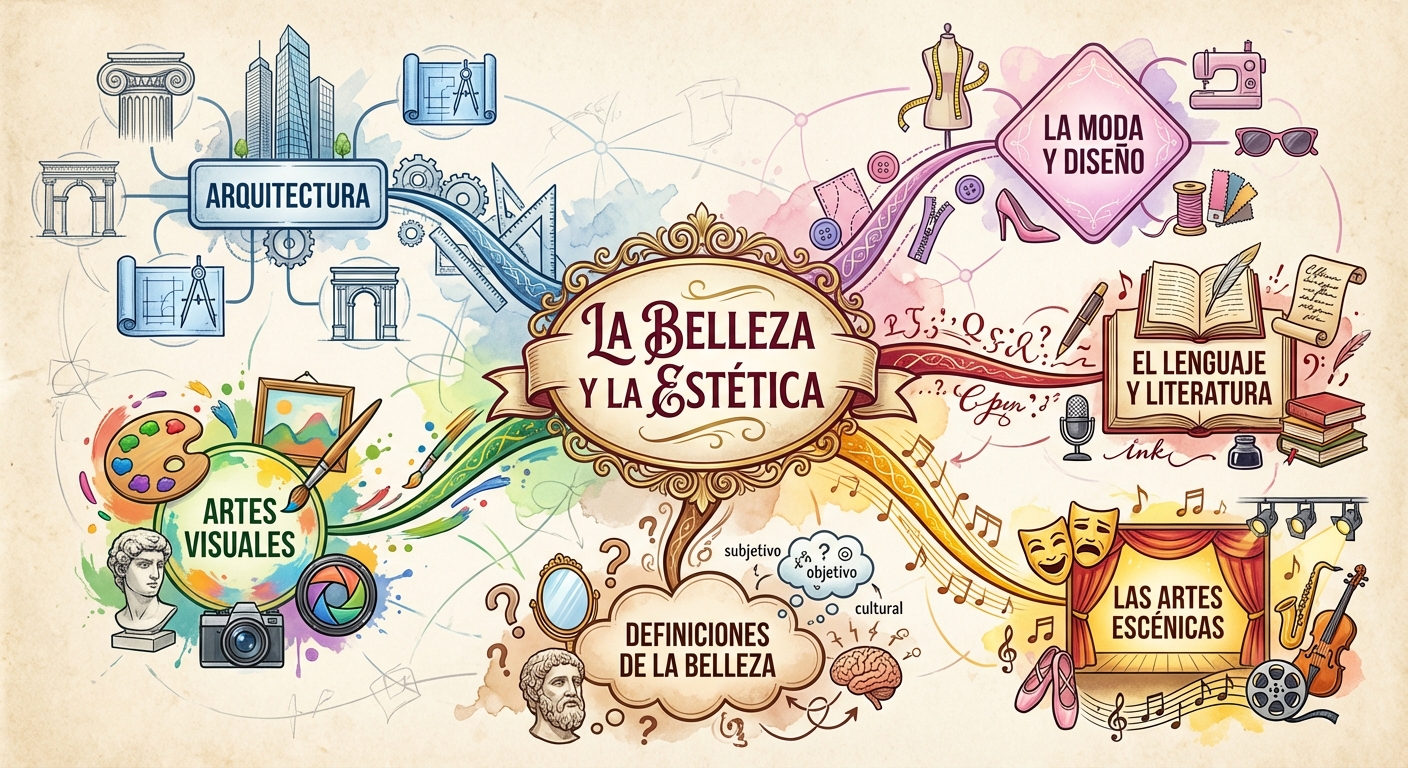
3.2 Fashion and Design (La moda y el diseño)
Concept: Fashion is both an expression of cultural identity and a major economic force.
The Economic Giant: "Fast Fashion"
Spain is a global leader in the fashion industry.
- Inditex (Zara): Founded by Amancio Ortega in Galicia, it revolutionized retail with "fast fashion"—bringing runway trends to stores in weeks.
- Economic Impact: The fashion industry is a pillar of the Spanish economy, influencing global trends and employment.
Identity Through Traditional Clothing
Clothing often signals regional identity, social status, or heritage.
- The Cholitas of Bolivia: Indigenous Aymara women who wear bowler hats (bombines) and layered skirts (polleras). Once a source of discrimination, this style is now worn with pride and has even entered high fashion runways.
- The Pollera (Panama): Considering one of the most expensive and elaborate national costumes in the world, worn for festivals and parades.
- Flamenco Dress (Spain): The traje de flamenca is the only regional costume that evolves with fashion trends (changing hemlines, patterns, and accessories year to year).
3.3 Visual Arts: The Great Masters (Las artes visuales)
Concept: Art serves as a mirror of history, a political tool, and a challenger of the status quo.
The Spanish Masters (The "Big Three")
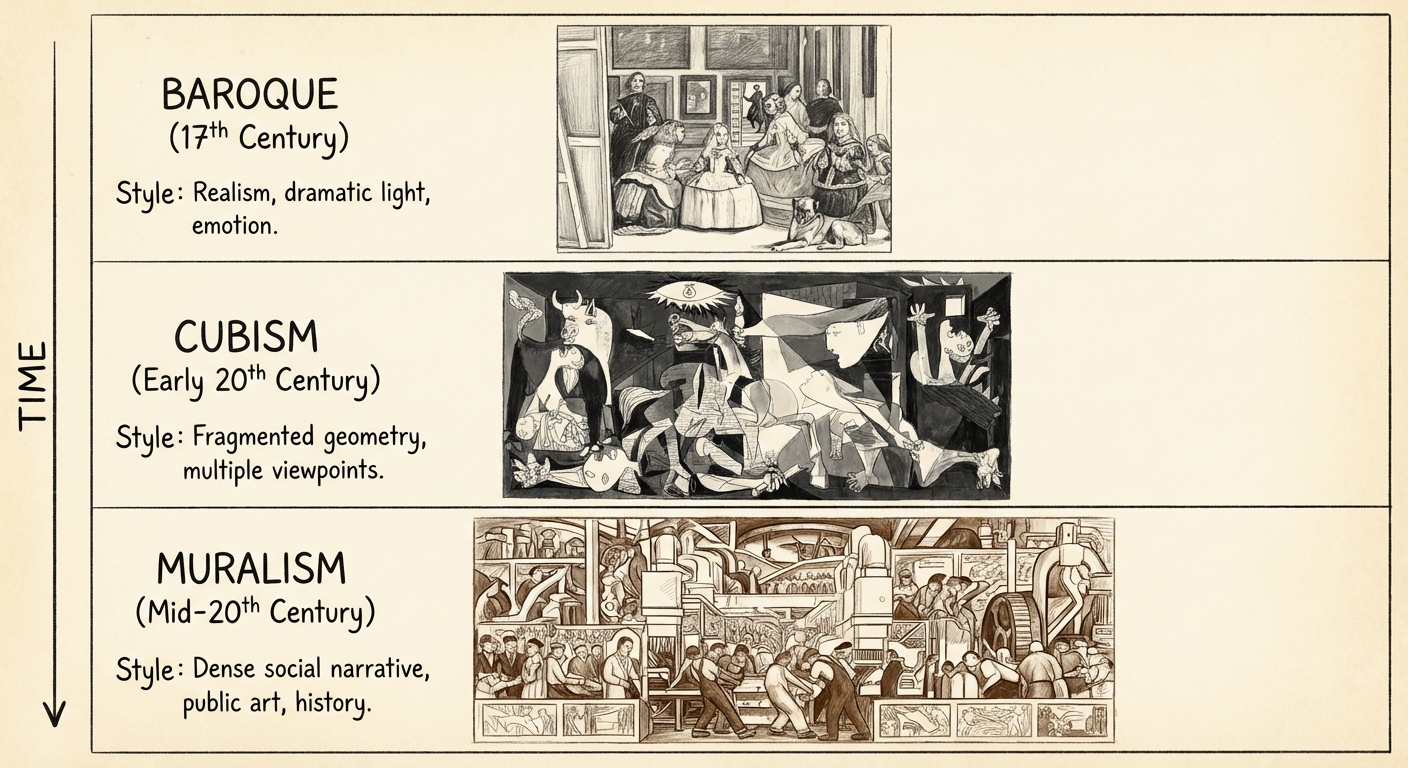
- Diego Velázquez (Baroque):
- Key Work: Las Meninas.
- Significance: Court painter for King Philip IV. Known for realism and playing with perspective (breaking the "fourth wall" 300 years early).
- Francisco de Goya (Romanticism/Dark Period):
- Key Work: El tres de mayo de 1808.
- Significance: A war correspondent with a brush. He transitioned from painting pleasant royal tapestries to holding a mirror up to the horrors of war and human madness.
- Pablo Picasso (Cubism):
- Key Work: Guernica.
- Significance: Co-founder of Cubism (shattering objects into geometric shapes). Guernica is the ultimate anti-war statement, depicted the bombing of a Basque town during the Spanish Civil War.
The Surrealists
- Salvador Dalí: Known for melting clocks (The Persistence of Memory) and eccentricity. He explored the subconscious and dreams.
- Joan Miró: Used abstract, childlike forms and primary colors to represent the Catalan landscape and subconscious.
Latin American Giants
Since the AP exam covers the entire Spanish-speaking world, you must know these artists:
- Mexican Muralism (Rivera, Orozco, Siqueiros):
- Purpose: Art for the people (public walls, not private museums).
- Themes: Social justice, indigenous history, Marxism, and the Mexican Revolution.
- Diego Rivera: Famous for depicting the glory of Aztec civilization and the struggles of the working class.
- Frida Kahlo (Mexico):
- Focus: Self-portraits exploring pain, identity, and Mexican heritage (Mexicanidad). She challenged beauty norms by highlighting her unibrow and mustache.
- Fernando Botero (Colombia):
- Style: "Boterismo"—depicting people and objects with exaggerated volume.
- Misconception: He doesn't paint "fat" people; he paints volume to explore space and color. He also used this style for political satire (e.g., painting dictators or the Abu Ghraib prison abuse).
Contemporary Art and Street Art
- Street Art vs. Vandalism: In cities like Bogotá, Valparaíso, and Barcelona, street art is a legitimate form of political expression.
- Okuda San Miguel (Spain): Transforms grey buildings and churches into vibrant, geometric, multicolor spectacles (Pop Surrealism).
- Chicano Art (USA): Born from the Civil Rights movement. Uses Aztec imagery and Virgin of Guadalupe icons to express the identity of Mexican-Americans (e.g., murals in East LA).
3.4 Architecture (La arquitectura)
Concept: Architecture reflects the history of conquest, religion, and modernization.
Historical Layers
- Roman: Aqueducts of Segovia (engineering marvels still standing).
- Islamic/Moorish: The Alhambra in Granada. Characterized by intricate geometric patterns (arabesques), horseshoe arches, and the aesthetic importance of water (fountains reflect beauty).
- Colonial: Found throughout Latin America (plazas, cathedrals). It represents the imposition of European order on the New World.
Modernist Pioneers
- Antoni Gaudí (Barcelona):
- Style: Organic, nature-inspired (no straight lines).
- Key Work: La Sagrada Familia. An unfinished basilica that combines Gothic traditions with natural forms.
- Santiago Calatrava (Valencia):
- Style: Neo-futuristic. Exploring skepticism and engineering.
- Key Work: City of Arts and Sciences in Valencia (looks like a giant eye or skeleton).
- Luis Barragán (Mexico):
- Style: Modernism mixed with Mexican tradition. Uses bright colors (pink, yellow), light, and silence as aesthetic elements.
3.5 Museums & Cultural Conservation
Museums play a critical role in preserving the "Patrimonio Cultural" (Cultural Heritage).
| Museum | Location | Specialization | Key Highlights |
|---|---|---|---|
| El Prado | Madrid | Classic European Art (12th-19th C) | Velázquez, Goya, El Greco |
| Reina Sofía | Madrid | Contemporary / Modern Art | Guernica (Picasso), Dalí |
| Guggenheim | Bilbao | Modern Art / Architecture | The building itself (Frank Gehry) renewed the city's economy |
| Museo de Antropología | Mexico City | Pre-Hispanic History | The Aztec Sun Stone |
| MALBA | Buenos Aires | Latin American Art | Frida Kahlo, Tarsila do Amaral |
3.6 Common Mistakes & Pitfalls
- Confusing "Modern" with "Contemporary":
- Correction: In art history, "Modern Art" refers very specifically to the period roughly from the 1860s to the 1970s (Picasso is Modern). "Contemporary" is art from the late 20th century to today.
- Stereotyping Beauty:
- Correction: Avoid generalizing that "all Latinos value curves." While historically true in some Caribbean contexts, beauty standards vary wildly between the Southern Cone (Argentina/Uruguay) and the Andes or Caribbean.
- Ignoring the "Why":
- Correction: When discussing art on the exam (Cultural Comparison), don't just describe the visual. Explain why it matters. (e.g., "Rivera painted murals so that illiterate populations could learn their history.")
- Overlooking Indigenous Architecture:
- Correction: Don't just focus on Spanish Cathedrals. Remember Machupicchu (Inca engineering) and Tenochtitlan (Aztec urban planning) as examples of aesthetic mastery.
Exam Tip: The Cultural Comparison
When asked to compare art or beauty:
- Target Culture: Pick a specific artist or standard (e.g., "In Mexico, Muralism is used for education…")
- Your Community: Contrast it with your reality (e.g., "In my community in the US, street art is often seen as vandalism, though this is changing with commissioned murals…")
- Theme: Link both back to the values of the community (Education vs. Property, Collective Memory vs. Individual Expression).