AP Spanish Language and Culture: Global Challenges (Los Desafíos Mundiales)
Unit Overview: Desafíos Mundiales
In Unit 6: Global Challenges, you are not expected to just memorize facts. The College Board assesses your ability to discuss, compare, and propose solutions to problems affecting the Spanish-speaking world (El mundo hispanohablante).
This unit explores three main questions:
- What are the social, political, and environmental challenges facing the world?
- What are the origins of these challenges?
- What are possible solutions?
6.1 Economic Issues (Los temas económicos)
Core Concepts
Economic challenges in the Spanish-speaking world vary significantly between developed nations (like Spain) and developing nations (various Latin American countries).
- La Globalización (Globalization): The connection of world economies. While it creates jobs, it can also threaten local traditions and exploit cheap labor.
- El Comercio Justo (Fair Trade): A movement to help producers in developing countries achieve better trading conditions. Coffee (café) and cocoa (cacao) are common examples in Latin America.
- La Microfinanciación (Microfinance/Microloans): Small loans given to people in poverty who lack access to traditional banking. This is a crucial concept for the AP exam, particularly regarding women's empowerment in rural Latin America.
Case Study: Economic Instability in Spain vs. Latin America
Spain (España): First World Challenges
- La Tasa de Desempleo (Unemployment Rate): Spain historically struggles with high unemployment (approx. 14% in 2019), with youth unemployment often exceeding 30%. This leads to delayed adulthood (people living with parents longer).
- La Deuda Pública (Public Debt): High debt (approx. 95% of GDP) limits government spending on social welfare (bienestar social).
- Productivity: Issues with low productivity due to rigid labor markets and insufficient R&D investment.
Latin America (Latinoamérica): Developing Challenges
- La Economía Informal: Unlike Spain, many Latin Americans work "off the books" (street vendors, unregistered labor), meaning they pay no taxes but receive no benefits/healthcare.
- La Fuga de Cerebros: The "Brain Drain." Educated professionals (doctors, engineers) leave their home countries for better pay in the US or Europe, hindering local economic growth.
- La Brecha Económica: Extreme inequality between the rich and the poor.
| Concept | Spain Context | Latin America Context |
|---|---|---|
| Housing | High rent, young people cannot leave home. | Shantytowns (favelas, villas miseria) lack basic services. |
| Employment | High structural unemployment. | High underemployment and informal work. |
Common Mistakes
- Confusing terms: Préstamo is a loan; impuesto is a tax. Don't mix them up.
- Generalizing: Not all Latin American economies are the same. Chile and Panama have different economic realities than Venezuela or Argentina.
6.2 Environmental Issues (Los temas del medioambiente)
Critical Environmental Vocabulary
- El calentamiento global: Global warming.
- El efecto invernadero: Greenhouse effect.
- La huella de carbono: Carbon footprint.
- Los recursos renovables: Renewable resources (solar, wind, hydro).
- El desarrollo sostenible: Sustainable development (meeting current needs without compromising the future).
Key Environmental Challenges
1. Climate Change affects Geography
- Spain: Vulnerable to desertification (desertización). Rising temperatures threaten agriculture (wine, olives) and increase forest fires (incendios forestales).
- The Andes: Glaciers are melting (derretimiento de los glaciares), threatening freshwater supplies for cities like Lima and La Paz.
- The Caribbean: Increased intensity of hurricanes (huracanes) due to warmer oceans.
2. Pollution & Waste Management
- Air Pollution (Contaminación del aire): Major cities like Madrid, Santiago de Chile, and Mexico City struggle with smog. Measures taken include:
- Protocolos anticontaminación: Restricting car use on high-pollution days.
- Fomento del transporte público: Promoting buses and metros.
- Water Scarcity (Escasez de agua): Spain faces severe droughts (sequías). In Latin America, privatization of water sources has led to social conflict (e.g., in Bolivia).
3. Biodiversity & Conservation
- The Amazon: Often called "el pulmón del planeta" (the planet's lung). Deforestation for cattle ranching and soy farming is a major AP topic.
- Ecotourism regarding Costa Rica: Costa Rica is the model answer for success. They abolished their army to fund education and conservation, generating wealth through protecting nature.
Common Mistakes
- False Cognate: Soportar means "to tolerate/put up with." To say "support the environment," use apoyar or proteger.
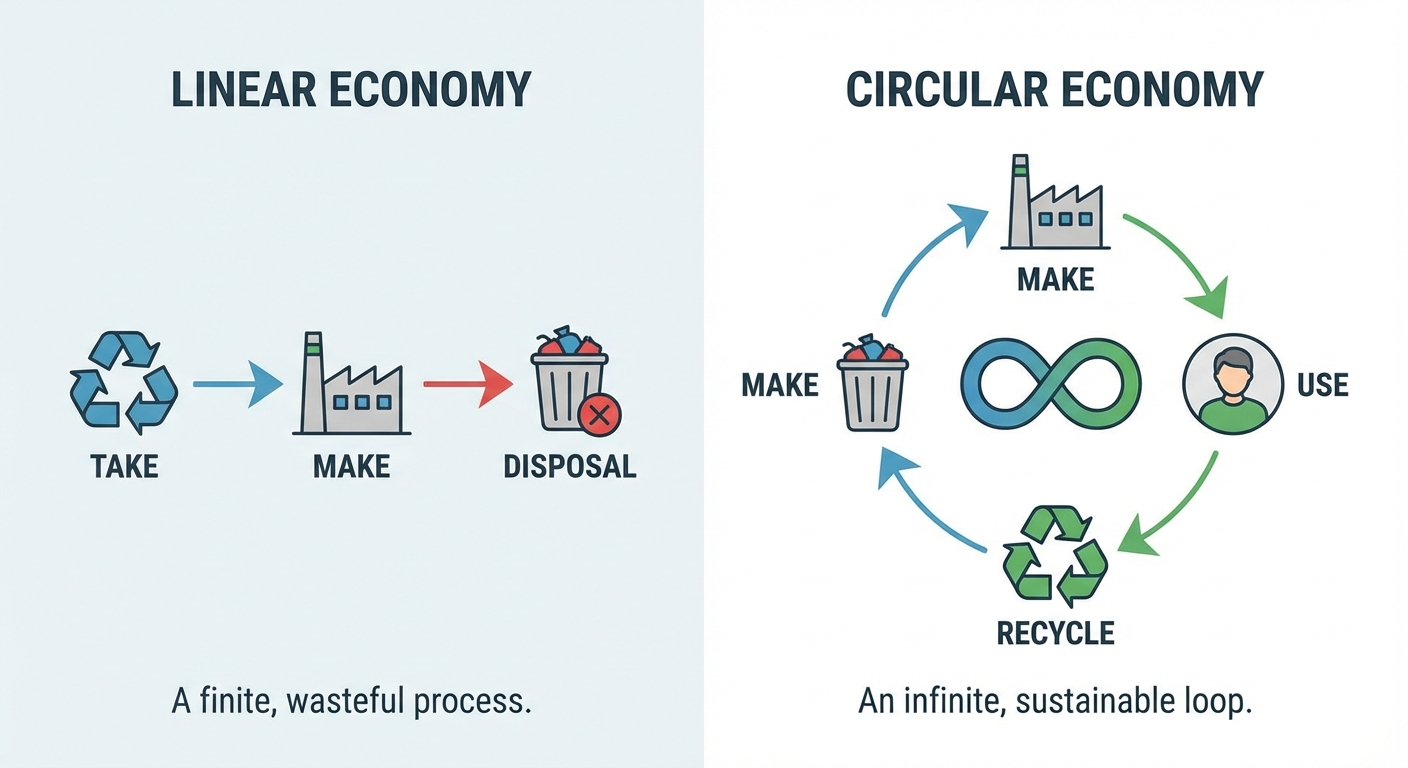
- Simplification: Don't just say "pollution is bad." Discuss specific types (plastic, air, light) and specific solutions (circular economy, biodegradable materials).
6.3 Population and Demographics (La población y la demografía)
Demographics Equation
To understand population changes, remember:
Contrast: The Aging vs. The Young
Spain: An Aging Population (Envejecimiento)
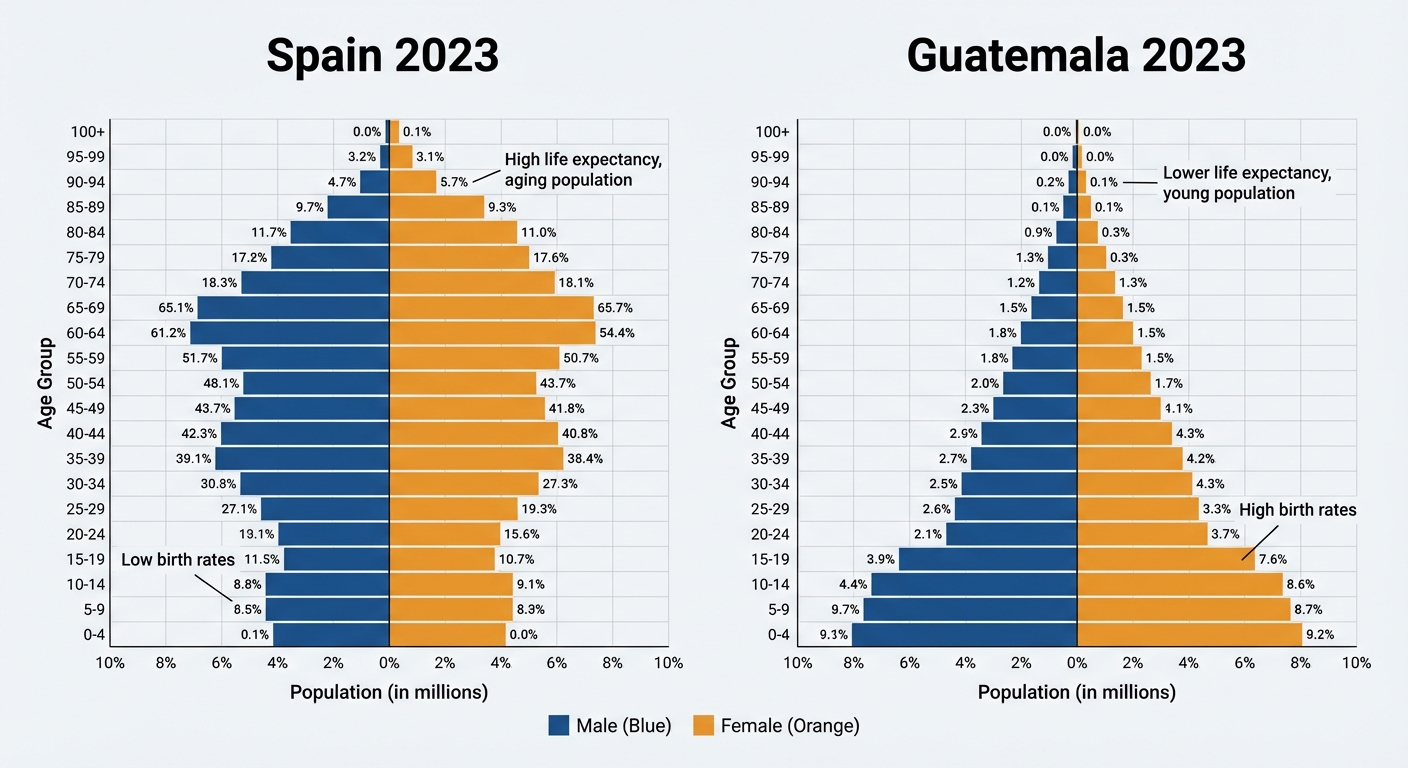
Spain has an "inverted pyramid" demographic structure.
- Low Birth Rate (Baja natalidad): Many couples choose not to have children or have them late due to economic instability.
- High Life Expectancy (Alta esperanza de vida): The Mediterranean diet and healthcare system keep people alive longer (Median age ~44).
- Consequence: The pension system is strained. Who will pay for the elderly?
Latin America: Urbanization & Migration
- Rural flight: People moving from the countryside (el campo) to the city (la ciudad) in search of opportunity.
- Megacities: Cities like Mexico City, Bogotá, and Buenos Aires face overcrowding (sobrepoblación), traffic, and pollution.
- Emigration: Push factors (factores de empuje) include violence and lack of jobs. Pull factors (factores de atracción) include safety and economic stability in the US or Europe.
Cultural Heritage & Diversity
While historical groups (Visigoths, Romans, Moors) built the foundation, the AP exam focuses on modern diversity challenges.
- Immigration to Spain: Spain is now a destination country. Immigrants from North Africa (Morocco), Latin America (Ecuador, Colombia), and Romania contribute to the workforce but sometimes face integration challenges.
- Indigenous Peoples (Pueblos originarios): In Latin America, the challenge is preserving indigenous languages (Quechua, Guarani, Maya) and rights against modernization.
6.4 Social Conscience (La conciencia social)
The Three Pillars of Social Engagement
To write a strong Persuasive Essay, use these concepts to analyze social problems:
- Conciencia (Awareness): Recognizing inequality. Do citizens value the "other"? Example: Awareness of gender violence (violencia de género).
- Estructura (Systemic Structure): Understanding that problems are often built into the law or economy. Example: Structural racism or lack of wheelchair access in cities.
- Agencia (Agency/Action): The power to change things. Example: Volunteering (el trabajo voluntario), voting, or protesting.
Key Social Challenges
1. Education & Access
- Desafío: Not everyone has access to quality education, internet, or technology (The Digital Divide / La brecha digital).
- Solución: NGO programs (ONGs), government scholarships (becas).
2. Health & Well-being
- Desafío: Access to medicine in rural areas.
- Cultural Connection: Traditional medicine (curanderos, medicinal plants) vs. Western medicine. A common cultural comparison topic.
3. Civil Rights
- Gender Equality: The movement "Ni Una Menos" in Latin America fights against femicide.
- LGBTQ+ Rights: Spain is a world leader in LGBTQ+ rights (same-sex marriage legal since 2005). Latin America varies by country.
Mnemonic for Suggested Solutions
When writing your essay or doing the simulated conversation, if you need to propose solutions to a Global Challenge, remember "EDU-LEG-TEC":
- EDU (Educación): awareness campaigns, school programs.
- LEG (Legislación): new laws, taxes, fines for pollution.
- TEC (Tecnología): renewable energy innovations, apps for social change.
Summary of Common Mistakes in Unit 6
- Focusing only on Spain: You must be able to compare a Spanish-speaking region with your own community. Do not ignore Latin America.
- Using "Americano" for US citizens: In Spanish, americano refers to anyone from the continent (North or South). Use estadounidense to refer to someone from the United States.
- Passive Voice: Instead of saying "The pollution is caused by cars," use the active voice or Se impersonal: "Los coches causan la contaminación" or "Se observa mucha contaminación."
- Vague Solutions: Don't just say "We need to help." Say "The government should subsidize renewable energy" (El gobierno debe subvencionar la energía renovable).