AP Psychology Unit Review: Stress, Health, and Coping
Understanding Stress and Stressors
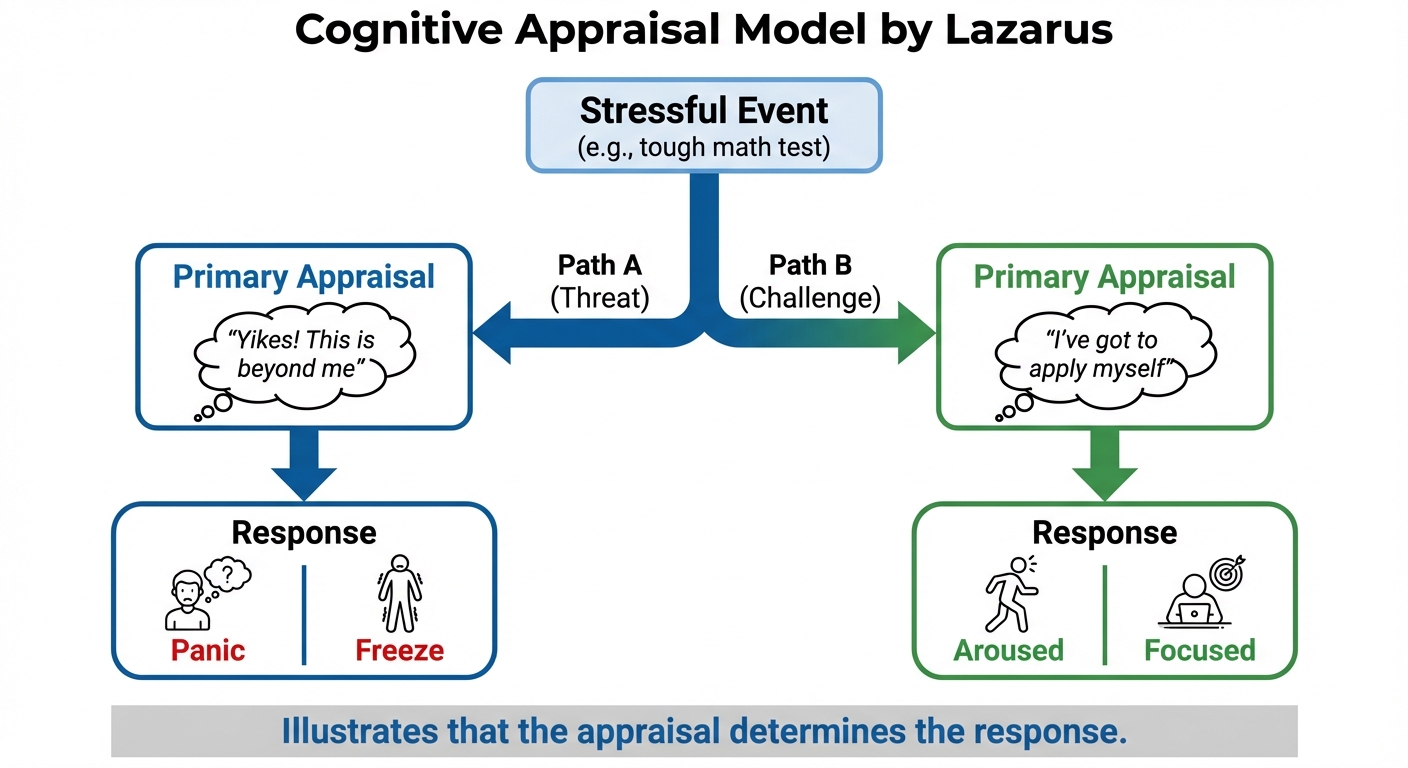
In psychology, Stress is not just a stimulus; it is a process. It refers to the process by which we perceive and respond to certain events, called stressors, that we appraise as threatening or challenging.
The Importance of Cognitive Appraisal
According to Richard Lazarus, stress arises less from the event itself and more from how we evaluate it. This is known as Cognitive Appraisal.
- Primary Appraisal: Is this a threat? (e.g., "Is this test going to ruin my GPA?")
- Secondary Appraisal: Do I have the resources to cope? (e.g., "Did I study enough to handle it?")
Types of Stressors
Psychologists generally categorize stressors into three main groups:
- Catastrophes: Unpredictable, large-scale events (e.g., earthquakes, wars, floods). These cause significant health damage because they are uncontrollable.
- Significant Life Changes: Major personal events, both positive and negative (e.g., marriage, divorce, leaving for college, death of a loved one). These are most significant during young adulthood.
- Daily Hassles: Day-to-day annoyances (e.g., traffic, long lines, forgot password). Over time, these can accumulate and take a greater toll on health than major life events due to their frequency.
The Physiological Response to Stress
When stress occurs, our body triggers a dual-track response system involving the nervous and endocrine systems.
1. The "Fast" Track: The Fight-or-Flight Response
identified by Walter Cannon, this system triggers the Symposium Nervous System.
- The hypothalamus stimulates the adrenal glands (specifically the adrenal medulla).
- Releases Epinephrine (adrenaline) and Norepinephrine.
- Result: Increased heart rate, dulled pain, blood diverted to muscles.
2. The "Slow" Track: The HPA Axis
For prolonged stress, the hypothalamus signals the pituitary gland to signal the adrenal glands (specifically the adrenal cortex).
- Releases Glucocorticoids such as Cortisol.
- Result: Energy allows for sustained coping, but long-term exposure impairs immune functioning.
General Adaptation Syndrome (GAS)
Hans Selye discovered that the body’s adaptive response to stress is general—it affects the whole body similarly, regardless of the stressor. He outlined three phases:
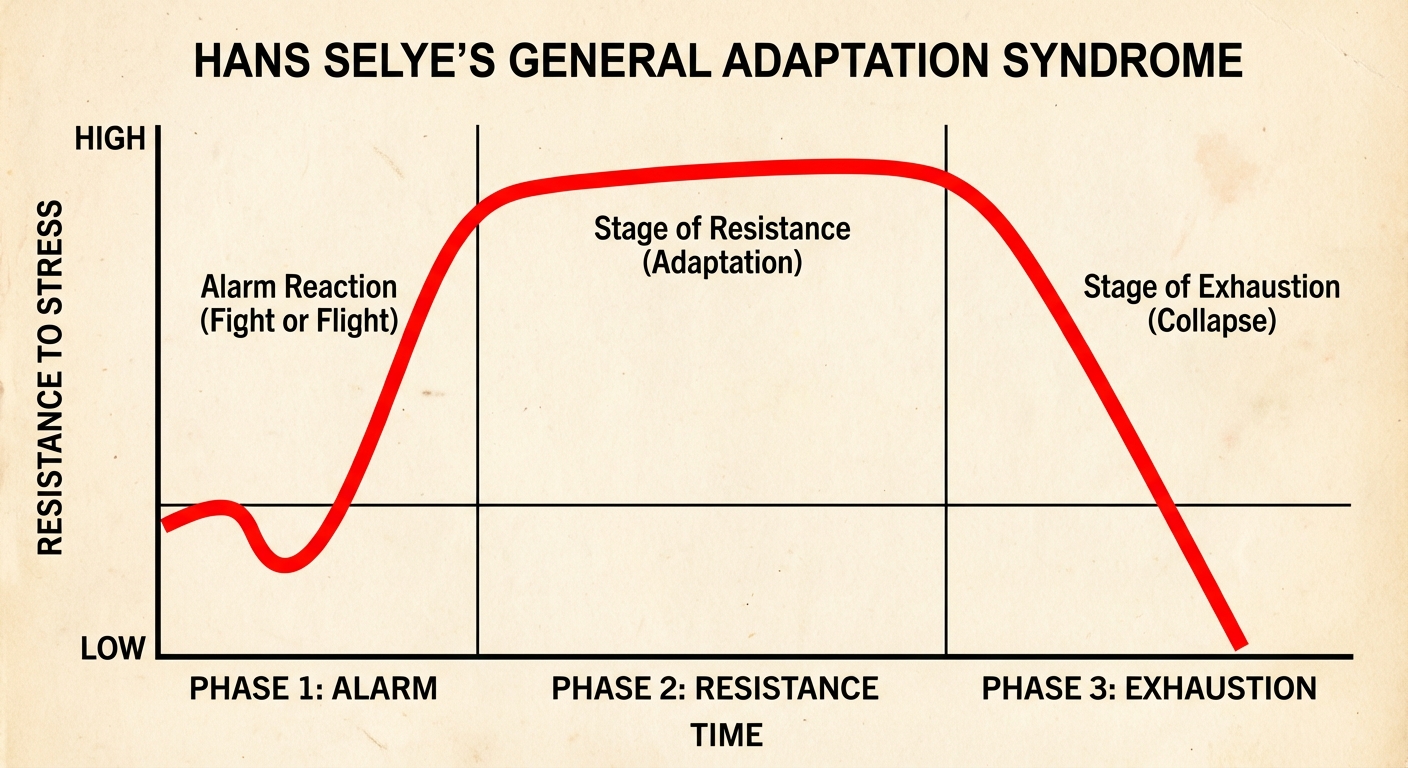
- Phase 1: Alarm Reaction: The sympathetic nervous system is suddenly activated (heart rate impacts, blood diverted). You feel the initial shock.
- Phase 2: Resistance: Your temperature, blood pressure, and respiration remain high. You are fully engaged, summoning all resources to meet the challenge. If the stress is persistent, your body's reserves begin to dwindle.
- Phase 3: Exhaustion: You become more vulnerable to illness or even death. The body's energy reserves are depleted. This is where "burnout" and immune suppression occur.
Mnemonic: ARE you stressed? (Alarm, Resistance, Exhaustion).
Stress and Physical Health
Psychoneuroimmunology is the study of how psychological, neural, and endocrine processes together affect the immune system and resulting health.
Stress and the Immune System
Your immune system has four types of cells active in search-and-destroy missions (B lymphocytes, T lymphocytes, Macrophages, and Natural Killer cells).
Key Concept: Stress diverts energy from the disease-fighting immune system to the muscles and brain (for fight-or-flight).
- Overreaction: The immune system may attack the body’s own tissues (e.g., allergic reactions, autoimmune flare-ups like lupus or MS).
- Underreaction: The system may allow dormant viruses to erupt (e.g., cold sores) or cancer cells to multiply.
Stress and Heart Disease
Stress is closely linked to Coronary Heart Disease, the clogging of the vessels that nourish the heart muscle. Meyer Friedman and Ray Rosenman conducted a famous nine-year study categorizing men by personality type:
- Type A: Competitive, hard-driving, impatient, verbally aggressive, and anger-prone.
- Type B: Easygoing and relaxed.
Result: Of the men who suffered heart attacks, 69% were Type A. Not one "pure" Type B had suffered a heart attack.
Why? The toxic core of Type A is negative emotion, specifically anger and hostility. When aggressive people get angry, the sympathetic nervous system redirects blood away from internal organs (like the liver, which removes cholesterol and fat) to muscles. Excess cholesterol continues to circulate and gets deposited around the heart.
Coping with Stress
Coping refers to alleviating stress using emotional, cognitive, or behavioral methods.
Coping Styles
- Problem-Focused Coping: Attempting to alleviate stress directly by changing the stressor or the way we interact with that stressor. Used when we feel we have control over the situation.
- Example: You are failing math, so you hire a tutor and study an extra hour a day.
- Emotion-Focused Coping: Attempting to alleviate stress by avoiding or ignoring a stressor and attending to emotional needs related to one's stress reaction. Used when we believe we cannot change a situation.
- Example: You break up with a partner (which you can't fix), so you eat ice cream and talk to friends for comfort.
Perceived Control
- Learned Helplessness (Martin Seligman): The hopelessness and passive resignation an animal or human learns when unable to avoid repeated aversive events.
- Locus of Control (Julian Rotter):
- Internal Locus of Control: The perception that you control your own fate. (Correlated with better health, higher achievement).
- External Locus of Control: The perception that chance or outside forces beyond your personal control determine your fate.
Managing Stress
Even if you cannot remove the stressor, you can manage the impact:
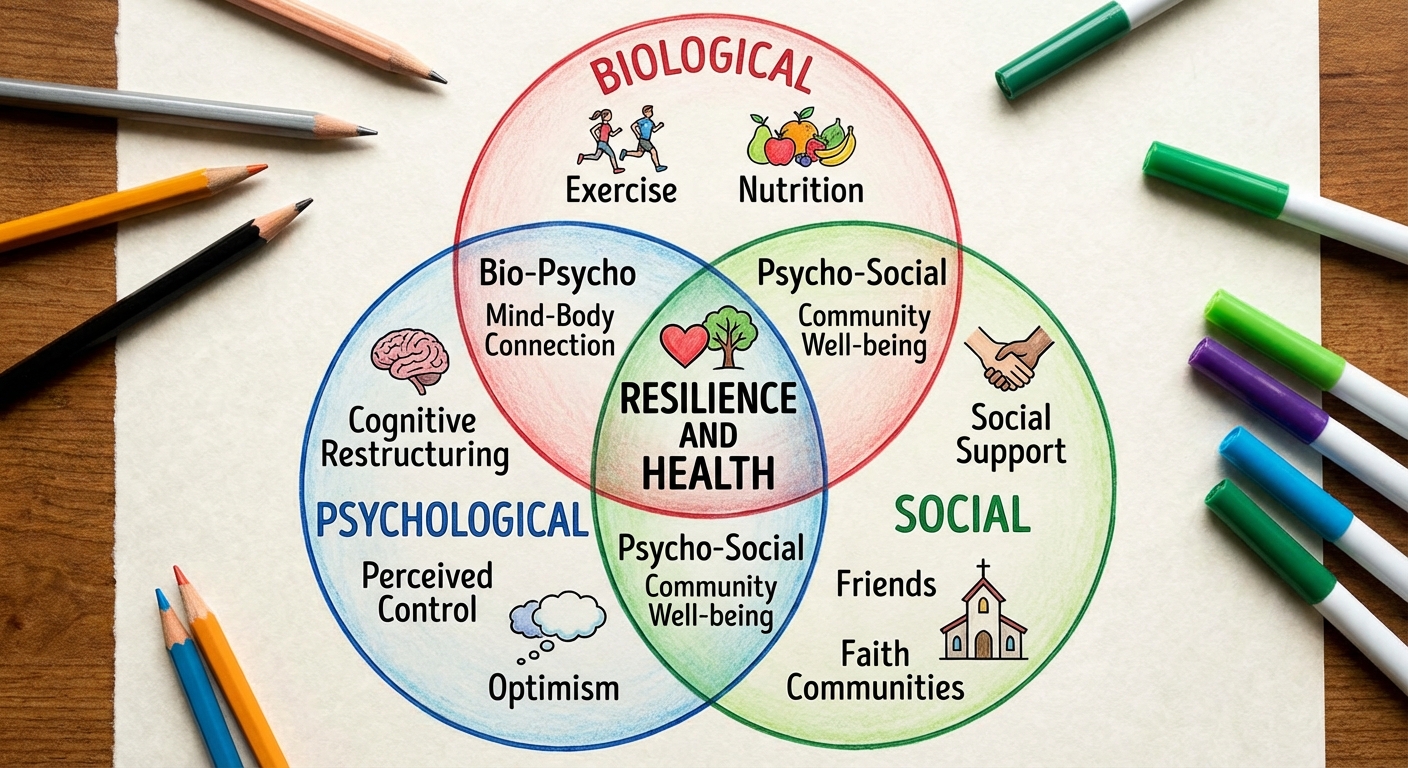
- Aerobic Exercise: Increases heart and lung fitness; helps alleviate depression and anxiety by increasing arousal and neurotransmitters like serotonin and endorphins.
- Relaxation & Meditation: Reduces tension and anxiety; modifies the stress response.
- Faith Factor: Religiously active people tend to live longer than those who are not, due to healthy lifestyle behaviors, social support, and positive emotions (hope/optimism).
Common Mistakes & Pitfalls
- Type A vs. Stress: Students often think Type A people are just "stressed" people. Correction: Type A is a personality structure defined by competitiveness and hostility. A Type B person can still experience high stress, but they react to it differently.
- Stress as bad: Not all stress is bad. Eustress is positive stress (like the excitement before a big game) that motivates us. Distress is the damaging kind.
- GAS Stages: Students often mix up Resistance and Exhaustion. Remember: You are fighting hardest during Resistance; you collapse during Exhaustion.
- Cortisol vs. Adrenaline: Adrenaline (Epinephrine) is the fast response (seconds/minutes); Cortisol is the slow, lingering response (hours/days) associated with chronic stress.