AP French Unit 6 Master Guide: Navigating Global Challenges (Les défis mondiaux)
This study guide covers Unit 6: Les défis mondiaux (Global Challenges). This is often considered the most vocabulary-dense unit in the AP French Language and Culture curriculum. It focuses on how Francophone societies address global issues ranging from climate change to human rights. Success in this unit requires understanding complex vocabulary, the ability to propose solutions using the Conditional and Subjunctive moods, and detailed cultural knowledge for the Cultural Comparison task.
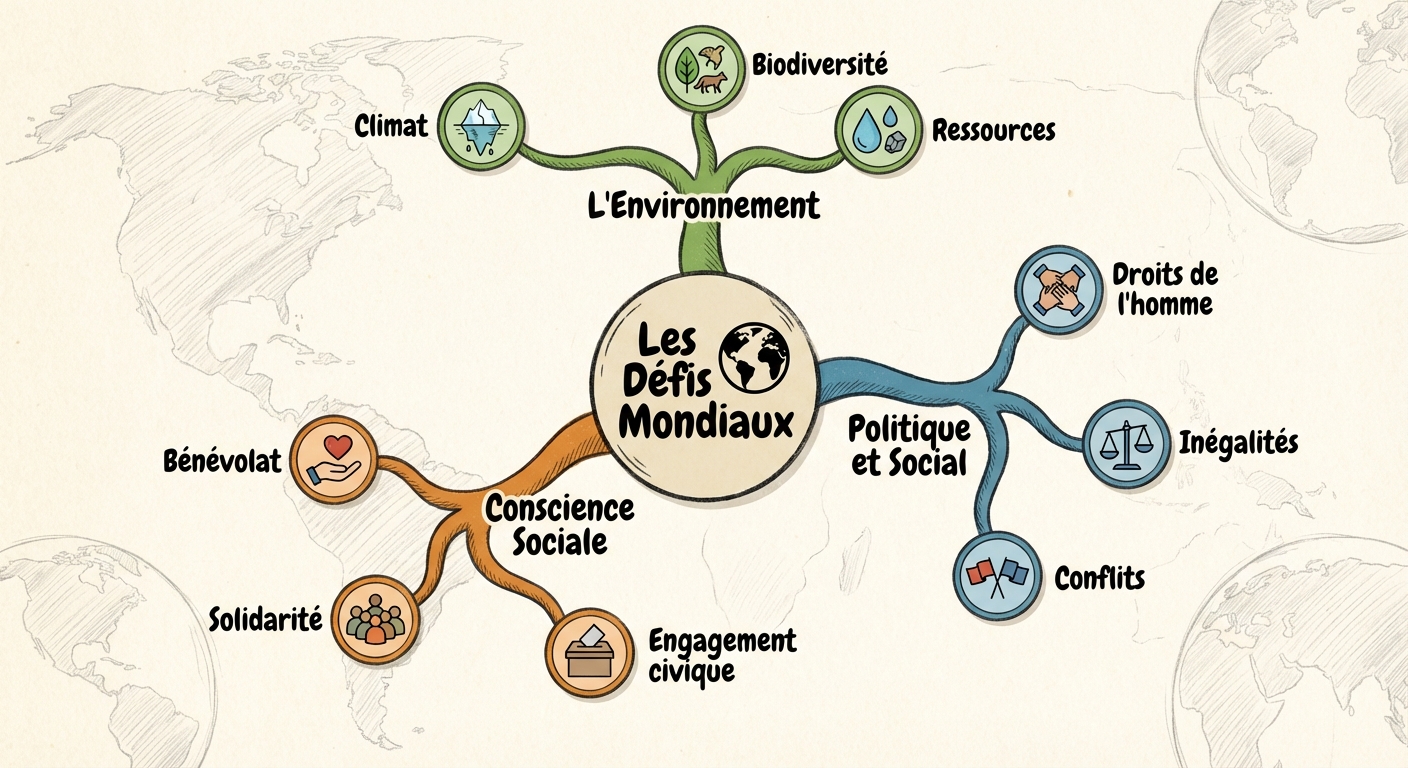
Environmental Issues (L'environnement)
The Francophone world places a high priority on le développement durable (sustainable development). France, for example, is often at the forefront of international climate diplomacy (e.g., L'Accord de Paris).
Key Concepts and Vocabulary
To discuss the environment effectively, you must move beyond basic weather terms into cause-and-effect relationships regarding global warming.
- Le réchauffement planétaire: Global warming. Often used interchangeably with le changement climatique (climate change).
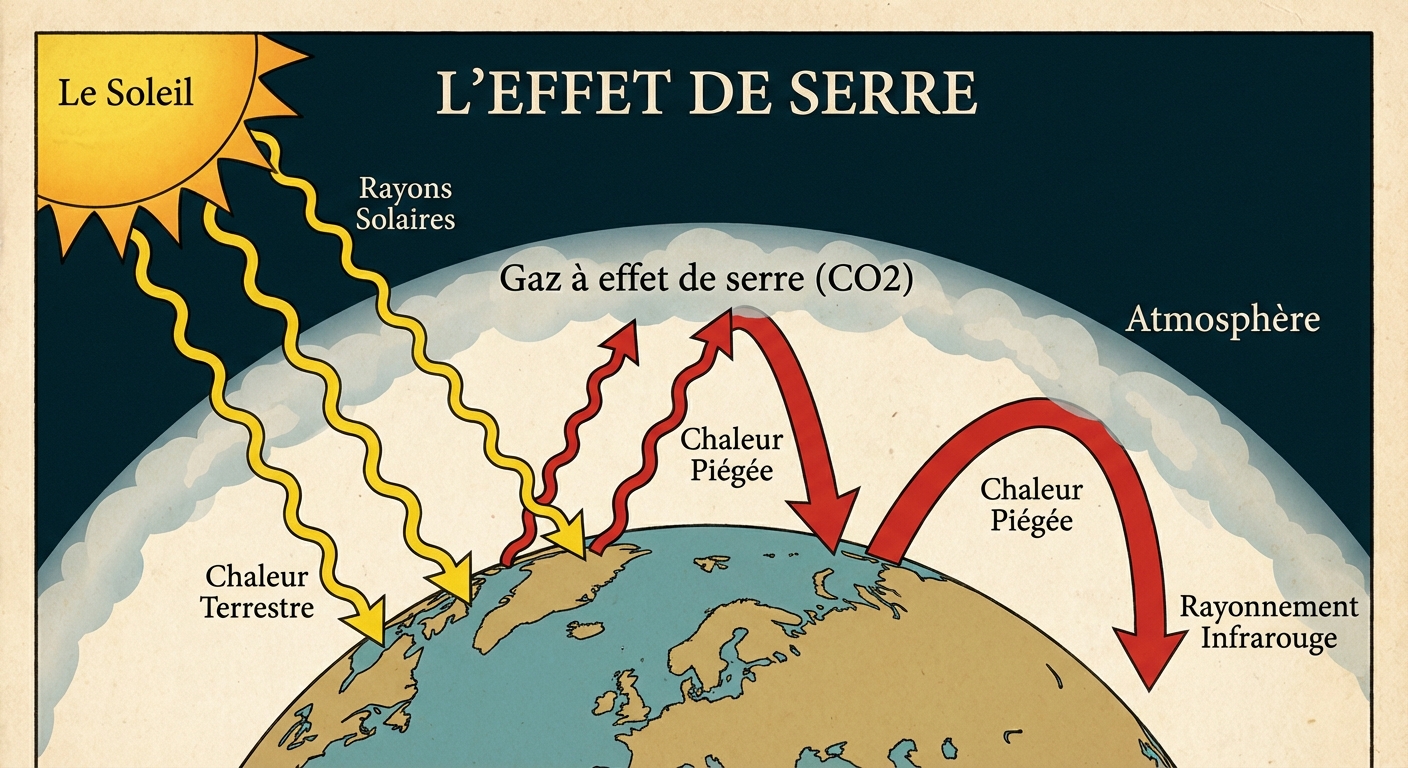
- L'effet de serre: The greenhouse effect. This is the mechanism causing the warming.
- L'empreinte carbone: Carbon footprint. A common topic relates to reducing one's individual footprint.
- Les énergies renouvelables: Renewable energies (solaire, éolienne, hydraulique).
- Le gaspillage: Waste (specifically wasting resources like food or water).
- Cultural Note: France was the first country in the world to ban supermarkets from throwing away or destroying unsold food (2016).
Examining Causes and Solutions
On the AP exam, you may be asked to read an article about a problem and propose a solution in an email or conversation.
| Problem (Le Problème) | Cause (La Cause) | Solution (La Solution) |
|---|---|---|
| La sécheresse (Drought) | Le manque de pluie, le dérèglement climatique. | La conservation de l'eau; améliorer l'irrigation. |
| La fonte des glaces (Melting ice) | La hausse des températures. | Réduire les émissions de gaz à effet de serre (CO2). |
| Les marées noires (Oil spills) | Les accidents de pétroliers; l'industrie pétrolière. | Utiliser des énergies propres (clean energy); sévir contre les pollueurs. |
| Les déchets nucléaires (Nuclear waste) | Les centrales nucléaires (nuclear power plants). | Développer l'énergie éolienne (wind) et solaire. |
Essential Grammar: Expressing Necessity and Possibility
When discussing the environment, you often express what must happen or what could happen.
1. The Subjunctive (Necessity/Will)
- Il est indispensable que nous réduisions notre consommation d'énergie. (It is essential that we reduce our energy consumption.)
- Je ne pense pas que la pollution disparaisse demain. (I don't think pollution will disappear tomorrow.)
2. The Conditional (Hypothetical Solutions)
- Si on recyclait plus, on pourrait sauver la planète. (If we recycled more, we could save the planet.)
Political and Social Structures (La politique et les structures sociales)
This section deals with how society is organized, who holds power, and how individuals interact with the state. A major focus in the French curriculum is the balance between security, liberty, and cultural identity.
Human Rights (Les droits de l'homme)
France considers itself the "Pays des Droits de l'Homme" (Country of Human Rights), stemming from the 1789 revolution.
- La liberté d'expression: Freedom of speech. A heavily debated topic regarding the press and social media.
- L'égalité homme-femme: Gender equality. Look for topics regarding the "glass ceiling" (le plafond de verre) and wage gaps (l'écart salarial).
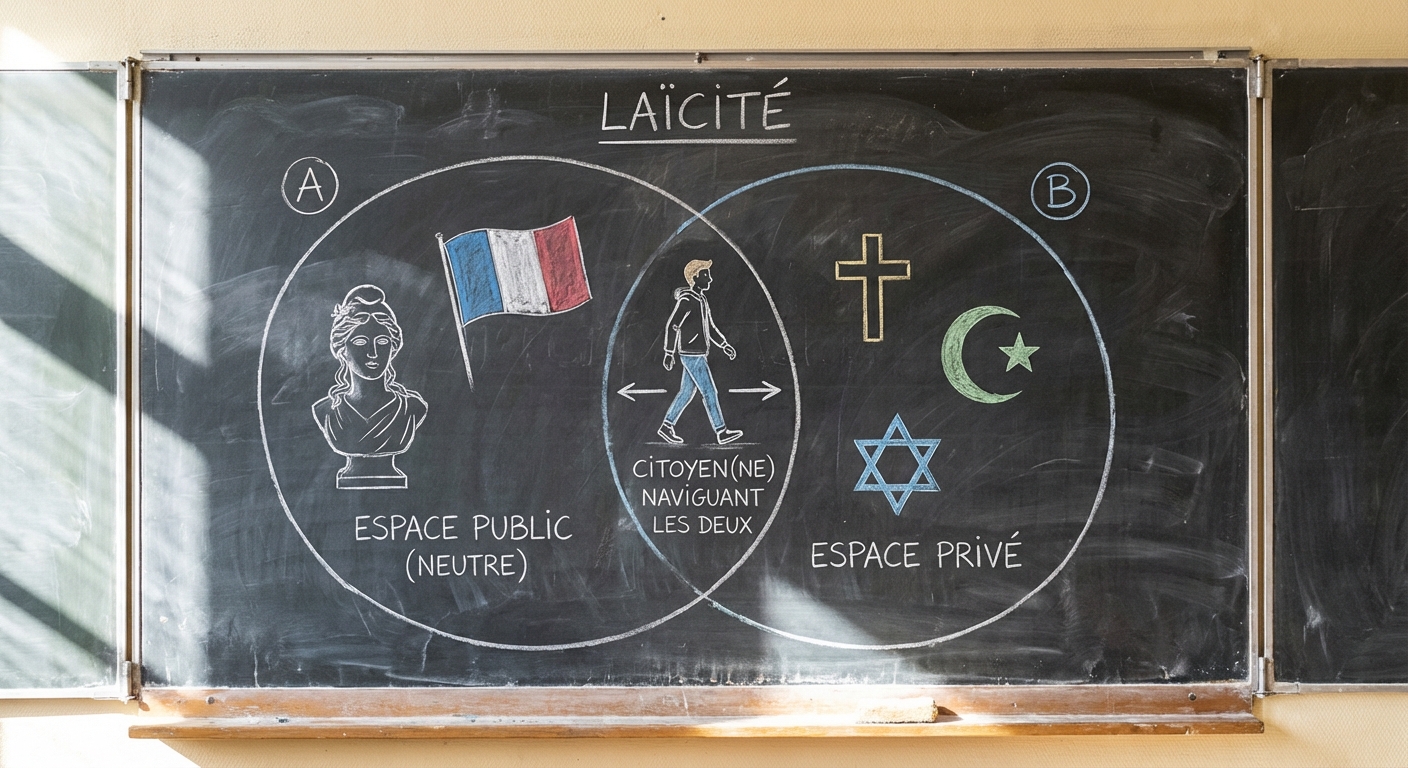
- La laïcité: Secularism. This is a uniquely French concept. Unlike American separation of church and state (which often allows religion in public), laïcité strictly removes religious symbols from public institutions (schools, government offices) to ensure neutrality.
Migration and Demographics (Les flux migratoires)
Immigration is a central topic in Francophone Europe and Canada.
- Les sans-papiers: Undocumented immigrants.
- Le droit d'asile: The right of asylum (protection granted to refugees).
- L'intégration vs. L'assimilation:
- Assimilation: The idea that immigrants should adopt the culture/language of the host country fully.
- Integration: The idea that immigrants participate in society while maintaining their cultural distinctiveness (often associated closer to the Canadian "multiculturalism" model).
Conflict and Peace (La guerre et la paix)
You should be able to identify threats to peace and the organizations that maintain it.
- L'OTAN: NATO.
- L'ONU (Organisation des Nations unies): The UN.
- Le maintien de la paix: Peacekeeping.
Social Conscience and Civic Responsibility (La conscience sociale et la responsabilité civique)
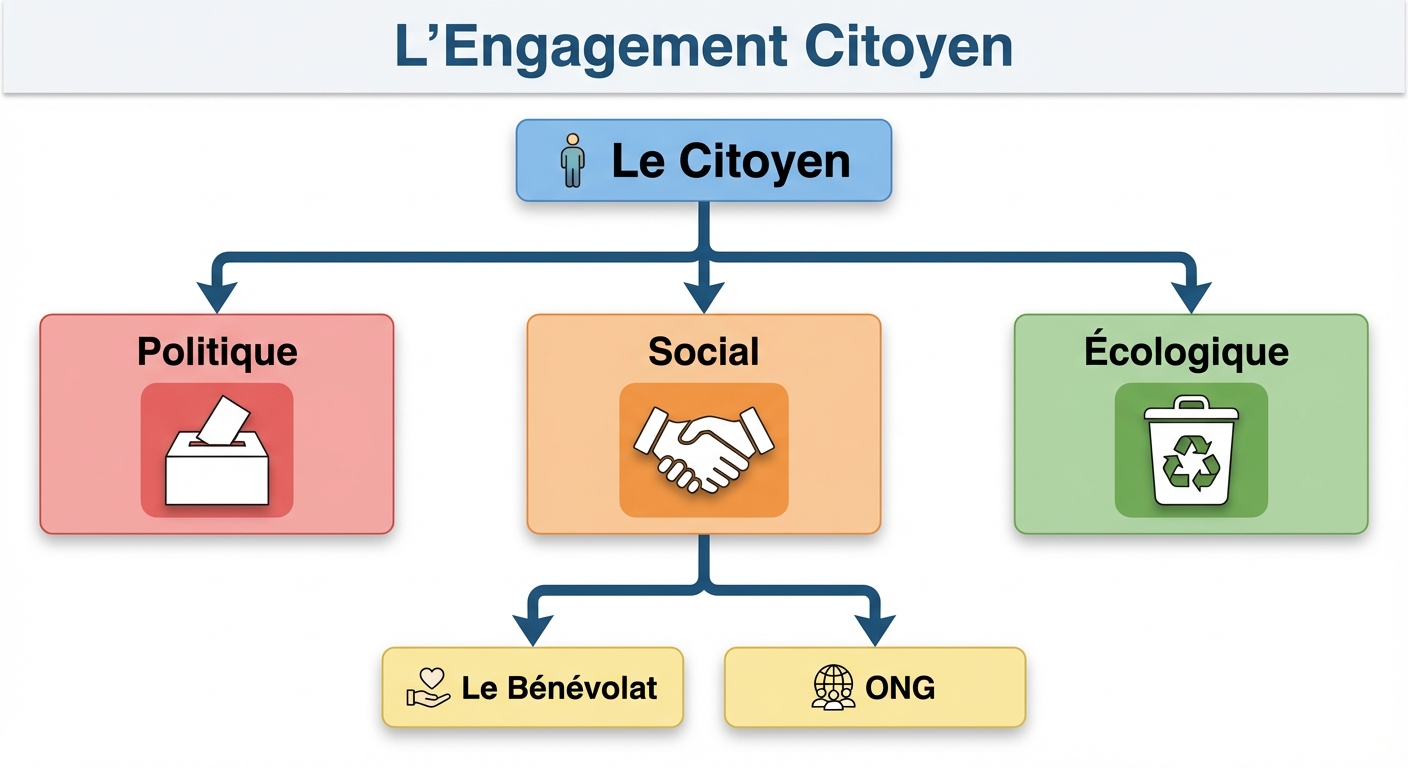
This theme focuses on how citizens engage to help others and improve society. It transitions from government-led structures to individual and community action.
Volunteering (Le Bénévolat vs. Le Volontariat)
This is a classic "faux ami" trap. In French, there is a distinction:
- Le Bénévolat: Unpaid, informal, or charitable volunteering (e.g., working at a soup kitchen on weekends). A volunteer is un bénévole.
- Le Volontariat: Often implies a contractual commitment, sometimes with a small stipend, for a specific duration (e.g., Peace Corps, Service Civique in France). A volunteer here is un volontaire.
Humanitarian Action (L'action humanitaire)
Many global NGOs (Non-Governmental Organizations / ONG) originated in France.
- Médecins Sans Frontières (Doctors Without Borders): Founded in France, provides medical aid in conflict zones.
- Les Restos du Cœur: A famous French charity distributed food to the needy (les démunis), started by the comedian Coluche. They also run the yearly concert event "Les Enfoirés".
- La Croix-Rouge: The Red Cross.
Civic Duty (Le devoir citoyen)
How do citizens participate in democracy?
- Voter: To vote.
- Manifester: To demonstrate/protest. (Note: Les manifestations or "manifs" are a culturally vital part of French civic expression, much more common than in the US).
- Se présenter aux élections: To run for office.
Cultural Comparison Connections
For the Task 4: Cultural Comparison on the exam, you need specific examples. Here are strong comparisons for Global Challenges:
- Environment: Compare recycling habits in your community with the strict waste laws in Switzerland or the ban on plastic bags in Rwanda/France.
- Social Conscience: Compare how the homeless are treated in your city versus the "SAMU Social" (emergency social medical service) in France.
- Politics: Compare the concept of religious symbols in schools (permitted in the US, banned in French public schools due to laïcité).
Common Mistakes & Pitfalls
1. Faux Amis (False Friends)
- Préservatif vs. Préservation:
- La préservation = Conservation/Protection (of nature).
- Un préservatif = A condom. Do not say "Il faut utiliser des préservatifs pour sauver la nature."
- Supporter vs. Soutenir:
- Soutenir = To support (a cause, a person, a policy).
- Supporter = To tolerate/put up with (something unpleasant).
- Correct: "Je soutiens cette loi environnementale."
2. Preposition Errors with "Problèmes"
- Students often mess up the cause/consequence prepositions.
- À cause de + Noun (Negative): À cause de la pollution. (Because of pollution).
- Grâce à + Noun (Positive): Grâce aux énergies renouvelables. (Thanks to renewable energy).
3. Grammar: "Il faut que"
- When discussing global challenges, students love to use "It is necessary that…"
- Remember: Il faut que ALWAYS triggers the Subjunctive.
- Incorrect: Il faut que le gouvernement fait quelque chose.
- Correct: Il faut que le gouvernement fasse quelque chose.
4. Overusing "Les Choses"
- Avoid the vague word "things" (les choses).
- Instead use: les enjeux (issues/stakes), les défis (challenges), les mesures (measures), les démarches (steps/processes).