Unit 2: Christendom Fractured — The Age of Reformation & Religious Wars (c. 1450–1648)
2.1 Contextualizing the Protestant Reformation
The State of the Church (c. 1450)
Before Martin Luther, the Catholic Church was the dominant institution in Western Europe, but its authority was waning due to corruption and the rise of Christian Humanism.
Clerical Corruption
Critics focused on three main abuses of power:
- Simony: The buying and selling of high church offices (e.g., becoming a Bishop by paying the Pope).
- Nepotism: Treating church assets as family property and appointing relatives to positions of power.
- Pluralism & Absenteeism: Clergy holding multiple positions (benefices) to collect income but hiring poor, uneducated priests to do the actual work.
- Indulgences: Paper certificates sold by the Church that purportedly reduced the time a soul spent in Purgatory used to fund St. Peter's Basilica.
Christian Humanism & Early Reformers
While the Italian Renaissance focused on secular classics, the Northern Renaissance focused on early Christian texts to reform the Church from within.
- Erasmus (Prince of the Humanists): Wrote In Praise of Folly (1509). He criticized clerical hypocrisy but wished to reform the church, not destroy it.
- Quote: "Erasmus laid the egg that Luther hatched."
- Thomas More: English humanist, wrote Utopia, advocated for communal living and education.
- Wycliffe & Jan Hus: Early medieval critics (Lollards and Hussites) who attacked papal authority. Hus was burned at the stake in 1415, foreshadowing the danger Luther faced.
2.2 Martin Luther and German Reformation
The Spark: 1517
Martin Luther, a German Augustinian monk, obsessed over his own sinfulness. He concluded that the Church's "good works" (sacraments, charity) could not earn salvation.
Luther’s Three Pillars (Theology)
- Sola Fide (Faith Alone): Salvation comes only from faith in Christ, not good works.
- Sola Scriptura (Scripture Alone): The Bible is the only authority. Pope and Church tradition are not infallible.
- Priesthood of All Believers: All Christians have direct access to God; a distinct priestly caste is unnecessary.
Key Events
- 95 Theses (1517): Luther posted these on the Wittenberg church door, attacking the sale of indulgences by the friar Johann Tetzel.
- Diet of Worms (1521): Emperor Charles V called Luther to recant. Luther refused ("Here I stand, I can do no other"). He was declared an outlaw.
- Confession of Augsburg (1530): The formal statement of Lutheran beliefs.
Social Impact vs. Theological Impact
- German Peasants' War (1524–1525): Peasants interpreted Luther's spiritual freedom as a license for social equality. They revolted against feudal lords.
- Luther's Reaction: He was socially conservative. He wrote Against the Murderous, Thieving Hordes of Peasants, urging princes to crush the revolt. Luther needed the protection of princes (like Frederick of Saxony) and supported the existing political hierarchy.
Common Mistake: Do not confuse Luther's religious radicalism with social radicalism. He supported the state's authority over the church and the peasants.
2.3 The Spread of Protestantism
As the Reformation spread, it splintered into different groups based on theology and geography.
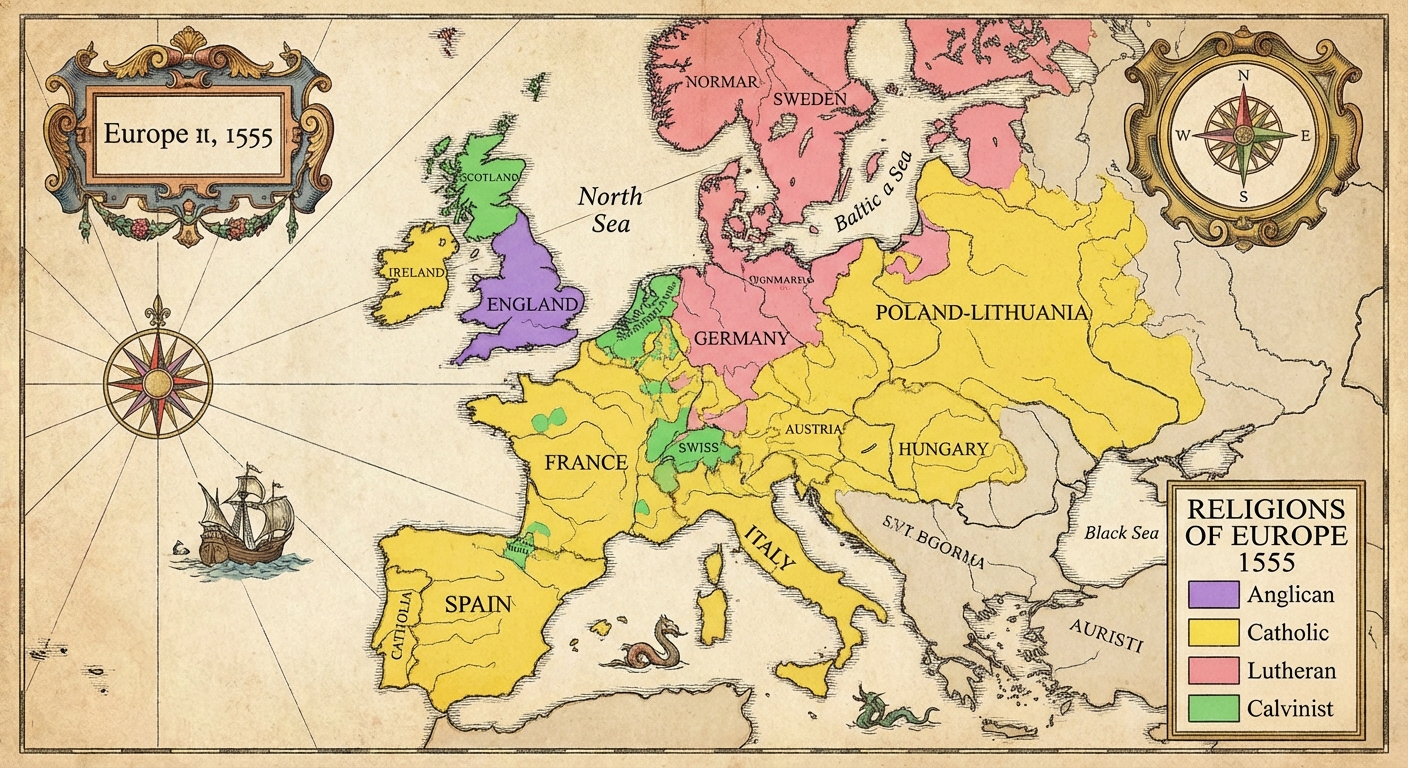
Ulrich Zwingli & The Swiss Reformation
- Based in Zurich.
- Disagreed with Luther on the Eucharist (Communion) during the Marburg Colloquy. Luther believed in the real presence of Christ (Consubstantiation), while Zwingli believed it was purely symbolic.
John Calvin & Calvinism
John Calvin wrote Institutes of the Christian Religion, systematizing Protestant thought. Calvinism became the most militant and rapidly spreading form of Protestantism (Huguenots in France, Presbyterians in Scotland, Puritans in England).
Key Beliefs (TULIP)
- Predestination: God determined before the beginning of time who would be saved (the Elect) and who would be damned. Humans have no free will in this regard.
- The Geneva Consistory: Calvin established a theocracy in Geneva, Switzerland. A moral court checked on private lives (dancing, drinking, and swearing were punished).
- Protestant Work Ethic: Hard work and wealth were seen as signs of God's favor (a sign one might be of the Elect).
The Radical Reformation: Anabaptists
- Beliefs: Rejected infant baptism (only adults can choose), advocated total separation of church and state, and pacifism.
- Persecution: Hated by both Catholics and Lutherans. In Münster (1534), radicals took over and were brutally massacred.
The English Reformation (Top-Down Reform)
Unlike Germany (theological), England's break was political.
- Henry VIII: Wanted a divorce from Catherine of Aragon to get a male heir. Pope refused.
- Act of Supremacy (1534): The King (not the Pope) is the head of the Church of England (Anglican).
- Doctrinal Shift: Under Henry, the church remained fairly Catholic. Under his son Edward VI, it moved toward Protestantism. Under Elizabeth I, it settled into a "middle way."
| Feature | Lutheranism | Calvinism | Anglicanism (under Eliz. I) | Anabaptists |
|---|---|---|---|---|
| Salvation | Faith Alone | Predestination | Faith Alone | Faith (Adult Decision) |
| Church/State | Prince rules Church | Theocracy (Church rules State) | Monarch rules Church | Total Separation |
| Eucharist | Consubstantiation | Spiritual Presence | Vague/Open to interpretation | Memorial/Symbolic |
2.4 The Catholic Reformation (Counter-Reformation)
The Catholic Church responded to the Protestant threat through reform and reaffirmation.
The Council of Trent (1545–1563)
Called by Pope Paul III to address the crisis.
- Reaffirmed Doctrine: Rejected Protestant theology. Upheld the 7 Sacraments, Transubstantiation, the authority of Tradition + Bible, and the necessity of Faith + Works.
- Reformed Practice: Banned the sale of indulgences, required bishops to live in their dioceses, and established seminaries for better priest education.
New Religious Orders
- Jesuits (Society of Jesus): Founded by Ignatius of Loyola. Focused on education (fighting heresy with logic), missionary work (Americas/Asia), and absolute obedience to the Pope.
- Ursulines: Order of nuns focused on the education of women.
Mechanisms of Control
- Roman Inquisition: A committee of six cardinals with judicial authority over all Catholics to root out heresy.
- Index of Prohibited Books: A list of forbidden readings (including works by Erasmus and Luther).
2.5 The Wars of Religion (1560–1648)
Religion became the primary cause of warfare in Europe, though political motives often overlapped.
1. The French Wars of Religion (1562–1598)
- Context: Civil war between French Catholics (Valois monarchy + Guise family) and French Calvinists (Huguenots + Bourbon family).
- St. Bartholomew’s Day Massacre (1572): Mob violence triggered by the monarchy resulted in the death of 20,000 Huguenots.
- The Politiques: A group (including Jean Bodin) who believed a strong monarchy and national unity were more important than religious unity.
- Resolution: Henry IV (Navarre), a Huguenot, became King. He converted to Catholicism ("Paris is worth a mass") and issued the Edict of Nantes (1598), granting Huguenots religious toleration and fortified towns.
2. Philip II and the Netherlands
- Philip II of Spain: The champion of Catholicism. Wanted to crush Protestantism.
- Dutch Revolt: The Calvinist Netherlands (led by William of Orange) revolted against Spanish taxation and religious persecution. Resulted in the independence of the Dutch Republic (United Provinces).
3. The Thirty Years' War (1618–1648)
started as a religious war in the Holy Roman Empire (HRE) and ended as a political war for European dominance. Most destructive European conflict prior to WWI.
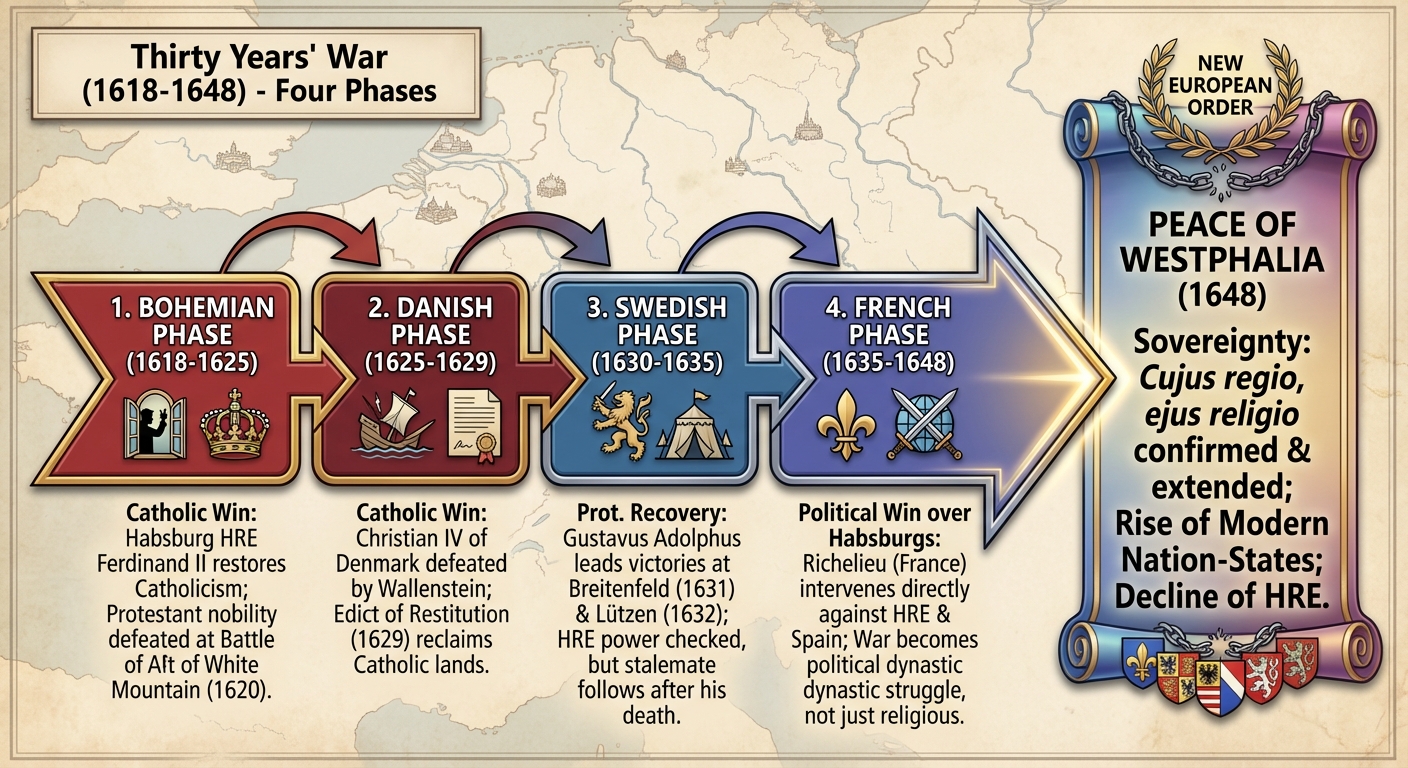
The Four Phases
- Bohemian Phase (Religious): Defenestration of Prague. Catholics win (Battle of White Mountain).
- Danish Phase (Religious): Lutheran King of Denmark invades to help Protestants. Wallenstein (Catholic general) crushes them.
- Swedish Phase (Political/Religious): Gustavus Adolphus (Father of Modern Warfare) invades. A Lutheran backed by Catholic France (Cardinal Richelieu) to check Habsburg power.
- French Phase (Political): France openly enters the war against Spain and the HRE. Catholic France fighting Catholic HRE demonstrates Politique thinking.
The Peace of Westphalia (1648)
- Religious: Renewed Peace of Augsburg but added Calvinism as a legal choice.
- Political: Recognized the sovereignty of 300+ German princes (destroying the HRE's central power). recognized independence of Switzerland and Dutch Republic.
- Significance: Ended the ideal of a universal Christendom. Marked the rise of the Balance of Power and the modern state system.
2.6 Society & Art in the 16th Century
Social Changes
- Family & Marriage: Protestants praised marriage over celibacy. Clergy could marry. Women were seen as managers of the household and educators of children, but still subordinate.
- Education: Luther advocated for universal literacy so people could read the Bible.
- Witchcraft Craze (c. 1580–1650): Economic uncertainty and religious paranoia led to the execution of thousands (mostly older women) for "consorting with the devil."
- Public Morals: Both Catholic and Protestant states tried to regulate leisure (e.g., Carnival restrictions, closing brothels).
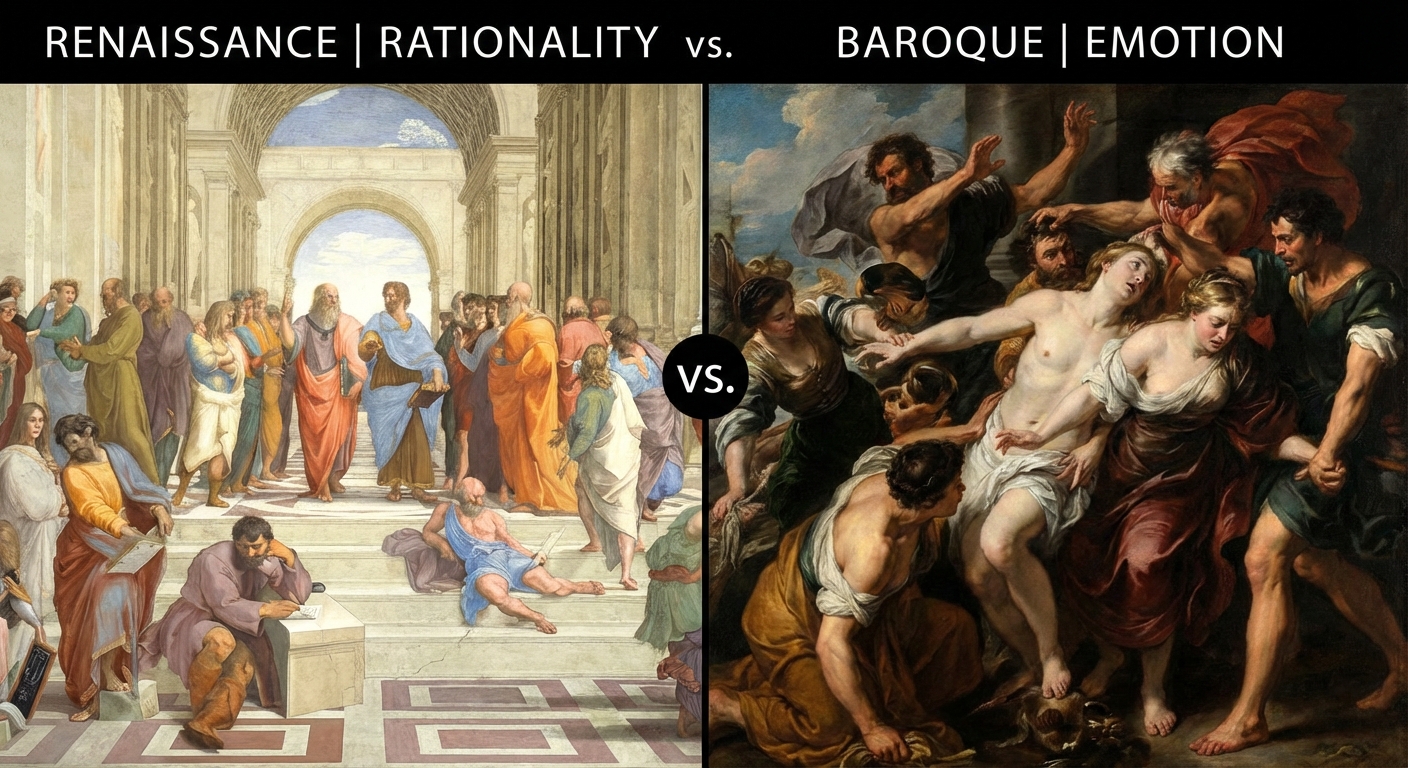
Mannerism and Baroque Art
Art was used as a weapon in the religious wars.
Mannerism (Late Renaissance)
- Style: Distorted figures, clashing colors, lack of focal point, anxiety.
- Meaning: Reflected the turmoil and chaos of the Reformation era.
- Artist: El Greco.
Baroque (The Art of the Counter-Reformation)
- Style: Dramatic use of light/dark (Tenebrism), motion, emotion, grandeur, and awe.
- Purpose: The Catholic Church used Baroque art to overwhelm the viewer and inspire awe in the Church's power (propaganda).
- Artists: Bernini (Ecstasy of St. Teresa), Caravaggio, Rubens.
Common Mistakes & Pitfalls
- Luther vs. Social Justice: Students often think Luther supported the peasants. He did not. He believed in spiritual equality, not political equality.
- Anglicanism: Do not confuse Henry VIII's break (political/dynastic) with the later theological changes under Elizabeth I.
- The 30 Years' War: Remember the shift. It started about religion (Bohemia) but ended about politics (France trying to weaken the Habsburgs).
- Individualism: The Reformation promoted individualism in reading the bible, but not religious toleration (initially). Luther and Calvin were just as intolerant of "heresy" as the Pope.
- Edict of Nantes vs. Westphalia: Nantes (1598) was internal French toleration. Westphalia (1648) was an international treaty ending valid religious wars.