AP Environmental Science Unit 7.5: Understanding Indoor Air Quality
Classification of Indoor Air Pollutants
Unlike outdoor atmospheric pollution, which is regulated broadly by laws like the Clean Air Act, Indoor Air Pollution is largely unregulated and often poses a more immediate health risk to individuals. According to the EPA, indoor air levels of many pollutants may be 2-5 times (and occasionally more than 100 times) higher than outdoor levels.
We generally categorize indoor pollutants based on their origin and the economic status of the country in question.
Developed vs. Developing Countries
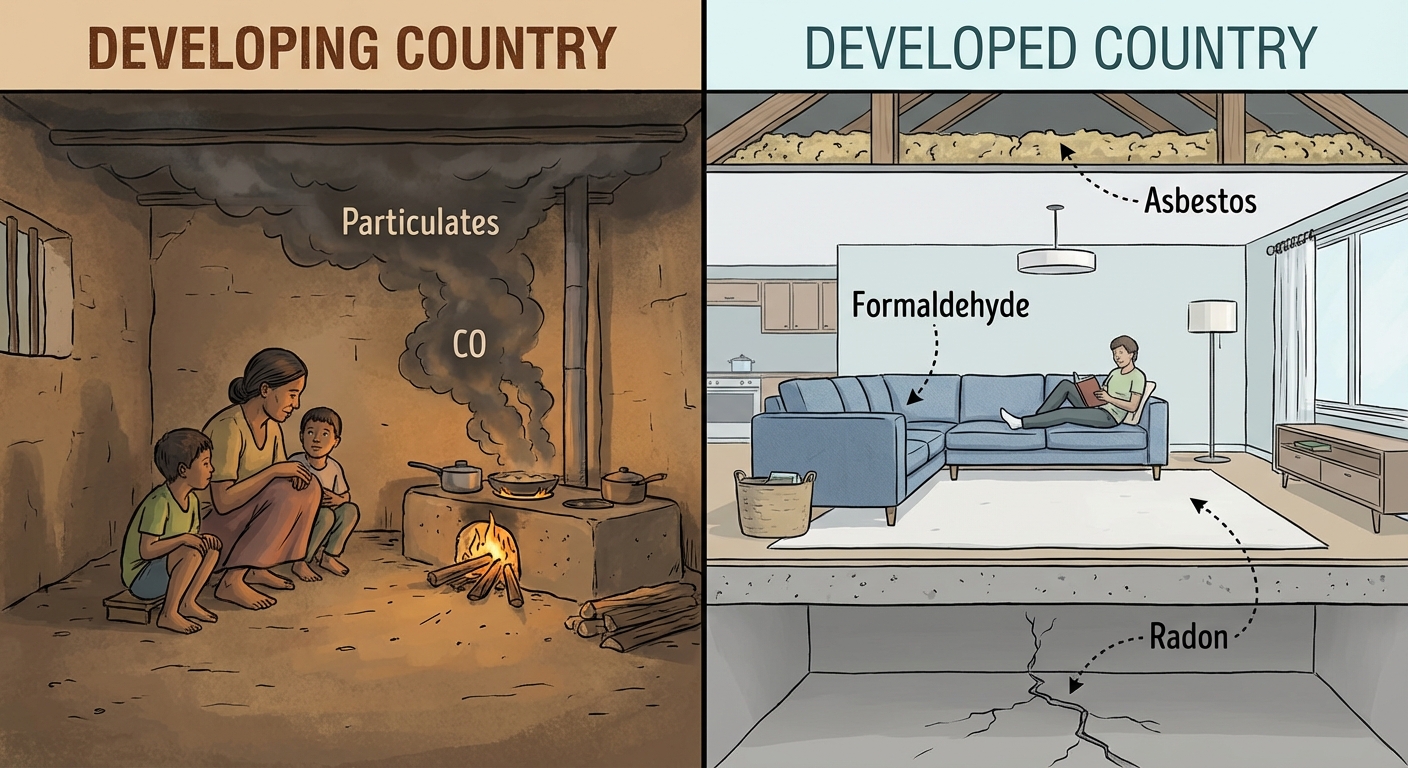
The sources of indoor air pollution vary drastically based on economic development:
- Developing Countries: The primary source is the indoor burning of biomass (wood, animal dung, crop waste) and coal for heating and cooking. Because these homes often lack proper ventilation or chimneys, residents are exposed to high concentrations of Particulate Matter (PM), Carbon Monoxide (CO), and Volatile Organic Compounds (VOCs).
- Developed Countries: The primary sources are man-made materials, chemical products, and tight building insulation. Better insulation keeps heat in but also traps pollutants like radon, manufactured VOCs, and allergens.
Specific Indoor Pollutants & Sources
1. Carbon Monoxide (CO)
Carbon Monoxide represents one of the most dangerous acute indoor threats due to its undetectable nature.
- Definition: A colorless, odorless gas that results from incomplete combustion of carbon-based fuels.
- Sources: Malfunctioning exhaust systems on furnaces, unvented gas space heaters, wood stoves, and car exhaust from attached garages.
- Health Effect: CO is an asphyxiant. It binds to hemoglobin in red blood cells more strongly than oxygen does, preventing oxygen transport to the brain and heart. At low levels, it causes headaches and nausea; at high levels, it is fatal.
2. Particulates (PM) and Asbestos
Particulate Matter includes dust, smoke, and pollen. However, a specific particulate of concern in APES is Asbestos.
- Definition: A long, thin, fibrous silicate mineral with insulating properties.
- Source: Used historically (pre-1980s in the US) in pipe insulation, vinyl ceiling tiles, and shingles.
- Health Effect: When disturbed, the fibers become airborne. If inhaled, they scar lung tissue, leading to Asbestosis or a specific cancer of the lung lining called Mesothelioma.
3. Radon-222
Radon is a critical topic for the AP exam. It involves nuclear decay chains occurring naturally in the soil.
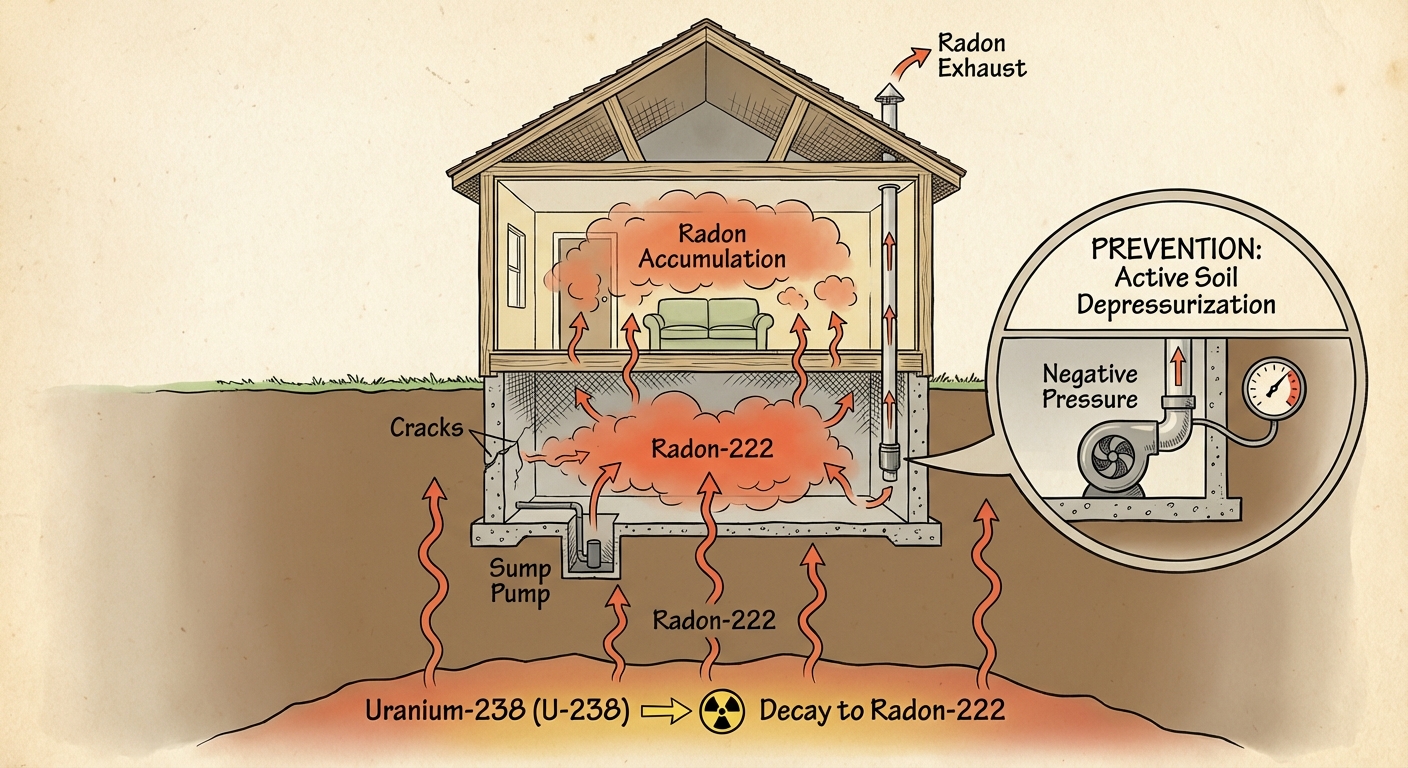
- Definition: A colorless, odorless, radioactive gas that is a decay product of Uranium-238 found in rocks and soil.
- Mechanism of Entry: Radon gas seeps up through the soil and enters homes through cracks in the foundation, basement walls, or gaps around sump pumps. It can also be dissolved in groundwater and enter via well water.
- Health Effect: Radon decays into radioactive daughter elements (like Polonium) that attach to dust and are inhaled. It is the second leading cause of lung cancer in the US, after smoking.
- Remediation: Sealing cracks in the foundation and installing a ventilation system that pulls air from under the house and vents it above the roofline.
4. Volatile Organic Compounds (VOCs)
VOCs are carbon-based chemicals that evaporate (sublimate) easily at room temperature.
- Formaldehyde: This is the most frequently tested VOC in APES.
- Source: Binding agents (glues) in furniture, particleboard, plywood, and upholstery. Also found in carpeting.
- Health Effect: Respiratory irritation, watery eyes, nausea; acknowledged as a human carcinogen.
- Other VOC Sources: Cleaners, solvents, paints, varnishes, and air fresheners.
5. Lead
- Source: Old paint (pre-1978) chipping off walls; lead-contaminated dust.
- Health Effect: Potent neurotoxin. It impairs the central nervous system, causing developmental delays, learning disabilities, and lower IQ, particularly in children.
6. Biological Pollutants
- Examples: Mold, mildew, pollen, dust mites, pet dander.
- Source: High humidity, water leaks, damp basements, or poor ventilation.
- Health Effect: Allergic reactions, asthma attacks, sneezing, and coughing.
Sick Building Syndrome
Modern construction emphasizes energy efficiency, which often means sealing buildings tightly to prevent heat loss. A side effect of this is Sick Building Syndrome (SBS).
Definition: A condition where building occupants experience acute health effects (headaches, dizziness, nausea, eye irritation) that appear to be linked to time spent in a building, but no specific illness or cause can be identified.
Key factors contributing to SBS:
- Inadequate Ventilation: Not enough exchange with fresh outdoor air.
- Chemical Contaminants: High concentrations of VOCs or ozone primarily from office equipment and new furniture.
- Biological Contaminants: Mold in HVAC systems.
Summary Table: Pollutants and Remediation
| Pollutant | Key Source | Primary Health Impact | Remediation/Prevention |
|---|---|---|---|
| Carbon Monoxide | Malfunctioning furnace, gas heater | Asphyxiation (binds to hemoglobin) | CO detectors, HVAC maintenance |
| Radon-222 | Uranium decay in soil | Lung Cancer | Seal foundation, install vent system |
| Formaldehyde (VOC) | Furniture, carpeting, glues | Eye/throat irritation, cancer | Better ventilation, low-VOC products |
| Asbestos | Old insulation, ceiling tiles | Mesothelioma, Lung scarring | Encapsulation or professional removal |
| Lead | Old paint (chipping) | Neurotoxin (Brain damage) | Paint removal, wet sanding |
Common Mistakes & Pitfalls
Confusing CO and CO$_2$:
- Mistake: Thinking Carbon Dioxide (CO$_2$) causes indoor poisoning.
- Correction: Carbon Monoxide (CO) is the toxic asphyxiant. CO$_2$ is not toxic at typical indoor levels; it is an asphyxiant only at extremely high concentrations where it displaces oxygen physically, but CO chemically binds to blood.
Radon Source Misconception:
- Mistake: Thinking Radon comes from human activities or nuclear power plants.
- Correction: Radon-222 is a naturally occurring radioactive gas derived from the decay of Uranium in the bedrock/soil beneath a house.
The "New Car Smell":
- Mistake: Thinking the smell of new carpet or cars is clean.
- Correction: That smell is actually the off-gassing of VOCs (usually formaldehyde and other industrial chemicals), which are pollutants.
Asbestos Remediation:
- Mistake: Assuming you should always rip out asbestos immediately.
- Correction: Removing asbestos can make it more dangerous by releasing fibers into the air. If the material is intact, encapsulation (sealing it so fibers cannot escape) is often safer than removal.