Mastering the Argument: AP English Language Unit 6 Study Guide
Introduction to Unit 6
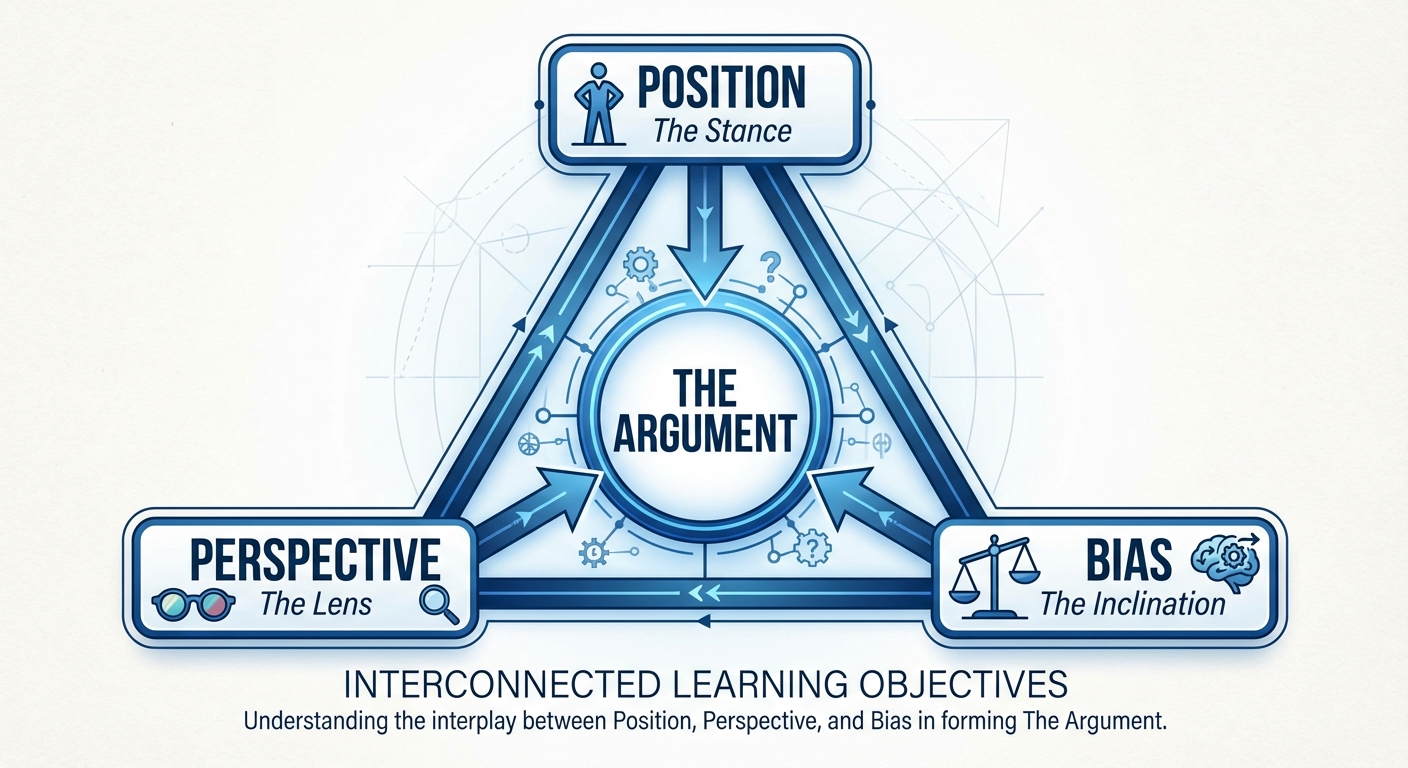
In AP English Language and Composition, Unit 6 marks a pivotal transition. By now, you understand how to analyze a single text (Rhetorical Analysis) and how to structure a basic argument. Unit 6, titled Position, Perspective, and Bias, focuses heavily on Synthesis: the ability to look at multiple viewpoints, place them in conversation with one another, and establish your own nuanced position within that landscape.
This unit asks you to move beyond simple binary (Yes/No) arguments and engage with the complexity of real-world discourse. You will learn to identify why authors think the way they do (Perspective), detect the resulting inclinations in their writing (Bias), and formulate a sophisticated stance of your own (Position).
I. Position: Taking a Nuanced Stance
A. Defining Position
In the context of the AP exam, a Position is not just an opinion; it is a reasoned, debatable stance on an issue that can be supported by evidence. It is the ‘What’ of the argument—the central claim the author is asserting.
When writing the Synthesis (Q1) or Argument (Q3) essays, taking a position is mandatory. However, the highest scores are reserved for students who move beyond simplistic assertions.
B. The Qualified Thesis
Unit 6 emphasizes Qualification. A qualified argument acknowledges the limitations of a claim or the validity of opposing views while still maintaining a clear stance. This is often achieved using a Counterargument Thesis.
The Thesis Formula
To ensure complexity, consider using this structural approach:
Example:
- Weak Position: Schools should not use tablets because they distract students. (Too simple, easily rebutted).
- Qualified Position (Unit 6 Level): While tablets offer unparalleled access to information and interactive learning tools (Concession), schools should strictly limit their use in primary education (Claim) because distinct cognitive disadvantages arise when screen time replaces tactile, social play (Rationale).
C. Analyzing an Author's Position (Rhetorical Analysis)
When reading a text for Q2 (Rhetorical Analysis), do not confuse the topic with the position.
- Topic: The subject matter (e.g., Space Exploration).
- Position: The specific argument made about the topic (e.g., Space exploration is a waste of resources until domestic poverty is solved).
Key Strategy: Look for the Thesis Statement in the introduction or conclusion, but also track how the position evolves. Does the author pivot? Do they offer a solution?
II. Perspective: The Lens of the Arguer
A. What is Perspective?
If Position is the "What," Perspective is the "Where." It refers to the specific vantage point, background, or "lens" through which an author views a subject. No text is created in a vacuum; every writer is influenced by their identity, profession, era, and geography.
The Lens Analogy: Imagine five people looking at a forest. A logger sees board-feet of timber. An environmentalist sees a carbon sink. An artist sees light and shadow. A developer sees real estate. They are looking at the same facts, but their perspective dictates their position.

B. Sources of Perspective
When analyzing a text (or choosing sources for Synthesis), consider the Rhetorical Situation to determine perspective:
| Element | Question to Ask | Example Impact |
|---|---|---|
| Background | Does the author have personal experience with the topic? | A soldier writing about war vs. a politician writing about war. |
| Affiliation | Who pays the author? Who are they representing? | A scientist funded by an oil company vs. an independent university researcher. |
| Audience | Who are they trying to please or persuade? | A speech to a graduating class vs. a memo to shareholders. |
| Time/Context | When was this written? | A text on civil rights written in 1950 vs. 2020. |
C. Perspective in Synthesis (The Conversation)
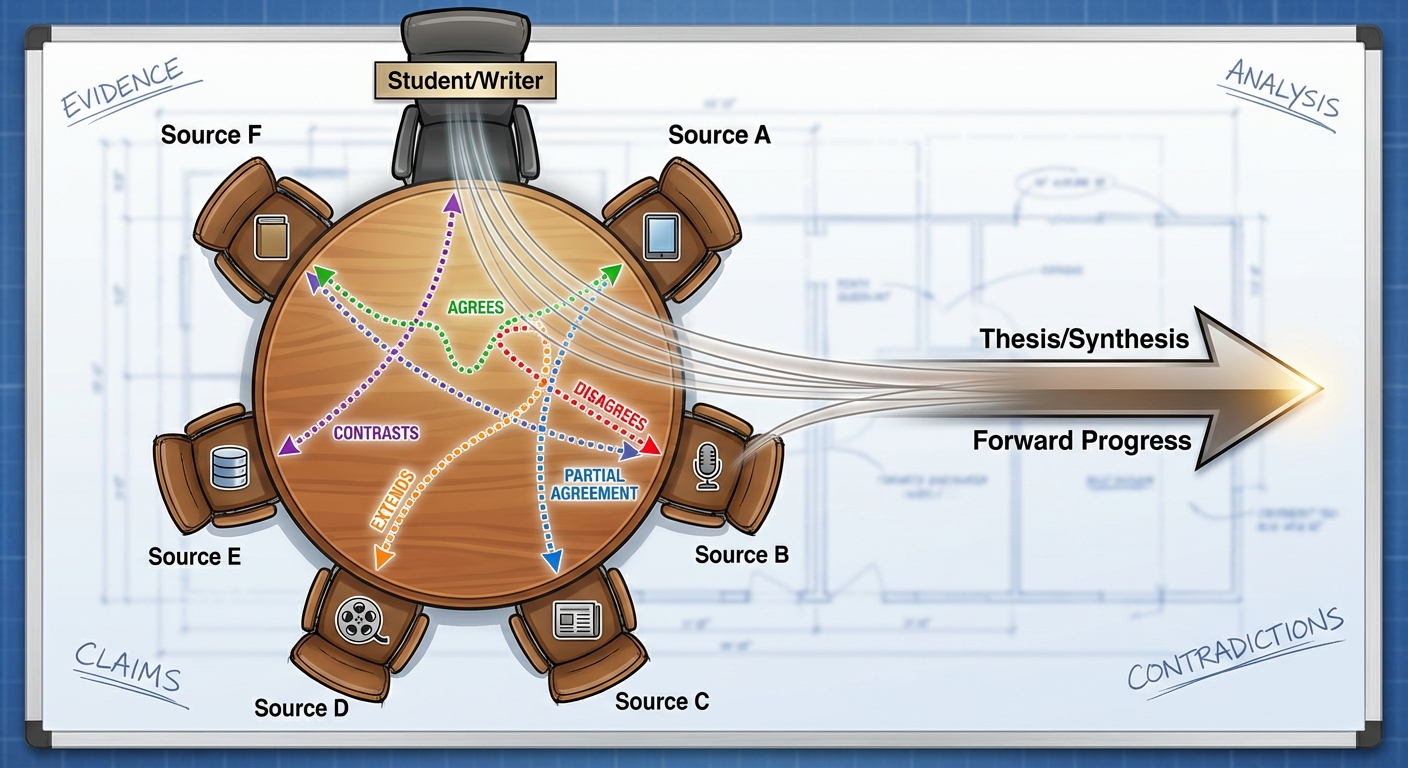
In the Synthesis essay, you are provided with 6-7 sources. To score well in Row B (Evidence & Commentary), you must refrain from merely summarizing these sources. Instead, you must analyze their perspectives.
How to use Perspective in your essay:
- Corroboration: "Source A and Source C, both written by educators, agree that…"
- Contradiction: "While Source B argues for economic growth, Source D views the issue through an environmental lens, revealing the hidden costs of that growth."
- Qualification: "Source E's argument is valid, but it is limited by its perspective as a corporate press release, heavily emphasizing profit over safety."
III. Bias: Inclination vs. Prejudice
A. Defining Bias
Bias is a tendency or inclination toward a specific conclusion. In widespread culture, "bias" is often used as a negative term (synonymous with "unfair opinion"). However, in AP Lang, bias is neutral and inevitable until it distorts validity.
- Constructive Bias: An inclination based on expertise. (e.g., A doctor has a bias toward saving lives; this is expected and good).
- Destructive (Prejudicial) Bias: An inclination that ignores evidence to favor a pre-conceived notion.
B. Recognizing Bias in Sources
When you read the sources provided in the Synthesis prompt, you must evaluate their Credibility based on bias.
Check the Italicized Blurb: The College Board always provides a citation block at the top of the source. Read it first! It often reveals the bias.
- Example: "The following is an op-ed from a conservative think-tank…"
Look for Emotional Loading: Does the author use words with strong positive or negative connotations (e.g., "bureaucratic nightmare" vs. "public service")?
C. Handling Bias in Your Own Writing
Students often think they must remain perfectly neutral. This is false. You are supposed to take a position. However, you must avoid Confirmation Bias (ignoring evidence that contradicts you).
To minimize the appearance of unfair bias:
- Concede Valid Points: acknowledge where the other side is right.
- Monitor Tone: Avoid inflammatory language.
- Broaden Context: Show that you have considered multiple perspectives before landing on your own.
IV. Strategic Source Integration (The Unit 6 Skill)
Unit 6 is the final "skill" unit before pulling everything together. The primary objective here is mastering the Conversation of the Synthesis essay.
A. Entering the Conversation
Imagine a dinner party where people are arguing about a topic. You don't just walk in and shout your opinion, nor do you just take minutes of what everyone else said. You listen, evaluate who is credible, find a gap in the argument, and then speak.
B. Three Ways to Engage with Sources
When writing your essay, use sources in these specific ways:
- Source as Ally: Use a source to support your claim.
- "As Source B illustrates, the economic impact is negligible…"
- Source as Counter: Use a source to represent the view you will debunk.
- "Proponents of the measure, such as the author of Source C, argue that cost is the primary factor; however, this perspective ignores the long-term social value…"
- Source as Pivot: Use a source to introduce a nuance or a new definition.
- "Source F provides a crucial distinction between 'public' and 'private' spaces that fundamentally changes how we should interpret these laws."
V. Tone and Voice
Your Tone is the vocal quality of your writing, and it is the direct output of your perspective and bias.
- Formal/Academic Tone: Increases credibility. Avoids slang, contractions, and hyperbole.
- Determining Author Tone: When analyzing a text, look for shifts. An author might start didactic (teaching) and become indignant (angry) as their argument builds.
Unit 6 Tip: If you can identify the shift in tone, you have usually identified the core of the author’s complex argument.
Common Mistakes & Pitfalls
The "Summary Trap": In the Synthesis essay, many students write one paragraph for Source A, one for Source B, etc. Correction: Organize by argument, not by source. Use sources A and B together in the same paragraph to show they are part of the same conversation.
Confusing Bias with Lying: Students often write, " This source is biased, so it is untrustworthy." Correction: Everyone has bias. Instead, ask: "How does this author's specific bias shape the way they present the data?" Evaluate the limitation caused by the bias, not just the existence of it.
The "Straw Man" Fallacy: When developing a position, students sometimes oversimplify the opposing view to make it easier to attack. Correction: Present the counterargument in its strongest, most reasonable form before refuting it to show intellectual maturity.
Neglecting the "So What?": You state a position, but fail to explain why it matters. Correction: Always end your analysis with the implications. Why is this perspective dangerous? Why is this position necessary for progress?