Unit 2: Identity Formation in the Italian Context
Language and Identity (Lingua e Identità)
In the context of AP Italian, understanding the relationship between language and identity requires navigating the complex history of Italy's unification. Unlike many other nations, Italy's linguistic identity is a duality: the national standard and the local dialect.
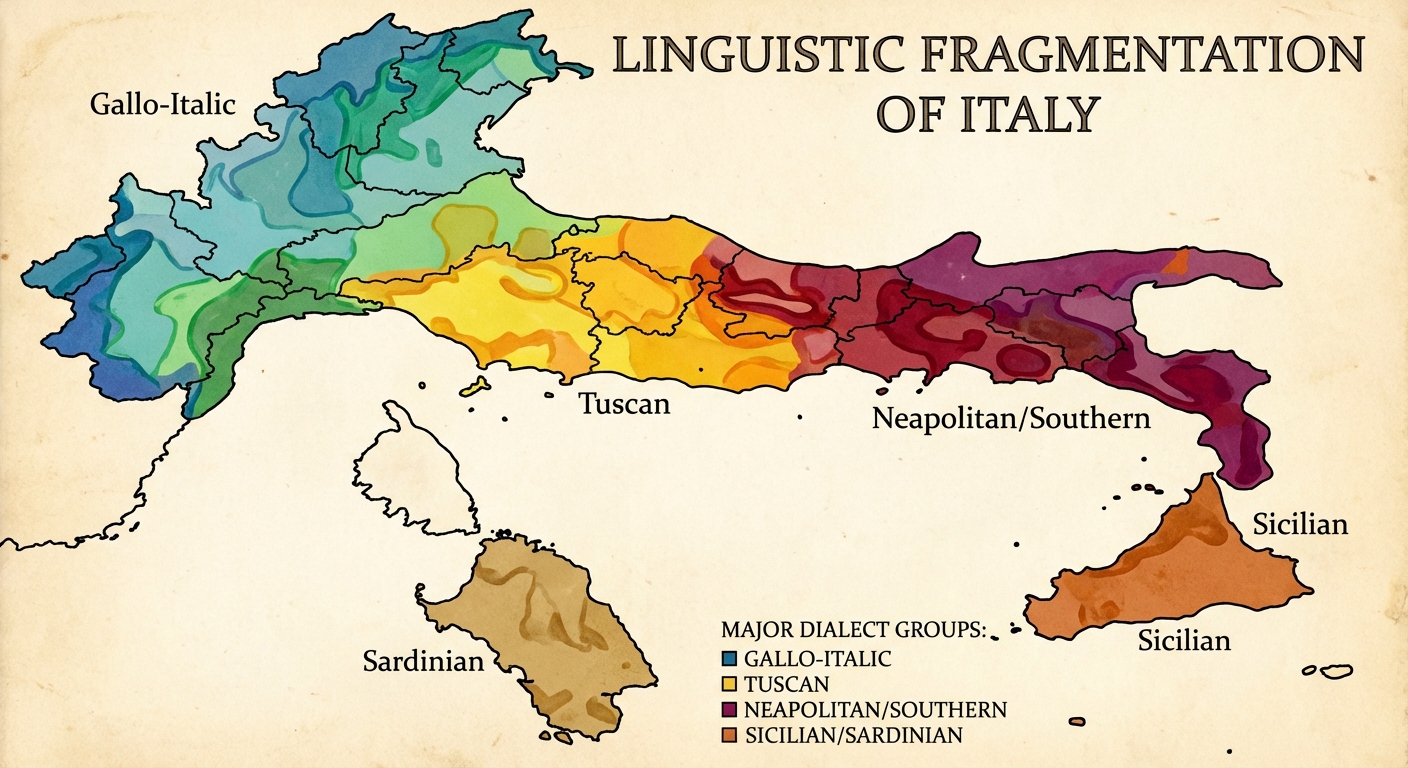
Standard Italian vs. Dialects
Identity in Italy is often rooted in the region or town of origin before the nation. This is best understood through the linguistic landscape.
- L'Italiano Standard (Standard Italian): Based primarily on the 14th-century Tuscan dialect (utilized by Dante, Petrarch, and Boccaccio). It is the language of school, media, and politics. It unifies the national identity.
- I Dialetti (Dialects): These are not corruptions of Italian or "bad grammar." They are distinct languages that evolved directly from Latin alongside Tuscan. For many Italians, the dialect is the language of emotion, family, and local identity.
- Diglossia: A sociolinguistic situation where two languages are used under different conditions within a community. An Italian might use Standard Italian at work (High status) and Neapolitan or Venetian at home (Low status).
- Italiano Regionale: A variety of standard Italian spoken in a specific area that retains the cadence (intonation) and some vocabulary of the local dialect, without actually being the dialect.
Campanilismo
One of the most critical concepts for understanding Italian identity is Campanilismo.
- Definition: Derived from campanile (bell tower), it refers to a strong attachment to one's local town or city over the nation. The idea is that your identity extends only as far as you can hear the local church bells ringing.
- Impact on Identity: This fostering of local pride creates a fragmented national identity but a very strong local community culture.
Cultural Beliefs and Values (Credenze e Valori)
Italian identity is heavily influenced by deep-seated values regarding social structure, geography, and lifestyle.
The North-South Divide (La Questione Meridionale)
Identity differs significantly depending on geography. This dualism is essential for the Cultural Comparison task.
| Feature | Northern Identity (Il Nord) | Southern Identity (Il Sud) |
|---|---|---|
| Economy | Industrial, fast-paced, wealthier. | Agricultural, tourism-based, higher unemployment. |
| Social Structure | More individualistic, nuclear families. | More traditional, extended families (la famiglia allargata). |
| Stereotypes | Efficient but cold (freddi). | Warm/welcoming (accoglienti) but disorganized. |
The Role of the Family (La Famiglia)
While the definition of family is changing, it remains the central pillar of Italian social life.
- Mammismo: A term (sometimes derogatory) referring to the close bond between Italian sons and their mothers, often leading to men living at home well into their 30s.
- Demographic Crisis: Italy has one of the lowest birth rates (denatalità) in the world. This aging population impacts the national identity, shifting focus to preserving pensions and healthcare rather than youth culture.
- Transformation: The "Traditional Family" is evolving. Civil unions (unioni civili) are recognized, and single-parent households are increasing, though the Church's influence remains visible in traditional values.
Food as Identity
Food in Italy is cultural heritage, not just nutrition.
- Slow Food Movement: Born in Italy to combat fast food and preserve local food traditions (chilometro zero - zero kilometer/locally sourced food).
- DOP and DOC: Labels (Protected Designation of Origin) legally protect the identity of products (like Parmigiano Reggiano). If a cheese isn't made in the specific region using specific methods, it cannot carry the name. This links identity strictly to the territory.
Multiculturalism and Assimilation (Multiculturalismo e Assimilazione)
Italy has transformed from a country of emigrants (paese di emigranti) to a country of immigrants (paese di immigrazione). This shift challenges the traditional definition of "Who is Italian?"
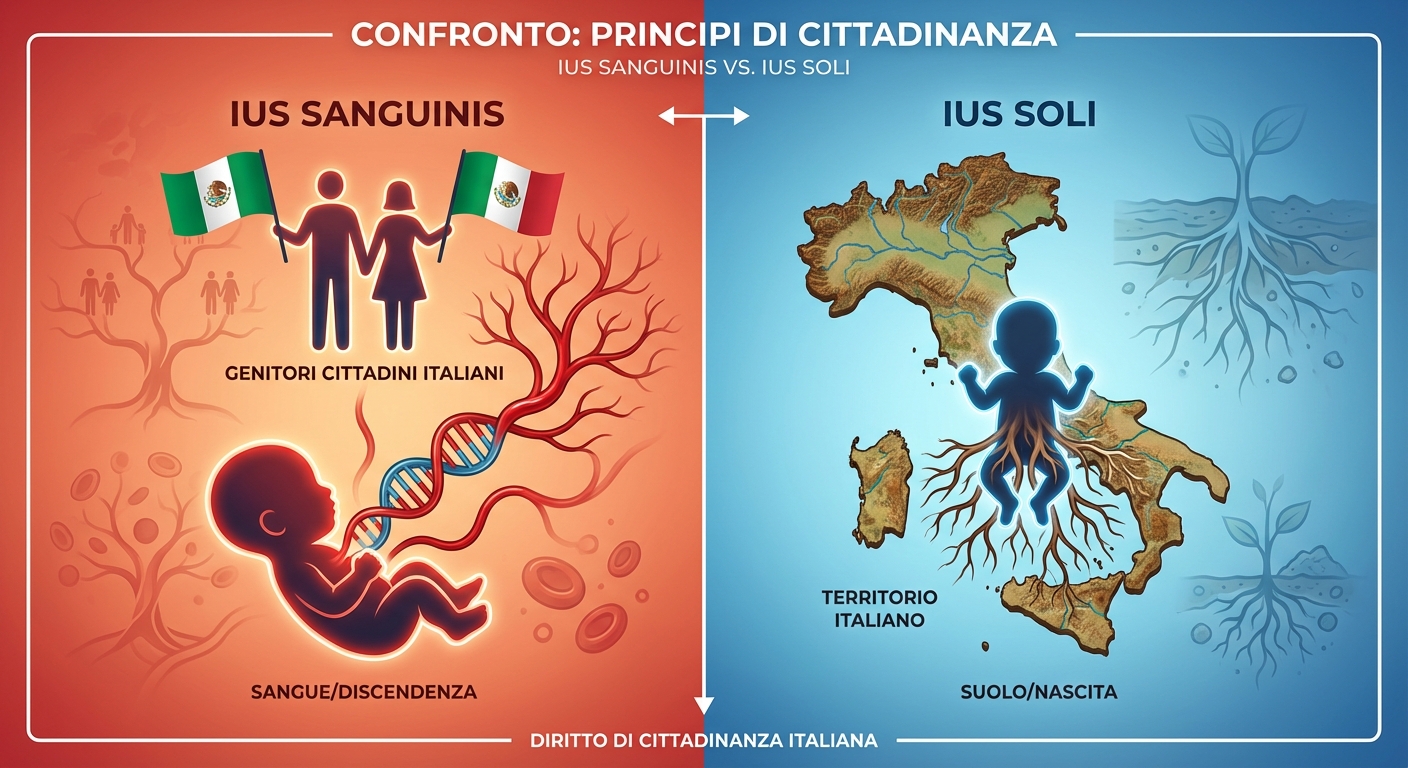
Citizenship: Blood vs. Soil
This is a frequent topic in AP exam sources (articles and audio).
- Ius Sanguinis (Right of Blood): The current basis of Italian citizenship. You are Italian if your parents are Italian. Being born in Italy does not automatically make you a citizen.
- Ius Soli (Right of Soil): A proposed (and controversial) law that would grant citizenship to children born in Italy to foreign parents.
The "New Italians" (I Nuovi Italiani)
- Second Generations (G2): Children born in Italy to immigrant parents. They speak Italian properly (often with local accents), eat Italian food, and feel Italian, but may not legally be citizens until age 18.
- Integration vs. Assimilation:
- Assimilation implies losing one's original culture to become "Italian."
- Integration implies participating in Italian life while maintaining distinct roots.
- Italy struggles with this balance, often debating how to maintain Catholic traditions (like the crucifix in classrooms) in a multicultural society.
Important Vocabulary
- Il pregiudizio: Prejudice.
- Lo stereotipo: Stereotype.
- L'ospitalità: Hospitality (a core value, especially in the South).
- Espatriare: To leave one's country.
- La cittadinanza: Citizenship.
- Il patrimonio culturale: Cultural heritage.
Common Mistakes & Pitfalls
Confusing "Dialetto" with "Accento":
- Mistake: Saying "He speaks with a Sicilian dialect" when you mean "He speaks Italian with a Sicilian accent."
- Correction: An accent is a pronunciation style of Standard Italian. A dialect is a completely different vocabulary and grammar structure.
Overgeneralizing Religion:
- Mistake: Assuming all Italians are devout Catholics.
- Correction: While Italy is culturally Catholic (holidays, monuments), modern Italian society is increasingly secular (laico).
Comparing Incorrectly:
- Mistake: In the Cultural Comparison, comparing an Italian city (e.g., Rome) to a whole country (e.g., the USA).
- Correction: Compare distinct communities or specific cultural practices (e.g., "Identity in Italian regional cuisine vs. Identity in American 'Melting Pot' cuisine").