Comprehensive Guide to Science and Technology in Italian Society
1. Discoveries and Inventions (Scoperte e Invenzioni)
The Global Impact of Italian Innovation
Science and technology (scienza e tecnologia) are foundational themes in the AP Italian curriculum. Understanding the historical context of Italian ingenuity is crucial for the Cultural Comparison task.
Historical Giants (I Giganti della Storia)
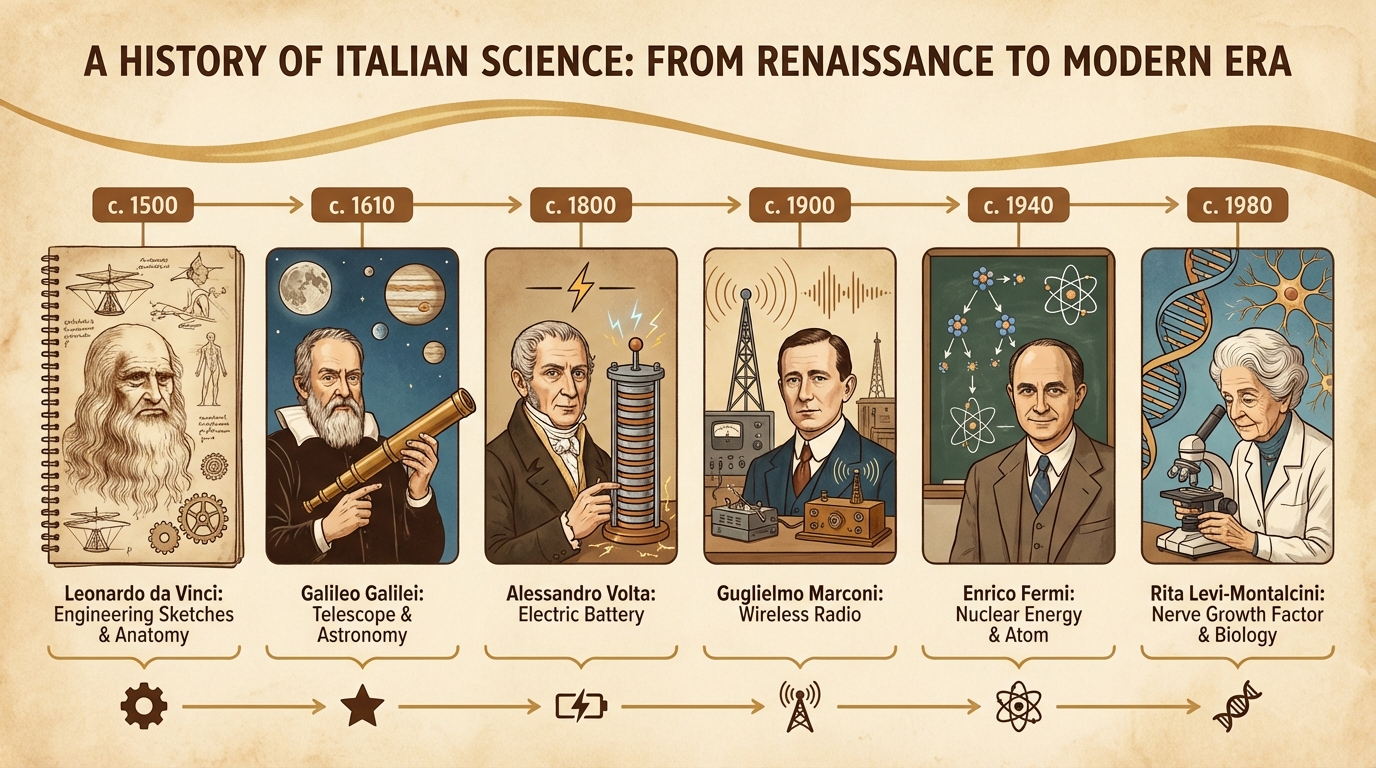
Italy has a long tradition of scientific excellence that fueled the Renaissance and the Enlightenment.
- Leonardo da Vinci: The archetype of the "Renaissance Man." Beyond art, he conceptualized the helicopter (l'elicottero), the parachute (il paracadute), and the tank (il carro armato).
- Galileo Galilei: The father of modern science. He improved the telescope (il telescopio) and championed heliocentrism, clashing with the Church—a key historical example of the conflict between science and ethics/religion.
- Alessandro Volta: Invented the electric battery (la pila). The unit "volt" is named after him.
- Guglielmo Marconi: A pioneer of radio transmission (la radio) and wireless communication, laying the groundwork for modern Wi-Fi and cellular networks.
- Enrico Fermi: Physicist known for the creation of the world's first nuclear reactor (reattore nucleare).
Modern Italian Scientists (Scienziati Moderni)
Do not limit your examples to history. The AP exam appreciates knowledge of contemporary figures.
- Rita Levi-Montalcini: A neurologist who won the Nobel Prize for discovering the Nerve Growth Factor (NGF).
- Fabiola Gianotti: An experimental particle physicist and the first female Director-General of CERN (European Organization for Nuclear Research).
- Federico Faggin: An Italian physicist/engineer instrumental in designing the first commercial microprocessor.
The "Brain Drain" Phenomenon (La Fuga dei Cervelli)
Critical Concept: One of the most significant socio-scientific issues in modern Italy is "La fuga dei cervelli" (The brain drain).
- Definition: Young, highly educated Italians (researchers, doctors, engineers) emigrate abroad (often to the US, UK, or Germany) to find better wages, funding, and meritocracy.
- Causes: Low investment in research (ricerca), nepotism (nepotismo), and precarious contracts in Italian universities.
- Consequences: Italy loses its best talent after paying for their education, slowing down domestic innovation.
2. The Internet and Social Impact (La Rete e l'Impatto Sociale)
The Digital Divide (Il Divario Digitale)
While the internet connects the world, access in Italy is not uniform. This is a perfect topic for comparison with English-speaking communities.
- Generational Gap: A strong divide exists between "Digital Natives" (nativi digitali) and the elderly, who often rely on traditional media (TV/Radio).
- Regional Gap: Northern Italy generally has better broadband infrastructure than rural areas in the South (Mezzogiorno).
Social Media Risks
- Cyberbullismo (Cyberbullying): A growing issue in Italian schools. Italy has introduced laws specifically to combat cyberbullying among minors.
- Le Bufale (Fake News): Misinformation spreading on WhatsApp and Facebook. The term bufala literally means "buffalo" but colloquially means a lie or fake news story.
- Privacy: Europeans are protected by GDPR (General Data Protection Regulation), which offers stricter privacy rights than in the US. Italians are historically very protective of their privacy.
3. Ethics (Scelte Etiche e Morali)
Ethics (l'etica) dictates the boundaries of science. In Italy, ethical debates are deeply influenced by the Catholic Church and cultural tradition.
Bioethics (Bioetica)
- Stem Cells & Cloning: Italy has strict laws regulating embryo research, largely due to religious objections regarding the sanctity of life.
- End of Life: Issues like euthanasia (eutanasia) and assisted suicide are heavily debated political hot-buttons.
Food Technology and GMOs
- OGM (Organismi Geneticamente Modificati): Italy is one of the strictest countries in Europe regarding GMOs.
- Why? To protect the "Made in Italy" brand. Italian culinary culture values genuinità (genuineness) and tradition. The widespread use of GMOs is seen as a threat to biodiversity and the high quality of protected products (DOP/IGP).
4. Health and Medicine (Salute e Medicina)
The Italian Healthcare System (SSN)
Understanding the difference between the Italian and American systems is vital for the exam.
| Feature | Italy (Sistema Sanitario Nazionale - SSN) | United States (Private/Mixed) |
|---|---|---|
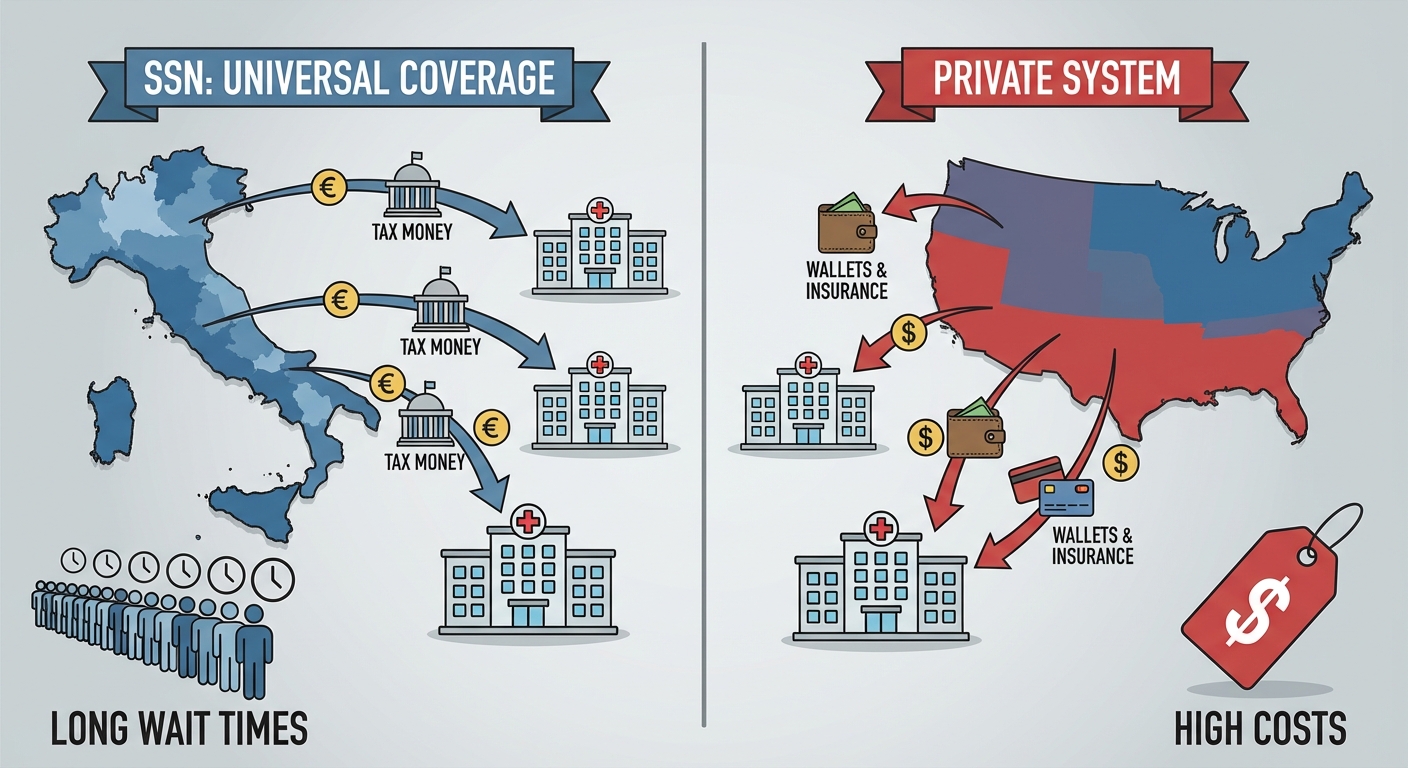
| Access | Universal Coverage: A fundamental right for all citizens (and foreigners in emergencies), free or low cost at the point of service. | Insurance Based: Depends on employment or private purchase (with exceptions like Medicare/Medicaid). |
| Funding | Funded through general taxation (le tasse). | Funded through premiums and private payments. |
| Doctor Choice | Citizens choose a generic "Family Doctor" (medico di base). | Depends on insurance network coverage. |
| Pros | No one goes bankrupt due to medical bills; high life expectancy. | High tech availability; shorter wait times for non-emergencies in private sectors. |
| Cons | Long waiting lists (liste d'attesa) for specialists; regional inequality (North hospitals often better than South). | High cost; inequality of access. |
Current Challenges
- Aging Population (Invecchiamento della popolazione): Italy has the oldest population in Europe. This puts immense strain on the SSN to care for the elderly (anziani).
- Telemedicine (Telemedicina): Gained popularity during COVID-19 to treat patients remotely, though infrastructure issues persist in rural areas.
5. Alternative Resources (Fonti di Energia Alternative)
Italy is resource-poor (little oil or coal) but rich in renewable potential. This drives a strong cultural push for sostenibilità (sustainability).
Renewable Energy Sources (Energie Rinnovabili)
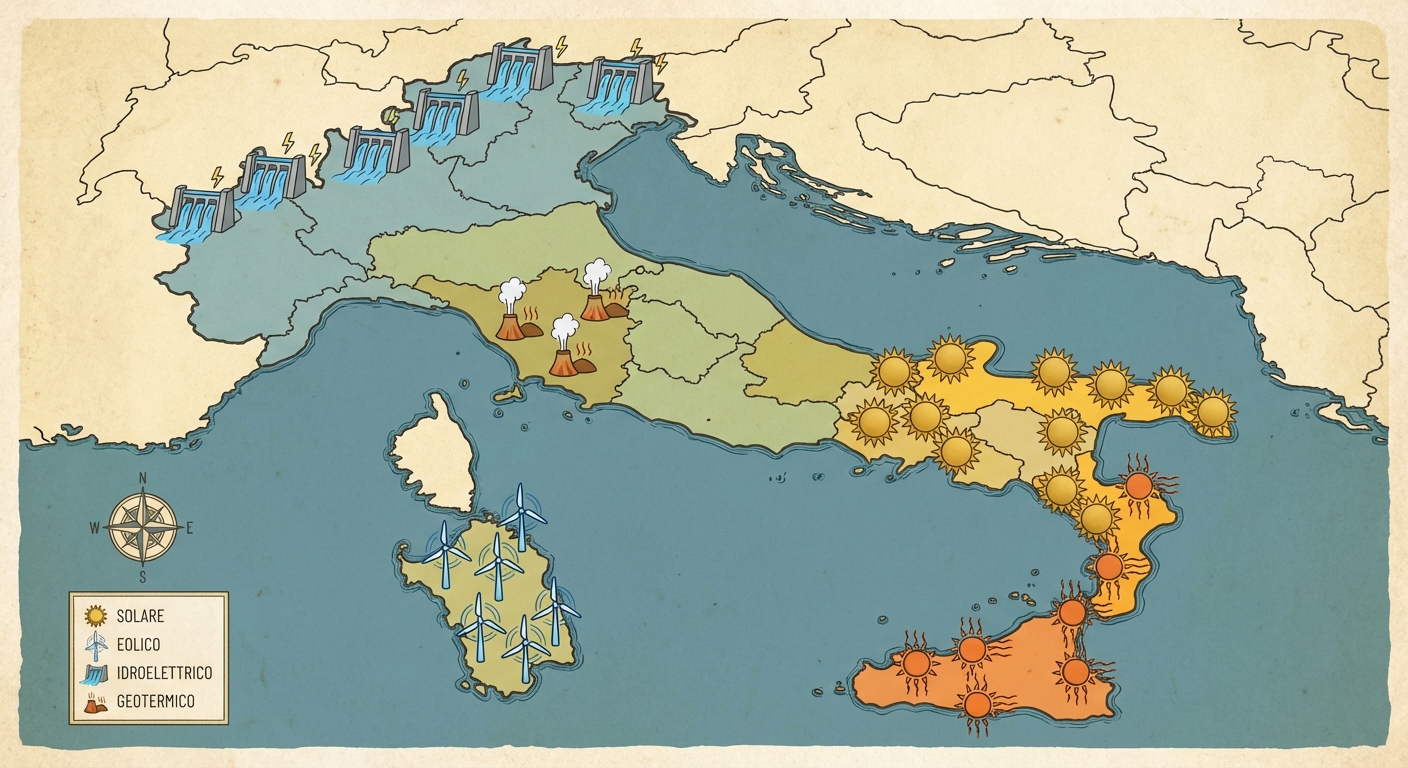
- Solar Energy (Energia Solare):
- Very popular in Southern Italy (Puglia, Sicilia) due to the Mediterranean climate.
- Italy is a top European producer of solar power.
- Geothermal Energy (Energia Geotermica):
- Larderello (Tuscany): The first place in the world to generate electricity from geothermal steam (1904). Italy remains a leader in this technology.
- Hydroelectric (Energia Idroelettrica):
- Concentrated in the North (The Alps), utilizing water from mountains and rivers.
- Wind Energy (Energia Eolica):
- Prevalent on the islands (Sardinia) and coastal ridges.
Eco-Friendly Innovations
- Bioplastics: Italy is a pioneer in creating biodegradable plastics (e.g., Novamont) to combat pollution.
- Renovation Bonus (Ecobonus): The government creates tax incentives for citizens to make their homes more energy-efficient (solar panels, thermal insulation).
6. Common Mistakes & Exam Pitfalls
Language Errors
- False Friend: La fattoria means "farm," NOT "factory." Factory is la fabbrica.
- False Friend: L'educazione usually refers to "upbringing/manners," NOT "schooling." Schooling is l'istruzione.
- False Friend: La camera is a room/bedroom, not a camera. A camera is la macchina fotografica.
- Grammar: When expressing opinions on ethics ("I think it is right that…"), you MUST use the Subjunctive Mood (Congiuntivo).
- Incorrect: Penso che la tecnologia è utile.
- Correct: Penso che la tecnologia sia utile.
Cultural Errors
- Stereotyping: Do not assume Italy is "backward" technologically. While internet speed varies, Italy is a leader in robotics, aerospace, and high-energy physics.
- Healthcare: Do not say "healthcare is free." It is paid for by taxes. The correct phrasing is "free at the point of service."
7. Essential Vocabulary List
General Science
- La scoperta / L'invenzione: Discovery / Invention
- La ricerca scientifica: Scientific research
- Lo scienziato / Il ricercatore: Scientist / Researcher
- Lo sviluppo: Development
- La navicella spaziale: Spaceship
Technology & Internet
- Scaricare / Caricare: To download / To upload
- Il motore di ricerca: Search engine
- La password / La parola d'ordine: Password
- Il telefonino / Il cellulare: Cell phone
- I social network: Social networks
- Il profilo: Profile
Ethics & Medicine
- Le cellule staminali: Stem cells
- La clonazione: Cloning
- I diritti umani: Human rights
- Sperimentare sugli animali: To test on animals
- Il vaccino: Vaccine
- Guarire: To heal/cure
Environment
- Inquinamento: Pollution
- Riscaldamento globale: Global warming
- Riciclaggio: Recycling
- Esauribile vs. Rinnovabile: Exhaustible vs. Renewable
- Le pale eoliche: Wind turbines