Mastering ACT Reading: Craft and Structure
Unlocking Vocabulary in Context
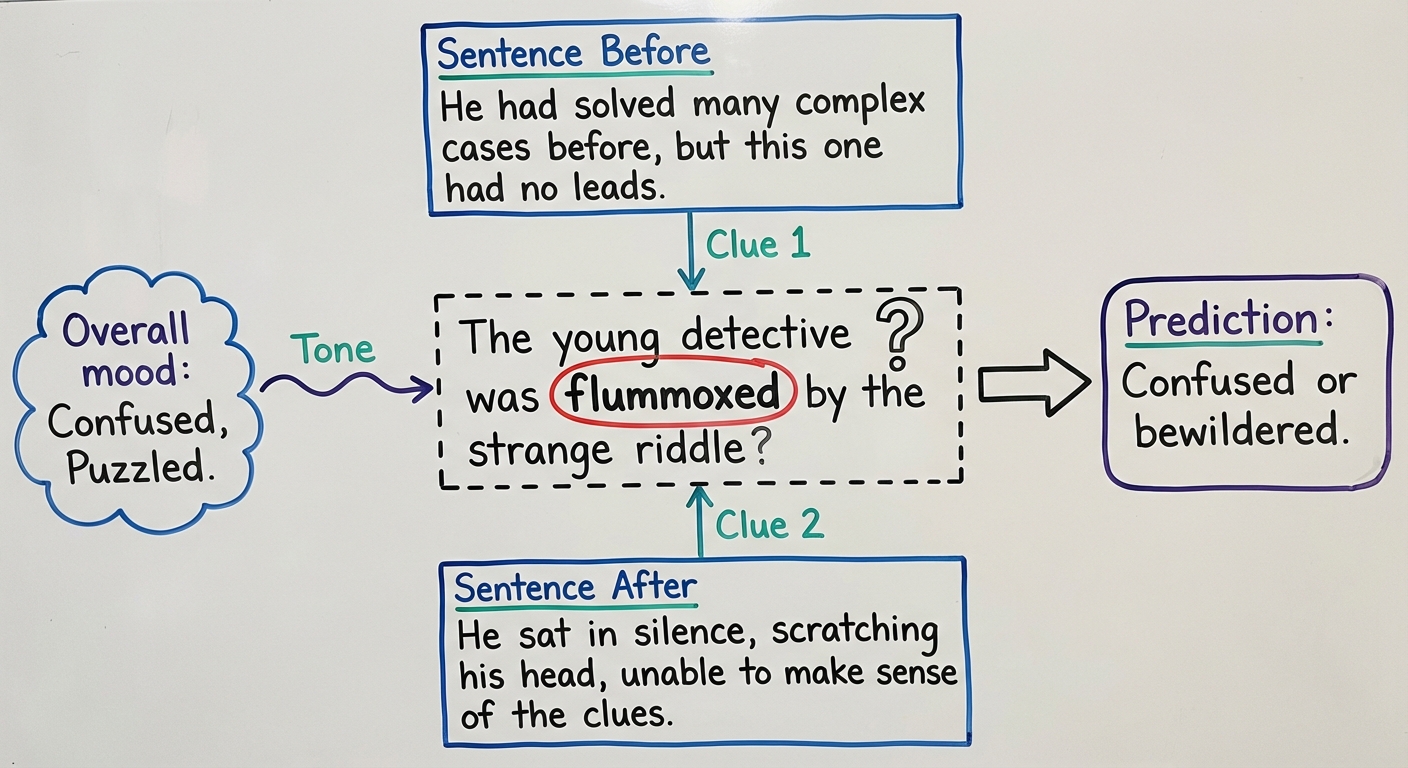
One of the most frequent question types in the ACT Reading section involves Determining Word and Phrase Meanings in Context. Unlike older standardized tests that required memorizing obscure vocabulary, the ACT tests your ability to deduce meaning based on how a word is used in a specific sentence.
The "Plug and Play" Strategy
The most effective way to approach these questions is to treat the word in question as a blank space. Do not look at the answer choices immediately. Instead:
- Read the surrounding sentence keying in on the target word.
- Predict a synonym based on the logic of the sentence.
- Compare your prediction to the answer choices.
Consider the concept equation for context clues:
Common Polysemes (Words with Multiple Meanings)
The ACT frequently traps students by using common words in secondary or tertiary ways. You must ignore the literal or most common definition if the text suggests otherwise.
- Example: "The senator checked his anger during the debate."
- Common Definition: To verify or inspect.
- Contextual Meaning: To hold back or restrain.
Analyzing Author's Word Choice and Rhetoric
Rhetoric refers to the art of effective or persuasive speaking and writing. In the ACT, you will be asked to analyze why an author chose specific words also known as diction and how those choices influence the reader.
Connotation and Tone
Words carry emotional weight. Connotation is the feeling a word evokes, distinct from its literal definition (Denotation).
- Positive Connotation: Youthful, energetic, curious.
- Negative Connotation: Childish, hyperactive, prying.
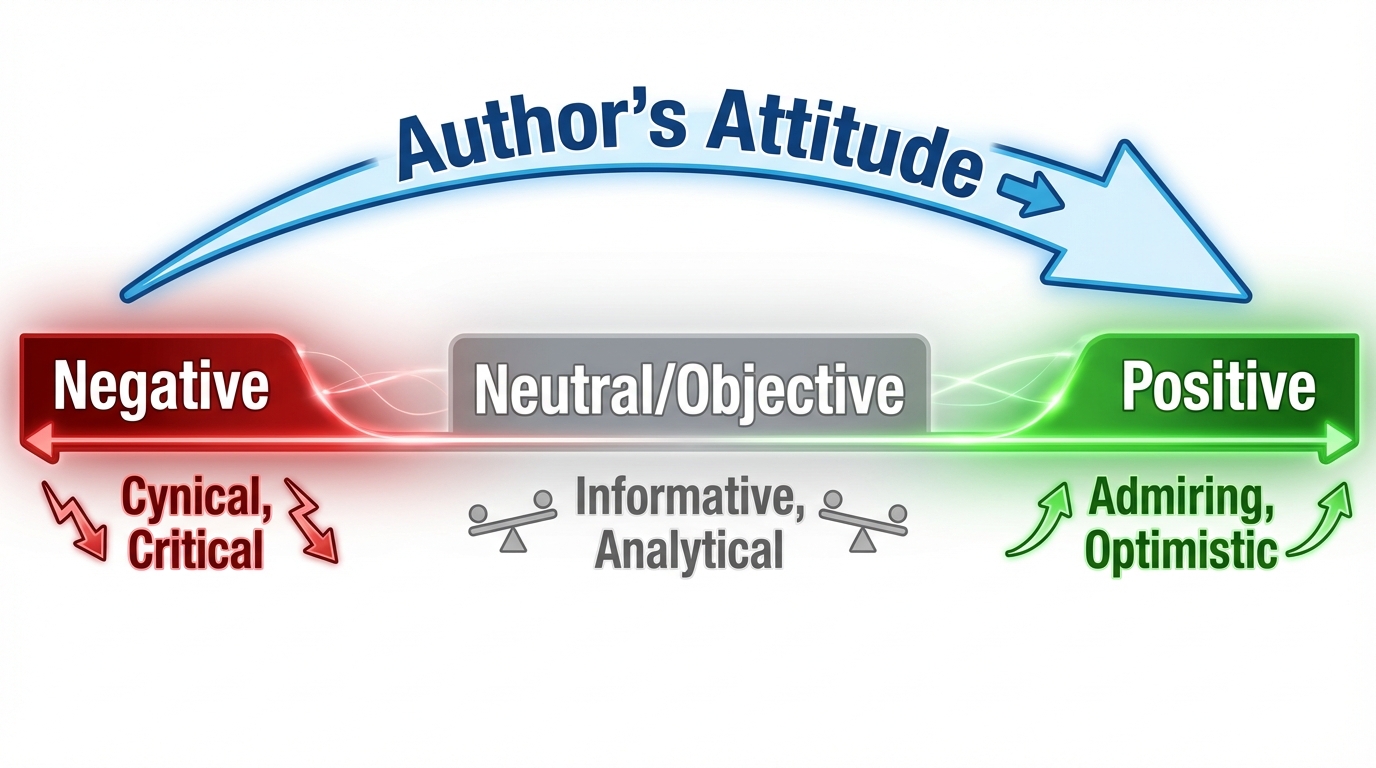
These choices contribute to the Tone, which is the author's attitude toward the subject matter. When analyzing tone, look for adjectives and adverbs that reveal bias.
| Tone Category | Keywords to Look For |
|---|---|
| Objective/Neutral | Data, facts, historical records, lack of "I think" statements. Common in Science passages. |
| Subjective/Biased | Emotional language, strong adjectives (e.g., "disastrous," "magnificent"), rhetorical questions. |
| Nostalgic/Reflective | Memories, "used to," comparison of past vs. present. Common in Literary Narratives. |
Rhetorical Devices
Authors use specific devices to achieve their purpose. You may encounter questions asking the function of a specific phrase:
- Metaphor/Simile: Used to make abstract concepts concrete.
- Hyperbole: Exaggeration used for emphasis or humor.
- Repetition: Used to reinforce a central theme.
Analyzing Text Structure
Text structure refers to how the information within a written text is organized. ACT questions often ask about the function of a paragraph or how the passage shifts focus.
Macro-Structure: The Big Picture
Identify the overall blueprint of the passage. Most ACT passages follow one of these patterns:
- Chronological: Moves through time (common in Biographies and Narratives).
- General to Specific: Starts with a broad concept and zooms in on details/examples.
- Cause and Effect: Explains an event and its consequences.
- Compare and Contrast: Discusses the similarities and differences between two subjects.
Micro-Structure: Paragraph Function
You will see questions like: "The main purpose of the third paragraph is to…"
To solve this, read the first and last sentence of the paragraph. The function is usually providing evidence, offering a counter-argument, or transitioning to a new topic.
Strategy Tip: Look for transition words (e.g., however, although, consequently). These are the road signs indicating structural shifts.
Understanding Author's Purpose and Perspective
While "Key Ideas" asks what the text says, "Craft and Structure" asks why it was written. This is the Author's Purpose.
The Goal of the Passage
Generally, the purpose falls into three categories (PIE):
- Persuade: To convince the reader of an argument (mostly Social Science/Humanities).
- Inform: To teach or explain a complex topic (mostly Natural Science).
- Entertain: To tell a story or describe a character (Literary Narrative).
Distinguishing Topic vs. Purpose
Students often confuse the topic with the purpose.
- Topic: Use of electric cars.
- Purpose: To criticize the lack of infrastructure for electric cars.
Use the formula:
Analyzing Characters' Points of View
In Literary Narrative (Fiction) passages, you must differentiate between the author and the narrator/characters. The author writes the book, but the narrator tells the story.
Narrative POV Types
- First Person: Uses "I/We." The narrator is a participant. Limit: We only know what this character knows/feels.
- Third Person Limited: Uses "He/She." The narrator focuses on one character's thoughts.
- Third Person Omniscient: The narrator knows everything about all characters.
Reliability Check
Is the narrator reliable or unreliable? If a narrator is a child or emotionally unstable, their description of events may be biased or inaccurate. The ACT expects you to pick up on these nuances.
Differentiating Between Perspectives and Sources
In non-fiction passages (Social Science, Humanities, Natural Science), the author often cites other people. You must distinguish between the Author’s Perspective and the Sources they quote.
The "They Say / I Say" Dynamic
- Attribution: Look for phrases like "Critics argue," "Researcher Dr. Smith found," or "Historically believed."
- The Conflict: Does the author agree with the source, or are they citing it to disprove it?
Paired Passages (Passage A vs. Passage B)
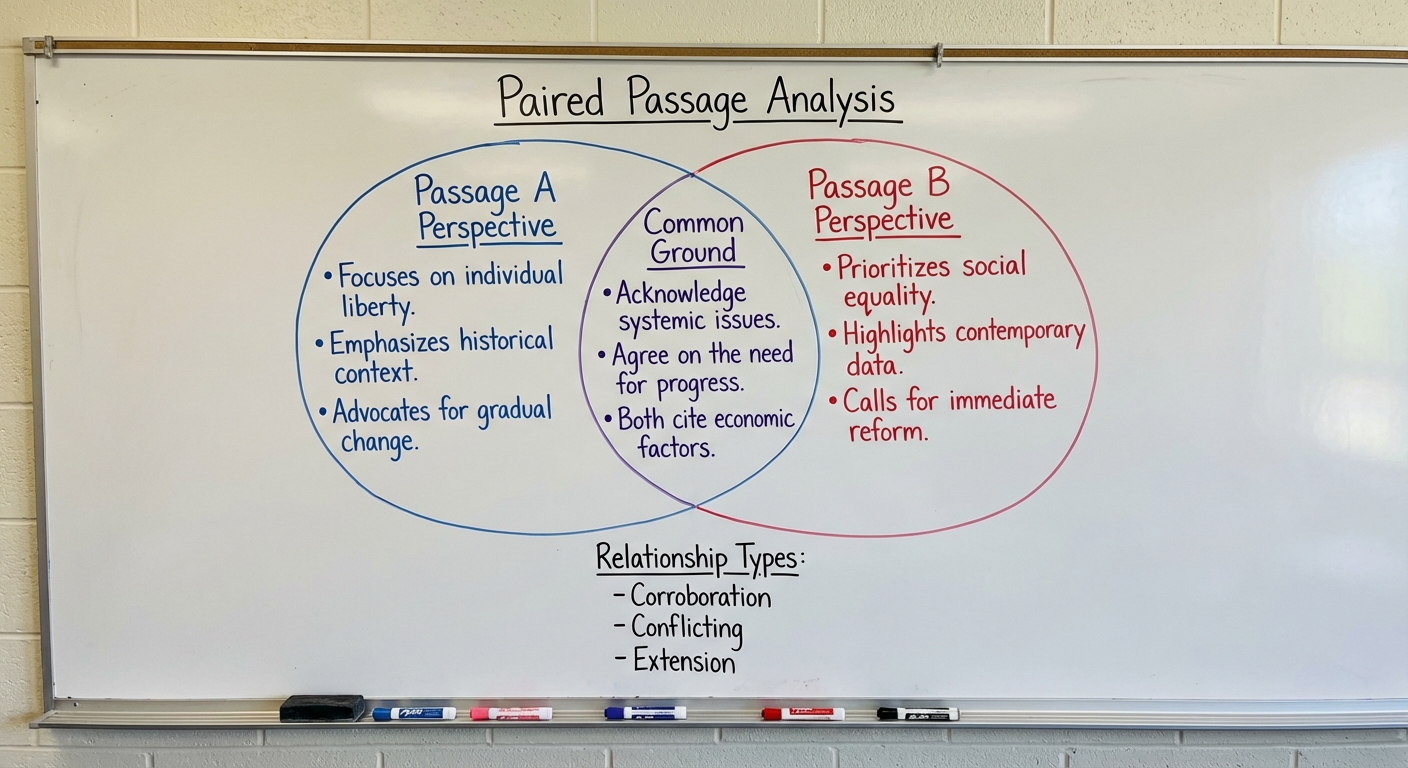
This skill is critical for the Dual Passage sets. You will be asked how the author of Passage A would respond to the author of Passage B.
- Summarize Passage A's thesis.
- Summarize Passage B's thesis.
- Identify the relationship: Do they agree completely, agree on the problem but disagree on the solution, or have totally opposing views?
Common Mistakes & Pitfalls
Throughout the Craft and Structure section, students commonly lose points due to a few recurring errors. Avoid these traps:
- The "dictionary definition" trap: Choosing the primary definition of a word without checking the context context (e.g., assuming "fine" means "good" when the text places it as "a monetary penalty").
- Confusing Facts for Purpose: An answer choice might be a true fact mentioned in the text, but if it doesn't describe why the author wrote the paragraph, it is incorrect as a function/purpose answer.
- Missing the Shift: Failing to notice transition words like "But," "Yet," or "However." These words often signal that the author is pivoting to their actual argument after summarizing an opposing view.
- Projecting Feelings: Assuming the author is "angry" or "joyful" when the text is actually neutral. Stick strictly to the adjectives provided in the text.