Comprehensive Guide to Social Factors Influencing Quality of Life
Education and Career (Ausbildung und Karriere)
In the DACH region (Germany, Austria, Switzerland), the quality of life is heavily influenced by the educational pathway one chooses. Unlike many other countries where a university degree is the primary goal, German-speaking countries value a multi-track system.
The German School System
The German education system separates students at an earlier age based on academic ability and career goals. This structure significantly impacts future career security and lifestyle.
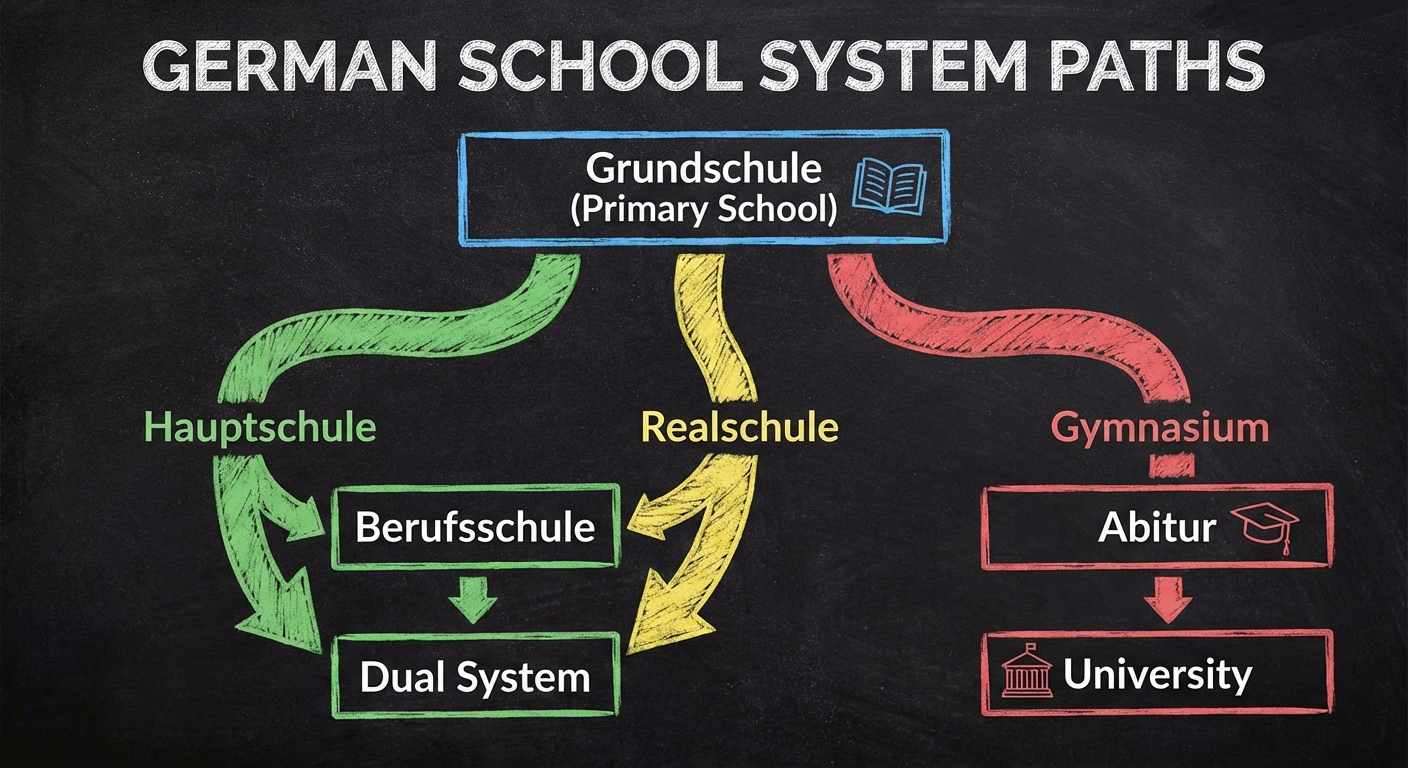
- Grundschule (Primary School): Usually grades 1–4. All children attend together.
- The Three Tracks: After primary school, students are generally sorted into three types of schools (though Gesamtschulen or comprehensive schools merge these):
- Hauptschule: Prepares students for manual trades and apprenticeships.
- Realschule: Prepares students for mid-level white-collar jobs.
- Gymnasium: Academic track preparing students for university. Graduation requires passing the Abitur (a comprehensive exit exam).
The Dual System (Das Duale System)
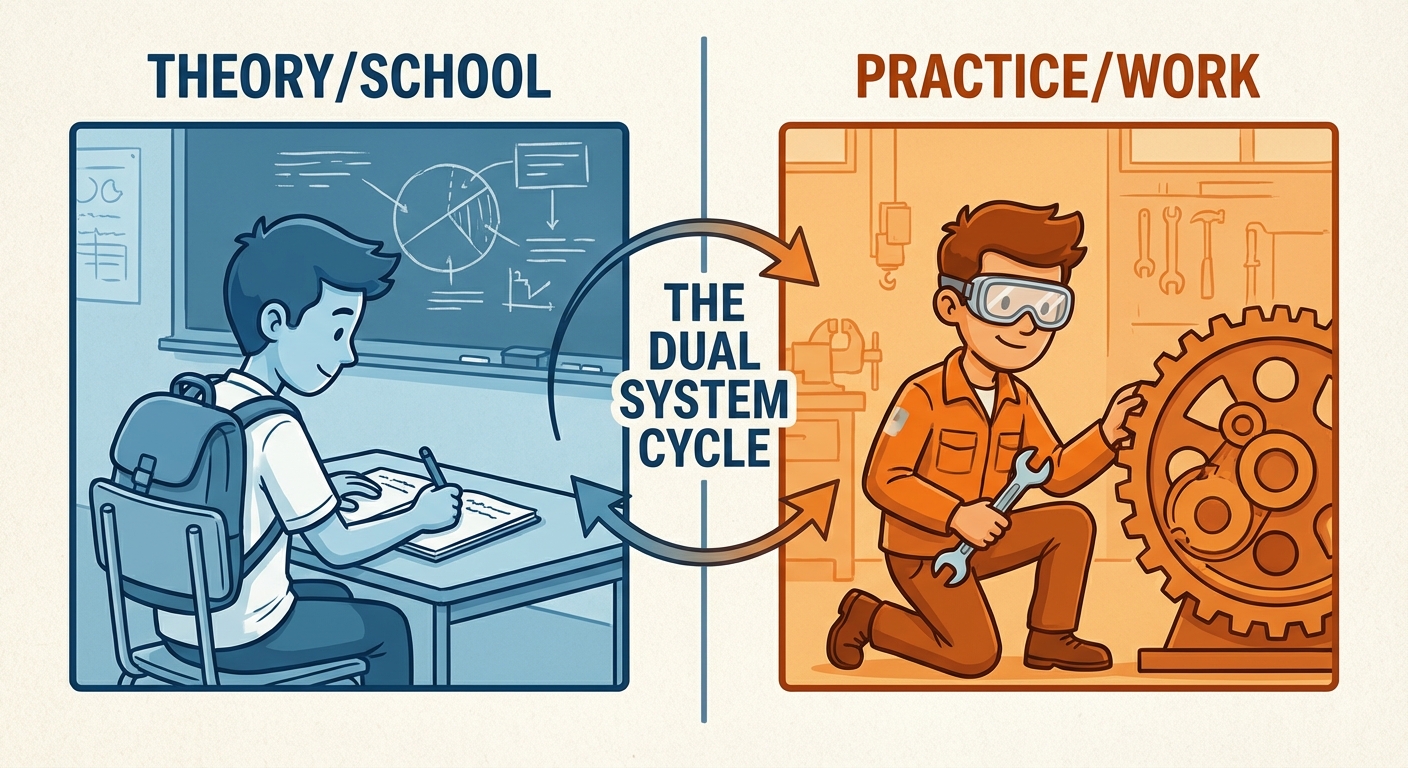
A defining feature of the German economy and quality of life is the Dual Education System. This is a vocational training model that combines classroom learning with on-the-job training.
- Concept: An Azubi (Auszubildende/r - apprentice) spends 1-2 days a week in a vocational school (Berufsschule) and 3-4 days working at a company.
- Benefits:
- Students earn a salary while studying.
- Low youth unemployment rates compared to other EU nations.
- High social respect for tradespeople (mechanics, bakers, bank tellers).
Work-Life Balance and Labor Rights
German-speaking countries are famous for strict distinctions between work and private life.
- Feierabend: Literally "celebration evening," this term refers to the moment the workday ends. It implies a complete mental disconnection from work tasks.
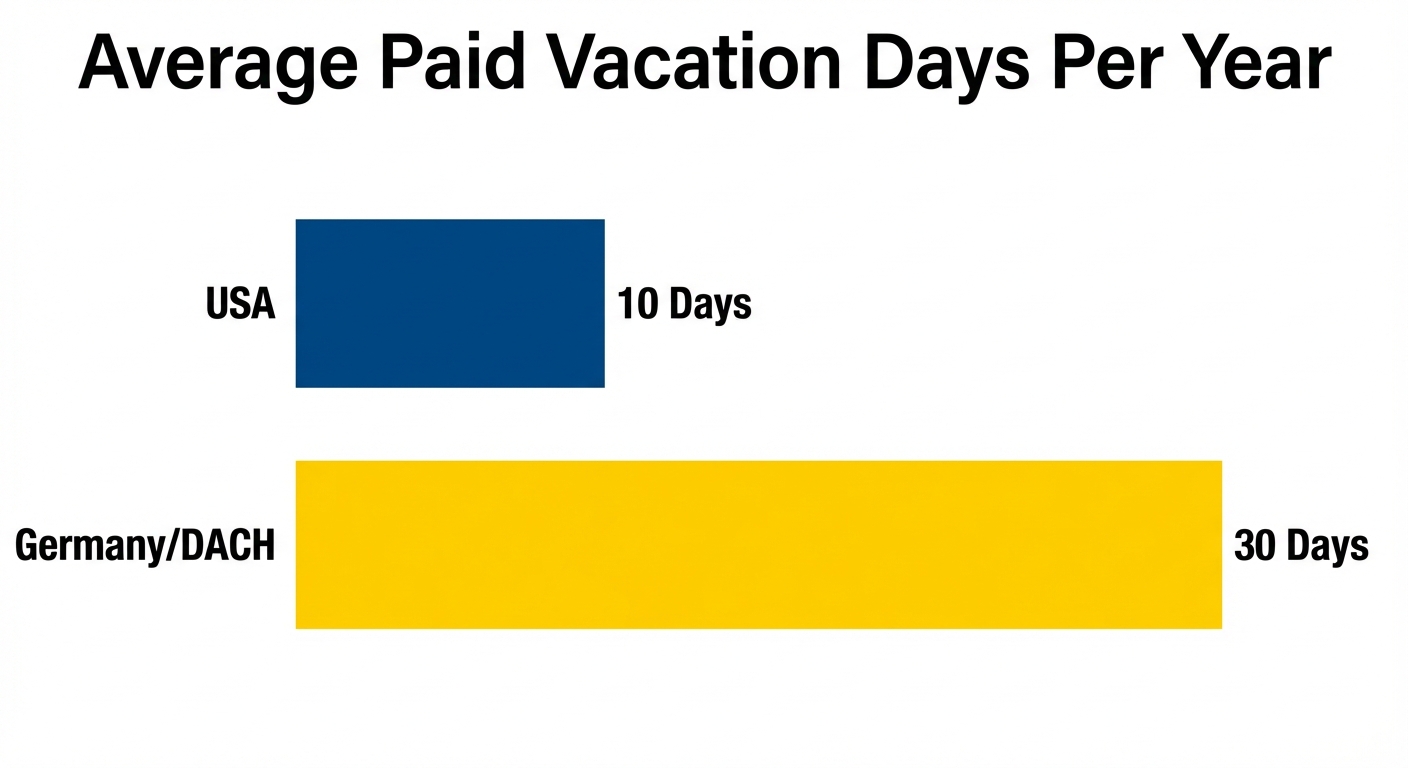
- Vacation: Employees in Germany are guaranteed a statutory minimum of 20 paid vacation days (for a 5-day work week), but 30 days is the standard in many industries.
- Sunday Rest: Shops are generally closed on Sundays (Ruhetag), enforcing a pause in consumerism and allowing for family time.
Health and Well-Being (Gesundheit und Wellness)
In the AP theme of Quality of Life, health goes beyond just "not being sick." It encompasses a holistic approach supported by the state.
The Social Safety Net
Germany, Austria, and Switzerland have some of the world's most comprehensive social security systems.
- Versicherungspflicht (Mandatory Insurance): Health insurance is compulsory. It is usually funded jointly by the employer and the employee.
- Lohnfortzahlung: If an employee gets sick, the employer continues to pay their full salary for up to six weeks. This reduces the financial stress of illness, directly improving quality of life.
Die Kur (Health Spa/Rehabilitation)
A unique cultural concept in the German-speaking world is die Kur.
- Definition: A preventative or rehabilitative stay in a health resort (often 3 weeks), prescribed by a doctor and often paid for by health insurance.
- Purpose: It is not a "vacation" in the leisure sense, but a medical necessity to prevent burnout, treat chronic conditions, or recover from surgery.
- Locations: Towns with names beginning with "Bad" (e.g., Bad Füssing) denote spa towns with mineral springs or clean air certification.
Mental Health and Stress
While the physical healthcare system is robust, issues like Burnout and stress are rising topics in DACH media. There is an increasing focus on Entspannungstechniken (relaxation techniques) and Work-Life-Balance (a term often used in English within German).
Leisure and Sports (Freizeit und Sport)
Leisure time is taken very seriously and is often highly organized.
Vereinswesen (Club Culture)
The social backbone of German society is the Verein (club/association).
- Significance: It is estimated that one in three Germans is a member of a sports club. Unlike in the US, where sports are often tied to high schools or universities, sports in the DACH region are organized through private local clubs.
- Ehrenamt (Volunteering): Clubs rely heavily on honorary administrative work. Participating in a club is a major factor in social integration and community quality of life.
Popular Activities
- Fußball (Soccer): The undisputed favorite sport, both to play and watch.
- Wandern (Hiking): Particularly in Austria, Switzerland, and Southern Germany. The infrastructure of trails and Almhütten (mountain huts) is extensive.
- Travel: Germans are often called Reiseweltmeister (world travel champions) due to the high number of international trips taken per capita, facilitated by the generous vacation time mentioned earlier.
Comparison: DACH Region vs. United States
Use this table for your Cultural Comparison FRQ parts of the exam.
| Feature | DACH Region (Germany/Austria/Switzerland) | United States |
|---|---|---|
| Higher Education | Often tuition-free or very low cost; entry based on grades (NC). | High tuition costs; entry involves holistic review (essays, extracurriculars). |
| Sports | Organized largely through local Vereine (Clubs). | Organized largely through Schools (High School/College sports). |
| Vacation Time | ~30 days standard; legally mandated minimums. | No legally mandated paid time off; ~10-15 days is average. |
| Shopping | Shops closed on Sundays (Ladenschlussgesetz). | "24/7" culture; shops open Sundays and holidays. |
| Career Training | Dual System elevates vocational trades to high status. | Vocational training often seen as "secondary" to a 4-year degree. |
Common Mistakes & Pitfalls
- "Gymnasium" False Friend: Do not confuse the German Gymnasium with the English "gym" (place for sports). The German word for a sports hall is Sporthalle or Fitnessstudio. Gymnasium is an academic high school.
- "Hochschule" vs. "High School": Hochschule usually refers to a university or college level institution, NOT a US high school. Use Oberschule or specifically Gymnasium/Realschule for secondary education.
- Assuming Sports are at School: When writing cultural comparisons, avoid saying German students play on their "school soccer team." It is much more culturally accurate to say they play in a Sportverein after school.
- Misunderstanding "Kur": Do not describe a Kur as a holiday/vacation (Urlaub). It is medical. You typically don't bring your family, and you follow a strict health regimen.
Useful Vocabulary Mnemonics
- Feierabend: Think "Fire" (Feier) + "Evening" (Abend)? No, think Partying/Celebrating (Feiern) that the work day is done.
- Azubi: Short for Auszubildende (The one to be educated).
- Verein: Think united -> Vereint -> Verein.