AP Spanish Unit 2 Study Guide: The Influence of Language and Culture on Identity
Unit 2: The Influence of Language and Culture on Identity
2.1 Defining Identity in the Spanish-Speaking World
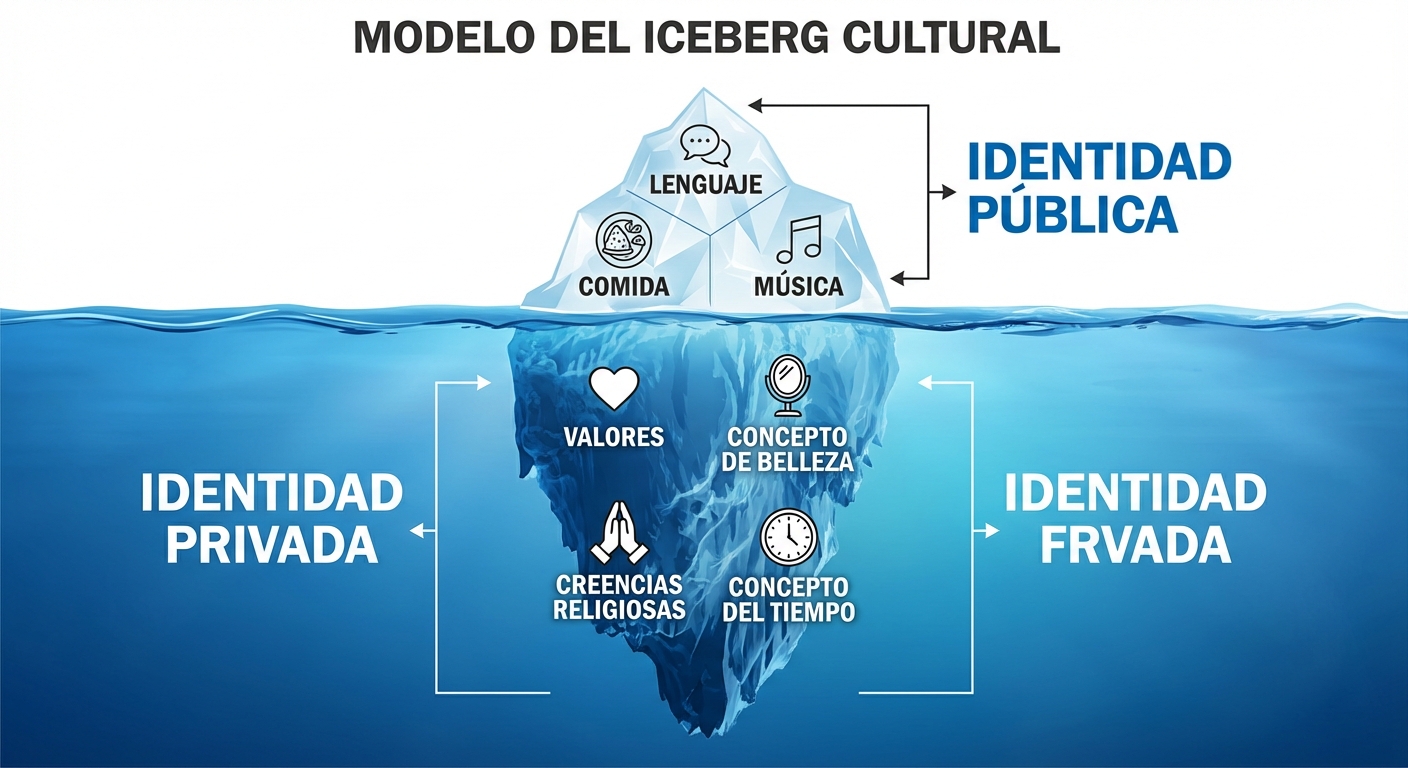
Personal vs. Public Identity (Identidad privada y pública)
Identity is not a single concept; it is a composite of how we see ourselves and how the world sees us. In the AP Spanish curriculum, understanding the tension between these two is vital.
- Identidad Privada (Personal Identity): This encompasses your inner self—your beliefs (‘creencias’), values (‘valores’), interests, and self-esteem.
- La Autoestima: In Hispanic cultures, self-esteem is often deeply connected to family approval and social standing. Unlike individualistic cultures where self-worth is internal, in collective cultures (like many in Latin America), it is often relational.
- Belief Systems: Religion plays a massive role. Over 70% of Spaniards identify as Catholic, though secularism is rising. In Latin America, the syncretism (blend) of Catholicism and indigenous beliefs shapes personal worldview.
- Identidad Pública (Public Identity): This is the persona presented to society, often influenced by workplace requirements, social media, and cultural expectations.
- Digital Identity: As mentioned in previous notes, technology allows users to curate a ‘perfect’ public identity. However, this often creates a disconnect between reality and the online persona, leading to mental health challenges.
Key Concepts Table
| Concept | Spanish Term | Definition & Context |
|---|---|---|
| Assimilation | La asimilación | The process of absorbing one cultural group into another. The minority loses distinct markers. |
| Integration | La integración | Maintaining one's original culture while participating in the host society. |
| Alienation | La enajenación | The feeling of being isolated or excluded from a group or society. |
| Heritage | El patrimonio | Cultural aspects inherited from the past (language, traditions, monuments). |
2.2 Language as a Pilar of Identity
Language (el idioma) is perhaps the strongest marker of identity. It carries history, worldview, and humor.
Linguistic Diversity in Spain
Spain is not a monolith; it is a nation of nations. Understanding this is crucial for the exam.
- Castellano (Spanish): The official language of the state.
- Catalán: Spoken in Catalonia (Cataluña), Valencia, and the Balearic Islands. Culturally, this region is very distinct, valuing industry and business. The drive for independence in Catalonia is fueled by strong linguistic identity.
- Euskera (Basque): Spoken in the Basque Country (País Vasco). It is a language isolate (not related to any other known language), which creates a fierce sense of unique ethnic identity.
- Gallego (Galician): Spoken in Galicia. It is closely related to Portuguese and reflects a Celtic heritage.
Indigenous Languages in Latin America
Identity in Latin America is often shaped by mestizaje (the mixture of European and Indigenous blood/culture).
- Quechua: Spoken in the Andes (Peru, Bolivia, Ecuador). Survives as a marker of Incan heritage.
- Nahuatl: The language of the Aztecs, still influencing Mexican Spanish dialect today.
- Guaraní: An official language of Paraguay, spoken by nearly 90% of the population (even non-indigenous), making it a unique case of a unifying indigenous language.
Spanglish and Bi-culturalism
In the United States, Spanglish (or code-switching) has evolved from being seen as ‘poor language’ to a valid marker of identity for Latinos living between two worlds. It represents the Identidad híbrida (hybrid identity).
2.3 Alienation and Assimilation (La enajenación y la asimilación)
This theme explores how individuals fit (or fail to fit) into a new culture.
The Immigrant Experience
When families move (e.g., from Latin America to the US, or Africa to Spain), they face specific challenges:
- Cultural Shock (Choque cultural): The disorientation felt when experiencing an unfamiliar way of life.
- Language Barriers: The inability to communicate leads to enajenación, limiting job opportunities and social connection.
- Generational Conflicts: Children assimilate faster than parents. This causes friction where the child may reject traditional heritage (el patrimonio) to fit in, while parents cling to it.
Case Study: The "Dreamers"
Young undocumented immigrants in the US often feel a dual alienation: they are not legally recognized in the US (their home), but they often don’t desire to return to a country of origin they barely know. Their identity is defined by resilience and political activism.

2.4 Heroes and Historical Figures (Los héroes y los personajes históricos)
Identity is often constructed around who a culture admires. Heroes reflect the values of the society.
Historical Heroes (Libertadores)
- Simón Bolívar & José de San Martín: The ‘George Washingtons’ of South America. They represent the values of freedom (libertad), sovereignty, and courage (valentía). Their identity is tied to the struggle for independence from Spain.
- Miguel Hidalgo: The priest who initiated the Mexican War of Independence. Represents the fight for the common people (el pueblo).
Cultural & Artistic Heroes
- Frida Kahlo (Mexico): Represents resilience through pain, feminism, and indigenous pride (indigenismo). She used her clothing and art to assert a Mexican identity against European standards.
- Rigoberta Menchú (Guatemala): An activist for indigenous rights. She represents the struggle against oppression and the voice of the marginalized.
Modern Heroes
In contemporary Spain and Latin America, athletes (like Rafael Nadal or Leo Messi) and musicians often replace political figures as icons of national pride, uniting divided populations under a common flag during sporting events.
2.5 National and Ethnic Identities
Ethnicity vs. Nationality
- Nationality is legal (citizenship).
- Ethnicity is cultural (heritage, ancestry).
- Example: A person can be of nationality española but identify ethnically as gitano (Romani). The gitanos have faced centuries of marginalization but have contributed deeply to the Spanish identity through Flamenco (an art form born of suffering and expression).
Regionalism in Spain
Spanish identity is framed by Autonomías. A common AP exam topic is the tension between valid regional pride and national unity. The phrase "Las dos Españas" usually refers to the ideological division (left vs. right) born from the Civil War, but it also applies to the Central vs. Peripheral identity tension.
2.6 Self-Esteem and Personal Beliefs
Factors Influencing Self-Esteem
- Beauty Standards: As touched upon in Unit 3, traditional Eurocentric beauty standards (pale skin, straight hair) historically damaged the self-esteem of indigenous and Afro-Latino populations. The movement towards body positivity and embracing natural hair (pelo rizado) is shifting this.
- Machismo vs. Marianismo:
- Machismo: The pressure on men to be dominant, emotionless providers. This can lead to toxic behaviors but is also linked to caballerosidad (chivalry).
- Marianismo: The expectation for women to be self-sacrificing, pure, and modeled after the Virgin Mary. While this creates strong family units, it can limit women’s personal and professional identity expression.
The Concept of "Duende"
Specific to Spanish identity (especially in the South), duende is a difficult-to-translate concept involved in art and flamenco. It is the ‘spirit of evocation’—a heightened state of emotion, expression, and authenticity. Having duende is a mark of profound artistic identity.
Common Mistakes & Pitfalls
- Confusing Castellano and Español:
- Mistake: Thinking they are totally different languages.
- Correction: In Spain, the language is often called Castellano to distinguish it from Galician or Catalan. Internationally, it is Español. They are the same language.
- Stereotyping assimilation:
- Mistake: Assuming all immigrants want to fully assimilate.
- Correction: Many seek integration (keeping their culture while adding the new one), not assimilation (replacing their culture).
- Ignoring Indigenous Identity:
- Mistake: Discussing Latin American identity only through a colonial lens.
- Correction: Always acknowledge the pueblos originarios (indigenous peoples) and their current fight for linguistic rights.
- Overlooking Regionalism in Spain:
- Mistake: Referring to Spain as a uniform culture.
- Correction: Always nuance your writing/speaking by acknowledging that a Basque person’s identity is very different from an Andalusian’s.
- Assuming Machismo is only negative:
- Mistake: Using machismo only to mean abuse.
- Correction: While often toxic, historically it encompassed protection and providing. However, in the modern context, it is largely critiqued as a barrier to gender equality.