Unit 3: The Canvas of Culture – Beauty and Art in Italy
Unit 3: The Canvas of Culture – Beauty and Art in Italy
Introduction: Il Bel Paese
Italy is often referred to as Il Bel Paese (The Beautiful Country). In AP Italian Unit 3, we explore Bellezza ed Estetica (Beauty and Aesthetics). This unit goes beyond just "pretty things"; it examines how art reflects history, how beauty standards shape society, and how Italian creativity—from the Renaissance to modern fashion—influences the world.
Key Themes
- Ideals of Beauty (Ideali di bellezza)
- The Arts (Le arti visive e sceniche)
- Architecture & Urban Space (L'architettura e lo spazio urbano)
- Fashion & Design (La moda e il design)
3.1 Ideals of Beauty (Ideali di Bellezza)
The Concept of "La Bella Figura"
Before diving into physical beauty, you must understand the uniquely Italian concept of La Bella Figura.
- Definition: Literally "the beautiful figure," it is not just about physical attractiveness. It is a social philosophy encompassing good manners, appropriate dress, confidence, and maintaining a positive public image.
- Contrast: La Brutta Figura (the bad figure) is the fear of looking foolish, rude, or unprepared in public.
Physical Beauty and Society
Italian culture places a high premium on aesthetics, which creates both artistic triumphs and modern societal pressures.
The Drive for Perfection
While Italy's history is rooted in the artistic perfection of Michelangelo's David, modern society faces challenges regarding body image, exacerbated by digital media.
- Appearance Obsession: The fixation on l'apparire (appearing/looking good) affects all genders and ages. It is often said that in Italy, "L'abito fa il monaco" (The habit makes the monk—meaning appearance does matter), contrary to the English idiom.
- Social Media Impact: Platforms like Instagram have amplified unrealistic beauty standards, leading to lower self-esteem among Italian youth (i giovani).
- Corrective Measures: There is a growing movement toward Body Positivity, emphasizing that character is more enduring than physical features.
Cosmetic Surgery (Chirurgia Estetica)
- Prevalence: Italy ranks highly in Europe for cosmetic procedures, with millions of operations annually.
- Demographic: Historically for the wealthy in private clinics, low-cost options have made it accessible to the masses, sometimes raising safety concerns.
- Trends:
- Women: Rhinoplasty, breast augmentation.
- Men: Liposuction, hair transplants.
Sun Culture and Tanning
- The Trend: A "bronzed" look is often associated with health and wealth (having time to vacation). Tanning booths (lampade abbronzanti) are common.
- The Risk: High rates of melanoma (skin cancer) have led to public health campaigns warning against UV overexposure, weighing the benefits of Vitamin D against skin damage.
3.2 The Visual Arts (Le Arti Visive)
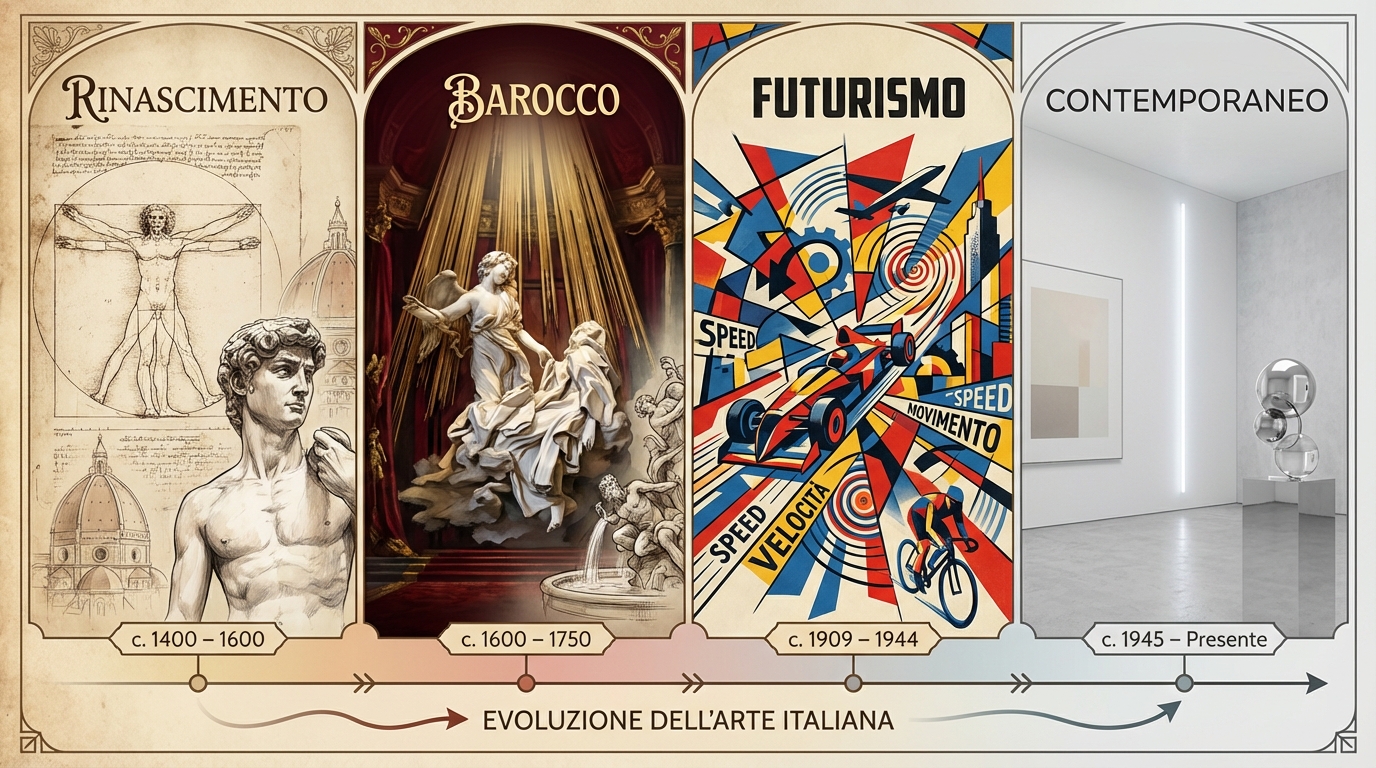
Italy possesses an estimated 60% of the world's art treasures. Art is not just a pastime; it is an industry and a pillar of national identity.
Major Artistic Movements
| Period | Key Characteristics | Famous Figures |
|---|---|---|
| Renaissance (Rinascimento) | Rebirth of Classical Greek/Roman humanist values. Focus on realism, perspective, symmetry, and human potential. | Leonardo da Vinci (Painter/Inventor), Michelangelo (Sculptor/Painter), Brunelleschi (Architect) |
| Baroque (Barocco) | Emotional intensity, movement, dramatic lighting, and ornamentation. | Bernini (Sculptor), Caravaggio (Painter) |
| Futurism (Futurismo) | Early 20th century. Rejected the past; glorified speed, technology, violence, and the industrial city. | Filippo Marinetti (Founder), Umberto Boccioni, Giacomo Balla |
| Modern/Contemporary | Conceptual, abstract, often political. Rejection of conservative values. | Modigliani, Arte Povera movement |
Importance of Patronage
- Historical: The Church and wealthy families (like the Medici in Florence) sponsored artists.
- Modern: Today, the government and fashion houses (like Fendi restoring the Trevi Fountain) play a role in il mecenatismo (patronage/sponsorship) to preserve cultural heritage.
3.3 Architecture and Urban Spaces
Historical Architecture
Italian cities are open-air museums. The architectural landscape is defined by the overlap of eras.
- Roman Influence: The arch, the dome, and concrete. Focus on durability and public utility (roads, aqueducts).
- Example: Il Colosseo (Rome) – Symbol of Roman engineering and entertainment.
- Religious Architecture: The center of almost every Italian town is the Piazza with a church.
- Example: La Basilica di San Pietro (Vatican) – The epicenter of Catholicism and Renaissance design.
- Example: La Torre di Pisa – A Romanesque bell tower famous for its unintended 10-degree tilt due to unstable soil.
Modern & Rationalist Architecture
Post-WWII and during the Fascist era, style shifted.
- Rationalism: Use of clean lines, symmetry, and lack of decoration (e.g., The EUR district in Rome).
- Functionalism: Post-war rebuilding focused on utility for industry and housing rather than ornate beauty.
Spaces of Living: City vs. Country
- The City (La Città): Centers of culture and nightlife (la movida). Living in a city often means apartment living in historical buildings. Challenges include traffic, pollution (smog), and high costs.
- The Periphery (La Periferia): Suburbs. Often high-density concrete apartments. Less expensive, but historically disconnected from the cultural center.
- The Countryside (La Campagna): Associated with "Agriturismo," food production, and a slower pace of life. A major draw for tourists seeking the "Tuscan Sun" ideal.
3.4 Fashion and Design (La Moda e Il Design)
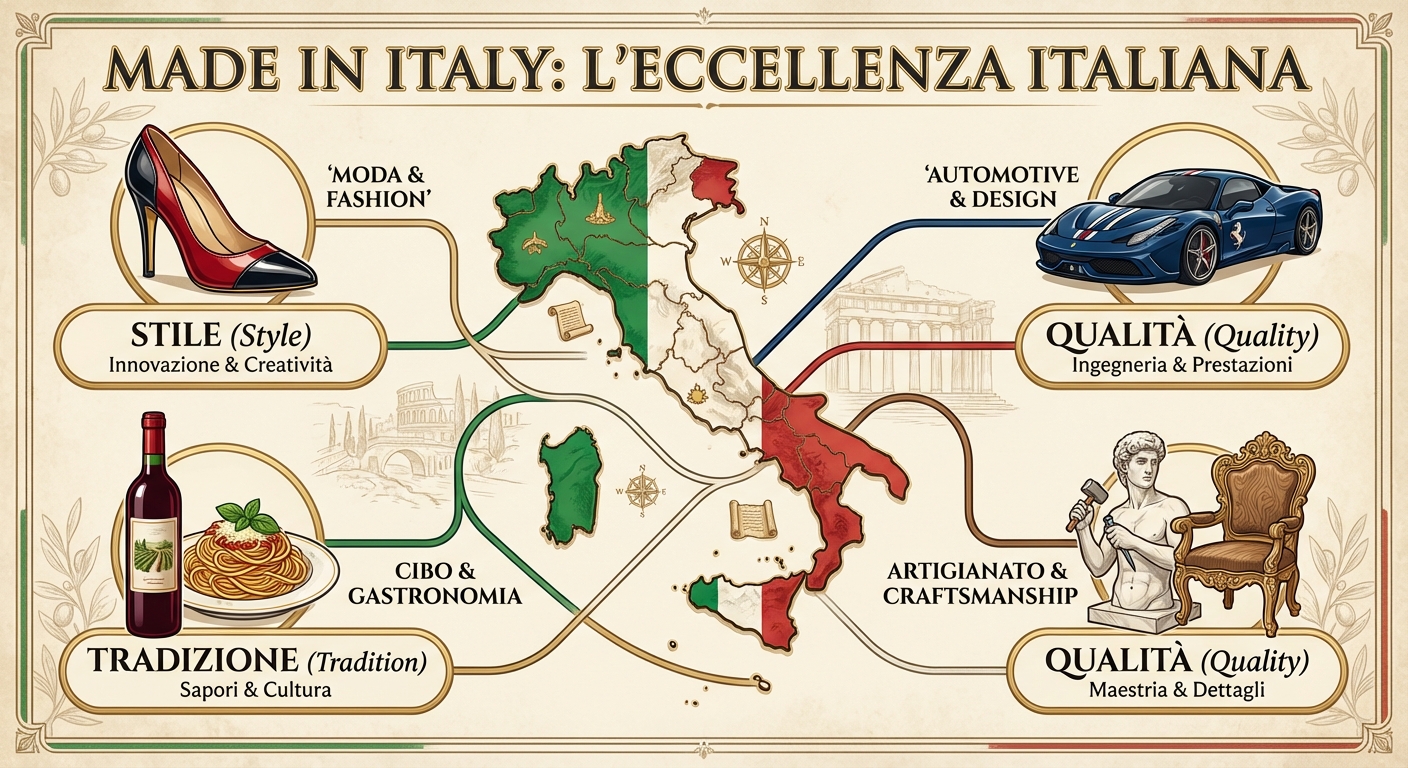
Fashion is perhaps Italy's most famous modern export. It serves as an economic engine and a tool for cultural diplomacy.
The Brand: "Made in Italy"
This label (Il marchio) is legally protected and globally recognized. It guarantees:
- Quality: High craftsmanship (artigianato).
- Creativity: Innovative design.
- Provenance: Materials and labor are Italian.
The Industry
- Milan: The undisputed fashion capital (la capitale della moda), hosting Settimana della Moda (Fashion Week).
- Economic Impact: Provides thousands of jobs. It is one of the "Three Fs" of the Italian economy: Food, Fashion, Ferrari (Automobiles).
- Major Brands:
- Luxury: Versace, Prada, Gucci, Armani.
- Influence: These brands set global trends, shifting from the Haute Couture of Paris to the Prêt-à-porter (Ready-to-wear) of Milan.
3.5 Music and Performing Arts (Musica e Spettacolo)
Music: Tradition vs. Modernity
Music is the soundtrack of Italian life, serving as a bridge between generations.
1. Opera (Lirica)
Historically, Opera was the popular music of the 19th century. It was political and emotional.
- Famous Composers: Giuseppe Verdi (symbol of the Risorgimento), Giacomo Puccini.
- Venues: La Scala (Milan) is the most prestigious opera house in the world.
2. Contemporary Pop
Modern Italian music mixes melody (melodia) with international influence.
- Sanremo Music Festival: The most important music event in Italy. It inspired Eurovision. It stops the nation every February.
- Comparison (USA vs. Italy):
- USA: Focus on rhythm, production, country/pop divide.
- Italy: Focus on vocal melody, lyrics (cantautori - singer-songwriters), and regional dialects.
- Key Artists:
- Classic: Mina, Andrea Bocelli (Opera/Pop crossover).
- Modern/Rock: Måneskin (Global fame, representing a new, rebellious Italian youth culture).
- Pop: Laura Pausini, Eros Ramazzotti.
Cinema (Il Cinema)
Italian cinema is studied worldwide for its artistic depth.
| Era | Movement/Style | Key Directors/Films | Significance |
|---|---|---|---|
| 1940s-50s | Neorealism | De Sica (Bicycle Thieves), Rossellini (Rome, Open City) | Filmed on location with non-actors. Showed the poverty and reality of post-war Italy. |
| 1960s | Comedy/Auteur | Fellini (La Dolce Vita) | Exploring the "Sweet Life," celebrity culture, and existential boredom. |
| 1990s-Present | Modern Revival | Benigni (La vita è bella), Sorrentino (The Great Beauty) | Benigni mixed comedy with the tragedy of the Holocaust; Sorrentino explores modern decadence. |
3.6 Common Mistakes & Exam Tips
Common Misconceptions
- "Bella Figura" is just about clothes: False. You can dress well and still make a brutta figura by being rude to a waiter.
- All Italian music is Opera: False. Italy has a massive rap/trap and rock scene today.
- Modern Architecture doesn't exist: False. While recognized for ruins, Italy is a leader in modern industrial design (Alessi, Fiat, Renzo Piano).
Vocabulary Traps (False Friends)
- La Camera vs. La Macchina Fotografica: Camera is a bedroom. A camera for taking photos is a macchina fotografica.
- La Noia: Means "boredom," not "annoyance" (which is fastidio). This is a common theme in cinema (e.g., La noia in existential films).
Exam Tip: The "Compare and Contrast"
On the AP exam, you may be asked to compare the role of art/beauty in your community vs. Italy.
- Example Argument: "While my community values utilitarian architecture (malls, skyscrapers), Italy integrates art into daily life (ancient ruins next to metro stations), preserving history even at the cost of modern efficiency."