AP Chinese Unit 1 Review: Dynamics of Family and Social Values
Introduction to Family Structures and Values
In the AP Chinese Language and Culture curriculum, Unit 1: Families in Different Societies focuses on the foundational unit of Chinese society. Understanding the contrast between traditional Confucian values and modern societal shifts is critical for the Cultural Presentation and Email Response sections of the exam. The concept of family (jiātíng / 家庭) in China extends beyond blood relations to denote a system of social hierarchy, obligation, and support.
Family Roles and Relationships
Traditional vs. Modern Structures
The evolution of the Chinese family structure is a central theme in this unit. You must be able to describe the shift from large, multi-generational households to smaller units.
1. Extended Family (Dàjiātíng / 大家庭)
Historically, the ideal was Si Shi Tong Tang (四世同堂), meaning "four generations under one roof."
- Structure: Grandparents, parents, children, and sometimes uncles/aunts living together.
- Values: Collective mentality, resource pooling, and clear hierarchy.
2. Nuclear Family (Héxīn Jiātíng / 核心家庭)
Due to urbanization and housing costs, the modern norm is the nuclear family: parents and their children.
- DINK Families: "Double Income, No Kids" (Dīngkè / 丁克) families are becoming more common in Tier 1 cities (Shanghai, Beijing).
The "4-2-1" Family Structure
A direct result of the One-Child Policy (1979–2015), this structure is frequently tested in the context of aging populations.
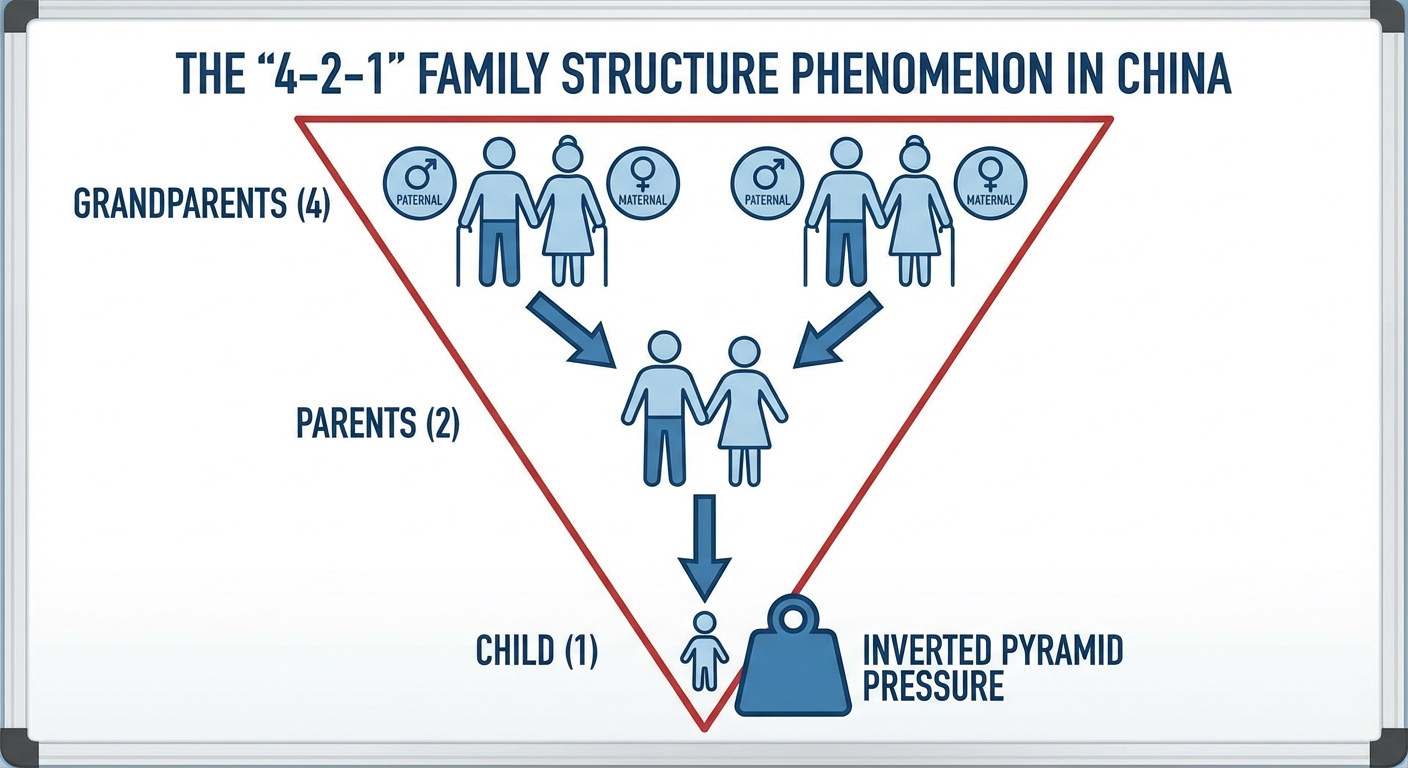
- The Burden: One child is responsible for caring for two parents and four grandparents.
- Little Emperors (Xiǎohuángdì / 小皇帝): A term for only children who receive excessive attention and resources from six adults, potentially leading to spoilage or high pressure to succeed.
Filial Piety (Xiàoshùn / 孝顺)
This is the most important philosophical concept in this unit. Rooted in Confucianism, it dictates how children treat elders.
- Respect: Parents are authoritative figures. Children generally do not call parents by their first names.
- Obligation (Yǎng / 养): It is a legal and moral duty for children to care for aging parents financially and physically.
- Concept Shift: In the past, xiàoshùn meant obedience. Today, it often means visiting home often or succeeding academically to bring honor (miànzi / 面子) to the family.
Customs, Ceremonies, and Traditions
Dining Etiquette as Social Hierarchy
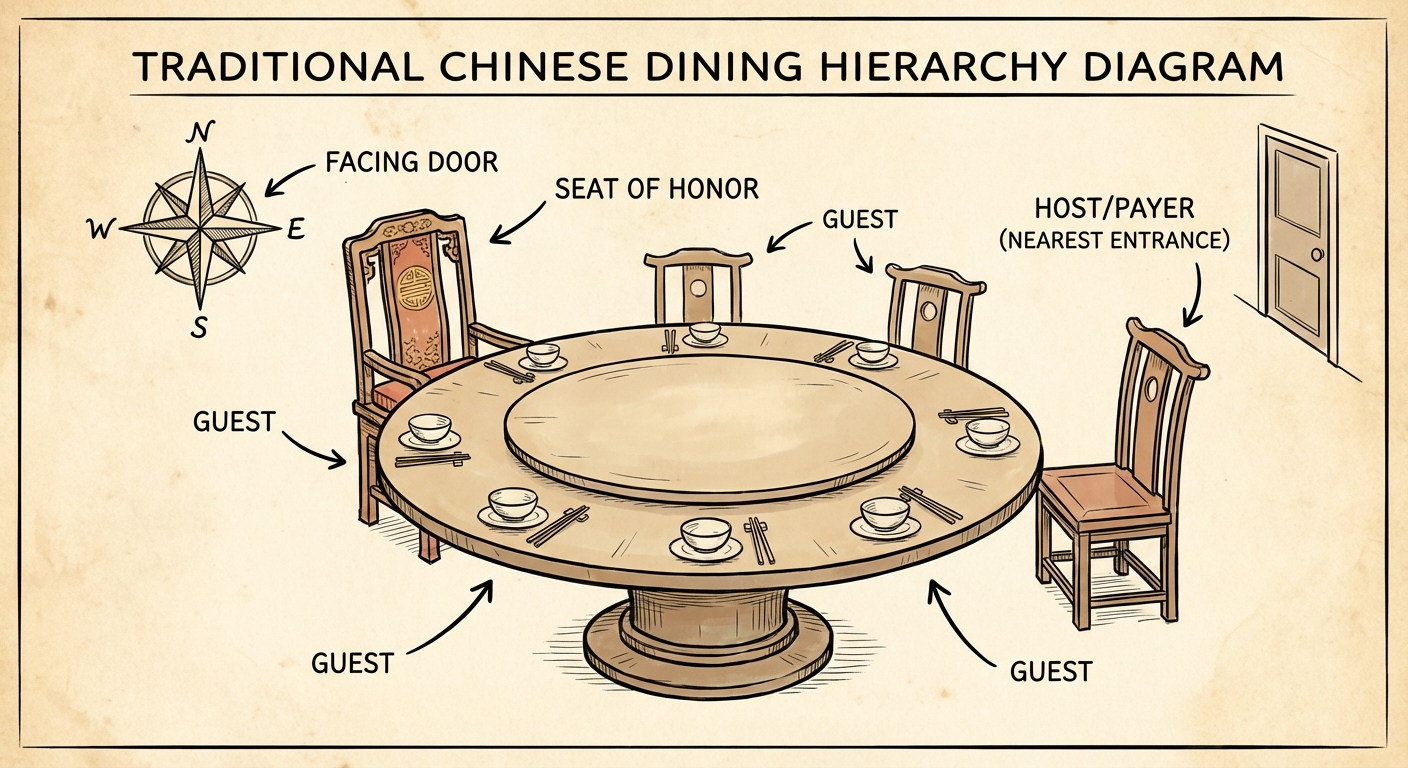
Family meals are rituals of respect. The seating arrangement and order of eating are strictly traditionally observed.
- Seating: The seat facing the entrance (or the "head" of the table) is reserved for the eldest or most honored guest.
- Action: No one eats until the eldest person picks up their chopsticks.
Major Life Events
1. Weddings (Hūnlǐ / 婚礼)
- Color Symbolism: Traditional weddings use Red (happiness/prosperity). White is traditionally associated with funerals, though Western-style white dresses are now common for the ceremony, with a change into a red qipao for the banquet.
- Red Envelopes (Hóngbāo / 红包): Guests give money in red envelopes rather than physical gifts. The amount is usually an even number (excluding 4) to symbolize double happiness.
2. Spring Festival (Chūnjié / 春节)
- Reunion Dinner (Niányèfàn / 年夜饭): The most important meal of the year. Essential dish: Fish (Yú / 鱼) because it sounds like "surplus" (Niánnián yǒuyú / 年年有余).
- Significance: It reinforces family unity. Migrant workers travel thousands of miles to return home, known as Chūnyùn (Spring Migration).
Generational Differences and Perspectives
The Generation Gap (Dàigōu / 代沟)
Rapid economic development has created a massive cultural divide between the older generation (who lived through hardship/Cultural Revolution) and the younger generation (digital natives).
| Perspective | Older Generation (Lǎoyíbèi / 老一辈) | Younger Generation (Niánqīngrén / 年轻人) |
|---|---|---|
| Money | Frugal (Jiéyuē), saves cash, avoids debt. | Spends on experiences/technology, uses mobile pay, comfortable with credit. |
| Career | Seeks stability (Tiěfànwǎn - Iron Rice Bowl). | Seeks passion, flexibility, and entrepreneurship. |
| Marriage | Matchmaking (Xiāngqīn), marry young. | Dating apps, marry later or stay single (Wǎnhūn). |
Modern Social Phenomena
1. The "Boomerang Kids" (Kěnlǎozú / 啃老族)
- Literal Meaning: "The tribe that gnaws on the old."
- Definition: Young adults who are unemployed or underemployed and rely entirely on their parents for financial support, often living at home well into their 20s or 30s.
2. Empty Nesters (Kōngcháo Lǎorén / 空巢老人)
- Definition: Parents whose children have left home for work or university, often leaving the elderly lonely. This stands in stark contrast to the traditional ideal of Si Shi Tong Tang.
- Solution: Some laws now mandate that children must visit parents, and retirement home industries are growing (a shift from traditional taboo).
Comparison Structure for Exam
When writing an email or cultural presentation, use these structures to compare generations:
- "In the past… but now…"
(Guòqù… dànshì xiànzài… / 过去……但是现在……) - "With regard to [Topic], older people think…, whereas young people think…"
(Zài [Topic] fāngmiàn, lǎorén rènwéi…, ér niánqīngrén rènwéi…)
Common Mistakes & Pitfalls
Confusing "Family" with "Home":
- Be careful with Jiā (家). It serves as "home" (place) and "family" (concept). However, when discussing the people, use Jiātíng (family unit) or Jiārén (family members). Do not say "My family is very nice" using just Jiā; use Jiārén.
Stereotyping All Families as Traditional:
- Mistake: Assuming all Chinese families have stay-at-home moms or grandparents living in the house.
- Correction: Acknowledge modernization. Many mothers work full-time, and nursing homes are becoming more acceptable. Nuance boosts your AP score.
Misusing Colors during Cultural Comparisons:
- Mistake: Saying red is for all celebrations.
- Correction: While red is lucky, be careful not to wear red to a funeral, or white to a traditional wedding. Wearing a green hat (Dài lǜ màozi) implies infidelity—never use this as a fashion example.
Date Writing Format:
- Remember the order is Big $\to$ Small: Year / Month / Day (e.g., 2023年 10月 5日). Getting this wrong on a formal email draft loses easy points.