Unit 3: Cultural Influences of Beauty and Art
Visual and Performing Arts
In the AP Chinese Language and Culture curriculum, understanding the arts is not just about memorizing facts; it is about analyzing cultural products (the artwork), practices (how it is made/performed), and perspectives (the philosophy behind it). This section is a distinct favorite for the Cultural Presentation task on the exam.
1. Calligraphy (Shūfǎ 书法) and Theory
Chinese Calligraphy is considered the supreme art form in Chinese culture, often ranked higher than painting. It is an expression of the artist's internal energy (Qi) and character.
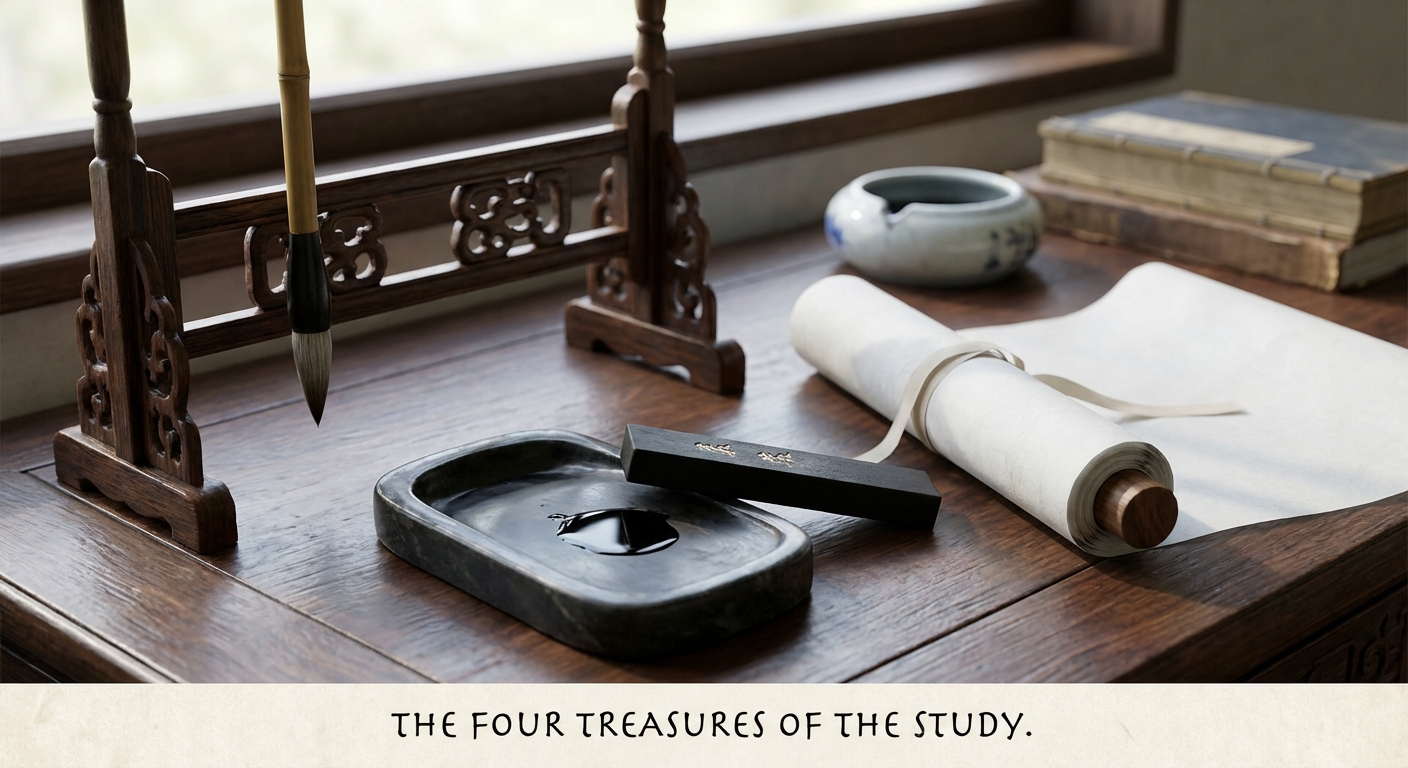
The Four Treasures of the Study (Wénfáng Sìbǎo 文房四宝)
To practice calligraphy or traditional painting, one must use the Four Treasures. You must memorize these four items, as they involve specific cultural products:
- Brush (Bǐ 笔): Made from animal hair (wolf, goat, or rabbit) and bamboo.
- Ink Stick (Mò 墨): Soot mixed with glue, ground on the inkstone.
- Paper (Zhǐ 纸): Specifically Rice Paper (Xuānzhǐ 宣纸), known for its absorbency and durability.
- Inkstone (Yàn 砚): The stone surface used to grind the ink stick with water.
2. Chinese Painting (Guóhuà 国画)
Traditional painting shares the same tools as calligraphy. It differs significantly from Western realism.
- Concept: The Three Perfections (Sān Jué 三绝): A masterpiece often combines three art forms on a single scroll: Painting, Poetry, and Calligraphy. The artist will paint a scene, write a poem that complements it, and sign it with a stylized seal.
- Styles:
- Gōngbǐ (工笔): Meticulous, detailed, realistic brushwork (often used for portraits or birds).
- Xiěyì (写意): "Sketching thoughts" or freehand style. Focuses on the spirit of the subject rather than anatomical accuracy. Relies heavily on water control.
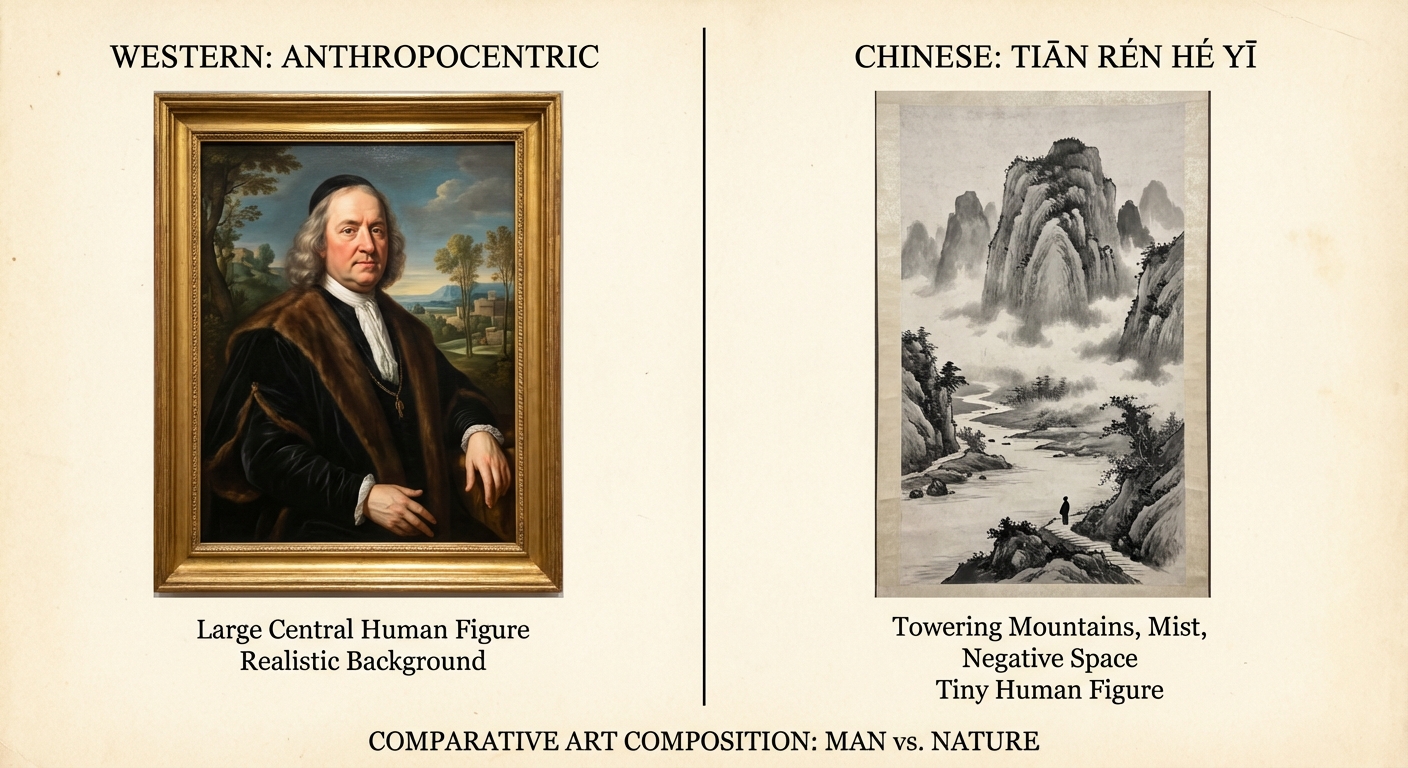
- Negative Space (Liúbái 留白): Unlike Western art which often fills the canvas, Chinese art values empty space. It represents clouds, water, or the sheer vastness of nature, inviting the viewer to imagine the rest.
3. Performing Arts: Peking Opera (Jīngjù 京剧)
Peking Opera is a synthesis of stylized action, singing, dialogue and mime, acrobatic fighting and dancing. It is not just "singing."
Key Characteristics:
- Minimalism: There are very few props. A roughly embroidered curtain might represent a general's tent; a whip represents a horse.
- The Roles (Hángdang 行当):
- Shēng (生): Male roles.
- Dàn (旦): Female roles (historically played by men like Mei Lanfang).
- Jìng (净): Painted face roles (males with strong characters).
- Chǒu (丑): The clown/comedic role.
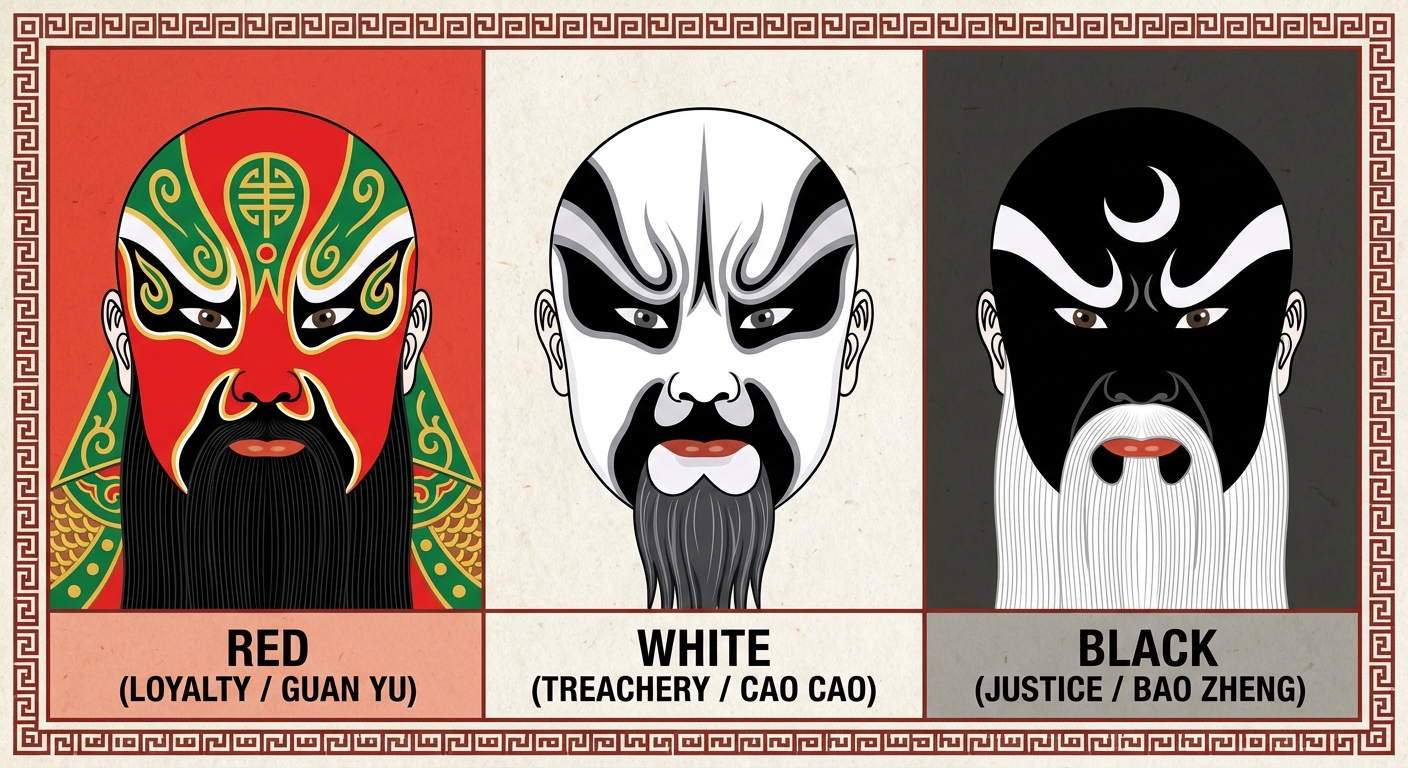
Face Painting (Liǎnpǔ 脸谱) Symbolism:
The colors on a Jing actor's face tell the audience about their character's personality instantly.
| Color | Meaning | Character Example |
|---|---|---|
| Red | Loyalty, bravery, heroism | Guan Yu |
| White | Treachery, cunning, suspicion | Cao Cao |
| Black | Integrity, selflessness, impartiality | Bao Zheng |
| Gold/Silver | Gods, demons, or spirits | Monkey King |
4. Folk Arts
For the AP exam, do not overlook folk arts, as they represent the "practices" of daily life.
- Paper Cutting (Jiǎnzhǐ 剪纸): Usually red paper pasted on windows during Lunar New Year. Themes include happy events, zodiac animals, and the character "Fu" (Fortune).
- Chinese Knots (Zhōngguójié 中国结): Decorative handicrafts often used as good luck charms. They represent unity and prosperity because they are made from a single continuous cord.
Literature and Literary Movements
Chinese literature spans thousands of years. For the AP exam, focus on the Golden Age (Tang Dynasty) and the major narrative novels.
1. Tang Poetry (Tángshī 唐诗)
The Tang Dynasty is the golden age of poetry. Poems from this era are memorized by Chinese children at a very young age. Strict rules govern rhyme, tone, and number of characters per line (usually 5 or 7).
Two Key Figures:
- Li Bai (李白): The "Poet Immortal" (Shīxiān). Known for his romanticism, love of wine, and free-spirited nature.
- Famous Work: "Quiet Night Thought" (Jìngyè Sī) — Expresses homesickness.
- Du Fu (杜甫): The "Poet Historian" (Shīshèng). Known for realism and social commentary regarding the suffering of war.
2. The Four Great Classical Novels (Sì Dà Míng Zhù 四大名著)
These novels are the pillars of Chinese fiction. You do not need to read them, but you MUST know their titles, basic plots, and cultural significance.
| Title | Pinyin | Key Characters | Theme |
|---|---|---|---|
| Journey to the West | Xīyóu Jì | Sun Wukong (Monkey King) | Adventure, Buddhism, redemption. |
| Romance of the Three Kingdoms | Sānguó Yǎnyì | Cao Cao, Liu Bei, Guan Yu | Strategy, loyalty, war, statecraft. |
| Dream of the Red Chamber | Hónglóu Mèng | Jia Baoyu, Lin Daiyu | Fate, decline of a feudal family, romance. |
| Water Margin (Outlaws of the Marsh) | Shuǐhǔ Zhuàn | 108 Bandits/Heroes | Rebellion, brotherhood, justice against corruption. |
Ideals of Beauty Across Cultures
This section addresses the comparison objectives of the AP course: understanding how Chinese aesthetics differ from or align with Western aesthetics.
1. Concepts of Physical Beauty
- Traditional Ideals: Historically, fair skin has been associated with high status (indicating one does not work in the fields). The phrase "One white covers three uglinesses" (Yī bái zhē sān chǒu) reflects this.
- Modern Shifts: While Western influence has introduced tanning as a sign of health/leisure, the preference for lighter skin tones remains prevalent in East Asia.
2. Philosophical Aesthetics: Harmony (Hé 和)
Chinese beauty is deeply rooted in the concept of Harmony between Heaven and Humanity (Tiān Rén Hé Yī 天人合一).
- In Art: Landscape paintings minimize the human figure to a microscopic size compared to mountains and rivers. This contrasts with Western Renaissance art where the human figure is often central and dominant. The beauty lies in nature's vastness, not human conquest.
- In Architecture: Traditional architecture (like the Siheyuan courtyards) focuses on symmetry and enclosing nature (gardens) within the home to create a harmonious microcosm.
3. Symbolism in Aesthetics
Beauty in China is rarely purely abstract; it is almost always symbolic (homophones or cultural associations).
- Bamboo: Represents resilience and integrity (bends but doesn't break).
- Lotus: Represents purity (grows out of mud but remains unstained).
- Pine: Represents longevity (stays green in winter).
Common Mistakes & Exam Tips
Confusing "Peking Opera" with "Western Opera":
- Mistake: Describing Peking Opera as just singing.
- Correction: Always mention the martial arts, acrobatics, and stylized masks. It is a comprehensive performance art.
Overlooking Regional Diversity:
- Mistake: Assuming all Chinese people act/create art exactly the same way.
- Correction: While you study "Chinese Art," remember that styles vary (e.g., Northern vs. Southern architecture). However, for the exam, sticking to the major representatives (like Peking Opera) is safer for the cultural presentation.
Misinterpreting Colors:
- Mistake: Assuming "White" is always good (as in Western weddings).
- Correction: In Peking Opera masks, White signifies treachery. In funerals, White is the color of mourning. However, in skin tone, White is a standard of beauty. Context is key!
Cultural Presentation Strategy:
- If asked about a "Chinese Art Form," Calligraphy or Paper Cutting are the safest choices because you can easily explain the tools (Four Treasures) or the purpose (New Year decoration) within the 2-minute time limit.