Navigating Global Challenges in Modern Italy (Sfide globali)
This study guide covers the "Global Challenges" (Sfide globali) section of Unit 6. In the AP Italian Language and Culture exam, you are not just expected to know vocabulary; you must understand the cultural context of Italy regarding these issues to succeed in the Cultural Comparison and Argumentative Essay sections.
Environmental Issues (Problemi ambientali)
Italy, known as Il Bel Paese, faces unique environmental challenges due to its geography and industrial history. Understanding these issues is crucial for discussing sustainability in an Italian context.
Key Concepts and Vocabulary
To discuss the environment effectively, familiarize yourself with these core terms:
- L'ambiente (The environment)
- L'inquinamento (Pollution) — This can be specific: atmosferico (air), idrico (water), or acustico (noise).
- Il riscaldamento globale (Global warming) and I cambiamenti climatici (Climate change).
- Le energie rinnovabili (Renewable energies) — Solar (solare), wind (eolico), and hydroelectric (idroelettrico).
- Lo sviluppo sostenibile (Sustainable development).
Waste Management: La Raccolta Differenziata
One of the most culturally visible aspects of Italian daily life is La Raccolta Differenziata (selective waste collection). unlike the single-stream recycling common in parts of the US, Italian municipalities have strict color-coded bin systems.
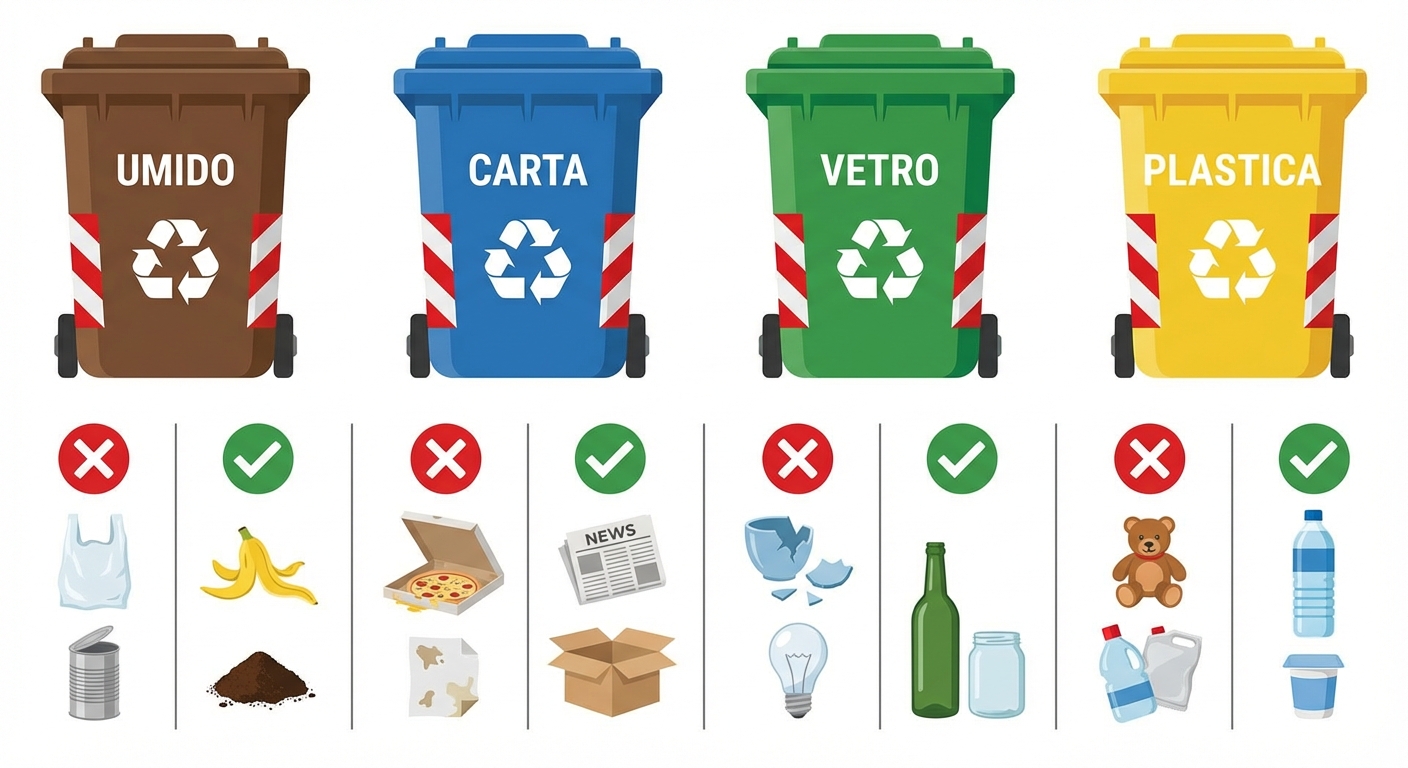
- L'umido/L'organico: Organic waste (food scraps).
- La carta: Paper and cardboard.
- Il vetro: Glass.
- La plastica: Plastic.
- L'indifferenziata/Il secco: Non-recyclable waste.
Cultural Context: Failing to sort trash correctly can result in fines (multe) from the municipality (comune). This reflects a high level of civic duty regarding waste.
Case Study: Venice and The MOSE Project
When writing an essay about environmental engineering or climate change, Venice is the ultimate example.
- Problem: L'acqua alta (high water/flooding) threatens the artistic heritage and daily life of Venice.
- Solution: Il MOSE (Modulo Sperimentale Elettromeccanico). It is a system of mobile dams designed to isolate the Venetian Lagoon from the Adriatic Sea when the tide reaches a certain level.
- Debate: It is controversial due to high costs, corruption scandals, and environmental concerns regarding the lagoon's ecosystem.
Political and Social Structures (Strutture politiche e sociali)
To compare Italian culture with your own, you must understand how the Italian state operates and the social economic pressures it faces.
The Italian Political System
Italy is a Parliamentary Republic (Repubblica Parlamentare).
| Position | Italian Term | Role & Description |
|---|---|---|
| Head of State | Presidente della Repubblica | Largely ceremonial, protects the Constitution, serves a 7-year term. Living in the Quirinale. |
| Head of Government | Presidente del Consiglio | The "Premier" or Prime Minister. Holds executive power. Appointed by the President of the Republic. |
| Legislature | Il Parlamento | Bicameral: Camera dei Deputati and Senato della Repubblica. |
Important Distinction: In the US, the President is both Head of State and Government. In Italy, these are two different people. Never refer to the Italian Prime Minister as merely "Il Presidente" without specifying "del Consiglio," or you might confuse them with the Head of State.
Economic Challenges: The North-South Divide
A persistent theme in AP prompts is La Questione Meridionale (The Southern Question). Historically and economically, there is a gap (divario) between the North and the South.
- Il Nord: Industrial, wealthier, higher employment rates (e.g., Milan, Turin).
- Il Sud (Mezzogiorno): Agricultural, tourism-based, historically higher unemployment (disoccupazione).
Migration and Demographics
Italy has transformed from a nation of emigrants to a destination for immigrants, while simultaneously facing a demographic crisis.
- L'immigrazione: Due to its position in the Mediterranean, Italy is a landing point for migrants from Africa and the Middle East. This creates political tension regarding reception centers (centri di accoglienza) and integration.
- La disoccupazione giovanile: Youth unemployment is high.
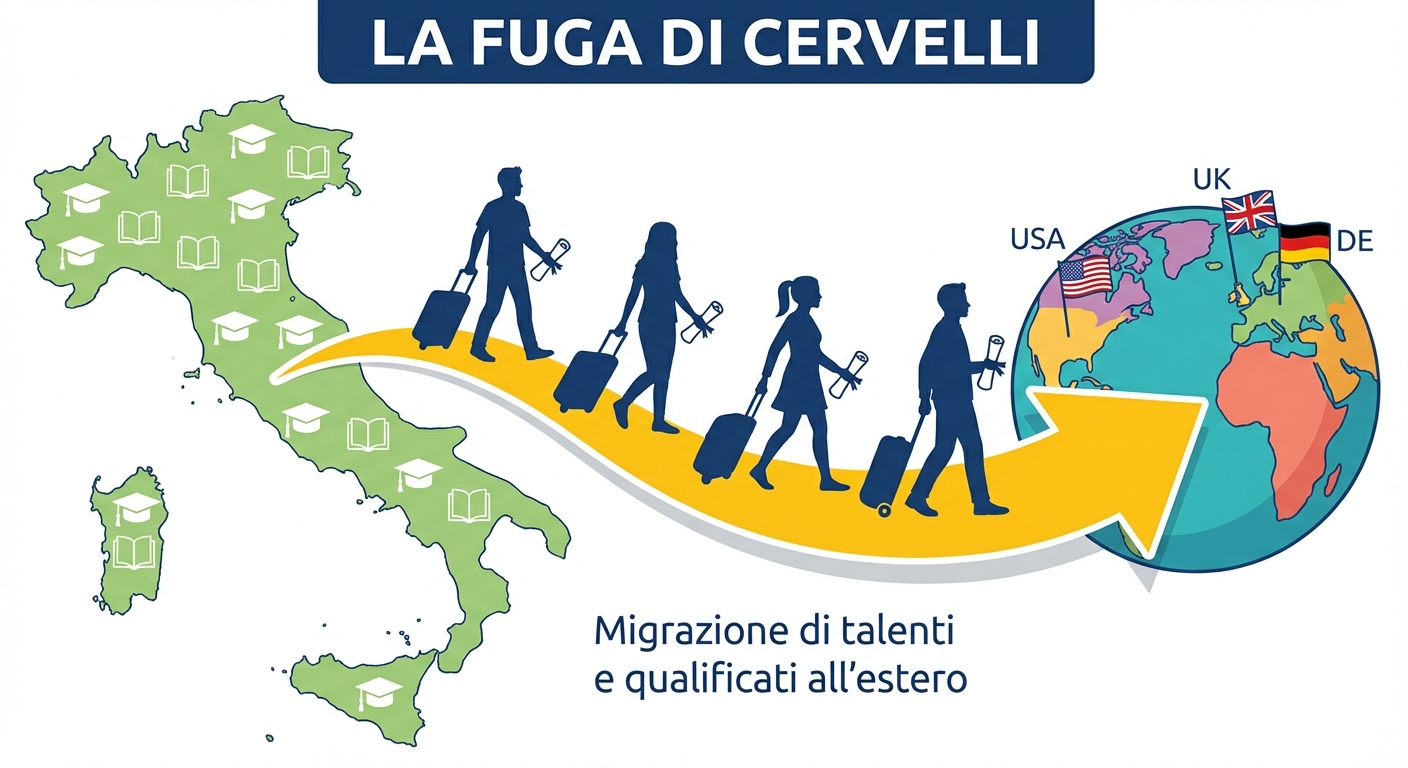
- La fuga di cervelli (The Brain Drain): Many highly educated young Italians leave Italy to work abroad (London, Berlin, USA) because of low wages and lack of opportunities at home.
Social Conscience and Civic Responsibility (Coscienza sociale e responsabilità civica)
This section deals with how individuals interact with society, human rights, and volunteer work.
Volunteerism (Il Volontariato)
Italy has a robust culture of volunteering, often filling gaps left by the state.
- Protezione Civile: A national body of volunteers and professionals that responds to natural disasters (earthquakes, floods).
- Associazioni di volontariato: Many Italians volunteer in secular organizations or through the parish (parrocchia).
- Terms to know:
- La solidarietà (Solidarity)
- Il terzo settore (The non-profit sector)
- L'assistenza (Assistance/care)
Rights and Citizenship
- Cittadinanza: Currently, Italian citizenship is largely based on Ius Sanguinis (right of blood/ancestry), not Ius Soli (right of soil/birthplace). This is a major topic of debate regarding children of immigrants born in Italy (le seconde generazioni).
- Pari opportunità: Equal opportunities (often referring to gender equality in the workplace).
Grammar for Global Challenges: The Subjunctive
When discussing these topics, you are almost always expressing opinions, doubts, or emotional reactions. You MUST use the congiuntivo (subjunctive).
Examples:
- Environment: È necessario che il governo investa nelle energie rinnovabili. (It is necessary that the government invest in renewable energy.)
- Politics: Penso che la disoccupazione sia un problema grave. (I think that unemployment is a serious problem.)
- Civic Duty: Dubito che la gente faccia abbastanza volontariato. (I doubt people do enough volunteering.)
Common Mistakes & Pitfalls
Here are the most frequent errors students make when writing or speaking about global challenges:
Gender of "Problema": The word problema ends in -a, but it is masculine.
- Incorrect: La problema ambientale.
- Correct: Il problema ambientale; i problemi globali.
False Cognates in Politics:
- La camera usually means "bedroom," but in politics, it means context "Chamber/House" (Camera dei Deputati).
- La noia means "boredom," not "annoyance" (which is il fastidio).
Overusing "La gente": Students often try to say "people are…" using la gente. Remember that la gente is singular.
- Incorrect: La gente sono preoccupate.
- Correct: La gente è preoccupata (singular feminine agreement).
Mixing up Government Roles: Do not compare the US President strictly to the Italian President. In terms of power and policy, the US President is more comparable to the Italian Presidente del Consiglio.
"Supportare" vs. "Sopportare":
- To support an idea/cause (civic duty): Sostenere or Appoggiare.
- To tolerate/stand something: Sopportare.
- Avoid: "Io supporto l'ambiente."
- Use: "Io sostengo la causa ambientale."