Unit 9: Globalization - Innovations, Challenges, and Human Rights
Advances in Technology After 1900
The 20th and 21st centuries witnessed an explosion of technological innovation that fundamentally altered how humans interact, travel, and survive. In AP World History, the focus is not just on what was invented, but how these inventions drastically reduced geographic barriers and created a shared global culture—a concept often called Time-Space Compression.
Communication and Transport: The Shrinking World
New modes of communication and transportation eliminated the problem of distance, creating a globally connected economy and culture.
- Radio and Cellular Communication: From the early spread of radio in the 1920s to the proliferation of the internet and smartphones today, information now travels instantly. This allows for immediate global news cycles and the spread of culture (e.g., K-Pop, Hollywood movies).
- Transnational Travel: The commercialization of air travel allowed for rapid movement of people for business and tourism.
- Shipping Containers: Perhaps the most underrated invention, standard shipping containers drastically lowered the cost of transporting goods, enabling the global supply chain.
Energy Technologies
Humanity shifted towards energy sources that offered higher power density, fueling industrial output.
- Petroleum and Nuclear Power: While coal remained important, the shift to oil (petroleum) fueled the automotive and aviation industries. Nuclear power emerged as a cleaner but controversial high-output energy source.
- Renewable Energy: In response to climate change, recent decades have seen a push toward wind, solar, and hydroelectric power.
The Green Revolution
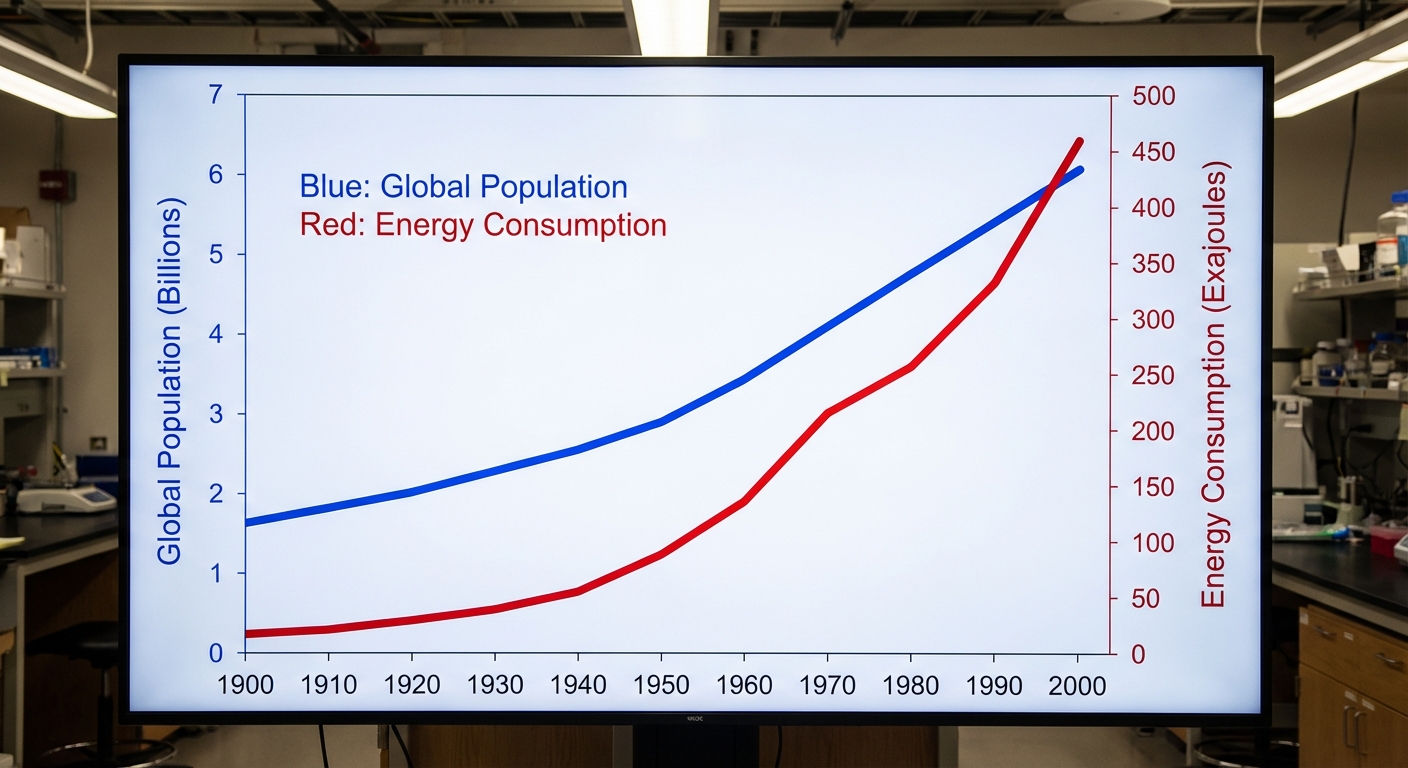
One of the most critical topics for Unit 9 is the Green Revolution (mid-20th century). It was a response to global hunger concerns as the population skyrocketed.
- Key Scientists: Led by Norman Borlaug and others.
- The Innovation: Development of genetically modified (GMO), high-yield, disease-resistant varieties of grains (wheat, rice, and corn).
- The Methods: Heavy use of chemical fertilizers, pesticides, and mechanized irrigation.
- Impact:
- Positive: Saved an estimated billion people from starvation (particularly in India, Mexico, and East Asia).
- Negative: Environmental degradation (soil depletion), chemical runoff, and the marginalization of small farmers who could not afford the new expensive technology.
Technological Advances and Limitations: Disease
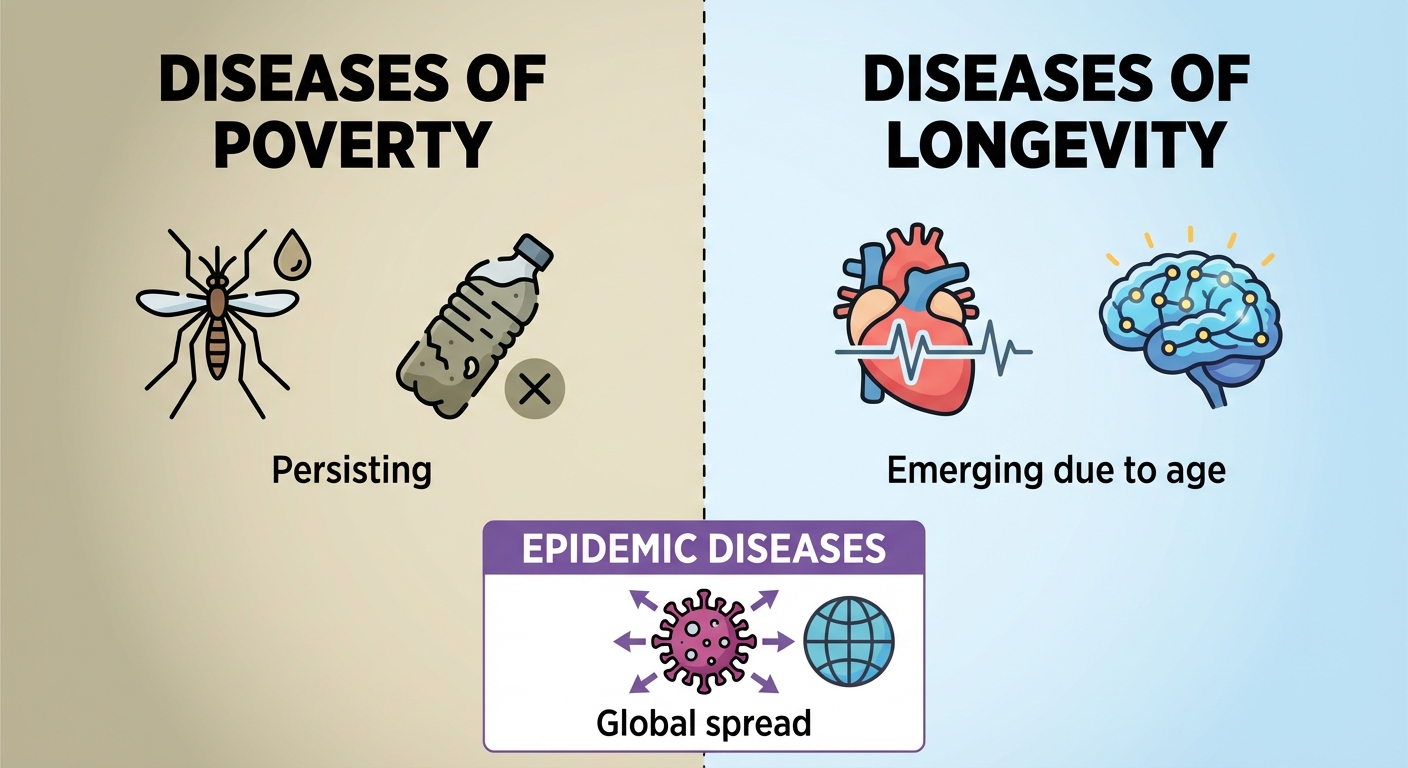
Medical innovations have extended human life expectancy dramatically, but the globalized world also facilitates the rapid spread of pathogens. The AP curriculum categorizes diseases into three specific types based on their context.
Medical Innovations
- Antibiotics: The discovery of Penicillin (1928, mass interaction in WWII) turned once-deadly bacterial infections into treatable inconveniences.
- Vaccines: Widespread vaccination campaigns eradicated Smallpox (1980) and nearly eliminated Polio.
- Reproductive Technology: Birth control pills gave women greater control over fertility, transforming gender roles and workforce participation.
1. Diseases Associated with Poverty
Despite medical advances, diseases persist in regions lacking infrastructure, clean water, and access to healthcare (often in the Global South).
- Malaria: Transmitted by mosquitoes; persists in tropical regions.
- Tuberculosis: An airborne bacterial infection associated with crowded, unsanitary urban conditions.
- Cholera: Spread through contaminated water.
2. Emerging Epidemic Diseases
Globalization creates "superhighways" for viruses. An outbreak in one nation can become a pandemic in days.
- 1918 Influenza Pandemic: The "Spanish Flu" killed millions after WWI.
- HIV/AIDS: Emerged in the 1980s, devastating communities globally, particularly in Sub-Saharan Africa. Antiretroviral drugs (ART) eventually turned it into a manageable chronic condition.
- COVID-19: Demonstrated the vulnerability of global supply chains and healthcare systems.
3. Diseases Associated with Longevity
As people live longer due to better hygiene and antibiotics, they survive long enough to develop age-related or lifestyle-related illnesses.
- Heart Disease: Linked to sedentary lifestyles and processed foods.
- Alzheimer's Disease: A neurodegenerative form of dementia affecting the elderly.
Calls for Reform and Responses
Globalization and the World Wars prompted a re-evaluation of how humans treat one another. The 20th century is defined by a shift toward Rights-Based Discourses—the idea that all humans possess inherent rights.
Challenging Old Assumptions: Race, Class, and Gender
Old social hierarchies were challenged effectively after 1900.
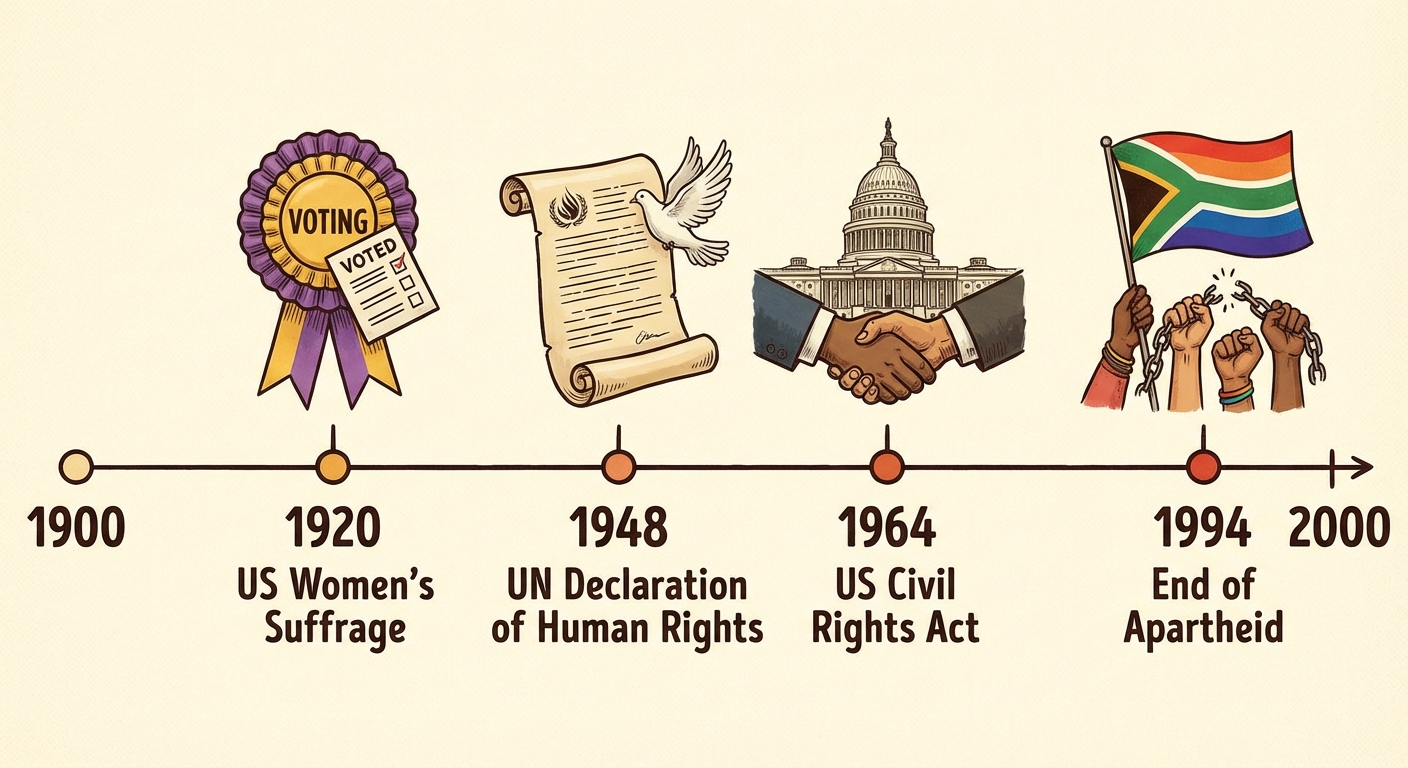
- The U.N. Universal Declaration of Human Rights (1948): Established basic rights (freedom of speech, religion, and freedom from fear/want) as a global standard for the first time.
- Women's Rights:
- Suffrage: Most nations granted women the right to vote by the mid-20th century (e.g., US in 1920, Brazil in 1932).
- CEDAW: The UN International Bill of Rights for Women.
- Negritude Movement: A literary and ideological movement in French West Africa and the Caribbean that celebrated black heritage and resisted French colonial culture.
Ending Racial Segregation
Two major systems of institutionalized racism were dismantled through nonviolent resistance and global pressure.
- Civil Rights Movement (USA): Led by figures like Dr. Martin Luther King Jr., utilizing nonviolent civil disobedience to achieve the Civil Rights Act (1964) and Voting Rights Act (1965).
- Apartheid (South Africa): A strict legal system of racial segregation enforced by the white minority government.
- Nelson Mandela: Leader of the African National Congress (ANC). Imprisoned for 27 years.
- Global Response: The world community placed strict economic sanctions on South Africa, crippling their economy and forcing the end of Apartheid. Mandela was elected President in 1994.
Liberation Theology
A movement within the Catholic Church, primarily in Latin America, which interpreted the teachings of Jesus as a call to liberate the poor from political and economic oppression. It combined Christian theology with socialist political activism.
Environmental Movements
As globalization accelerated industrial damage, movements arose to protect the Earth.
- Greenpeace: Focused on direct action against whaling, nuclear testing, and deforestation.
- Green Belt Movement: Founded by Wangari Maathai in Kenya. It focused on planting trees to prevent soil erosion and providing firewood, empowering women in rural communities simultaneously.
Common Mistakes and Pitfalls
- Green Revolution ≠ Green Energy: Students often confuse the Green Revolution (bio-engineering crops to stop hunger) with the modern Green movement (solar panels/windmills). They are totally different.
- "Eradicated" vs. "Treatable": Do not say Malaria was eradicated. Only Smallpox has been totally eradicated in humans. Other diseases are just managed.
- Globalization Resistance: Students often think protesters against the World Trade Organization (WTO) hate trade. Often, they are protesting unequal labor laws or environmental damage, not the concept of trade itself.
- Apartheid Timeline: Remember that Apartheid did not end until the 1990s. It is a very recent historical event.