APES Unit 6: Renewable Energy Resources
Energy from Biomass
Biomass energy is derived from organic material that contains stored chemical energy from the sun. It is the dominant source of energy in many developing nations, primarily used for heating and cooking.
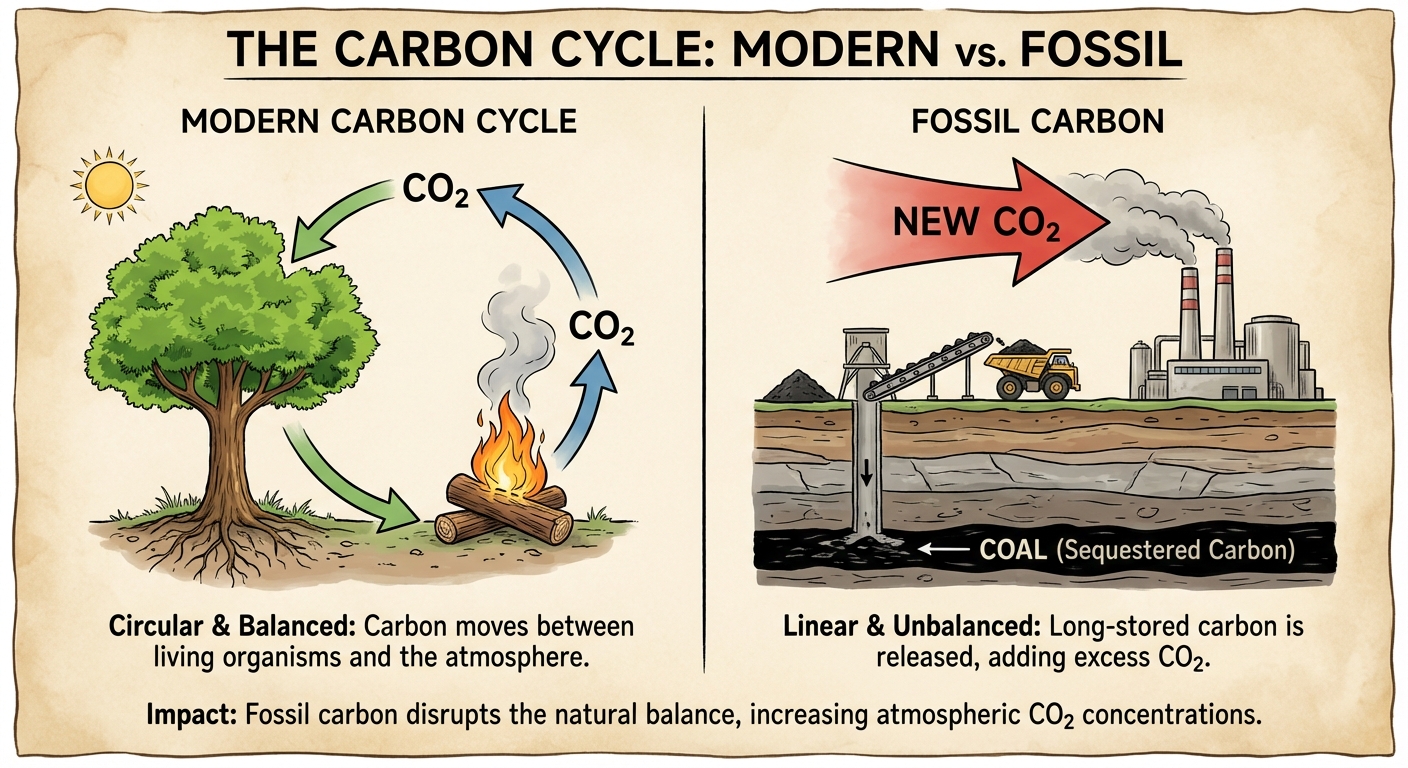
Modern Carbon vs. Fossil Carbon
The central concept in biomass energy is the carbon cycle.
- Modern Carbon: Carbon found in plants and biomass that was captured from the atmosphere recently (via photosynthesis). Burning it returns that carbon to the atmosphere, theoretically making it carbon neutral regarding climate change.
- Fossil Carbon: Carbon stored in coal and oil for millions of years. Burning it adds new carbon to the rapid atmospheric cycle.
Forms of Biomass
- Solid Biomass:
- Wood & Charcoal: Primary fuel in developing countries. Charcoal is lighter and more energy-dense than wood but produces more smoke.
- Manure: Used for heating/cooking where wood is scarce. Benefits include removing harmful bacteria from the environment, but burning it releases particulate matter.
- Biofuels (Liquid):
- Ethanol: Alcohol made by fermenting plant starches (corn in the US, sugarcane in Brazil). Usually mixed with gasoline (e.g., E85).
- Biodiesel: Produced from vegetable oils (soy) or recycled restaurant grease.
Environmental Impacts
While renewable, biomass is not necessarily "clean."
- Air Pollution: Burning solid biomass releases Particulate Matter (PM), Carbon Monoxide (CO), and Nitrogen Oxides ($NO_x$).
- Indoor Air Pollution: Poorly ventilated burning leads to respiratory illness in developing nations.
- Deforestation: Overharvesting wood leads to soil erosion and habitat loss.
Solar Energy
Solar energy captures the sun's irradiance to generate heat or electricity. It is geographically dependent on solar intensity.
Passive vs. Active Solar
| Feature | Passive Solar Design | Active Solar Energy |
|---|---|---|
| Mechanism | Architectural design without moving parts. | Uses pumps or fans to move heat. |
| Key Elements | South-facing windows, Thermal Mass (stone/concrete floors to store heat), roof overhangs | Solar water collectors/heaters on roofs. |
| Goal | Reduce heating/cooling costs naturally. | Heat water or fluids for domestic use. |
Photovoltaic (PV) Cells
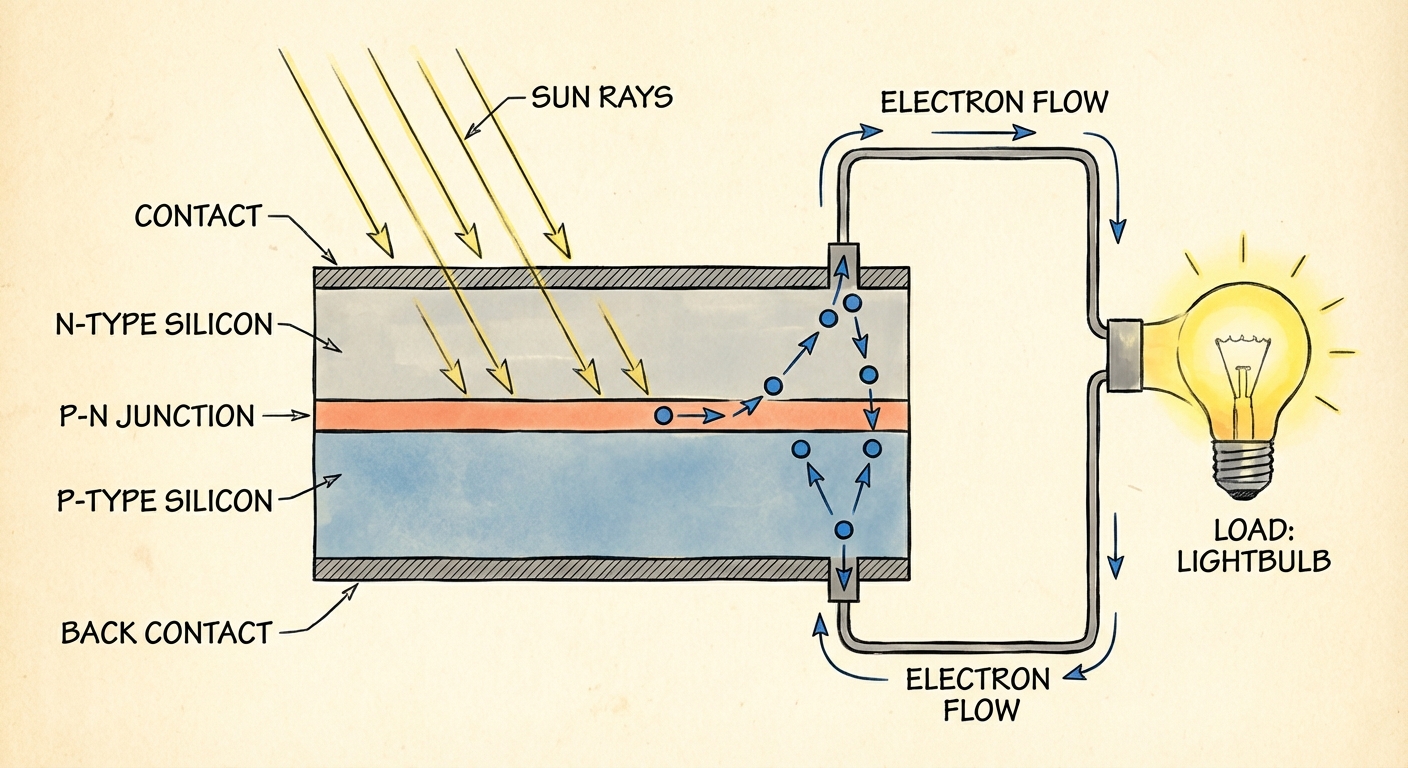
Photovoltaic cells generate electricity directly.
- Physics: Light strikes a semiconductor (usually Silicon), causing electrons to flow. This creates a direct current (DC) which is converted to alternating current (AC) by an inverter.
- Pros: Scalable (calculator to grid-scale), no emissions during operation.
- Cons: Toxic metals (cadmium) used in manufacturing, difficult to recycle, intermittency (requires battery storage).
Concentrated Solar Power (CSP)
CSP systems use huge arrays of mirrors or lenses to focus sunlight on a central tower or tube. The intense heat boils water to create steam, turning a turbine.
- Limitations: Requires vast land areas; the intense beam can incinerate birds/insects mid-air; requires water for cooling in arid environments.
Hydroelectric Power
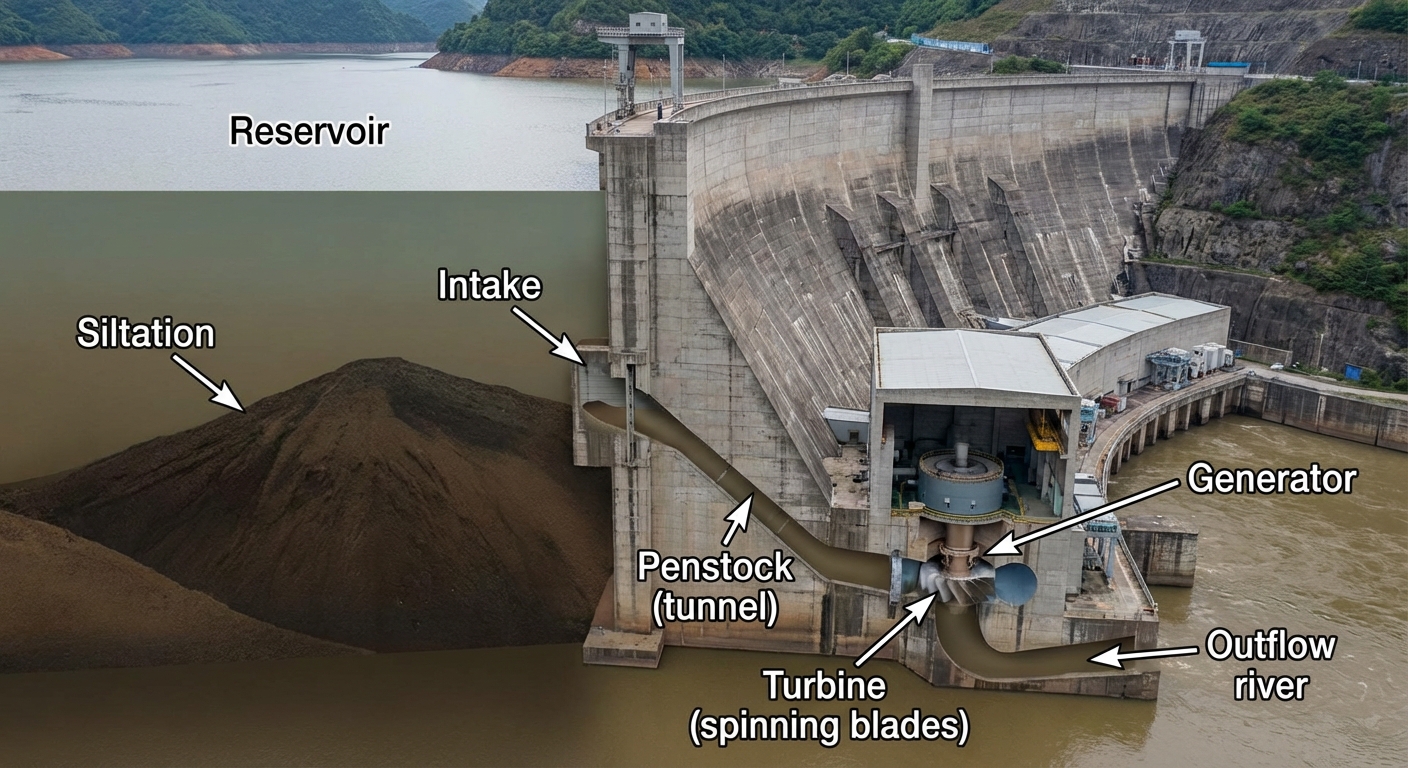
Hydroelectricity utilizes the kinetic energy of moving water to turn a turbine. It is currently the largest source of renewable electricity globally.
Methods of Generation
- Impoundment (Dams): Holds water in a reservoir. Operators control the flow through the dam to meet electricity demand.
- Run-of-River (Diversion): Channels a portion of a river through a canal. Smaller impact, but relies on natural river flow (can't store power for later).
- Tidal Energy: Uses the rise and fall of tides. Highly predictable but location-limited.
(Where $h$ is the "head" or vertical distance the water falls)
Environmental Impacts
- Siltation: This is a major APES concept. Sediments normally carried downstream build up behind the dam, reducing water capacity and depriving downstream ecosystems of nutrients.
- Fish Migration: Dams block upstream migration for salmon. Fish Ladders are engineered solutions to allow passage.
- Methane Release: Flooded vegetation in the reservoir decomposes anaerobically (without oxygen), releasing methane ($CH_4$).
Geothermal Energy
Geothermal energy utilizes heat from the Earth's natural radioactive decay of elements in the core.
Geothermal Power Plants
- Mechanism: Deep wells are drilled to bring steam or hot water to the surface to spin turbines.
- Reliability: Unlike wind/solar, this is a baseload power source (available 24/7).
- Emissions: Very low $CO2$, but creates Hydrogen Sulfide ($H2S$) gas which smells like rotten eggs.
Ground Source Heat Pumps
Note: This is different from a power plant.
This system uses the constant temperature of the soil (approx 50-60°F) just 10 feet underground to heat/cool homes. It circles fluid through pipes buried in the yard to exchange heat.
Hydrogen Fuel Cells
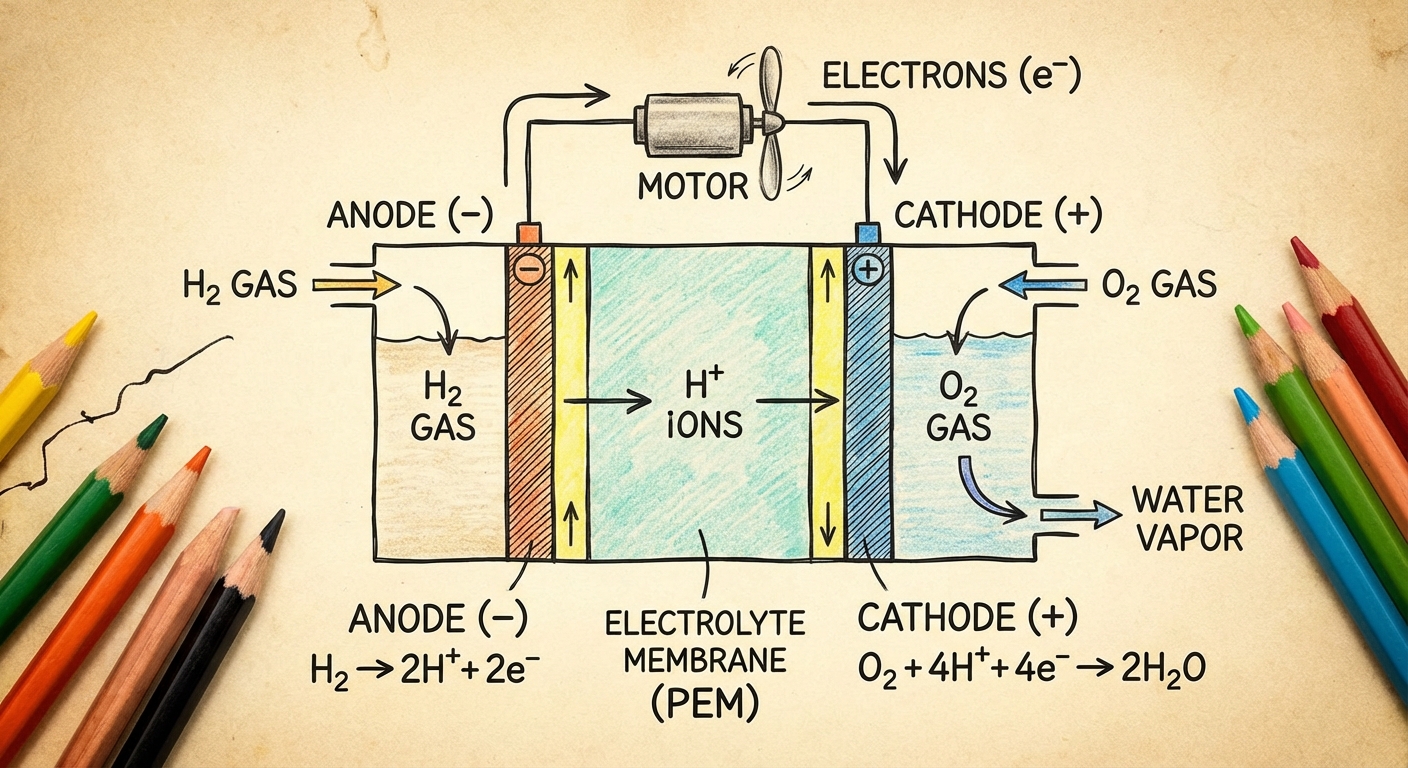
Hydrogen fuel cells function like a battery that doesn't run flat as long as fuel is supplied. They generate electricity chemically, not by combustion.
The Chemistry
The reaction combines Hydrogen and Oxygen to produce water and energy.
Pros and Cons
- Pro: The only emission is pure water vapor.
- Con: Pure Hydrogen ($H2$) gas does not exist naturally on Earth. It must be separated from methane ($CH4$) or water ($H_2O$) using energy.
- Net Energy: If the electricity used to create the hydrogen comes from coal, the vehicle is not truly emission-free.
Wind Energy
Wind energy converts the kinetic energy of moving air into electricity using rotor blades.
Mechanics and Location
- Mechanism: Wind turns the blades $\rightarrow$ gearbox increases rotational speed $\rightarrow$ generator produces electricity.
- Offshore Wind: Stronger and more consistent than onshore wind.
- Land Use: Wind farms can share land with agriculture (grazing/crops).
Drawbacks
- Use conflicts: Concern over noise pollution and aesthetic complaints (NIMBY - Not In My Backyard).
- Wildlife: Collisions with bats and birds (migratory paths must be considered).
Common Mistakes & Pitfalls
- Confusing "Clean" with "Renewable": Biomass is undoubtedly renewable (we can grow more trees), but it is NOT clean air energy. It creates significant smog and particulate matter.
- Solar vs. Geothermal Origins: Remember that wind, biomass, and hydro are all ultimately solar-powered (sun drives weather cycles and photosynthesis). Geothermal is the only renewable on this list derived from the Earth itself, not the Sun.
- Steam vs. Photovoltaic: Students often write that solar panels use steam. PV cells do NOT use steam; they use electron flow. Only CSP (Concentrated Solar) uses steam.
- Hydrogen as a Source: Hydrogen is an energy carrier (like a battery), not a primary source (like coal or wind). You need a primary source to make the hydrogen first.
- Nuclear is NOT Renewable: While nuclear is non-emitting, it relies on Uranium ore, which is finite. Do not list it in an essay about renewable strategies.