Comprehensive Guide to Family Dynamics in German-Speaking Cultures
Unit 1: Families in Different Societies
Welcome to your detailed study guide for the AP German Language and Culture Theme: Familie und Gemeinschaft (Families and Communities). This note specifically covers the section on Family Structures and Values. Success in this unit requires understanding not just vocabulary, but the sociological shifts occurring in the DACH (Deutschland, Austria, Switzerland) region.
Family Roles and Relationships (Familienstrukturen und Beziehungen)
In modern German-speaking societies, the definition of "family" has evolved significantly away from traditional models. Understanding these nuances is critical for the Cultural Comparison task on the AP exam.
Types of Families
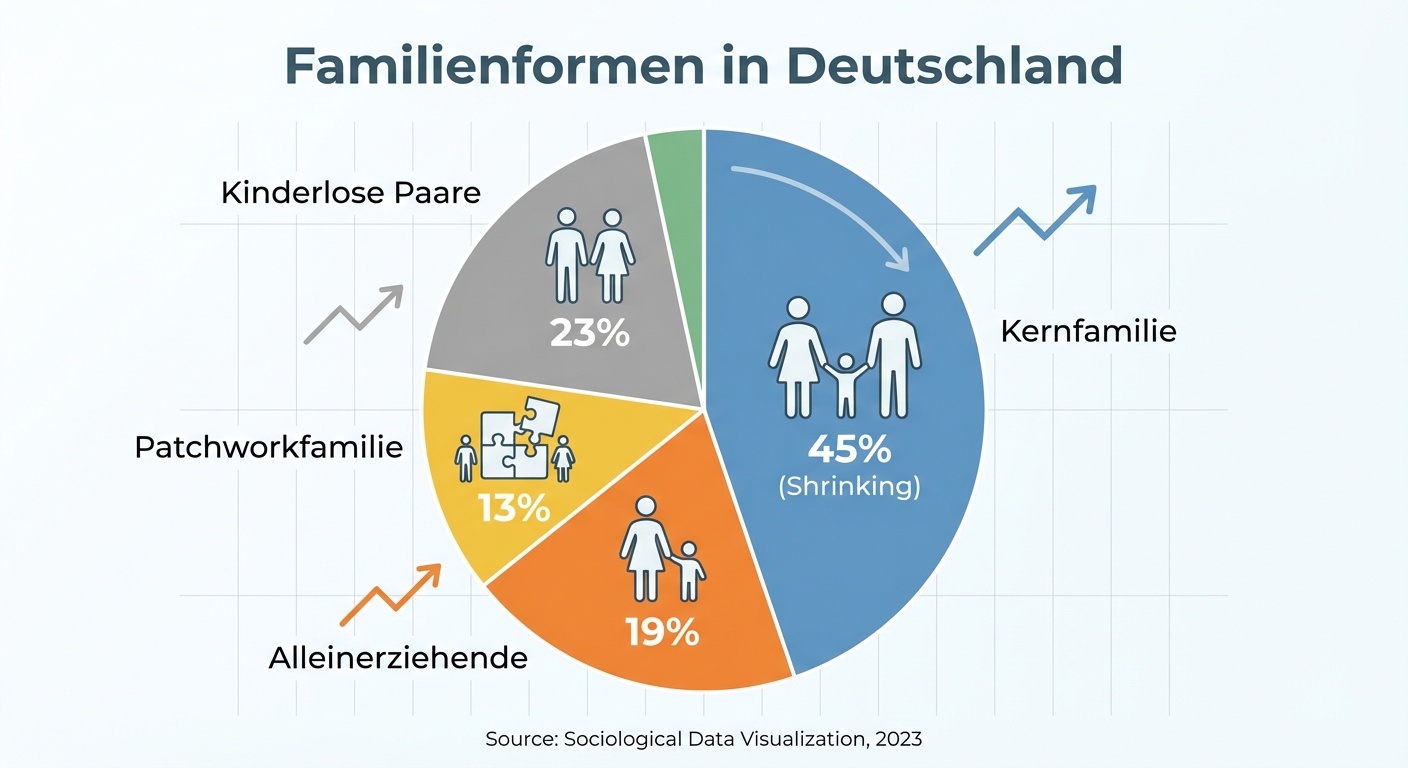
The traditional nuclear family (die Kernfamilie)—consisting of a married father, mother, and children—is no longer the sole standard. You must be able to describe various family structures:
- Die Kernfamilie / Die Kleinfamilie: The traditional two-parent household.
- Die Großfamilie: Extended family living together (grandparents, parents, children). This is less common in urban centers but historically significant.
- Die Einelternfamilie / Alleinerziehende: Single-parent families. Use the term Alleinerziehende (single parents) typically implying a single mother (alleinerziehende Mutter) or father.
- Die Patchworkfamilie: Blended families consisting of parents with children from previous relationships.
- Die Regenbogenfamilie: Same-sex couples raising children. (Same-sex marriage, die Ehe für alle, was legalized in Germany in 2017).
- Die kinderlose Ehe: Married couples who choose not to have children or cannot have them.
Current Demographics and Trends
A major topic in German sociology is the demographic change (der demografische Wandel). Germany has one of the lowest birth rates in the world.
- Low Birth Rate (niedrige Geburtenrate): Many Germans delay having children until their 30s to focus on careers. The average is roughly 1.5 children per woman, which is below the replacement level.
- Female Workforce Participation: Historically, West Germany held a conservative view (often summarized by the 3 Ks: Kinder, Küche, Kirche). Today, most women work, but finding childcare (die Kinderbetreuung) remains a challenge. A mother who works and puts her child in daycare early was historically stigmatized as a Rabenmutter (raven mother), though this attitude is rapidly fading.
Rights and Duties (Rechte und Pflichten)
German law grants children significant independence earlier than in some cultures.
- Taschengeld (Allowance): Many German parents give strict allowances to teach financial responsibility early. There is even a "Taschengeldparagraph" in German law allowing minors to make small purchases without parental consent.
- Erziehung (Upbringing): The German parenting style often emphasizes Selbstständigkeit (independence/self-reliance). It is common for elementary students to walk to school alone or take public transit (Öffentliche Verkehrsmittel).
Customs, Ceremonies, and Traditions (Sitten, Bräuche und Traditionen)
Germany, Austria, and Switzerland have deep-rooted traditions surrounding the life cycle. You must distinguish between religious and civil traditions.
Marriage (Die Hochzeit vs. Die Ehe)
It is crucial to understand the legal requirement in DACH countries:
- Das Standesamt (Civil Registry Office): A couple must be married here for it to be legal. This is often a small, bureaucratic ceremony.
- Die kirchliche Trauung (Church Wedding): This is optional and purely ceremonial. It usually happens after the civil ceremony, sometimes the next day or even weeks later.
Key Tradition: Der Polterabend
Before the wedding, guests gather to smash porcelain (never glass!) on the ground. The couple must clean it up together to symbolize that they can handle difficult tasks together.
Mnemonic: "Scherben bringen Glück" (Shards bring luck).
Childhood and Education
Die Schultüte (Zuckertüte)
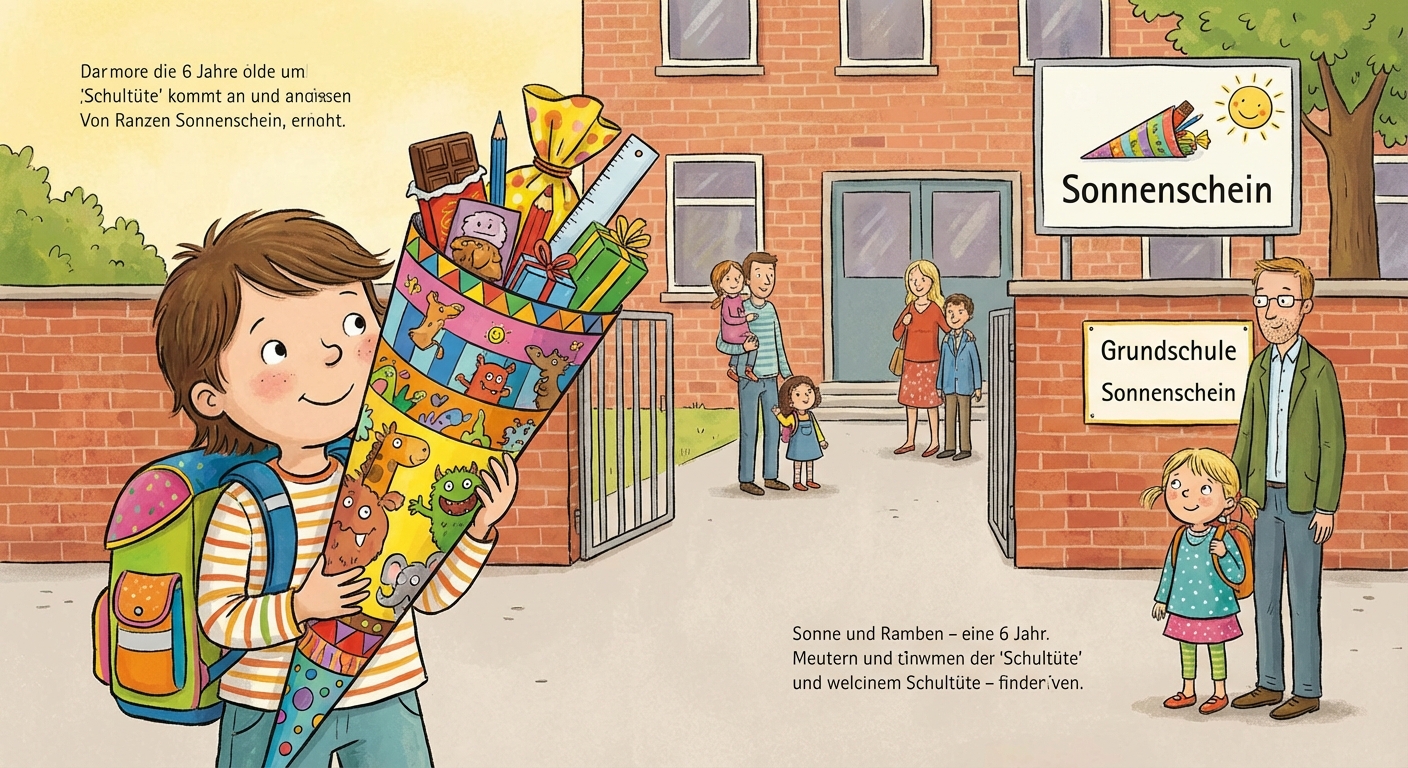
On the first day of first grade (der erste Schultag), children receive a large, cone-shaped container filled with candy, school supplies, and small toys. This is a uniquely German tradition designed to "sweeten" the start of the "seriousness of life" (der Ernst des Lebens).
Coming of Age (Das Erwachsenwerden)
There is a distinct East-West historical divide here:
| Tradition | Primary Region/Group | Description |
|---|---|---|
| Die Konfirmation | Protestant (Evangelisch) | Religious ceremony around age 14 marking entry into adult church life. |
| Die Kommunion / Firmung | Catholic (Katholisch) | First Communion (age 9) and Confirmation (age 14-15). |
| Die Jugendweihe | East Germany (secular) | A secular coming-of-age ceremony around age 14. Originating in the GDR (DDR), remains very popular in Eastern Germany as a non-religious alternative. |
Generational Differences and Perspectives (Generationenkonflikte)
As the population ages (die Überalterung der Gesellschaft), the relationship between generations changes.
Elderly Care (Altenpflege)
With fewer young people to care for the elderly, the traditional model of grandparents living with the family is declining. However, new concepts are emerging:
- Das Altenheim / Das Pflegeheim: Nursing homes. Often viewed negatively or as a last resort.
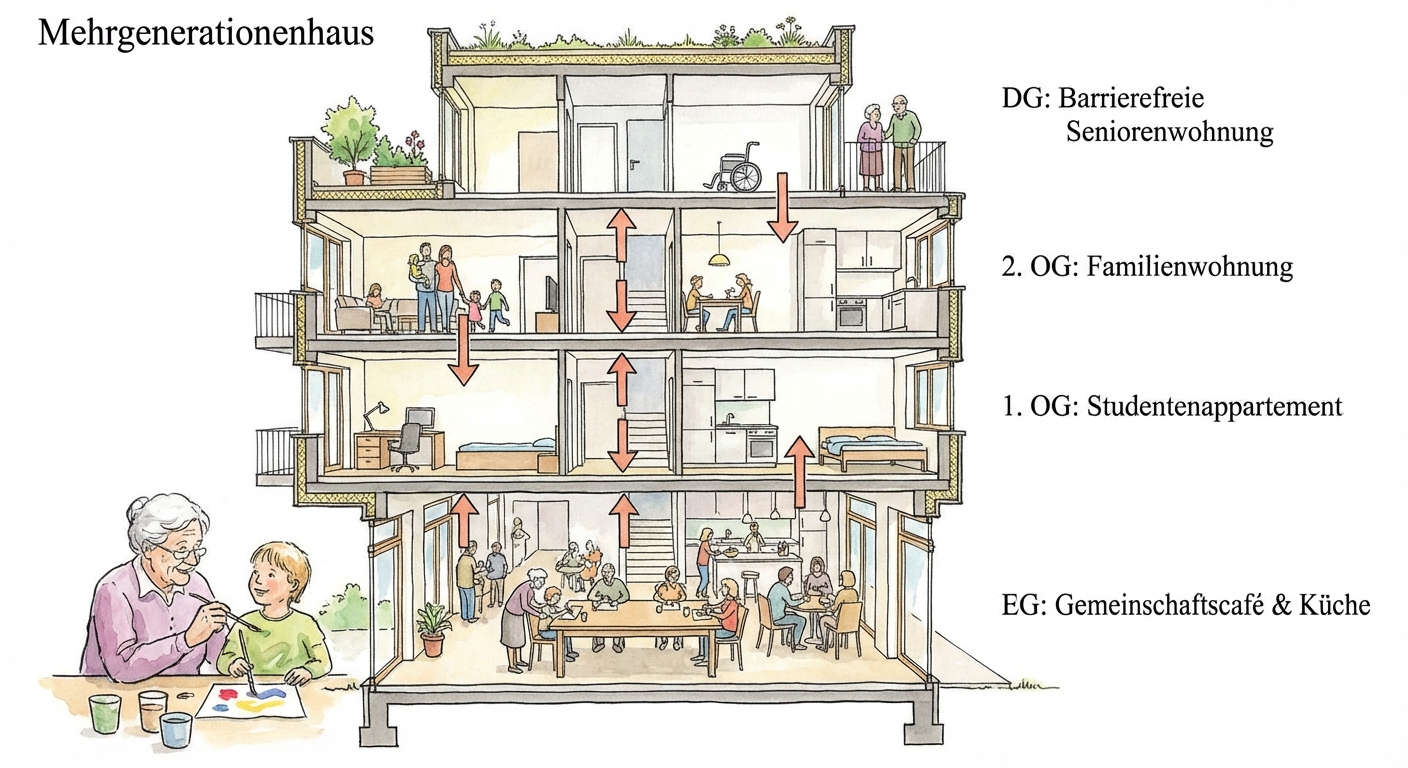
- Das Mehrgenerationenhaus: A sociological model encouraged by the government. These represent community centers or living complexes where elderly people, young families, and students live together or interact. The elderly help with childcare (Leihomas - "rented grandmas"), and the young help with shopping or technology. This combats loneliness among seniors.
Young Adults and Independence
Nesthocker (Nest Squatters): This is a slang term for young adults (usually men) who live with their parents well into their late 20s.
- Reasons: High cost of rent in university cities (like Munich or Hamburg), long duration of university studies, and comfort.
- Comparison: While US students often leave at 18 for "college dorms," German universities rarely have dorms in the US sense. German students often live in a WG (Wohngemeinschaft)—a shared apartment—if they don't live at home.
Vocabulary Checklist
Ensure you can use these terms in a sentence for your Email Reply or Argumentative Essay.
- verwitwet: widowed
- sich scheiden lassen: to get divorced (reflexive!)
- die Beziehung: relationship
- die Erziehung: upbringing/education (at home)
- der Trauschein: marriage certificate
- vereinbaren: to reconcile/combine (specifically family and career: Familie und Beruf vereinbaren)
Common Mistakes & Pitfalls
Hochzeit vs. Ehe:
- Die Hochzeit is the wedding ceremony/party.
- Die Ehe is the state of being married (marriage institution).
- Incorrect: "I want a happy Hochzeit." $\rightarrow$ Correct: "Ich möchte eine glückliche Ehe."
Parents vs. Relatives:
- Eltern means parents. Verwandte means relatives.
- Do not say meine Eltern when you mean your cousins and aunts.
To Marry:
- Avoid literal translations of "to get married with."
- Correct: "Er heiratet sie" (direct object) OR "Sie haben geheiratet."
- Correct: "Er ist mit ihr verheiratet" (He is married to her).
Friend vs. Boyfriend/Girlfriend:
- Mein Freund/Meine Freundin usually implies a romantic partner.
- Ein Freund von mir implies a platonic friend.
Dative Plural:
- When talking about helping family members, remember the Dative case requires an 'n' on the noun in the plural.
- Incorrect: "Ich helfe meinen Großeltern_."
- Correct: "Ich helfe meinen Großelternn." (Wait, actually Großeltern already ends in -n, but for other nouns like Kindern: "Ich helfe den Kindern.")
AP Exam Tip: Cultural Comparison
When answering "How does the structure of families affect society in a German-speaking country compared to your own?":
- Acknowledge the diversity (Patchwork, Alleinerziehende).
- Mention the state support (Kindergeld - state money for children, Elterngeld - parental allowance) in Germany compared to the US.
- Discuss the demographic crisis in Germany as a driving force for policy changes.