AP Spanish Language and Culture - Unit 4 Study Guide
Unit 4: Science and Technology (La ciencia y la tecnología)
Unit Overview
This unit explores how science and technology influence our lives and the world around us. In the AP Spanish Language and Culture curriculum, you must not only know vocabulary but also understand cultural products, practices, and perspectives. The central theme is the tension between tradition and innovation, and the ethical implications of progress.
Essential Questions (Contextos)
- El acceso a la tecnología: How does access to technology affect equity and quality of life?
- El cuidado de la salud y la medicina: How do healthcare systems differ across the Spanish-speaking world?
- Las innovaciones tecnológicas: What is the impact of recent inventions?
- La ciencia y la ética: What ethical questions are raised by scientific advancement?
- Los fenómenos naturales: How does science help us manage natural disasters?
4.1 Access to Technology (El acceso a la tecnología)
The Digital Divide (La brecha digital)
Definition: The gap between those who have easy access to the internet and technology workers and those who do not.
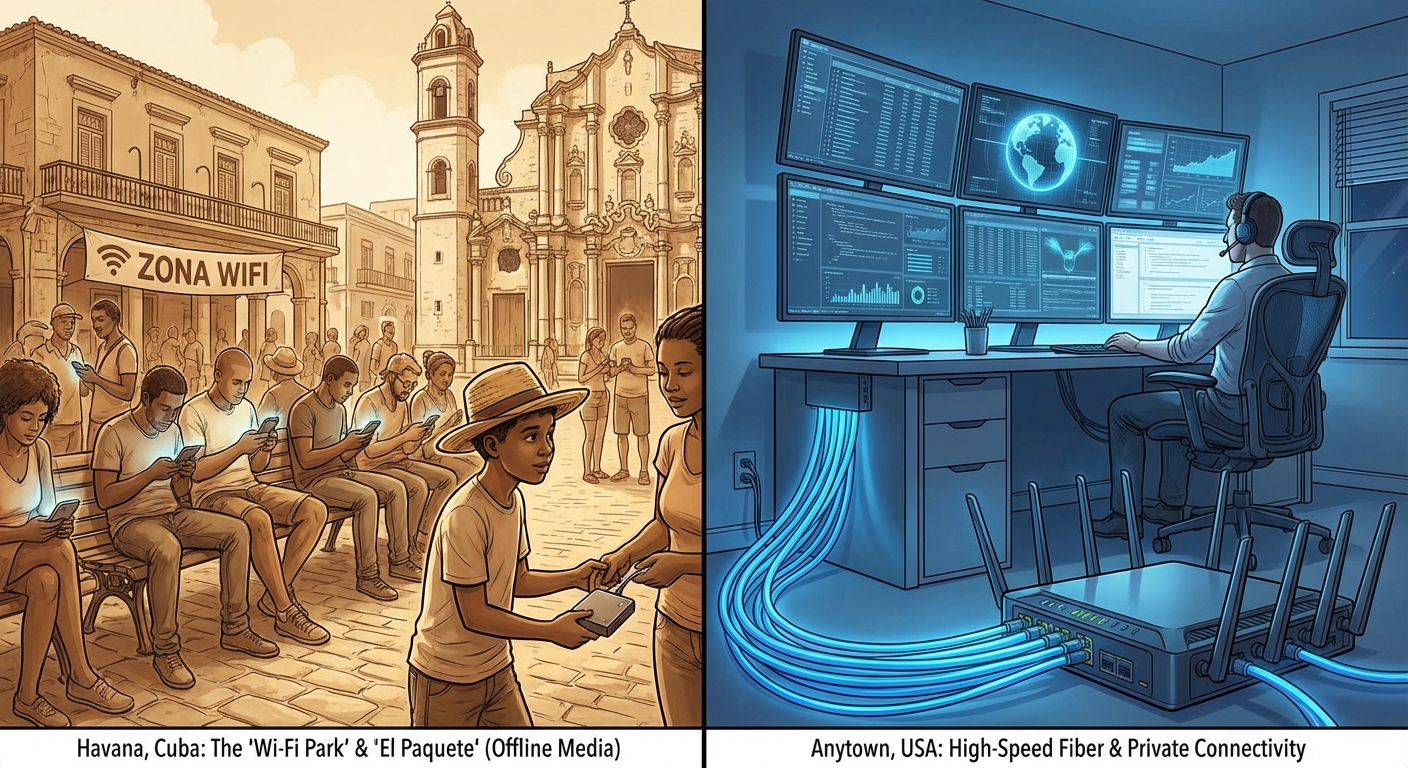
Case Study: Cuba vs. United States
This is a classic comparison for the AP Exam.
Cuba: Restricted & Resourceful
- Penetration: Historically low (~5% traditionally), though rising with mobile data (3G/4G introduced in 2018 by ETECSA). However, cost remains prohibitive for the average salary.
- El Paquete Semanal: A unique cultural phenomenon. Because internet is expensive and slow, Cubans distribute "The Weekly Package"—a literal hard drive filled with downloaded internet content (news, YouTube, movies)—delivered person-to-person offline.
- Censorship: Government-controlled ISPs block dissenting political content. Public Wi-Fi parks (parques wifi) are common social gathering spots because home internet is rare.
United States: High Access
- Penetration: Over 90% access. Viewed as a utility essential for education and work.
- Infrastructure: Competition among private ISPs (Comcast, Verizon, etc.).
- Context: The debate in the US focuses on rural broadband access and Net Neutrality, rather than total lack of access.
Social Media (Las redes sociales)
| Influence | Positive Impact (El Positivo) | Negative Impact (El Negativo) |
|---|---|---|
| Activism | Mobilization (La movilización): Used for social justice (e.g., #NiUnaMenos in Argentina/Mexico against femicide, #1Oct in Catalonia). | Slacktivism: Passive support without real action. |
| Connection | Global Village: Connecting immigrants with families back home (remesas, video calls). | Isolation: El aislamiento social implies less face-to-face interaction. |
| Information | Democratization of information. | Fake News (Noticias falsas): Rapid spread of misinformation influencing elections or health decisions. |
4.2 Healthcare and Medicine (El cuidado de la salud y la medicina)
Traditional vs. Modern Medicine
A frequent topic in the Cultural Comparison section.
Modern Medicine (Medicina Occidental/Moderna):
- Prevalent in urban centers (Madrid, Buenos Aires, Mexico City).
- Universal Healthcare: Most Spanish-speaking countries (Spain, Costa Rica, Colombia) consider healthcare a constitutional right, offering universal public coverage, unlike the insurance-based system often seen in the US.
Traditional Medicine (Medicina Tradicional/Alternativa):
- Curanderos/Chamanes: Traditional healers who use herbs (hierbas), rituals, and spiritual cleansing. Common in rural areas of Mexico, Peru, and Bolivia.
- Integration: In countries like Bolivia, modern hospitals sometimes work alongside traditional Kallawaya healers to respect indigenous beliefs and improve patient trust.
- Farmacias de Guardia: In Spain, pharmacies operate on a rotation to ensure 24-hour access, a pivotal part of the community health structure.
Vaccine Development & Epidemics
- Cuba: Despite economic struggles, Cuba has a powerful biotech industry. They developed their own COVID-19 vaccines (Soberana 02, Abdala) and often export doctors/vaccines to other developing nations (