Power, Divinity, and Eternity: The Ancient Mediterranean (3500 BCE–300 CE)
Unit 2: Ancient Mediterranean, 3500 BCE–300 CE
Welcome to the cradle of Western art history. This unit covers a massive span of time and geography, ranging from the earliest city-states in Mesopotamia to the collapse of the Roman Empire. While the cultures vary, the central theme remains constant: Art is a tool for power.
Whether it’s a pharaoh ensuring his afterlife, a Greek city-state celebrating democracy, or a Roman emperor asserting control, these works were functional, symbolic, and deeply tied to the political and religious contexts of their time.
1. The Ancient Near East
Time Period: c. 3500 BCE – 641 CE (Focus covers Sumerian, Akkadian, Babylonian, Assyrian, and Persian)
Key Concept: The relationship between humans and the divine, often mediated by kings who claimed absolute power.
Core Concepts & Vocabulary
- Hierarchy of Scale: A technique where the most important figure (king or god) uses the largest space.
- Votive Offering: An object given to a deity as an act of worship or thanks.
- Ziggurat: A massive stepped tower on which a temple is built.
- Cuneiform: The earliest form of writing, developed by Sumerians.
Sumerian Art (c. 3500–2340 BCE)
Sumerians built the first city-states. Their art focused on religious devotion and the appeasement of gods who were seen as volatile.
➔ White Temple and its Ziggurat (Uruk, Iraq)
- Form: Mud-brick, colossal scale, tapering sides to shed water.
- Function: A high place for the god Anu (sky god) to descend. It physically elevated the priests above the populace.
- Context: Unlike Egypt's stone pyramids, Mesopotamia lacked stone. They used mud-brick, which required constant maintenance. The Bent-Axis Plan (angular changes in direction to reach the top) slowed down the approach, enforcing humility.

➔ Statues of Votive Figures
- Form: Wide eyes, hands clasped (prayer representation), cylindrical bodies. Geometric simplification.
- Function: Stand-ins for the donors. The wide eyes symbolize eternal wakefulness and awe before the god.
- Meaning: "It offers prayers." These were not portraits but conceptual representations of devotion.
➔ The Standard of Ur
- Context: Found in a Royal Cemetery. Shows the extensive trade network (lapis lazuli from Afghanistan, red limestone from India).
- Content: Two sides: War (chariots crushing enemies) and Peace (banquet). The King breaks the frame at the top, showing his primacy.
- Technique: Uses registers (horizontal bands) to organize the narrative.
Babylonian & Assyrian Art (c. 1792–539 BCE)
Art shifts toward law, intimidation, and the glorification of the monarch's strength.
➔ The Code of Hammurabi (Babylonian)
- Form: Black basalt stele.
- Content: Top register shows Hammurabi receiving the right to rule (ring and rod) from Shamash (sun god/judge). Below are 300 laws.
- Significance: Divine right to rule. The laws are immutable because they come from the gods.
➔ Lamassu (Assyrian)
- Form: Colossal limestone winged human-headed bulls. Monolithic (carved from one stone).
- Detail: They have 5 legs. From the front, they stand firm (guarding). From the side, they stride forward (movement).
- Function: Apotropaic (warding off evil). They guarded the gates of Sargon II, intimidating visitors.
Persian Art (c. 559–331 BCE)
The Achaemenid Empire was the largest the world had seen. Their art was cosmopolitan, blending styles from conquered nations to show inclusivity.
➔ Audience Hall (Apadana) of Darius and Xerxes
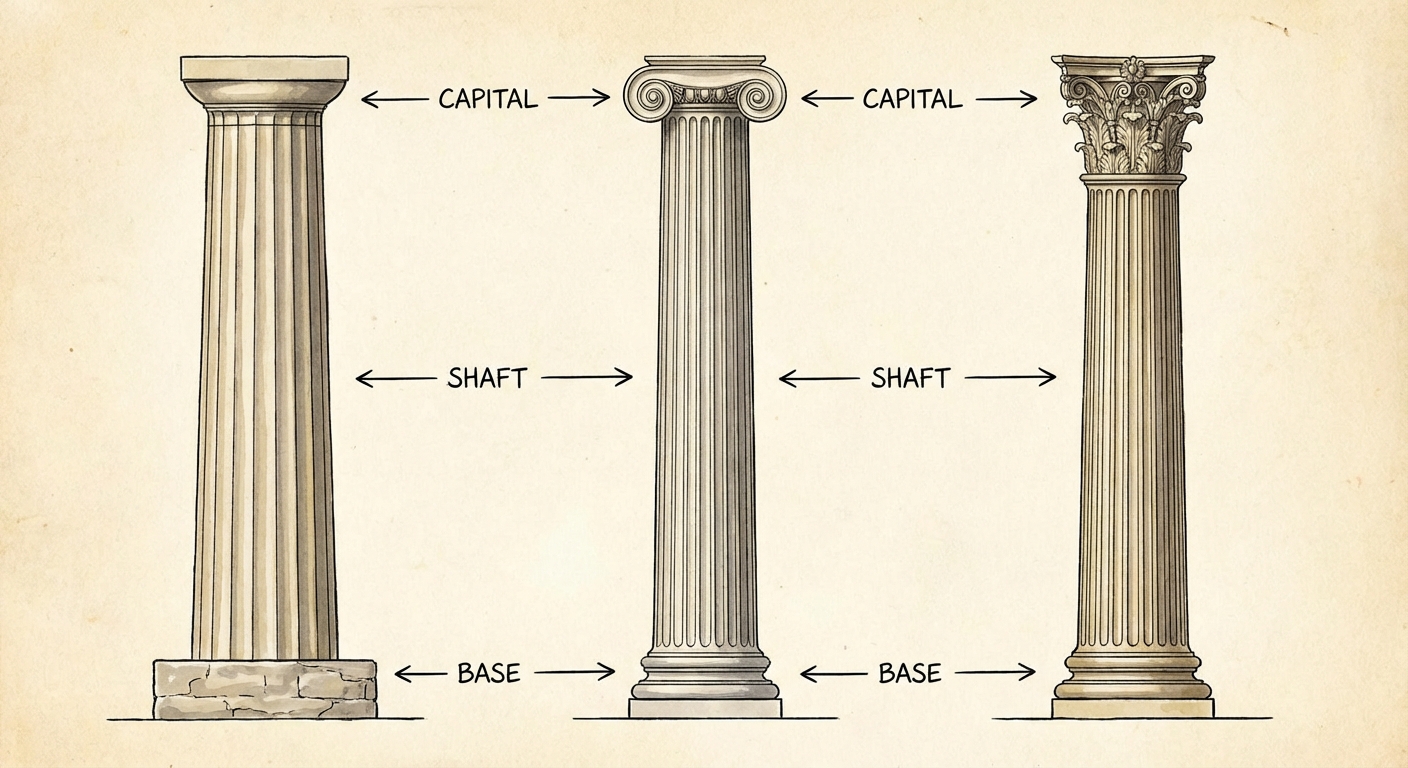
- Form: Hypostyle hall (forest of columns). Capitals feature bulls/lions.
- Content: Reliefs on the stairs depict valid subjects bringing tribute peacefully—propaganda of a tolerant, orderly empire rather than the violent Assyrian approach.
2. Ancient Egypt
Time Period: c. 3000–30 BCE
Key Concept: Permanence. Stability, order (Ma'at), and preparation for the afterlife.
Egyptian Conventions
- Canon of Proportions: A strict grid system ensuring figures were depicted ideally, not realistically.
- Composite View: Head in profile, eye frontal, shoulders frontal, legs in profile. Used to show the most recognizable parts of the body.
Predynastic & Old Kingdom
➔ Palette of King Narmer
- Significance: The "blueprint" for Egyptian art. Commemorates the unification of Upper and Lower Egypt.
- Symbolism: Narmer wears the crowns of both regions. He is crushing an enemy (order vs. chaos).
➔ Great Pyramids (Menkaura, Khafre, Khufu) & Sphinx
- Form: Geometric perfection, oriented to cardinal points. Reference to the benben stone (creation myth).
- Function: Tombs transforming the pharaoh's body into solar light to join Ra.
➔ King Menkaura and Queen
- Style: Idealized, rigid, timeless. Left foot forward (active) but hips don't shift. They are attached to the block (permanence).
- Gender: Figures are of similar height, indicating the queen's high status.
➔ The Seated Scribe
- Contrast Alert: Unlike the Pharaoh, the scribe is depicted realistically (sagging chest, thin face). The lower the social status, the more realistic the art.
New Kingdom & The Amarna Revolution
New Kingdom temples (like Temple of Amun-Re) introduced the Pylon (gateway) and Hypostyle Hall. The architecture mimicked the swamp of creation (columns = papyrus).
➔ Mortuary Temple of Hatshepsut
- Architecture: Carved into the cliffside. The horizontal terraces harmonize with the vertical cliffs.
- Patronage: Hatshepsut was a female pharaoh. Her statues (e.g., Kneeling Statue) depict her with male attributes (beard, kilt) to legitimize her rule.
The Amarna Period (Akhenaton)
For about 20 years, Pharaoh Akhenaton upended thousands of years of tradition. He switched to monotheism (Aton) and changed the art style.
➔ Akhenaton, Nefertiti, and Three Daughters
- Changes: Curvilinear forms, swollen bellies, elongated skulls, intimate family interaction. This informality was shocking and previously unseen.
➔ Tutankhamun’s Tomb
- Return to orthodoxy. The innermost coffin is gold, symbolizing the god's skin.
➔ Last Judgment of Hunefer (Book of the Dead)
- Function: A guidebook for the soul. Hunefer is tested by Anubis (weighing heart vs. feather). If he passes, he meets Osiris. It proves he lived an ethical life.
3. Ancient Greece
Time Period: c. 900–30 BCE
Key Concept: Humanism. "Man is the measure of all things." The evolution from rigid stylization to hyper-realism and emotion.
The Evolution of Greek Sculpture
| Period | Characteristics | Example Work |
|---|---|---|
| Archaic (c. 600-480 BCE) | Stiff, frontal, Egyptian influence (left foot forward), "Archaic Smile" to show life. | Anavysos Kouros, Peplos Kore |
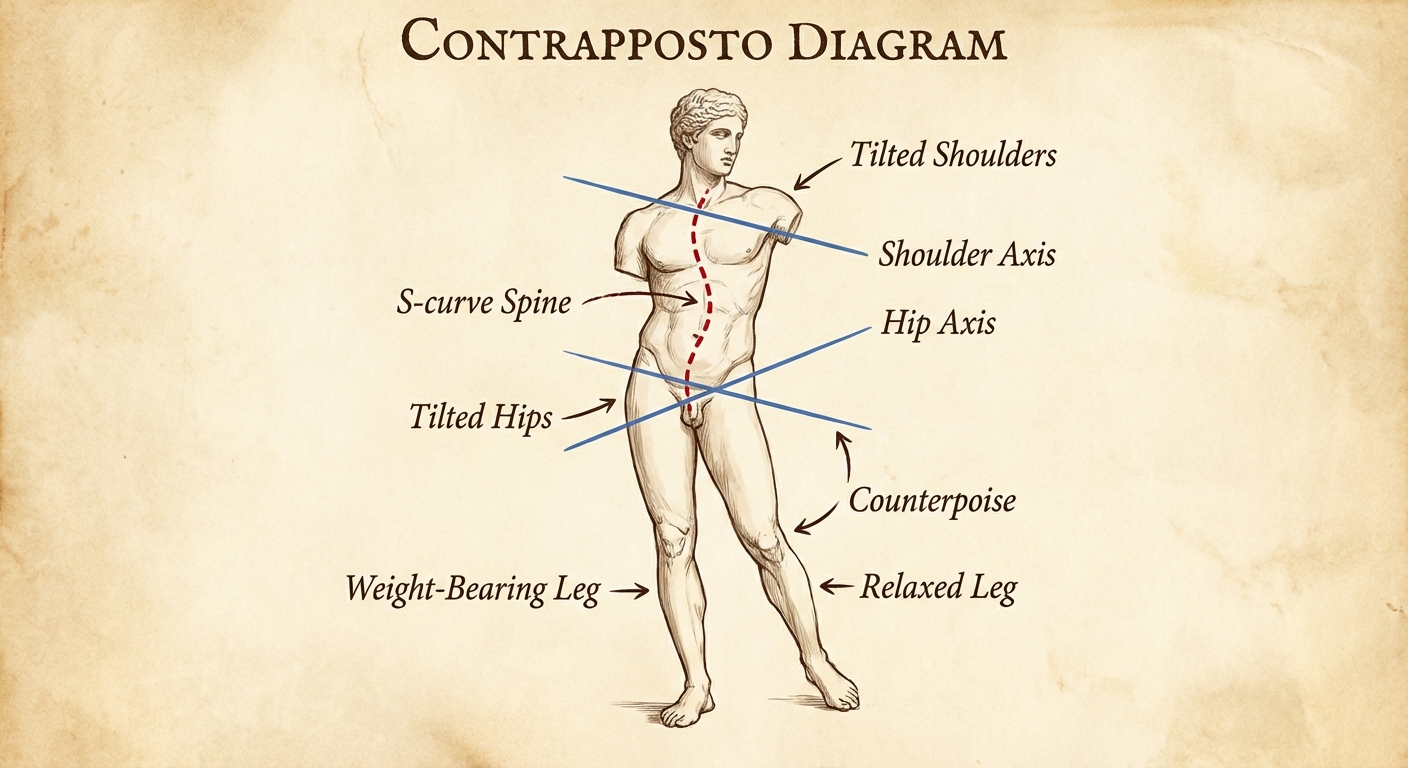
| Classical (c. 480-323 BCE) | Contrapposto, idealized proportions, calm/stoic face (severe style), mathematical perfection. | Doryphoros, Grave Stele of Hegeso |
| Hellenistic (c. 323-30 BCE) | Dramatic, emotional, dynamic movement, interaction with environment, explores defeat/old age. | Winged Victory, Seated Boxer, Great Altar of Zeus |
Ceramics
➔ Niobides Krater: A mixing bowl showing the slaughter of Niobe’s children. Significant because figures are on different levels (no ground line), attempting depth.
The High Classical Moment: The Acropolis
Built by Pericles after the Persian Wars to assert Athenian dominance.
➔ The Parthenon (Iktinos & Kallikrates)
- Style: Doric temple with Ionic features (frieze).
- Mathematics: uses $x = 2y + 1$ ratio. Contains optical corrections (entasis) to make columns look straight.
- Decorations:
- Helios, Horses, and Dionysus: East pediment. Figures fit the triangular space brilliantly (wet drapery style).
- Plaque of the Ergastines: Depicts the Panathenaic Procession. First time citizens are depicted on a temple, elevating democracy to the divine.
➔ Temple of Athena Nike: Small Ionic temple. Features Victory Adjusting Her Sandal—a study in balance and eroticism (wet drapery) in a mundane act.
The Hellenistic Shift
➔ Great Altar of Zeus and Athena at Pergamon: depiction of the Gigantomachy (Gods vs. Giants). It is a metaphor for the Greeks defeating the "barbarian" Persians. High relief, figures spill onto the stairs, intense emotion.
➔ Seated Boxer: Unlike the idealized Doryphoros, this man is beaten, bleeding (copper inlay), and older. It evokes pathos (pity).
4. Etruscan Art
Region: Ancient Italy (Tuscany) before Roman dominance.
Key Concept: Lively, joyful, terracotta masters.
➔ Temple of Minerva (Veii)
- Materials: Wood and mud-brick (perishable), unlike Greek marble.
- Style: Tuscan order (unfluted columns), deep porch, statues on the roof (not in pediments).
- Apollo of Veii: Terracotta statue from the roof. Striding aggressively, wearing clothes (Etruscans rarely did nudity), Archaic smile.
➔ Sarcophagus of the Spouses
- Content: Husband and wife reclining together at a banquet.
- Cultural Context: Shocking to Greeks/Romans because Etruscan women enjoyed relative equality and dined publicly with men.
- Material: Terracotta (baked clay).
➔ Tomb of the Triclinium: Frescoes showing dining, dancing, and music. Death was a celebration/feast, not a somber event.
5. Ancient Rome
Time Period: 753 BCE–337 CE
Key Concept: Pragmatism and Power. Rome absorbed Greek aesthetics but used them for political propaganda and engineering (Concrete Revolution).
Republican Rome (Verism)
➔ Head of a Roman Patrician
- Style: Verism (hyper-realism). Wrinkles, warts, sagging skin.
- Meaning: Gravitas. Age = experience, wisdom, and service to the state. It honored lineage.
➔ House of Vettii (Pompeii)
- Architecture: Domus (elite home). Axial plan. Atrium (public) to Peristyle (private).
- Frescoes: Fourth Style wall painting (eclectic, crowded, illusion of framed pictures).
➔ Alexander Mosaic: Found on the floor of the House of Faun. A copy of a Greek painting. Shows Alexander the Great displaying bravery (no helmet) vs. Darius of Persia (fear). Roman admiration for Greek history.
Imperial Rome (Idealism & Concrete)
Augustus ended the Republic and established the Empire. He shifted art from Verism back to Greek Idealism to portray himself as a god-like, ageless youth.
➔ Augustus of Prima Porta
- Form: Modeled on the Doryphoros. Idealized body, contrapposto.
- Propaganda: Cupid at his feet (lineage to Venus). Breastplate depicts diplomatic victory over Parthians. Hand raised in orator's pose.
➔ The Colosseum (Flavian Amphitheater)
- Engineering: Concrete allows for massive scale. Uses Groin Vaults and Barrel Vaults.
- Facade: Hierarchy of orders (Tuscan bottom, Ionic middle, Corinthian top).
- Function: Bread and Circuses—controlling the populace through entertainment.
➔ The Pantheon
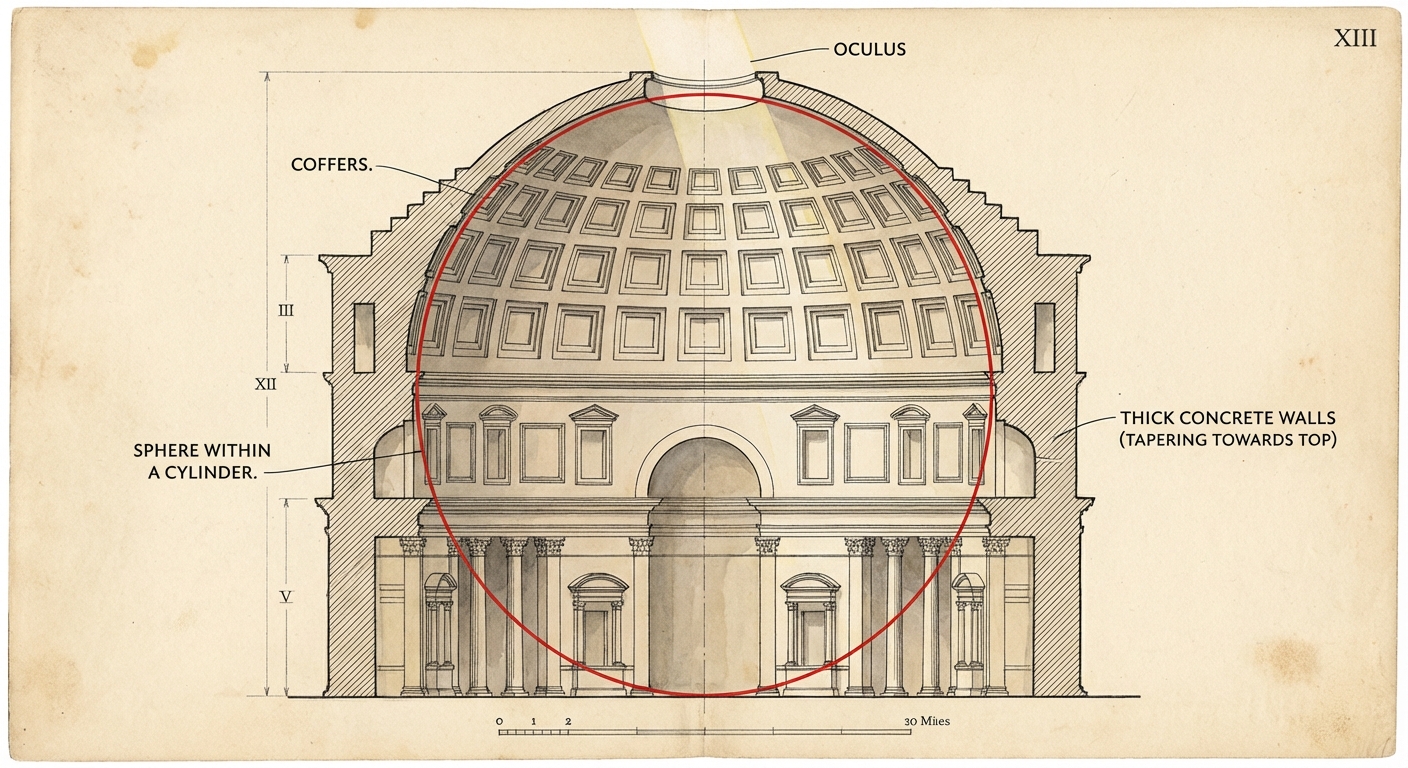
- Form: A sphere inside a cylinder. The Oculus (eye) is the only light source.
- Innovation: The dome is made of concrete that gets lighter/thinner toward the top (coffers reduce weight).
- Meaning: Temple to all gods. The oculus links the emperor to the heavens.
➔ Forum of Trajan & Column of Trajan
- Function: A massive civic center paid for by the defeat of Dacia (Romania).
- Column: A 625-foot continuous scroll narrative. Trajan appears 58 times—he is the organizing force of the chaotic battle. The base is his tomb.
➔ Ludovisi Battle Sarcophagus (Late Empire)
- Shift in Style: Rejection of Classical space.
- Form: Horror Vacui (fear of empty space). Figures are piled on top of each other. No illusion of depth.
- Context: Rome is unstable (civil wars). The art becomes chaotic to reflect the times.
Common Mistakes & Pitfalls
Pantheon vs. Parthenon:
- Parthenon: GREEK. Acropolis (Athens). Dedicated to Athena. Rectangular with exterior columns.
- Pantheon: ROMAN. Rome. Dedicated to all gods. Round dome (rotunda) with oculus.
- Mnemonic: PantheOn has a dome (O-shape).
Verism vs. Idealism:
- Republicans (Patricians) used Verism (wrinkles) to show wisdom.
- Emperors (Augustus) used Idealism (youth) to show divinity.
Materials: Do not mix up Greek marble with Roman concrete. The Romans invented concrete construction, which allowed for the Colosseum and Pantheon. Greeks relied on post-and-lintel (columns holding up roofs).
Amarna Period: Remember, this is the exception to the rule. Egyptian art is static for 3,000 years, except for Akhenaton's brief reign where it becomes curvy and intimate.
Islamic Art in this Unit: Sometimes students mention Islamic art when discussing the Near East. Islamic Art does not begin until the 7th Century CE, which is Unit 3. Unit 2 ends at 300 CE.