Unit 5: Factors Influencing Japanese Well-Being
Factors That Impact the Quality of Life
In AP Japanese Unit 5, we explore how various societal structures—from the rigorous school system to healthcare and leisure—shape the daily lives of Japanese people. This unit is critical for the Cultural Comparison section of the exam, where you will frequently be asked to compare these aspects to your own community.
Education and Future Pathways
Education (Kyouiku - 教育) is a cornerstone of Japanese society and a primary determinant of one's future quality of life. The pressure to succeed academically is a central theme.
The Japanese School System
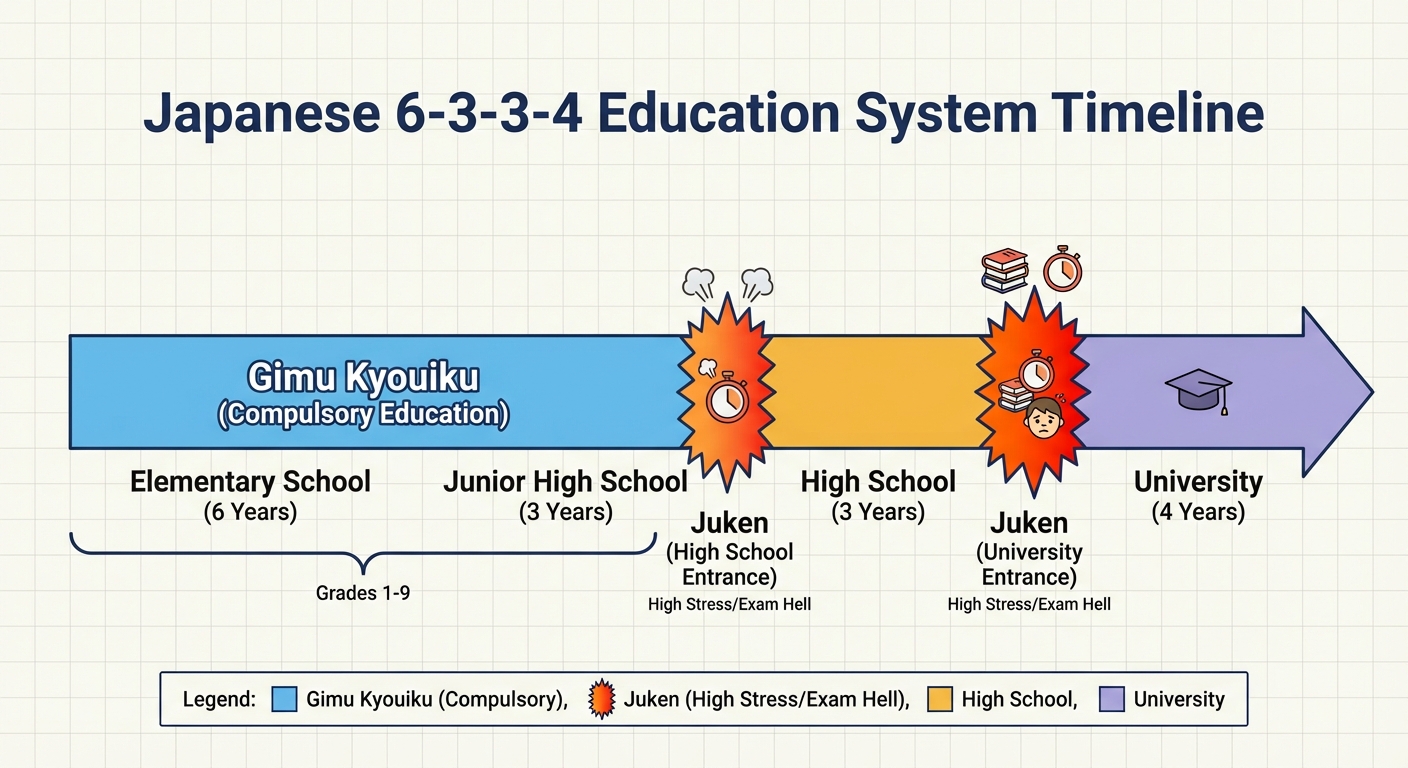
The structure follows the 6-3-3-4 system, similar to the US, but with distinct differences in compulsory education (Gimu kyouiku - 義務教育).
- Elementary (Shougakkou - 小学校): 6 years (Compulsory)
- Middle School (Chuugakkou - 中学校): 3 years (Compulsory)
- High School (Koukou - 高校): 3 years (Not compulsory, but attended by ~98% of students)
- University (Daigaku - 大学): 4 years
Distinctive Aspects of School Life
To score high on cultural comparisons, memorize these unique features:
Entrance Exams (Juken - 受験):
- Unlike the holistic admissions in the West, Japanese entry into high school and university is determined almost exclusively by entrance exam scores.
- This leads to Juku (塾)—cram schools. Many students attend juku late into the night to prepare, impacting sleep and leisure time.
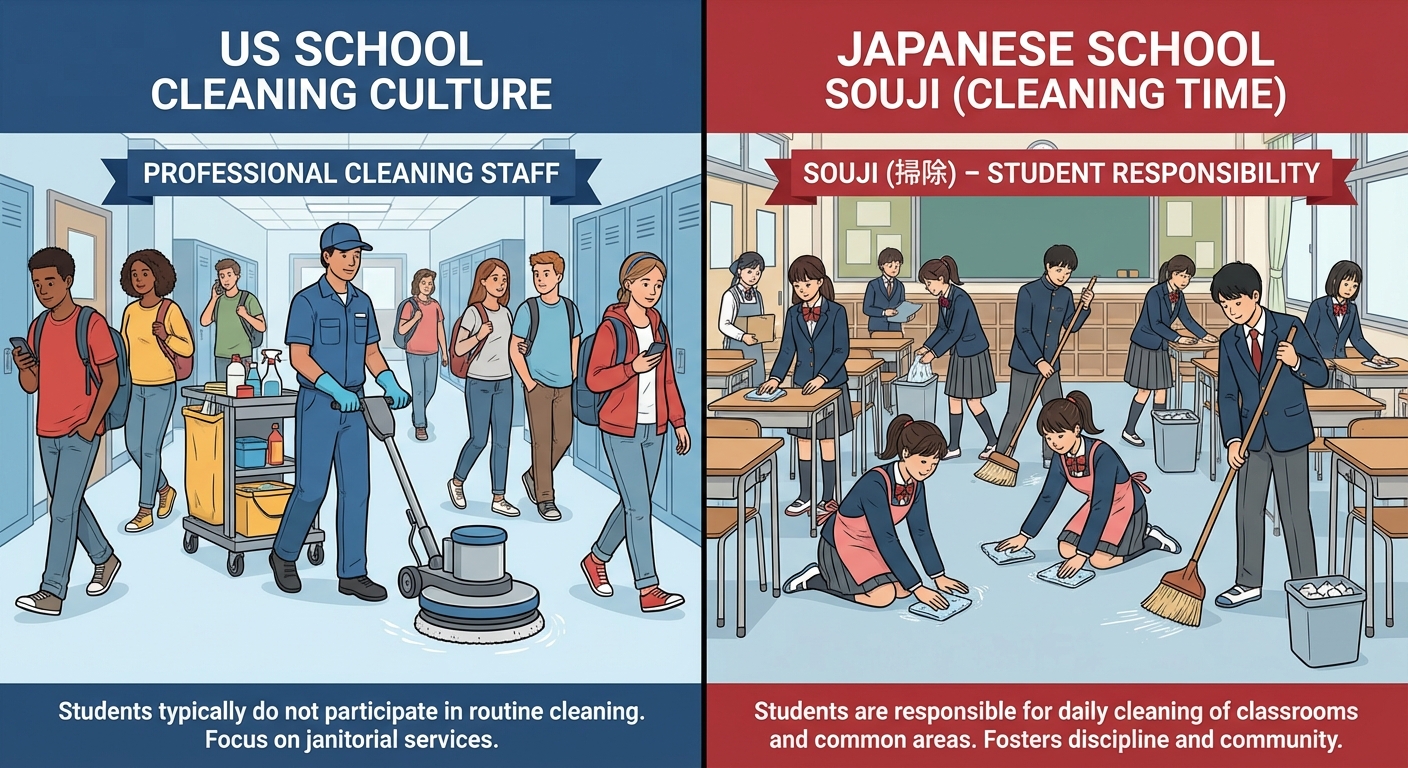
School Clean-up (Souji - 掃除):
- There are usually no janitors for classrooms. Students and teachers clean the school themselves every day.
- Cultural Value: fosters responsibility (sekinin - 責任) and respect for shared spaces.
School Lunch (Kyuushoku - 給食):
- In elementary and middle schools, students serve each other standardized, nutritionally balanced meals within the classroom.
- Cultural Value: emphasizes teamwork (kyouryoku - 協力) and nutrition education.
Club Activities (Bukatsu - 部活):
- Clubs are taken very seriously, often requiring practice before and after school and on weekends. Whether it's the Baseball Club (Yakyuu-bu) or Brass Band (Suisougaku-bu), bukatsu defines a student's social circle and identity.
Career and Work Culture
The transition from university to work involves Shuukatsu (就活) (Job Hunting), a rigorous process where students wear identical "recruit suits" and interview simultaneously during their junior/senior year.
- Lifetime Employment (Shuushin koyou - 終身雇用): The traditional expectation that one stays with a single company until retirement. While changing, this is still more common than in the West.
- Work-Life Balance Issues: The concepts of Comradery often force workers to stay late.
- Zangyou (残業): Overtime work.
- Karoushi (過労死): Death from overwork (a major social issue the government is trying to combat).
Health and Well-Being
Japan has one of the highest life expectancies in the world. This section explores why (Diet) and the challenges the country faces (Demographics).
Dietary Habits (Shokuseikatsu - 食生活)
The traditional Japanese diet is cited as a major factor in health quality.
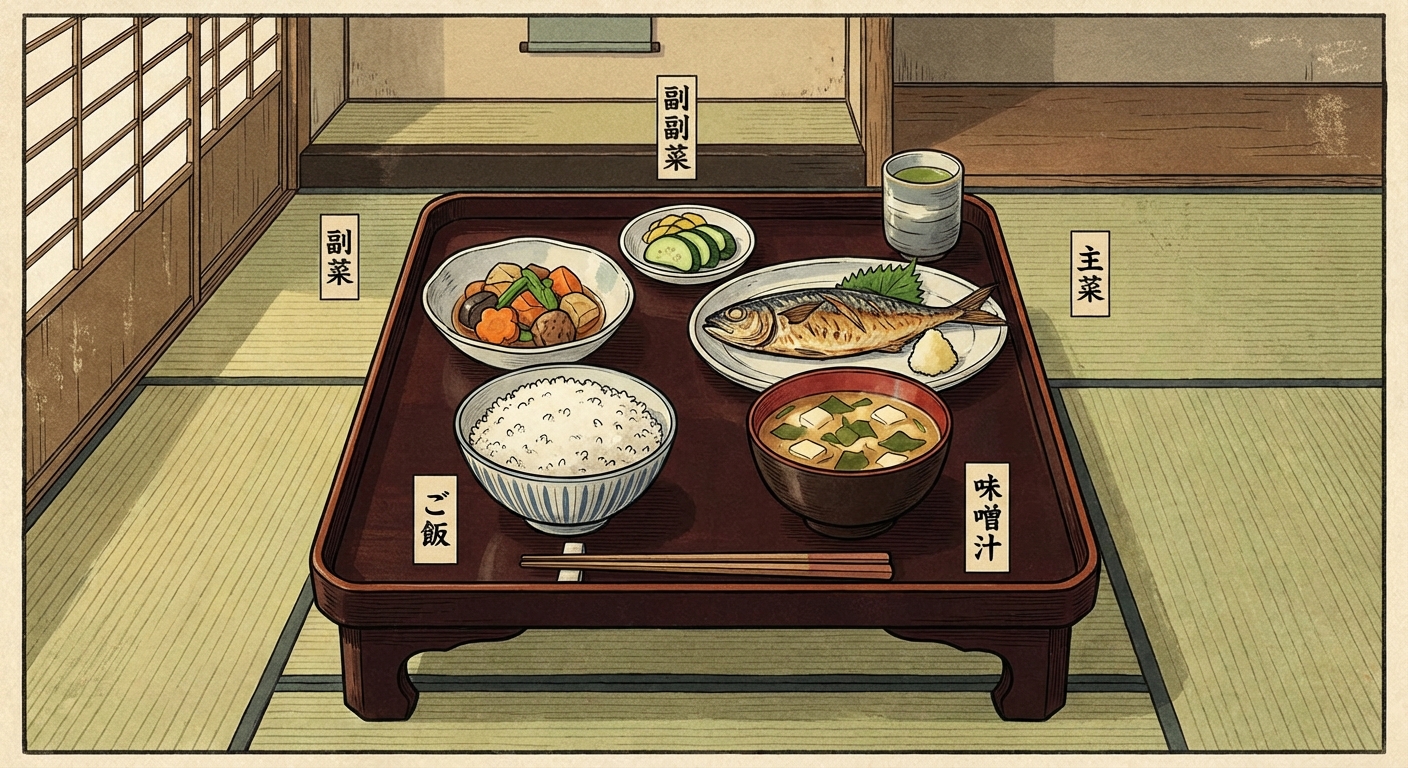
- Ichiju-Sansai (一汁三菜): Literally "One soup, three sides." This is the foundation of a balanced Japanese meal, consisting of rice, miso soup, a main dish (fish/meat), and two vegetable sides.
- Convenience: While traditional food is healthy, modern convenience stores (Konbini) provide high-quality, though sometimes processed, food. Bento culture allows for portion control.
Healthcare System
Japan uses a universal health insurance system (Kokumin Kaihoken). Citizens pay 30% of medical costs, and the government covers 70%. This accessibility greatly improves the general quality of life.
The Demographic Crisis
The biggest threat to Japan's quality of life is Shoushikoureika (少子高齢化)—the combination of a declining birthrate and an aging population.
- Causes: High cost of raising children, women prioritizing careers, late marriages.
- Impact: A shrinking workforce means fewer people to support the pension and healthcare systems for the elderly.
- Exam Tip: When discussing "challenges" in Japan, Shoushikoureika is almost always a relevant answer.
Leisure and Sports
How people relax (yoka - 余暇) balances the high stress of school and work.
Sports (Supootsu - スポーツ)
- Traditional: Sumo (national sport), Judo, Kendo. These emphasize spiritual growth and etiquette (rei).
- Modern: Baseball (Yakyuu) is arguably the most popular sport. The High School Baseball Tournament at Koshien is a national cultural event.
Travel and Relaxation
- Onsen (温泉): Hot springs are vital for stress relief. Because of Japan's volcanic geography, onsen trips are the quintessential getaway for physical and mental healing.
- Golden Week: A string of national holidays in late April/early May. It is the busiest travel time of the year.
Youth Leisure
- Karaoke: A private space to relieve stress with friends.
- Purikura: Photo sticker booths, a staple of youth social life.
Grammar Comparison Table
When writing Cultural Comparisons, you need specific grammar structures. Use these to contrast Japan with your culture.
| Grammar Structure | Usage | Example |
|---|---|---|
| A no hou ga B yori… | A is more… than B | Nihon no hou ga Amerika yori densha ga benri desu. (Trains are more convenient in Japan than the US.) |
| ~ni kurabete | Compared to… | Amerika ni kurabete, Nihon no ie wa semai desu. (Compared to the US, Japanese houses are small.) |
| ippou (de) | On the other hand | Nihon wa anzen na ippou de, stress ga ooi. (Japan is safe; on the other hand, there is a lot of stress.) |
Common Mistakes & Pitfalls
- "Student" Vocabulary:
- Do not use Gakusei (学生) for everyone. generally, Gakusei implies college students.
- Use Seito (生徒) for middle/high school students and Jidou (児童) for elementary.
- Generalizing "Asian" Culture:
- Be specific to Japan. For example, don't assume strict discipline implies corporal punishment (which is banned). Focus on peer pressure and social expectations.
- Passive Form Errors:
- When saying "I was made to study," students often mess up the Causative-Passive form.
- Correct: Benkyou sasetareimashita (I was made to study [by my parents/teachers]).
- Misunderstanding "Juku":
- Don't confuse Juku (cram school) with Bukatsu (clubs). Juku is for academic study; Bukatsu is for sports/arts.