Study Notes: Unit 2 - The Influence of Language and Culture on Identity
Unit 2 Overview: Cultural Contexts of Identity
In AP Chinese Language and Culture, understanding Identity requires diving into how language choices, traditional values, and cross-cultural experiences shape who a person is. This section explores how the Chinese language itself functions as a cultural identifier, the deep-rooted values that dictate social behavior, and the complexities of navigating life between two cultures.
Language and Identity (语言与身份)
Language is not just a tool for communication; it is a primary marker of identity. In Chinese culture, the way you speak, the words you choose, and even your name carries significant weight regarding your social standing, regional origin, and relationship to others.
The Role of Mandarin and Dialects
- Standard Mandarin (普通话 - Pǔtōnghuà): As the official language, fluency in Standard Mandarin represents national identity and education. It effectively bridges the gap between speakers of mutually unintelligible dialects.
- Dialects (方言 - Fāngyán): Local dialects (like Shanghainese, Cantonese, or Sichuanese) signify regional identity and local heritage.
- Usage: A person might use Mandarin for business or school (formal identity) but switch to a dialect at home or with old friends (personal/regional identity).
- Cultural Connection: Many local operas and folk arts are performed exclusively in dialects, meaning preserving the dialect is akin to preserving local culture.
Chinese Names and Forms of Address
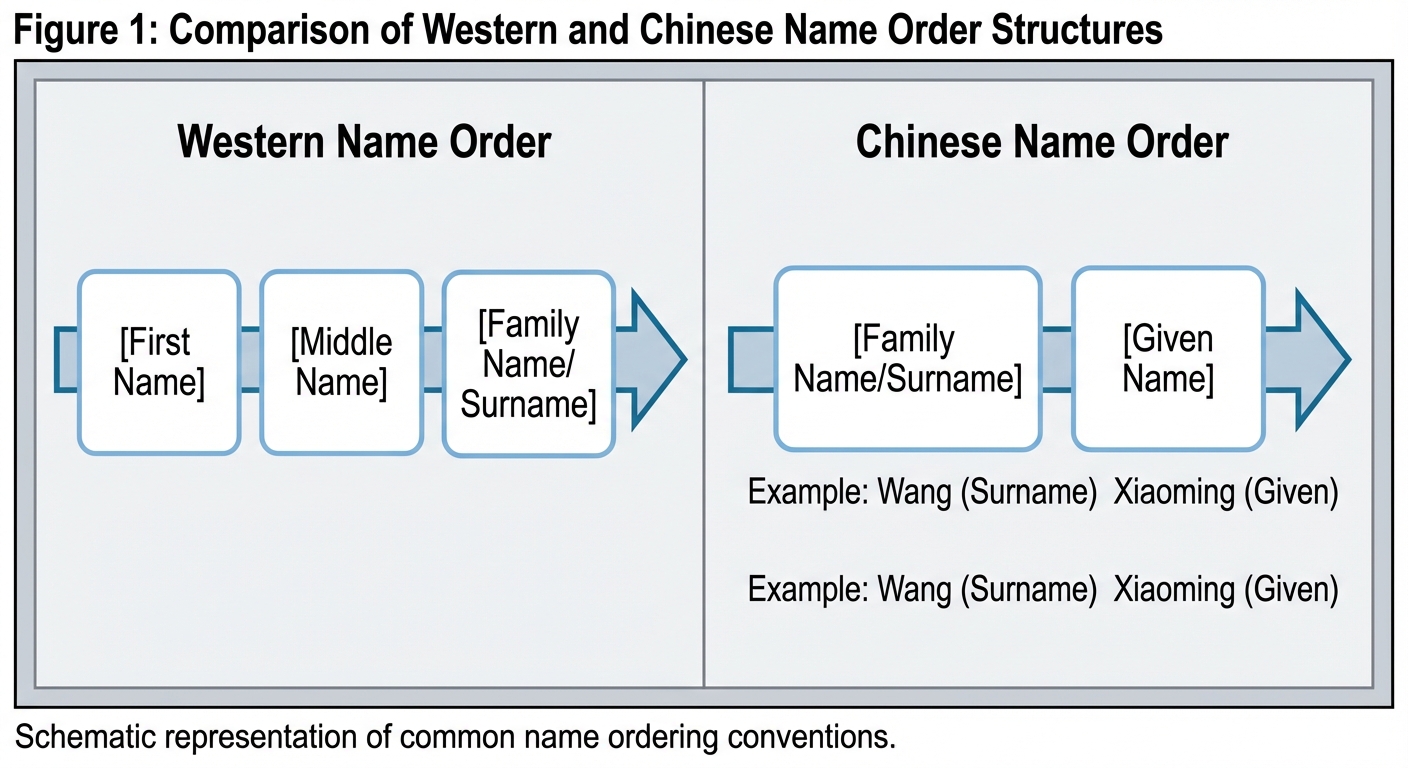
Unlike Western cultures where individualism is often highlighted by a unique first name, Chinese names emphasize family lineage and generational continuity.
- Structure: The Surname (姓 - Xìng) comes before the Given Name (名 - Míng).
- Example: In the name Wang Xiaoming (王小明), "Wang" is the family foundation, and "Xiaoming" is the individual.
- Meaning: Given names are carefully chosen characters representing parental hopes (e.g., Wei 伟 for greatness, Hui 慧 for wisdom, Qiang 强 for strength).
- Titles and Hierarchy: You rarely call an elder or superior by their first name. Identity is defined by your relative status to others.
- Lao (老) + Surname: Respectful term for older colleagues (e.g., Lao Zhang).
- Xiao (小) + Surname: Affectionate term for younger colleagues (e.g., Xiao Liu).
- Professional Titles: Teacher (Laoshi), Manager (Jingli). You address the role, not just the person.
Cultural Beliefs and Values (文化信仰与价值观)
To understand Chinese identity, you must understand the philosophical frameworks—primarily Confucianism—that act as the operating system for Chinese society.
Collectivism vs. Individualism
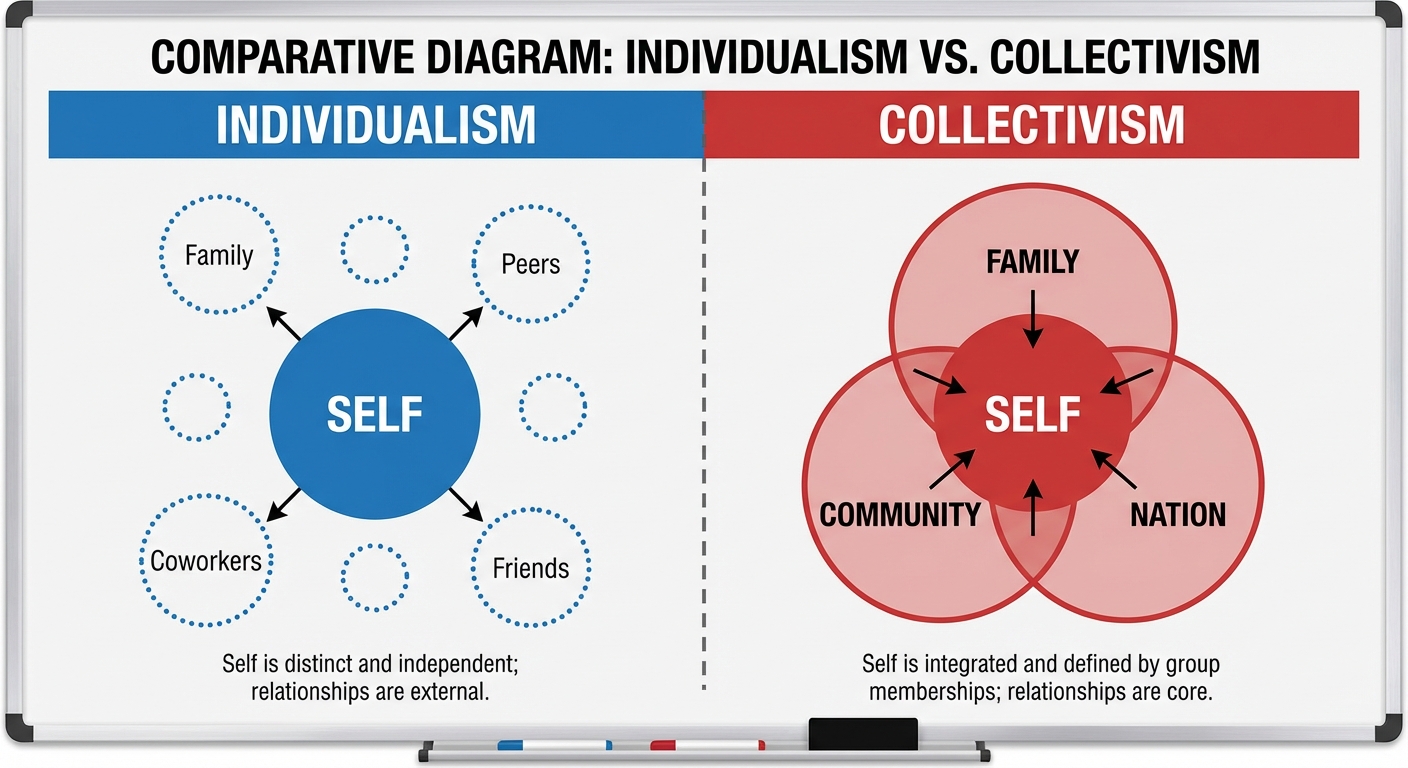
Western culture tends to be Individualistic (focus on "I"), while Chinese culture is largely Collectivistic (focus on "We").
- The Collective Self: Identity is anchored in group membership—the family, the school, the company, or the nation.
- Interdependence: Success is rarely viewed as a solo achievement. If a student excels, it brings glory to the family and teachers (Guang Zong Yao Zu - 光宗耀祖 - bringing honor to ancestors).
- Harmony (和 - Hé): Social harmony is valued above personal expression. Disagreeing openly or being too "unique" can be seen as disruptive.
Key Confucian Values Shaping Identity
Filial Piety (孝 - Xiào):
- Definition: Respect, obedience, and care for one's parents and ancestors.
- Impact: Adult children often live with or care for aging parents. Major life decisions (career, marriage) often require parental approval to maintain family harmony.
Face (面子 - Miànzi):
- Definition: A mixture of public image, social prestige, and dignity.
- Saving Face: Avoiding public criticism or embarrassment.
- Giving Face: Praising someone or showing them deferential respect in front of others.
- Application: A student might hesitate to ask a question in class to avoid looking "stupid" (losing face) or to avoid making the teacher look bad if the question is too hard (saving the teacher's face).
Propriety/Ritual (礼 - Lǐ):
- Proper conduct and etiquette. Knowing your place in the social hierarchy creates a stable society.
Multiculturalism and Assimilation (多元文化与同化)
In the context of AP Chinese, this topic often touches on the experiences of overseas Chinese, immigrants, and the "East meets West" dynamic.
The Immigrant Experience and "ABC"
- ABC (American Born Chinese): Often described metaphorically as a "Banana" (yellow on the outside, white on the inside)—looking Chinese but culturally American. This creates a complex Hybrid Identity.
- Generation Gap:
- Parents: Adhere to traditional Chinese values (frugality, academic pressure, hierarchy).
- Children: Adopt Western values (autonomy, creativity, egalitarianism).
- Conflict: This clash is a frequent theme in literature and movies appearing on the AP exam.
Acculturation vs. Assimilation
| Concept | Definition | Example Scenario |
|---|---|---|
| Assimilation (同化) | Adopting the dominant culture and losing one's original culture. | Losing the ability to speak Chinese; rejecting Chinese food in the cafeteria to fit in. |
| Acculturation (文化适应) | Adopting the new culture while maintaining the original culture (Biculturalism). | Celebrating Thanksgiving but including dumplings and noodles in the feast. |
Globalization and Modern Identity
Modern Chinese identity is increasingly global. Young people in China (often called the "Post-00s" generation) celebrate Christmas as a shopping holiday, drink Starbucks, and watch NBA games, yet they retain strong nationalistic pride and traditional commitments to family (Filial Piety). This blending creates a Transnational Identity.
Common Mistakes & Pitfalls
Confusing "Face" with simple "Embarrassment":
- Mistake: Thinking Mianzi is just about feeling shy.
- Correction: Mianzi is a form of social currency. You can "borrow" face, "lose" face, or "fight" for face. It dictates social exchanges and business negotiations.
Overgeneralizing Collectivism:
- Mistake: Assuming Chinese people have no individual desires or personalities.
- Correction: Individualism is rising in modern urban China. While the underlying structure is collectivist, young people express strong personal identities through fashion, hobbies, and career choices.
Incorrect Name Usage:
- Mistake: Addressing a Chinese person named "Li Ming" as "Mr. Ming".
- Correction: The surname is first. He is "Mr. Li".
Stereotyping "Tiger Parenting":
- Mistake: Assuming all Chinese parenting is strict and cold.
- Correction: While high expectations are common due to Xiao and the Gaokao (college entrance exam) pressure, the motivation is usually deep care (Guanxin) and ensuring the child's future stability.