Unit 2 Study Notes: Italian Language, Culture, and Identity
L'Italiano e i Dialetti (Language and Dialects)
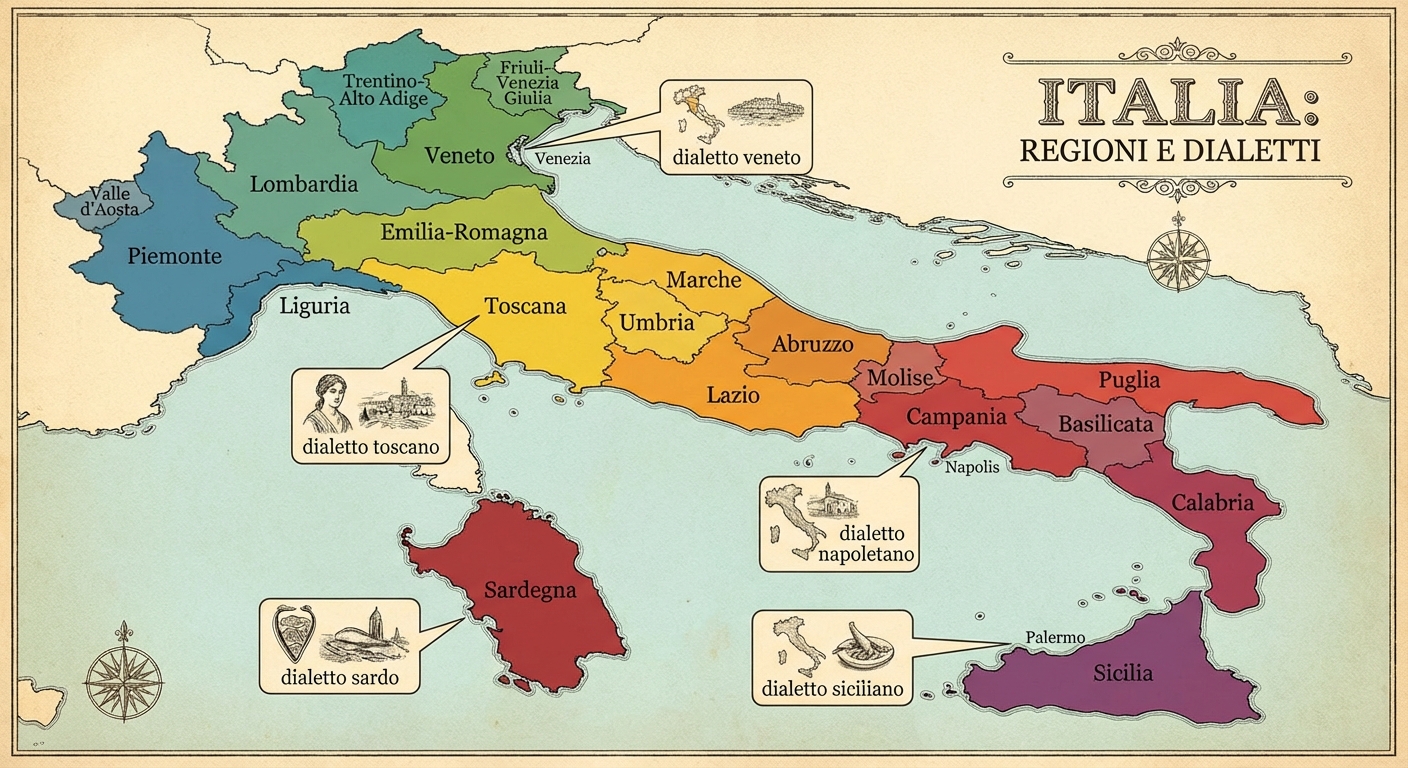
Language is the primary vehicle for culture and identity (l'identità). In Italy, the relationship between the national language and local dialects is unique and historically rooted.
Language Structure and History
- Origins: Italian is a Romance language (Lingua romanza) derived from distinct variations of Vulgar Latin.
- The Father of the Language: Modern Standard Italian is primarily based on the Florentine (Tuscan) dialect used by Dante Alighieri, Petrarch, and Boccaccio in the 13th-14th centuries.
- Accademia della Crusca: The oldest linguistic academy in the world, founded in 1583, dedicated to maintaining the purity of the Italian language.
I Dialetti (The Dialects)
A common misconception is that dialects are "slang" or "broken Italian." In reality, they are distinct languages with their own grammar, vocabulary, and literature.
- Regional Diversity: Italy has roughly 28 indigenous dialects (and minority languages).
- Usage:
- Italian: Official contexts, schools, media, and inter-regional communication.
- Dialetto: Often used at home (in famiglia), with friends, or by older generations to express specific cultural nuances regarding food, humor, or emotions.
- Bilingualism: Most Italians are effectively bilingual (Italian + their regional dialect), and students also learn English and often a third language in school.
Language as Identity
- "Parlare come mangi": A famous saying meaning "Speak as you eat" (speak simply and strictly). It reflects how deeply language and food are tied to one's honest, local identity.
- Erasure Fears: There is a tension between preserving dialects to maintain local traditions and prioritizing Standard Italian/English for economic globalization.
Geografia e Regionalismo (Geography and Regionalism)
Geography dictates lifestyle, economy, and character in Italy. The country is a peninsula shaped like a boot (lo stivale) extending into the Mediterranean Sea.
Il Campanilismo
This is a critical AP concept. Derived from campanile (bell tower), Campanilismo refers to a strong attachment to one's local town or city rather than the country as a whole. An Italian might define themselves as Romano or Napoletano before Italiano.
The Three Macro-Regions
1. Italia Settentrionale (The North)
- Geography: Dominated by the Alps (Alpi) and the Po River Valley (Pianura Padana).
- Climate: Continental—cold winters, humid summers.
- Economy: The "Industrial Triangle" (Milan, Turin, Genoa). High GDP, banking, fashion, and manufacturing.
- Major Cities: Milano (Finance/Fashion), Torino (Automotive/FIAT), Venezia (Tourism).
2. Italia Centrale (The Center)
- Geography: Characterized by the Apennine Mountains (Appennini) and rolling hills (colline).
- Economy: Mixed agriculture, tourism, and small-to-medium enterprises. Famous for wine (Chianti) and olive oil.
- Major Cities: Roma (Politics/History), Firenze (Art/Culture), Bologna (Education/Food).
3. Italia Meridionale e Le Isole (The South and Islands)
- Geography: Rugged mountains, volcanoes (Vesuvio, Etna), and extensive coastline.
- Economy: Traditionally agricultural (citrus, olives, tomatoes) and tourism-driven. Struggles with higher unemployment and lower industrialization.
- Major Cities: Napoli (Culture/Pizza), Palermo (Sicily), Bari (Puglia).
Storia e Unificazione (History and Unification)
Understanding history explains the fragmented identity of Italians.
Key Historical Milestones
| Era | Date | Event | Significance |
|---|---|---|---|
| Roman Empire | 27 B.C. - 476 A.D. | Pax Romana | Unified the Mediterranean; laid foundations for law, language (Latin), and infrastructure. |
| Middle Ages | 9th - 14th C. | City-States | Rise of independent Comuni (Florence, Venice). Fostered artistic competition but strictly divided identities. |
| Risorgimento | 1861 | Unification | The Kingdom of Italy acts as a political unit. "We have made Italy. Now we must make Italians" (Massimo d'Azeglio). |
| Fascism | 1922 - 1943 | Mussolini | Attempted to force a unified nationalist identity; alliance with Hitler led to devastation in WWII. |
| Republic | 1946 | Republic of Italy | Italy abolishes the monarchy via referendum and becomes a democratic republic. |
Stereotipi e Società (Stereotypes and Society)
Identity is often shaped by how others see us. Italy suffers from internal and external stereotypes.
The North-South Divide (La Questione Meridionale)
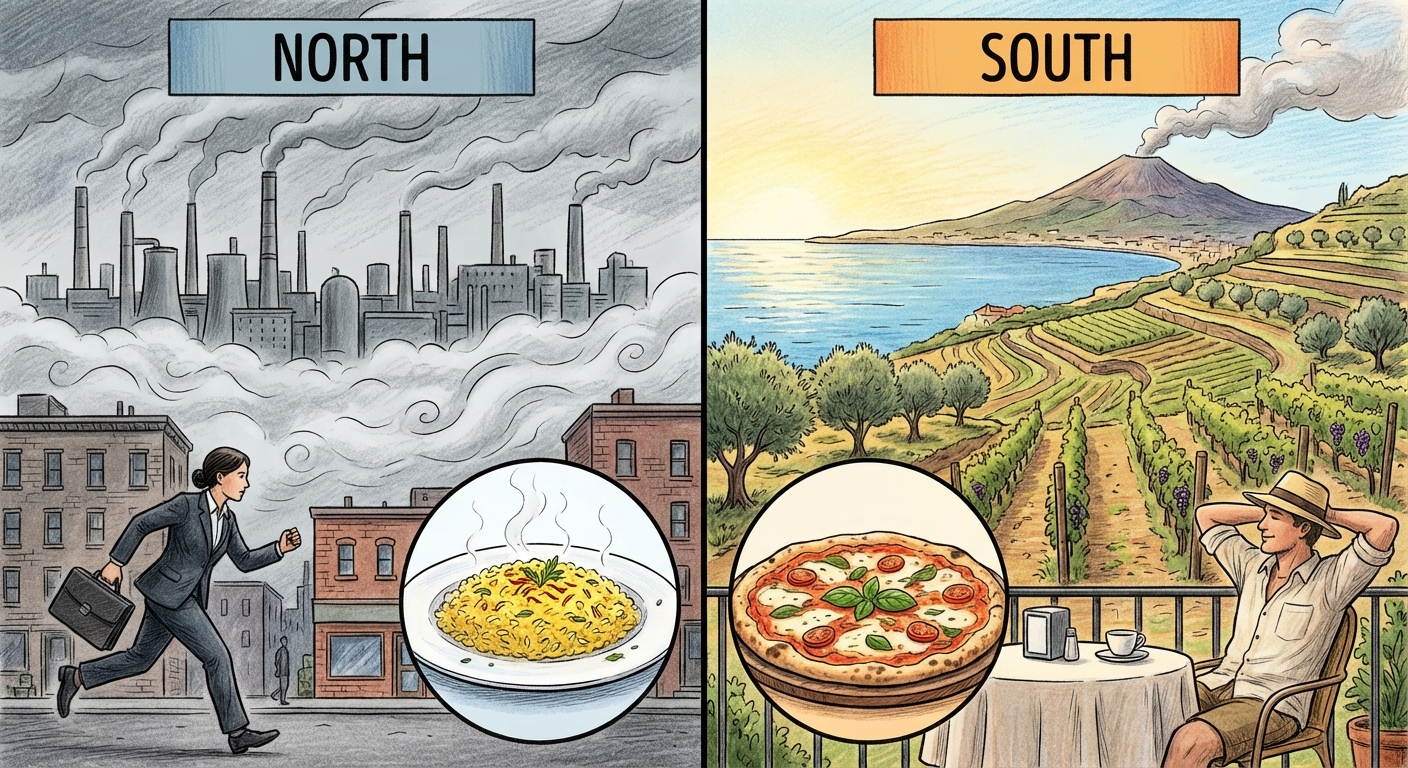
The economic and cultural gap between the industrial North and the agrarian South is known as the "Southern Question."
| Aspect | North (Il Nord) | South (Il Sud) |
|---|---|---|
| Stereotype | Hard-working (laborioso), cold, efficient, "European." | Warm, hospitable, loud, lazy (pigro), traditional. |
| Economy | Prosperous, industrialized. | Higher unemployment, rural, relies on state support. |
| Food | Butter, polenta, risotto, expensive meats. | Olive oil, pasta, pizza, seafood, fresh vegetables. |
| Pejoratives | Sometimes called Polentoni (polenta eaters). | Sometimes called Terroni (people of the land) - offensive. |
External Stereotypes (How the world sees Italy)
- Gestures: Italians speak with their hands (il gesticolare). Reality: It is a cultural code to emphasize meaning, not just flailing.
- Food: Italians eat only pasta/pizza. Reality: The diet is varied (Mediterranean Diet) and highly regional.
- La Bella Vita: Italians don't work hard. Reality: Many Italians work long hours, but they prioritize leisure and family time (il dolce far niente - the sweetness of doing nothing).
Immigration and Racism
Italy has transformed from a country of emigrants (people leaving) to a country of immigrants.
- Nuovi Italiani: Children born in Italy to foreign parents often struggle for citizenship due to Ius Sanguinis (citizenship by blood) laws, rather than Ius Soli (citizenship by soil/birth).
- Challenges: Immigrants are sometimes scapegoated for unemployment and crime, challenging the Italian identity of being "welcoming people."
Ruoli di Genere e Famiglia (Gender Roles and Family)
The Changing Family
- Traditional View: The large patriarchal family with the mother as the domestic "queen" is largely a myth in modern urban Italy.
- Low Birth Rate (Denatalità): Italy has one of the lowest birth rates in the world.
- Mammoni: A cultural phenomenon where adult men live with their parents into their 30s. This is governed by high youth unemployment and high cost of living, not just attachment to the mother.
Gender Equality (Parità di Genere)
- Workforce: Women are highly educated but face a "glass ceiling" and lower employment rates than men.
- Violence: Femminicidio (femicide) is a major social issue, leading to increased laws and awareness campaigns (e.g., Red Shoes protests).
Il "Made in Italy" (Made in Italy)
Italian identity is heavily tied to craftsmanship and excellence. The "Made in Italy" brand represents quality, luxury, and tradition.
The Three Fs
- Fashion (Moda): Armani, Prada, Gucci, Versace. Milan is a fashion capital.
- Food (Cibo): Protected designations (DOP/DOC) ensure Parma ham comes from Parma and Chianti from Tuscany. This protects cultural identity.
- Furniture/Ferrari (Arredamento/Auto): Design and luxury vehicles (Ferrari, Lamborghini, Fiat).
La Contraffazione (Counterfeiting)
- The Problem: The "Italian Sounding" phenomenon (products named to sound Italian but made elsewhere) and fake luxury goods damage the economy.
- Impact: It undermines the prestige of Italian identity and hurts honest artisans.
Tecnologia e Salute (Technology and Health)
Health (La Salute)
- SSN (Servizio Sanitario Nazionale): Universal public healthcare. A source of national pride, though the North often has better facilities than the South.
- Mediterranean Diet: Recognized by UNESCO. Key to Italian longevity, focusing on moderation, vegetables, and olive oil.
Technology (La Tecnologia)
- Social Connection: Italians use WhatsApp and social media heavily to maintain their strong social circles (expanding the Piazza concept to the digital realm).
- Digital Divide: Rural areas and older generations lag in internet adoption compared to the urban youth.
Common Mistakes & Pitfalls (Errori Comuni)
- Confusing "Dialects" with "Accents": Do not say Italians speak with a dialect when you mean they have an accent. A dialect is a separate linguistic system (e.g., Venetian, Sicilian). An accent is just how they pronounce Standard Italian.
- Stereotyping the South: Avoid describing Southern Italy simply as "poor" or "mafia-ridden." Discuss the economic challenges while acknowledging its rich history, tourism, and cultural contributions.
- Campanilismo: Don't forget this term. It explains why an Italian might criticize Italy but ferociously defend their own gloomy little town.
- Citizenship Laws: Remember that being born in Italy does not automatically make one Italian (unlike in the USA). This is a crucial point for the "Identity" theme regarding immigrants.
- Made in Italy: It isn't just about luxury; it is about protection of origin (DOP/IGP labels).