Period 9: Conservatism, Globalization, and the Modern Era (1980–Present)
9.1 The Rise of Conservatism & The Reagan Revolution
The "New Right" and the Election of 1980
By 1980, the United States faced a "crisis of confidence" (a term associated with Jimmy Carter's malaise speech), high inflation (stagflation), and the Iran Hostage Crisis. This set the stage for a resurgence of conservative values.
- The New Right: A coalition of conservative groups that emerged in the late 1970s. It included:
- The Moral Majority: Founded by Jerry Falwell, this group mobilized evangelical Christians to vote for candidates who opposed abortion, feminism, and gay rights, and supported prayer in schools.
- Fiscal Conservatives: Taxpayers tired of New Deal/Great Society government spending.
- Election of 1980:
- Ronald Reagan campaigned as a Washington outsider with a "can-do" attitude (the "Great Communicator").
- He asked voters, "Are you better off than you were four years ago?"
- Result: A landslide victory for Reagan; Republicans eventually took control of the Senate.
Reaganomics (Supply-Side Economics)
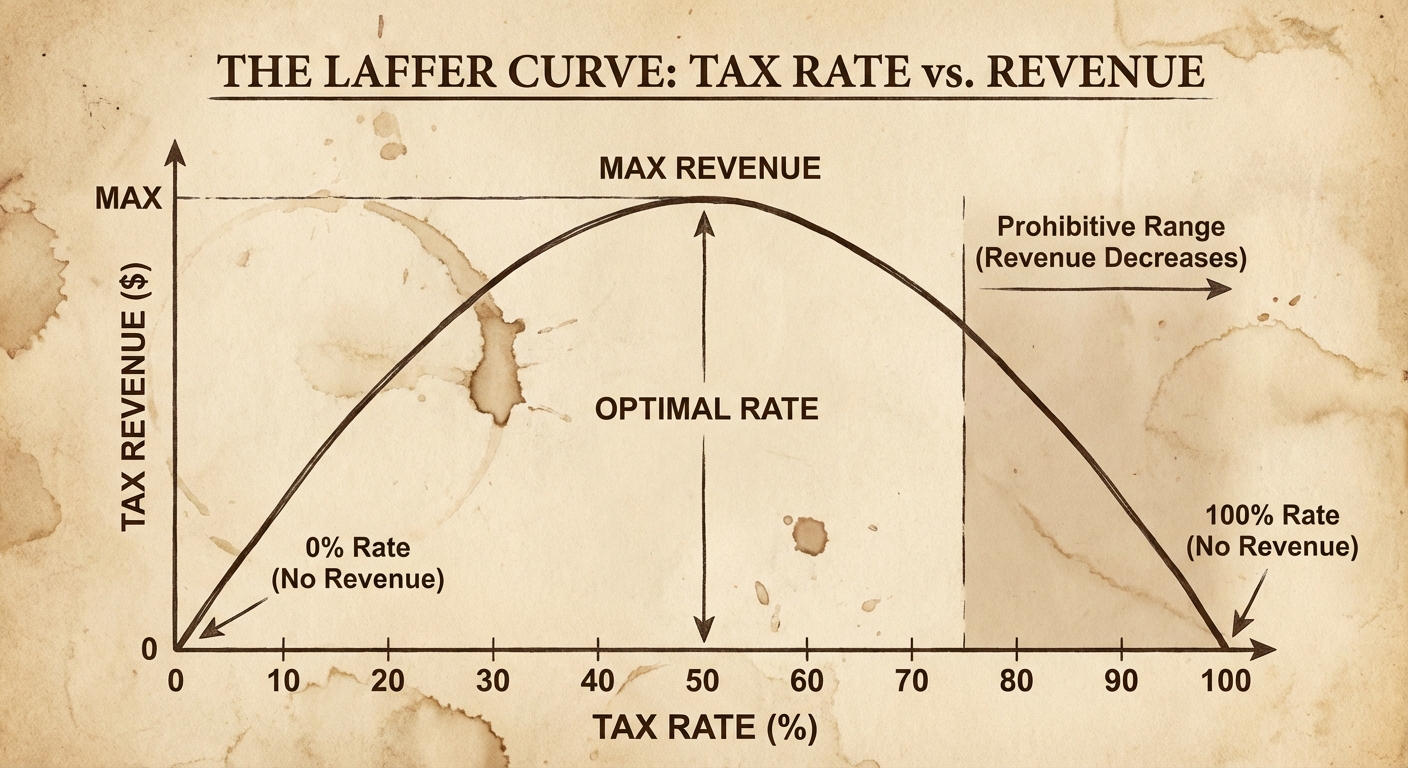
Reagan's economic policy, often called Supply-Side Economics or "Reaganomics," was the antithesis of the Keynesian demand-side economics used since the New Deal.
Core Principles:
- Tax Cuts: The belief that cutting taxes on corporations and wealthy earners would leave them with more capital to invest.
- Job Creation: This investment would create jobs and increase production.
- Trickle-Down: The prosperity generated at the top would eventually "trickle down" to the working class.
Implementation & Results:
- Economic Recovery Tax Act (1981): A massive 25% tax cut over three years.
- Deregulation: Reduced federal regulations on banking, the environment (EPA), and industry to lower business costs.
- Budget Deficits: While inflation dropped and the economy eventually boomed, the combination of tax cuts and massive military spending led to record-breaking federal budget deficits. The national debt tripled during the 1980s.
Reagan's Foreign Policy
"Peace Through Strength": Reagan believed the U.S. had to be militarily dominant to force the USSR to negotiate.
- Strategic Defense Initiative (SDI): Nicknamed "Star Wars," this was a proposed missile defense system intended to protect the US from nuclear attack. While never fully realized, the massive spending effectively bankrupted the Soviet Union as they tried to keep up.
- Iran-Contra Affair: A major scandal where the Reagan administration sold arms to Iran (in exchange for hostages) and illegally diverted the profits to fund the Contras (anti-communist rebels) in Nicaragua, violating the Boland Amendment passed by Congress.
- Relations with Gorbachev: Despite calling the USSR an "Evil Empire," Reagan worked with reformist Soviet leader Mikhail Gorbachev (who introduced glasnost and perestroika) to sign arms reduction treaties (INF Treaty).
9.2 The End of the Cold War & The Bush Presidency (1989–1993)
The Collapse of Communism
The Cold War did not end under Reagan, but under George H.W. Bush.
- 1989: The Berlin Wall fell, symbolizing the collapse of Soviet control over Eastern Europe.
- 1991: The Soviet Union dissolved into separate republics.
- START I & II: Treaties reducing nuclear warheads dramatically.
The Persian Gulf War (1990–1991)
Following the Cold War, the U.S. military focus shifted to regional stability, specifically in the Middle East.
- Conflict: Iraqi dictator Saddam Hussein invaded oil-rich Kuwait.
- U.S. Response: Bush organized a massive international UN coalition.
- Operation Desert Storm: A rapid military campaign (beginning with air strikes) that liberated Kuwait in just 100 hours of ground combat.
- Note: Saddam Hussein was left in power, setting the stage for future conflict.
Common Mistakes: Cold War Timeline
Don't confuse the presidencies! Students often claim Reagan ended the Cold War. While Reagan's pressure (SDI) accelerated the Soviet collapse, the termination of the Soviet Union and the fall of the Wall happened during George H.W. Bush's term.
9.3 The Clinton Era: Globalization and Prosperity (1993–2001)
The New Democrat
Bill Clinton won the 1992 election by moving the Democratic party to the center ("Third Way"), embracing some conservative fiscal policies while maintaining liberal social values.
Globalization and Free Trade
During the 1990s, the U.S. economy became increasingly integrated with the global economy.
- NAFTA (North American Free Trade Agreement): Eliminated trade barriers between the U.S., Canada, and Mexico.
- Proponent Arg: Cheaper goods and increased exports.
- Critic Arg: Outsourcing of American manufacturing jobs to Mexico (cheap labor).
- World Trade Organization (WTO): Established to oversee trade agreements and manage disputes.
Domestic Policy & Scandal
- Welfare Reform (1996): Clinton signed the Personal Responsibility and Work Opportunity Reconciliation Act, which required work in exchange for time-limited assistance.
- Financial Deregulation:
- Gramm-Leach-Bliley Act (1999): Repealed the depression-era Glass-Steagall Act. This allowed commercial banks to act as investment banks.
- Significance: Many economists (like Joseph Stiglitz) argue this deregulation allowed for the risky speculation that caused the 2008 Financial Crisis.
- Impeachment: Clinton was impeached by the House for perjury and obstruction of justice regarding the Monica Lewinsky scandal but was acquitted by the Senate.
9.4 The Post-9/11 World: George W. Bush (2001–2009)
The Election of 2000
One of the most controversial elections in U.S. history.
- Candidates: Al Gore (Democrat) vs. George W. Bush (Republican).
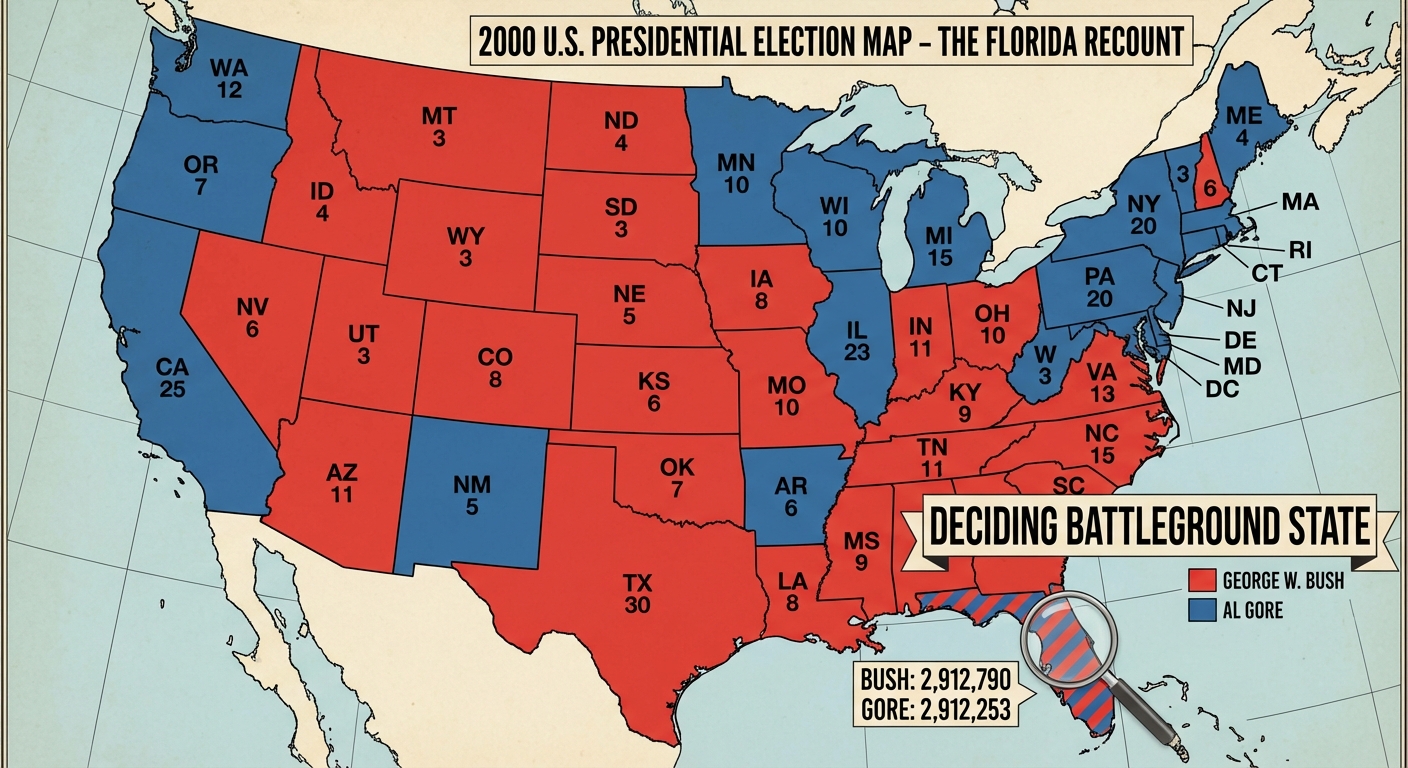
- The Issue: The election hinged on Florida's electoral votes. The margin was razor-thin, leading to disputes over "hanging chads" and ballot counting.
- Supreme Court Intervention (Bush v. Gore): The Court ruled 5-4 to stop the manual recount, effectively awarding the presidency to Bush.
September 11 and the War on Terror
On September 11, 2001, Al-Qaeda terrorists attacked the World Trade Center and the Pentagon.
The Bush Doctrine:
A shift US foreign policy from deterrence (Cold War) to preemptive strikes against terrorists and nations that harbor them.
- War in Afghanistan (2001): U.S. forces invaded to dismantle Al-Qaeda and remove the Taliban government.
- War in Iraq (2003): The U.S. invaded Iraq based on intelligence (later proven faulty) that Saddam Hussein possessed Weapons of Mass Destruction (WMDs) and had links to terrorism.
- The Patriot Act (2001): Expanded the government's power to conduct surveillance on phone and email communications to prevent terrorism. This sparked intense debate over national security vs. civil liberties.
- Homeland Security: Creation of a new cabinet department to coordinate domestic security.
The Great Recession (2008)
Towards the end of Bush's second term, the U.S. faced the worst financial crisis since the Great Depression.
- Causes: The bursting of the housing bubble and the collapse of banks holding "subprime" mortgages (related to 1999 deregulation).
- Impact: Stock market crash, high unemployment, and government bailouts of major banks.
9.5 The Obama Presidency & Beyond
Historic Election of 2008
Barack Obama became the first African American President, campaigning on "Hope and Change." He inherited the 2008 economic collapse and two active wars.
Key Policies
- Affordable Care Act (Obamacare): Aimed to reduce the number of uninsured Americans and prevent insurers from denying coverage for pre-existing conditions. It was the most significant overhaul of healthcare since Medicare (1965).
- Stimulus Package: Massive government spending to bail out the auto industry and banks to prevent a total economic depression.
- Foreign Policy: Authorized the raid that killed Osama bin Laden (2011) and sought to wind down combat operations in Iraq.
Political Polarization
The rise of the Tea Party (conservative populist movement) in 2010 contributed to gridlock in Congress. This polarization continued into the Donald Trump presidency (2017–2021), marked by debates over immigration ("The Wall"), trade protectionism (tariffs), and "fake news."
9.6 Demographic & Social Changes (1980–Present)
The Digital Revolution
- The Internet: Moved from military use to public dominance in the 1990s (Dot-com boom). It revolutionized business, communication, and globalization.
- Impact on Labor: Service sector jobs grew, while manufacturing jobs continued to decline (rust belt to sun belt migration).
Immigration and Demographics
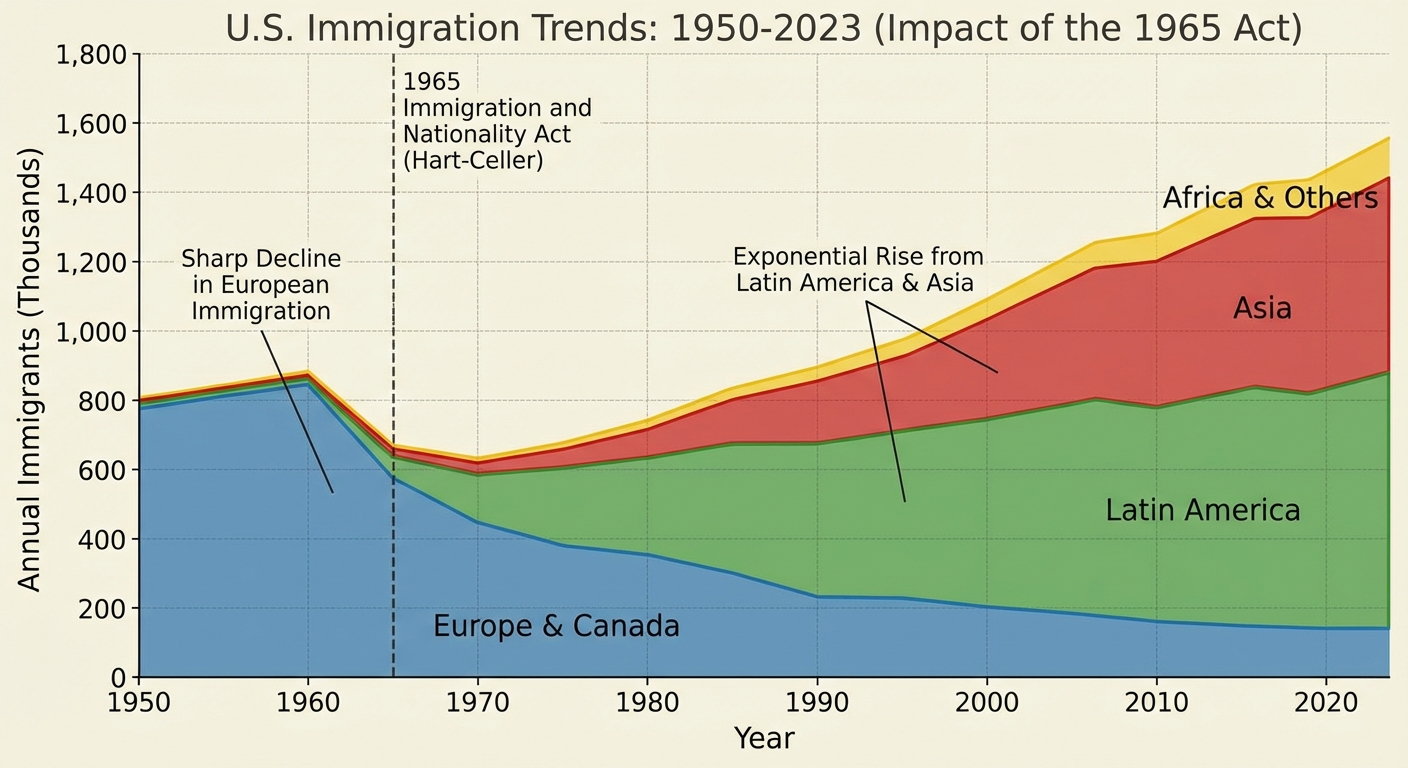
The Immigration Act of 1965 had long-term effects that peaked in Period 9. The majority of immigrants post-1980 came from Latin America and Asia (replacing Europe as the primary source).
- The Sun Belt: Population shifted from the industrial Northeast/Midwest to the South and West (Texas, Florida, California) for jobs and warmer climate. This shifted political power (Electoral College votes) to these regions.
- Debate: Rise in illegal immigration led to heated political debates (e.g., Simpson-Mazzoli Act of 1986 grant amnesty but penalized employers; current debates over border security).
Rights and Society
- LGBTQ+ Rights:
- Don't Ask, Don't Tell (1994): Allowed gays to serve in the military only if closeted (later repealed under Obama).
- Obergefell v. Hodges (2015): The Supreme Court legalized same-sex marriage nationwide.
- Women's Movement: Continued breaking "glass ceilings" (e.g., Sandra Day O'Connor as first female Supreme Court Justice, Hillary Clinton receiving the popular vote in 2016). Family structures shifted toward more dual-income or single-parent households.
Summary of Key Supreme Court Cases (Period 9)
| Case | Topic | Ruling |
|---|---|---|
| Bush v. Gore (2000) | Elections | Stopped the Florida recount; effectively decided the 2000 election for Bush. |
| Obergefell v. Hodges (2015) | Civil Rights | Legalized same-sex marriage under the 14th Amendment. |
| Citizens United v. FEC (2010) | Campaign Finance | Ruled that corporate funding of independent political broadcasts cannot be limited (Free Speech). |
Final Review: Common Pitfalls in Period 9
- Deficit vs. Debt: Students often assume conservative presidents always reduced the deficit. Reality: The deficit increased significantly under Reagan (military spending + tax cuts) and W. Bush (wars + tax cuts).
- The Two Iraq Conflicts: Do not confuse the Persian Gulf War (1991) (liberating Kuwait, authorized by UN) with the Iraq War (2003) (invading Iraq for WMDs, unilateral action).
- Cause of 2008 Crash: Don't just say "bad economy." Be specific: Deregulation (repeal of Glass-Steagall) allowed banks to gamble on subprime mortgages, leading to a housing bubble burst.