AP Italian Unit 6 Study Guide: Facing Global Challenges (Sfide Globali)
1. Overview: The Theme of Global Challenges (Sfide Globali)
This unit explores complex issues affecting contemporary Italy, focusing on how the country navigates the tension between tradition and modernity. In the AP Italian Language and Culture exam, this theme is often used to test your ability to express opinions (opinioni), make comparisons (confronti), and understand cause-and-effect relationships.
Key Learning Objectives
- Economic Issues (Economia): Understanding the North-South divide and labor market shifts.
- Environmental Issues (Ambiente): Climate change effects on Italian geography and sustainable solutions.
- Demographics & Migration (Popolazione e Migrazione): The aging population, immigration trends, and citizenship laws.
- Social Welfare & Human Rights (Diritti Umani): Civil rights evolution and social protections.
2. Environmental Challenges (L'Ambiente)
Italy's unique geography makes it particularly vulnerable to environmental shifts. The constitution was recently amended to explicitly protect the environment and biodiversity for future generations.
Climate Change and Natural Disasters
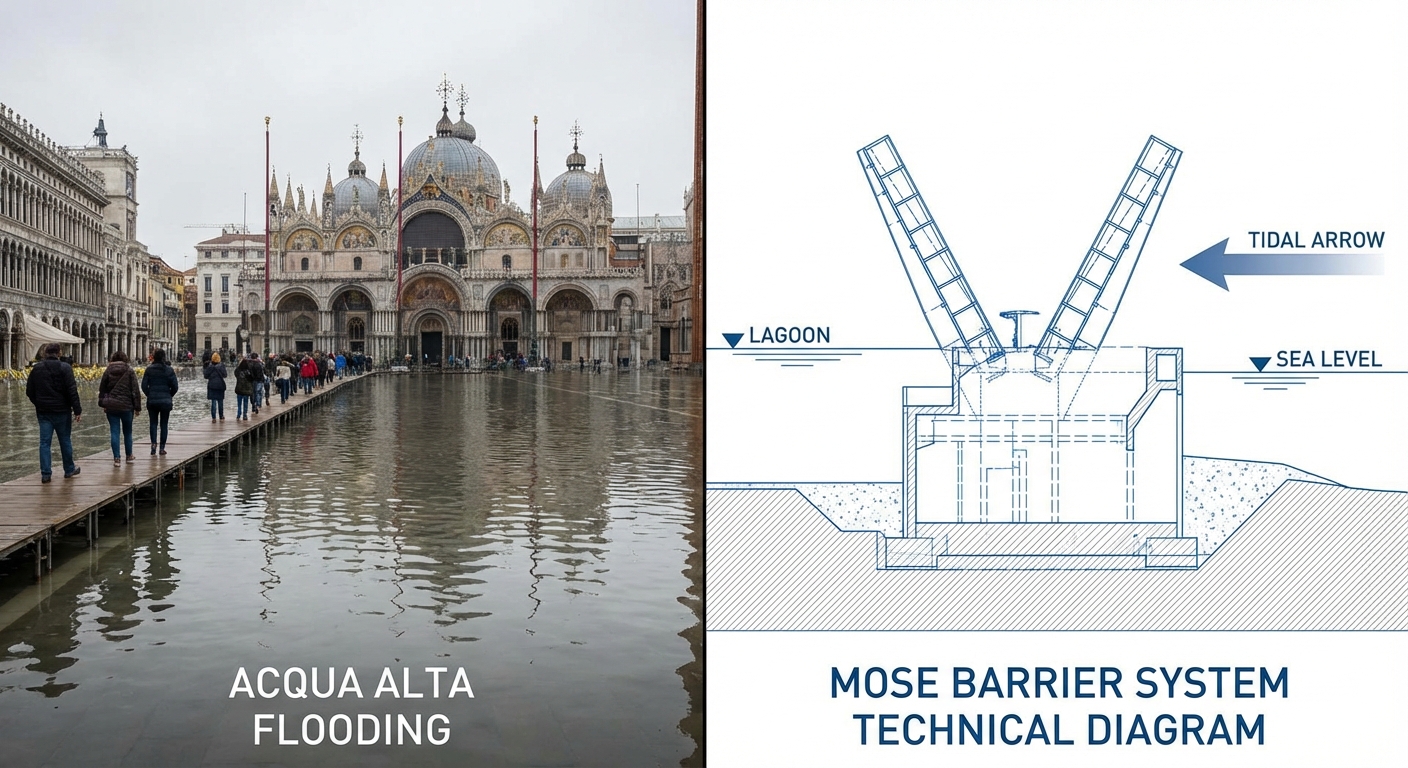
- Venice and High Water (Acqua Alta): Rising sea levels threaten Venice. The frequency of floods has increased, damaging historic architecture and disrupting daily life.
- Solution - MOSE: A system of mobile barriers (dighe mobili) designed to isolate the Venetian Lagoon from the Adriatic Sea when tides get too high.
- Impact: While effective, it is controversial due to high costs, corruption scandals, and environmental concerns for the lagoon ecosystem.
- Hydrogeological Instability (Dissesto Idrogeologico): Due to unauthorized building (abusivismo edilizio) and deforestation, many Italian regions are prone to landslides (frane) and floods (alluvioni).
Pollution and Sustainability
- The Land of Fires (La Terra dei Fuochi): A crisis in the Campania region involving the illegal dumping and burning of toxic waste by organized crime (ecomafie). This has led to severe health issues for locals and contamination of agricultural land.
- Renewable Energy (Energie Rinnovabili):
- Geothermal: Tuscany (Larderello) is a world leader in geothermal energy.
- Solar: Regions like Sicily and Puglia utilize their high sun exposure for solar farms.
- Recycling (Raccolta Differenziata): Italy has high recycling rates compared to other EU nations, though efficiency varies greatly between Northern and Southern municipalities.
Activism
- Fridays for Future: Young Italians are highly active in climate strikes (scioperi per il clima), demanding faster political action.
- Legambiente: The most prominent Italian environmental association, known for its "Goletta Verde" campaign monitoring sea pollution.
3. Economic Challenges (Le Sfide Economiche)
The Italian economy (la terza economia dell'Eurozona) faces structural issues that deeply impact society.
The North-South Divide (La Questione Meridionale)
A historic economic gap exists between the industrialized North and the agrarian South.
| Northern Italy (Il Nord) | Southern Italy (Il Mezzogiorno) |
|---|---|
| Economy: Industrial hubs (Milan, Turin), Finance, Fashion. | Economy: Agriculture, Tourism, smaller enterprises. |
| Employment: Lower unemployment rates. | Employment: Higher unemployment, higher rates of undeclared work (lavoro nero). |
| Infrastructure: High-speed trains, modern hospitals. | Infrastructure: Often outdated transport and healthcare facilities. |
Labor Market Issues
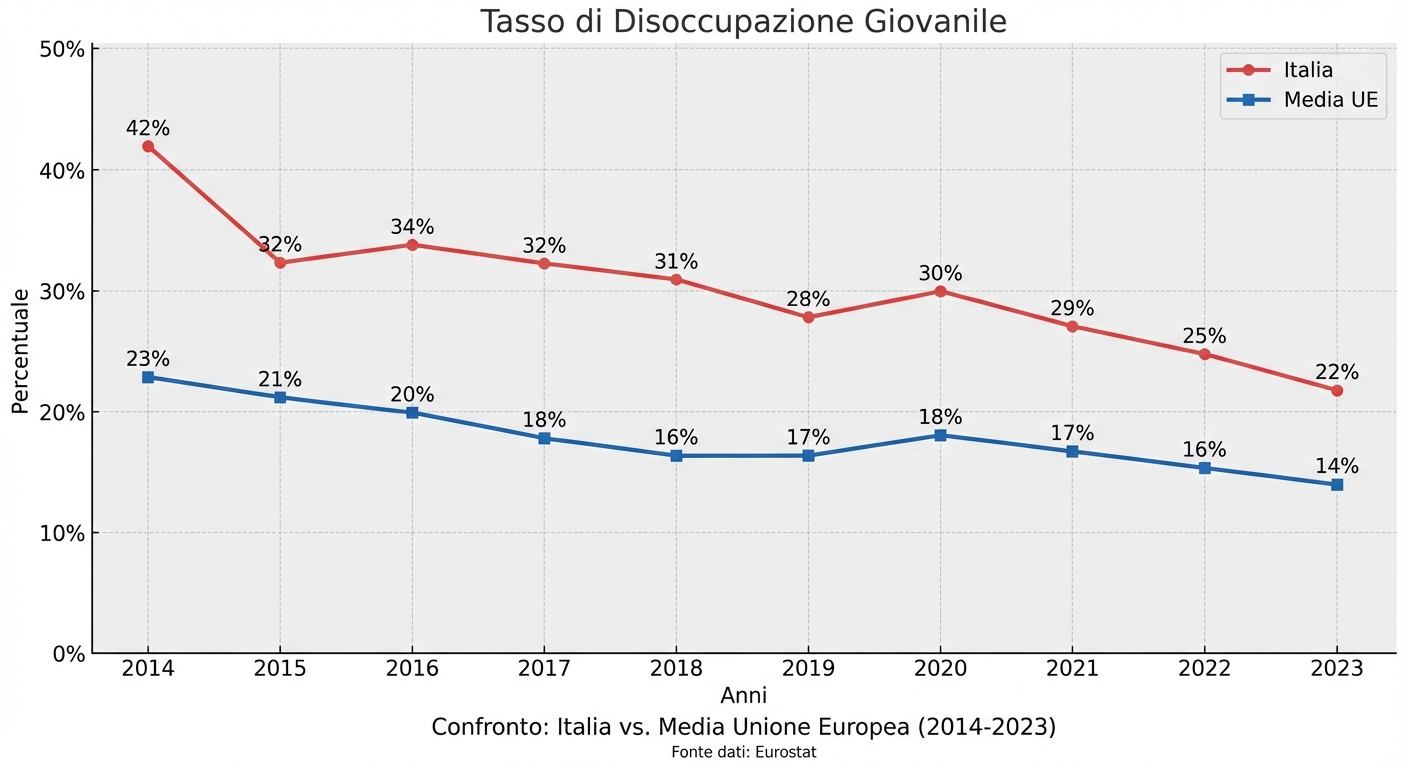
- Youth Unemployment (Disoccupazione Giovanile): One of the highest in Europe. Many young graduates cannot find stable jobs.
- The Brain Drain (La Fuga di Cervelli): Highly educated young Italians migrate to the UK, Germany, or the US for better wages and research opportunities.
- Precarious Work (Il Precariato): Many young people work on temporary contracts with no benefits or job security, delaying major life steps like buying a house or having children.
- "Made in Italy": While globalization challenges small businesses, the "Made in Italy" brand (food, fashion, design) remains a crucial economic driver, protected by strict regulations against counterfeiting (contraffazione).
4. Societal Changes: Demographics and Migration
The Demographic Crisis (Inverno Demografico)
Italy has one of the lowest birth rates (tasso di natalità) in the world.
- Causes: Economic instability, lack of childcare support (asili nido), and cultural shifts where women prioritize careers or delay marriage.
- Consequences: An aging population (invecchiamento della popolazione) puts strain on the pension system (sistema pensionistico) and healthcare.
- Family Dynamics: Young adults often live with parents into their 30s. These individuals are sometimes jokingly called "Bamboccioni" (big babies), though the cause is usually economic necessity rather than laziness.
Migration (L'Immigrazione)
Italy's geographic position makes it a "bridge" (ponte) in the Mediterranean for migrants from Africa and the Middle East.
- New Italians (I Nuovi Italiani): Children of immigrants born and raised in Italy.
- Citizenship Debate: The current law is based on Ius Sanguinis (rights of blood/ancestry). There is a heated political debate about moving toward Ius Soli (rights of soil) or Ius Scholae (citizenship after completing school cycles), which would allow children of immigrants to become citizens more easily.
- Investigation vs. Integration: While political rhetoric can be hostile, integration is happening. Migrant labor is essential in the agricultural and caretaking sectors (badanti for the elderly).
5. Human Rights and Ethics
Gender and Civil Rights
- Women's Rights: While equality is legally guaranteed, the gender pay gap and semicide (femminicidio) remain pressing issues. Cultural attitudes regarding women's roles in the family are slowly evolving.
- Civil Unions: In 2016, Italy passed the "Legge Cirinnà," legalizing civil unions (unioni civili) for same-sex couples, granting them many (but not all) rights of marriage.
Bioethics
- End of Life: Euthanasia remains illegal, but the debate on "assisted suicide" (suicidio assistito) is very active, with recent court rulings creating limited exceptions.
- Food Security: Initiatives like "Last Minute Market" recover unsold food from supermarkets to feed the needy, fighting both waste and poverty.
6. Grammar Connection: The Language of Debate
In Unit 6, you must often express hypothesis, doubt, and emotion. This requires the Subjunctive Mood (Congiuntivo) and Hypotheticals (Periodo Ipotetico).
Essential Structures for the AP Exam
Expressing Opinions (Requires Subjunctive):
- Penso che il governo debba fare di più. (I think the government must do more.)
- È necessario che noi proteggiamo l’ambiente. (It is necessary that we protect the environment.)
Hypotheticals (Se-Clauses):
- Reality (Present/Future): Se non ricicliamo, l'inquinamento aumenterà. (If we don't recycle, pollution will increase.)
- Possibility (Imperfect Subjunctive + Conditional): Se ci fossero più posti di lavoro, i giovani non partirebbero. (If there were more jobs, young people wouldn't leave.)
7. Cultural Comparison Corner
Use these comparisons for the Oral Presentation section of the exam.
| Topic | Italy Context | Possible My Community Context (US/Canada) |
|---|---|---|
| recycling | Strict separation rules (raccolta differenziata); fines for errors; varies by region. | Often single-stream recycling; varies by city/state. |
| Food Systems | Emphasis on "Slow Food," local markets (Km 0), and protection of regional specialties (DOP/IGP). | Emphasis on convenience, large supermarkets, fast food, though "Farm to Table" is growing. |
| Young Adults | Live with parents until roughly age 30 due to economy/culture. | Generally encouraged to move out for college or work at age 18-22. |
| Health Care | Universal public coverage (SSN). accessible to all but can have wait times. | Private/Insurance-based system. Access depends on employment/income. |
8. Common Mistakes to Avoid
- Confusing Tempo terms:
- Tempo = Time (abstract) or Weather.
- Volta = Time (instance/frequency, e.g., "one time").
- Do not say "Il tempo è male" for climate change implications. Use "Il clima".
- Stereotyping the South: Avoid generalizing the South as only "poor" or "mafia-ridden." Discuss it as a region with rich culture and potential, facing structural challenges.
- Misusing Ambiente: Ambiente usually means "Environment" (nature). If referring to the "atmosphere" of a room, use atmosfera.
- Immigration Terminology:
- Avoid clandestino (illegal alien) as it has a negative connotation. Use immigrato irregolare.
- Do not confuse emigrato (someone who left Italy) with immigrato (someone entering Italy).
- Forgetting the Article: Abstract nouns in Italian generally require the definite article (e.g., L'inquinamento è pericoloso, not Inquinamento è pericoloso).