Drama, Divinity, and Global Exchange: The Baroque Age and the Americas (1600–1750 CE)
The Essence of Baroque Art
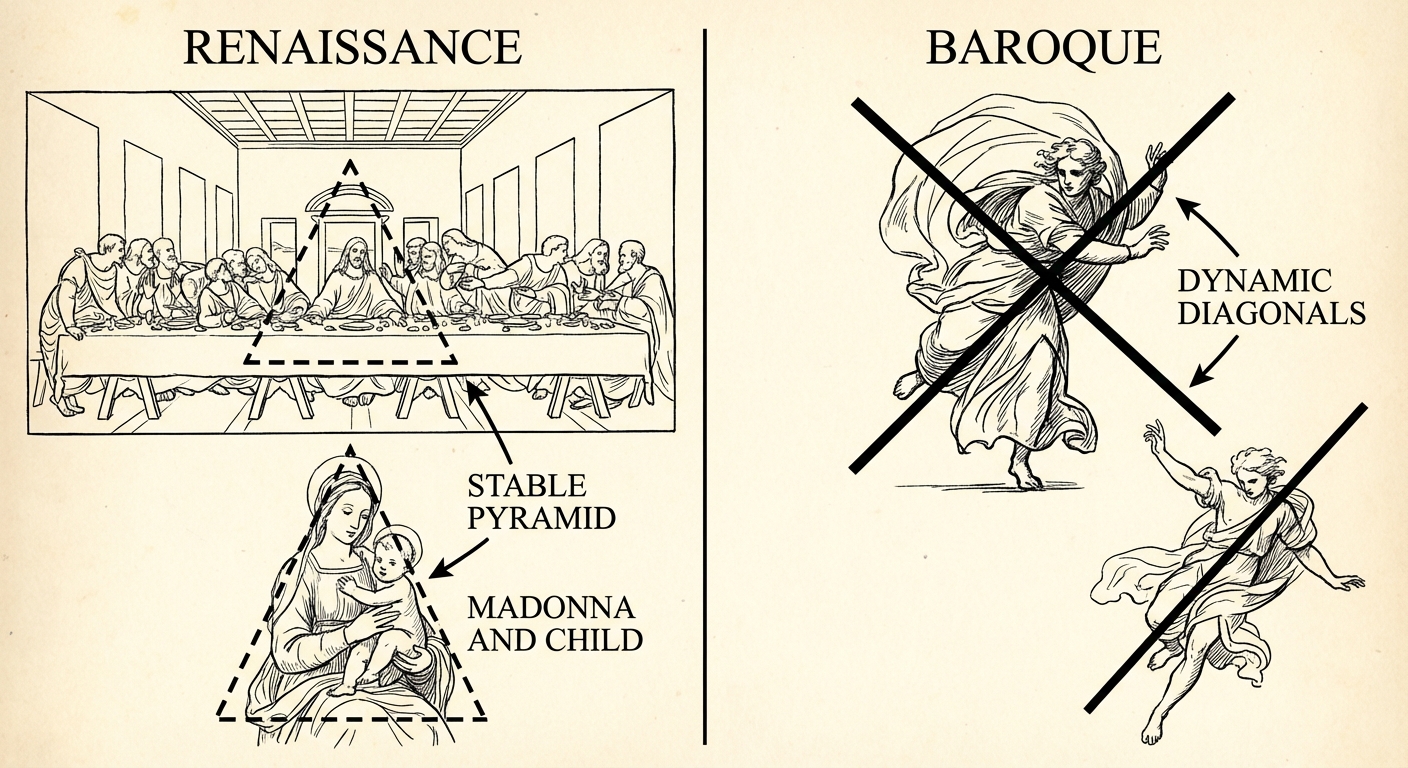
The Baroque period follows the Renaissance and Mannerism, characterized by a shift toward theatricality, dynamism, and emotional engagement. While the Renaissance sought balance and calm reason, the Baroque sought to move the viewer through drama and sensory richness.
Key Characteristics
- Complex Geometry: Rejection of the simple circle/square in favor of ovals and ellipses.
- Diagonal Composition: Figures and structures often follow diagonal lines to create a sense of movement and instability.
- Theatricality: Art acts as a stage; the viewer is often an active participant in the "scene."
- Direct Emotional Appeal: Triggering awe, piety, or shock.
Italian and Spanish Baroque: The Counter-Reformation
In Italy and Spain, the Counter-Reformation (the Catholic Church's response to Protestantism) drove artistic production. The Council of Trent mandated that art should be clear, intelligible, and realistic to simulate piety in the faithful.
Italian Baroque
Caravaggio (Michelangelo Merisi)
Caravaggio revolutionized painting with radical naturalism (painting ordinary people with dirty feet as saints) and lighting.
- Key Term: Tenebrism — A dramatic form of chiaroscuro where forms emerge from deep, encompassing darkness into a stark spotlight. This creates high drama.
- Key Work: Calling of Saint Matthew (c. 1597–1601).
- Christ calls Matthew (a tax collector) in a dingy tavern setting.
- The light source in the painting corresponds to the actual window in the Contarelli Chapel (site-specific).
Gian Lorenzo Bernini
Bernini was the master of the Bel Composto (beautiful whole), unifying architecture, sculpture, and painting.
- Key Work: Ecstasy of Saint Teresa (c. 1647–1652).
- media: Marble, stucco, and gilt bronze.
- Depicts a mystic attempting to describe a spiritual encounter in physical terminology.
- Includes "theater boxes" with sculptures of the patron family (Cornaro) watching the "miracle," highlighting the theatrical nature of the Baroque.
Spanish Baroque
Diego Velázquez
Velázquez served closer to the court than the church, exploring the optical properties of light and the dignity of the focal point.
- Key Work: Las Meninas (1656).
- A complex portrait of the Infanta Margarita, but also a self-portrait of Velázquez.
- Meta-commentary: It questions the nature of viewing. Who is the subject? The King and Queen (seen in the mirror)? The princess? The viewer?
Northern Baroque: Flanders vs. The Dutch Republic
The political and religious divide in the North created two distinct styles of Baroque art.
Comparison Table: Northern Baroque
| Feature | Flemish Baroque (e.g., Rubens) | Dutch Baroque (e.g., Vermeer, Rembrandt) |
|---|---|---|
| Region | Flanders (Southern Netherlands) | Dutch Republic (Northern Netherlands) |
| Religion | Catholic (Spanish control) | Protestant (Calvinist) |
| Patrons | The Church and Monarchs | Middle-class Merchants and Civic Groups |
| Subject Matter | Altar pieces, mythological allegories, glorification of rulers | Landscapes, Genre Scenes, Still lifes, Group portraits |
| Scale | Massive, monumental canvases | Small, intimate works for domestic homes |
Peter Paul Rubens (Flanders)
Rubens combined the precision of Northern art with the musculature and drama of Italian art.
- Key Work: Henri IV Receives the Portrait of Marie de’ Medici (1621–1625).
- Part of a cycle of 24 paintings glorifying the Queen of France.
- Uses allegory: Mythological gods (Hymen, Cupid) sanction a political marriage, elevating a human ruler to divine status.
Rembrandt & Vermeer (The Dutch Republic)
Protestant iconoclasm meant no religious art in churches. Artists sold works on the open market.
- Johannes Vermeer: Master of light and interior quietude.
- Key Work: Woman Holding a Balance (c. 1664).
- Depicts a domestic moment imbued with spiritual weight. Behind her is a painting of the Last Judgment, creating a thematic parallel between weighing gold/jewelry and weighing souls (Vanitas theme).
Spanish Colonial Art (New Spain & The Andes)
Art in the Americas was not merely a copy of European Baroque; it was a site of syncretism (the blending of different beliefs and styles). Indigenous techniques and symbols merged with European Catholic iconography.
Techniques and Global Trade
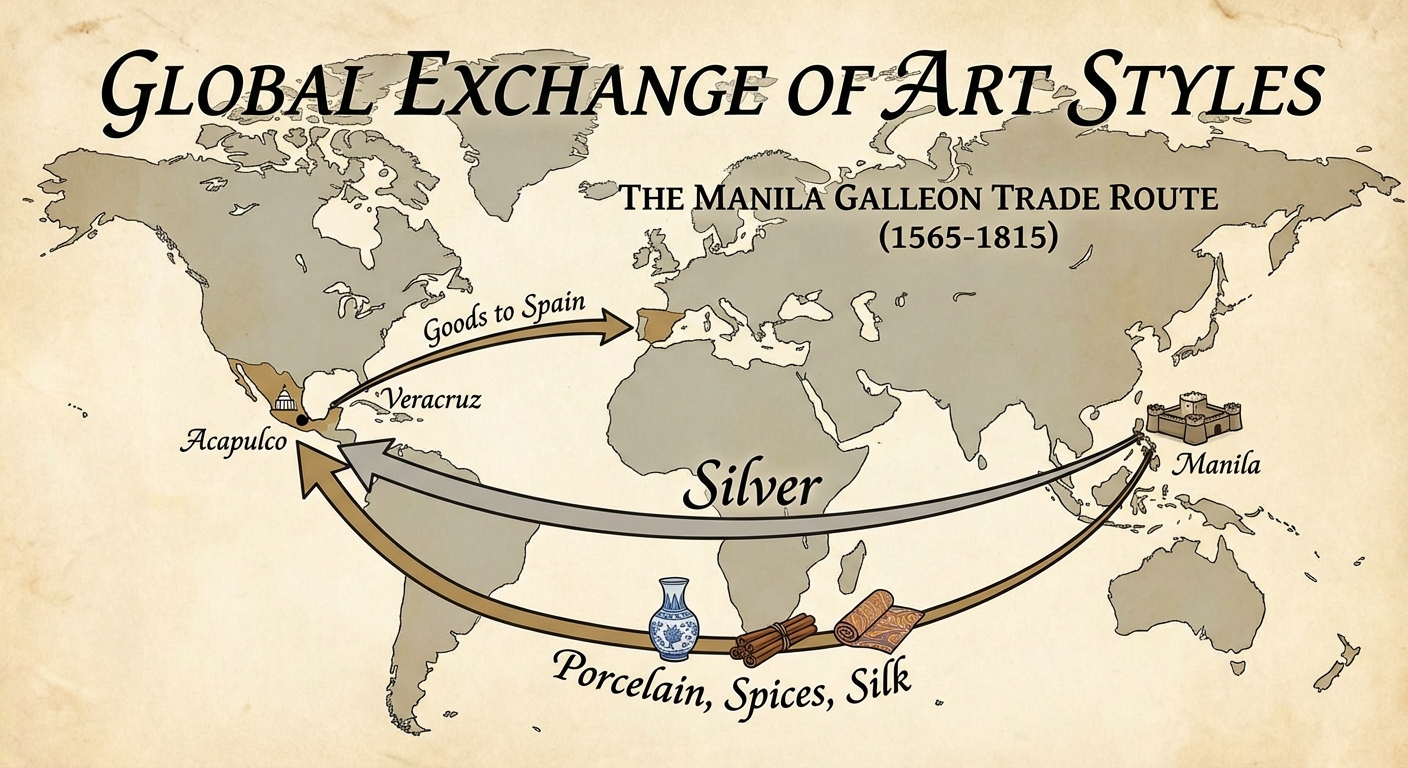
- Biombos: Folding screens inspired by Japanese byōbu. These arrived via the Manila Galleons (trade ships between the Philippines and Mexico).
- Example: Screen with the Siege of Belgrade and Hunting Scene (c. 1697–1701). One side depicts a European war (propaganda) for the Viceroy's guests; the other side is a hunting scene for the women's quarters.
- Enconchado: Oil painting combined with mother-of-pearl inlay, inspired by Asian lacquerware but executed by Mexican artists.
- Example: The Virgin of Guadalupe (Miguel González). The shell inlay makes the Virgin shroud shimmer, signifying divinity.
Racial & Social Hierarchies
- Casta Paintings: A uniquely American genre attempting to taxonomize the racial mixing (mestizaje) of the colonies.
- Key Work: Spaniard and Indian Produce Mestizo (attributed to Juan Rodríguez Juárez).
- Presented as pseudoscientific documentation but served to reinforce the social hierarchy (Europeans at the top).
Angel with Arquebus (Master of Calamarca)
Found in Peru/Bolivia, this work depicts an androgynous angel dressed in aristocratic clothing holding a harquebus (gun).
- Syncretism in Action: Corresponds to Incan myths of Ilapa (god of thunder/lightning) while satisfying Catholic demands for angel imagery. The gun represents the power of the Spanish but also the power of the divine.
Rococo (c. 1730–1770)
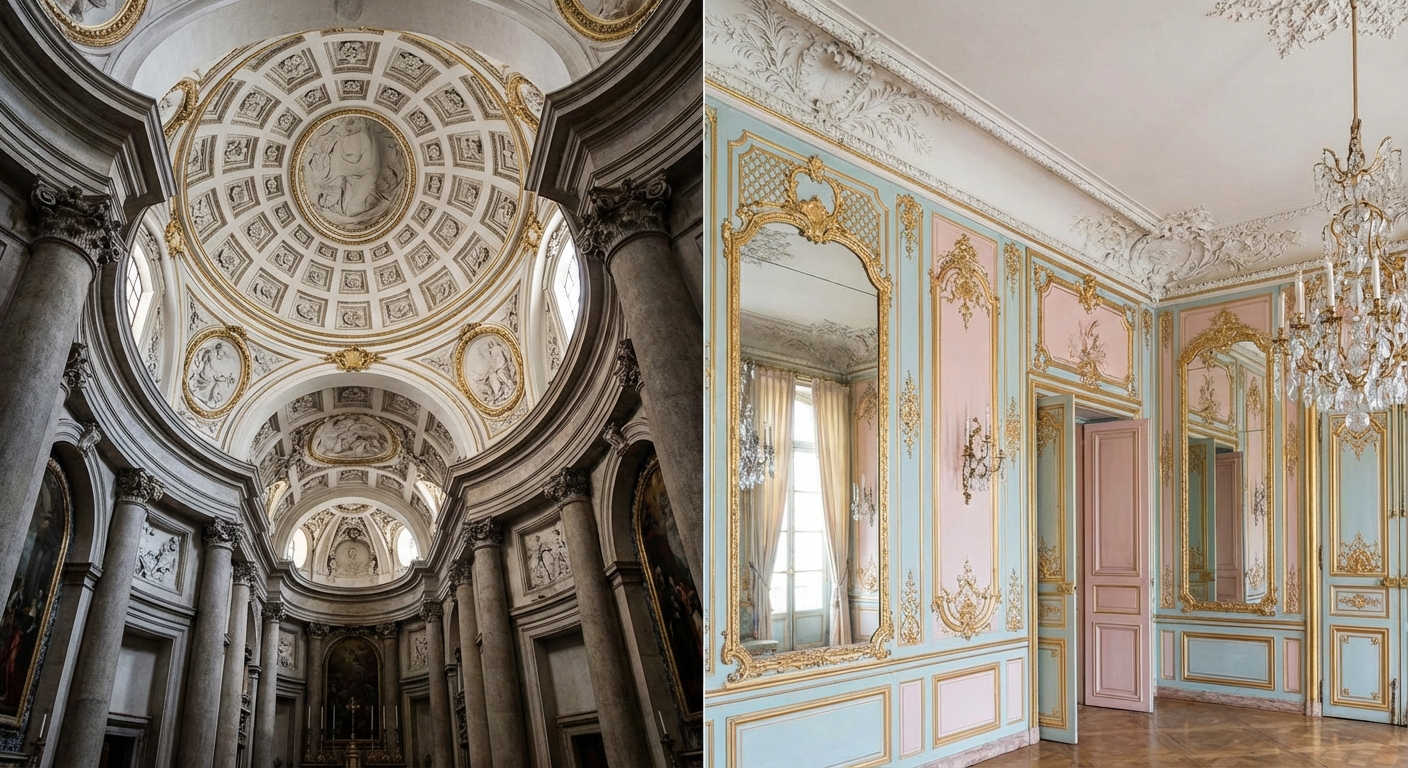
Following the death of Louis XIV (1715), the French aristocracy moved from the rigid Versailles to intimate townhouses in Paris (hôtels). The art shifted from maximizing power to maximizing pleasure.
Characteristics of Rococo
- Pastel Colors: Soft pinks, blues, and greens.
- Curvilinear Forms: "S" curves, looking organic and flowing.
- Subject Matter: Fête galante (outdoor aristocratic courtship parties), love, playful sensuality, and leisure.
- Tone: Frivolous, witty, and often erotic.
Key Work: The Swing (Jean-Honoré Fragonard)
- Context: Commissioned by a baron to depict himself looking up the skirt of his mistress.
- Symbolism:
- The Bishop pushing the swing represents the unsuspecting church/authority.
- The statue of Cupid holds a finger to his lips (secrecy).
- The shoe flying off is a symbol of lost virginity or erotic abandon.
Common Mistakes & Pitfalls
Confusing Tenebrism and Chiaroscuro:
- Correction: All tenebrism is chiaroscuro, but not all chiaroscuro is tenebrism. Chiaroscuro is just light/shadow modeling (Da Vinci used it). Tenebrism is the "spotlight effect" with pitch-black backgrounds (Caravaggio).
Assuming "Colonial" means "European Copy":
- Correction: AP Art History demands you recognize indigenous agency. Works like the Virgin of Guadalupe or Angel with Arquebus contain indigenous materials (feathers, shell) and spiritual parallels that European patrons may not have even understood.
Ignoring the Protestant Influence:
- Correction: If you see a Dutch Baroque work (like Vermeer), do not analyze it for Catholic theological dogma. Analyze it for middle-class values, rising capitalism, and private domestic piety.
Misinterpreting Rococo as "Bad Art":
- Correction: It may seem shallow compared to the Renaissance, but it is technically masterful. It reflects the values of a specific class (the Aristocracy) immediately before the French Revolution.