Unit 4: How Science and Technology Affect Our Lives (AP Italian Review)
Science, Technology, and Society
In the AP Italian Language and Culture curriculum, Unit 4 explores the intersection of innovation and humanity. This section, Science, Technology, and Society (Scienza, tecnologia e società), does not just ask you to memorize vocabulary lists; it requires you to understand the cultural context of technology in Italy, compare it to your own community, and debate the ethical implications of progress.
This unit is critical for the Cultural Comparison (Task 4) and the Argumentative Essay (Task 2) on the exam.
Technology and Daily Life (La tecnologia e la vita quotidiana)
This theme links modern tools to social interaction, work, and communication habits in Italy.
The Role of Social Media and Smartphones
In Italy, the smartphone (il telefonino or il cellulare) is indispensable. Italy has one of the highest mobile phone penetration rates in Europe.
- WhatsApp: It is the primary mode of communication, even for businesses and schools. Unlike in the US where SMS/iMessage is common, Italians rely almost exclusively on WhatsApp for texting, calling, and group coordination.
- I social network: Platforms like Instagram and Facebook are widely used not just for socializing, but for news consumption (l'informazione).
- I nativi digitali vs. Gli anziani: There is a distinct gap between "digital natives" and the elderly population. While grandchildren (i nipoti) live online, many elderly Italians (gli anziani) strictly prefer face-to-face interaction (l'interazione faccia a faccia) in the piazza.
The Digital Divide (Il divario digitale)
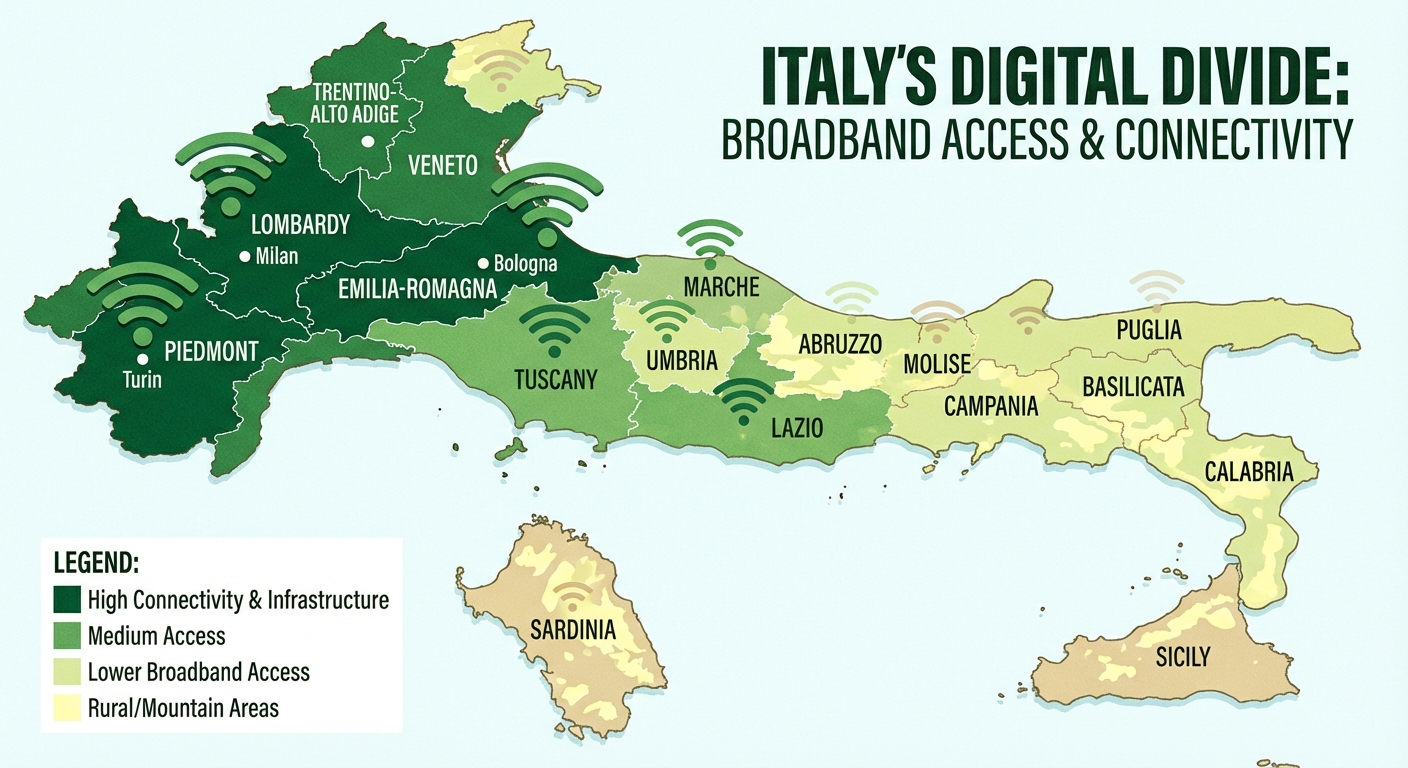
A major topic for the AP exam is the Digital Divide in Italy. This refers to the gap between those who have access to high-speed internet and technology and those who do not.
- North vs. South: Generally, Northern Italy tends to have better broadband infrastructure compared to rural areas in the South (il Mezzogiorno).
- Urban vs. Rural: Small villages (i borghi) often suffer from slow connections, which hinders economic growth and causes young people to leave.
Smart Working
Since the COVID-19 pandemic, the English term "Smart Working" (remote work) has entered the daily Italian vocabulary.
- Cultural Shift: Traditionally, Italian work culture valued physical presence. Now, il lavoro agile (agile work) is debated as a way to improve work-life balance (l'equilibrio tra vita professionale e vita privata).
Key Vocabulary: Daily Technology
| Italian Term | Definition/Context |
|---|---|
| Scaricare | To download (music, files, apps). |
| Navigare in Rete | To surf the Web. |
| Il profilo utente | User profile. |
| La dipendenza | Addiction (often used regarding screens/gaming). |
| Condividere | To share (posts, photos, files). |
New Discoveries and Inventions (Le nuove scoperte e le invenzioni)
Italy has a profound history of scientific contribution. On the exam, you must be able to link historical achievements to modern innovation.
Historical Contributions
You should know at least 2-3 historical figures for cultural comparisons:
- Galileo Galilei: The father of modern science and astronomy.
- Alessandro Volta: Inventor of the battery (la pila).
- Guglielmo Marconi: Pioneer of long-distance radio transmission (la radio).
- Antonio Meucci: Often defended by Italians as the true inventor of the telephone (il telefono), prior to Alexander Graham Bell.
Modern Italian Innovation
Italy is not just a museum; it is a leader in specific scientific sectors:
- Robotics (La robotica): The Istituto Italiano di Tecnologia (IIT) is world-renowned for creating humanoid robots (like the iCub).
- Space Exploration: Italy is a major contributor to the European Space Agency (ESA).
- Automotive Engineering: Brands like Ferrari and Lamborghini are at the forefront of combining luxury with high-tech engineering (l'ingegneria automobilistica).
The Phenomenon of "Brain Drain" (La fuga dei cervelli)
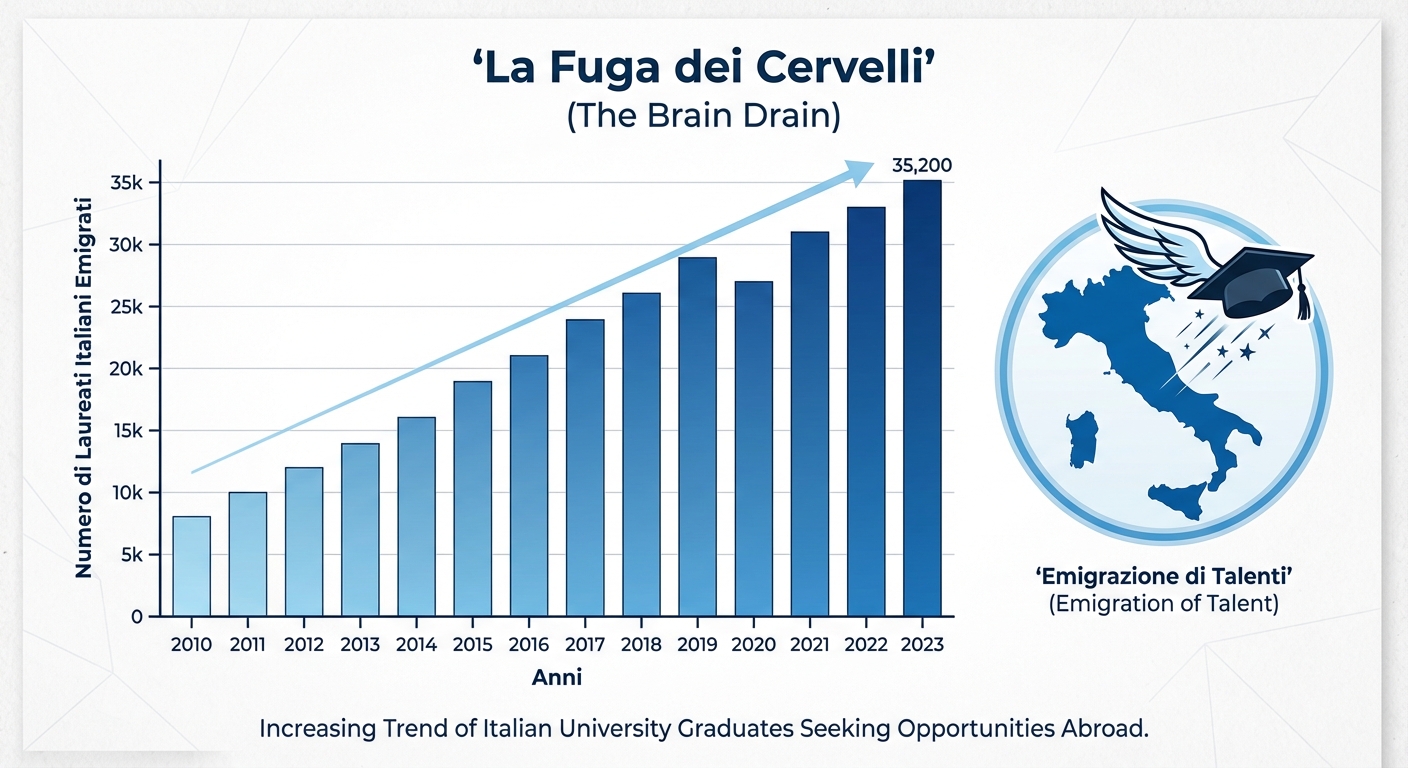
A critical socio-scientific concept in Italy is La fuga dei cervelli.
- Definition: Many highly educated young Italian scientists and researchers emigrate abroad (to the UK, US, or Germany) because of a lack of funding (i fondi) and job opportunities in Italy.
- Impact: This slows down domestic innovation despite the high quality of Italian university education.
Ethical Questions in Science and Technology (Le questioni etiche)
This section often appears in the Argumentative Essay. You must be able to present pros and cons regarding scientific advancement.
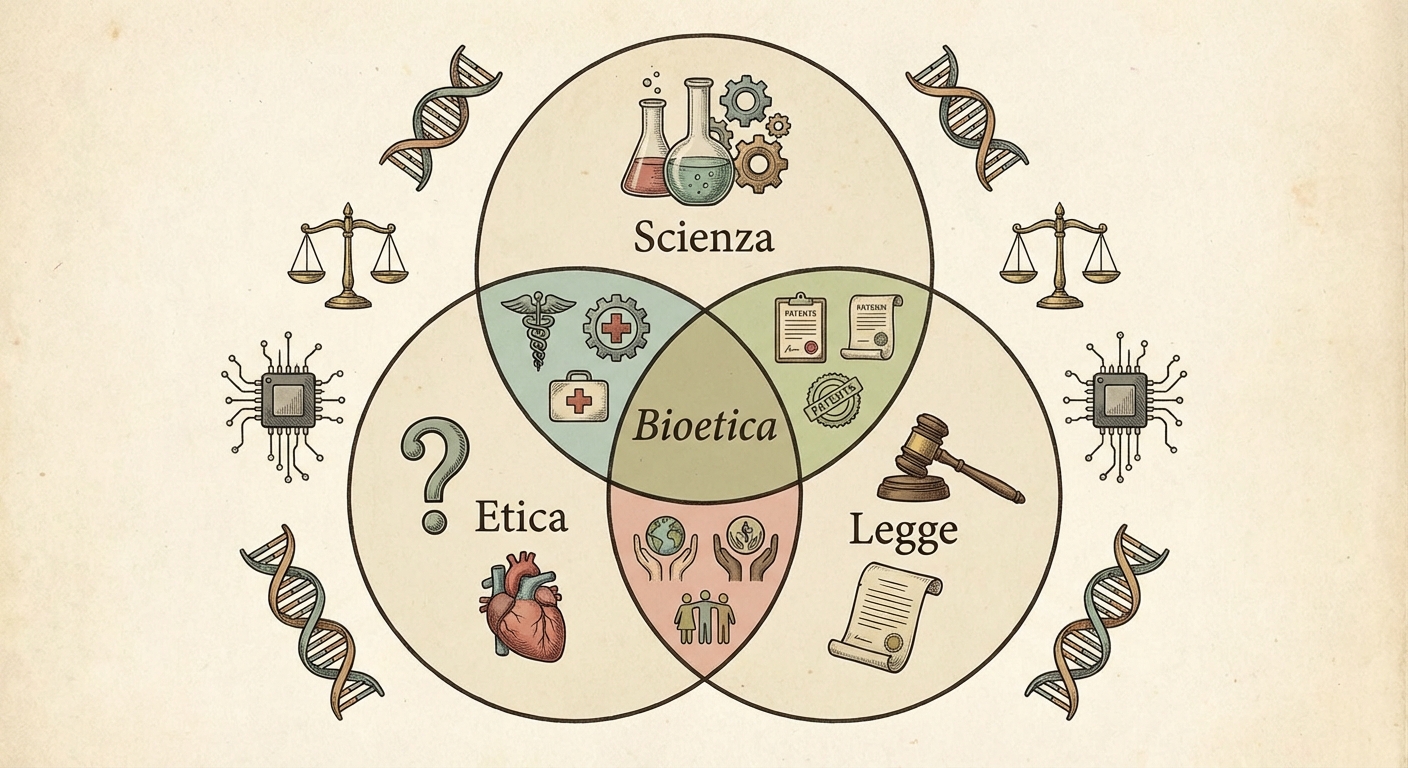
Bioethics (La bioetica)
Given the strong cultural influence of the Catholic Church in Italy, bioethical debates are very spirited.
- Stem Cells (Le cellule staminali): Research is controversial. The debate centers on the potential to cure diseases vs. the moral status of the embryo.
- GMOs (Gli OGM): Italy has strict regulations against Organismi Geneticamente Modificati. Italian food culture emphasizes "natural" and "traditional" products (prootti biologici), making the public skepticism of GMOs higher than in the US.
Privacy and Artificial Intelligence (L'intelligenza artificiale)
- GDPR: Italy follows strict European privacy laws. There is significant cultural concern about how corporations use personal data (i dati personali).
- Automation: There is fear that robots and AI will replace human workers (sostituire i lavoratori umani), contributing to unemployment (la disoccupazione).
Environmental Technology
- Alternative Energy (Le energie alternative): Italy invests heavily in solar and wind power, especially in the South.
- The Dilemma: Balancing the need for wind turbines (le pale eoliche) with the preservation of Italy's historic landscapes (il paesaggio).
Language Structure for Ethics (The Subjunctive)
When discussing ethics, you must use the Subjunctive Mood (Il Congiuntivo) to express opinions, doubts, and necessity.
- È necessario che la scienza rispetti l'etica. (It is necessary that science respects ethics.)
- Dubito che i robot possano sostituire gli insegnanti. (I doubt that robots can replace teachers.)
- Penso che la tecnologia migliori la vita. (I think technology improves life.)
Common Mistakes & Pitfalls
When writing or speaking about this Unit, students often make these errors:
False Cognates:
- Mistake: Using domanda to mean a "demand" for a product.
- Correction: Domanda is a question. Use richiesta for "demand" (e.g., market demand).
- Mistake: Using attualmente to mean "actually."
- Correction: Attualmente means "currently." Use in realtà or effettivamente for "actually."
Overusing "Il Computer":
- While Italians use the word "computer," in a formal essay, try to vary your vocabulary with terms like l'elaboratore (formal) or specific devices like il portatile (laptop) or il tablet.
Grammar - The Future vs. Hypothetical:
- Mistake: Se la tecnologia continuerà, noi saremmo…
- Correction: Hypothetical sentences (Se clauses) have strict rules.
- Likely future: Se la tecnologia continua (present), noi saremo (future).
- Hypothetical: Se la tecnologia continuasse (imp. subj.), noi saremmo (conditional).
Cultural Generalizations:
- Mistake: Assuming Italy is "behind" technologically.
- Correction: While internet speeds vary, Italy is a leader in high-tech manufacturing and medicine. Avoid stereotypes; present a nuanced view incorporating the Digital Divide.