Study Guide: The Influence of Language and Culture on Identity (AP Chinese Unit 2)
– Foundations of Chinese Identity: Values and Philosophy
Defining Chinese Identity
In the context of AP Chinese, Identity (shēn fèn, 視份) is not just about the individual self, but how an individual fits into the larger web of family, society, and history. Unlike Western Individualism, Chinese culture historically emphasizes Collectivism (jí tǐ zhǔ yì, 集体主义).
The Three Pillars of Thought
Three major philosophical traditions intersect to form the core of the Chinese personality. This is often referred to as “Three Teachings Harmoniously as One” (Sān Jiào Hé Yī).
| Philosophy | Key Concept | Impact on Identity & Behavior |
|---|---|---|
| Confucianism (儒家 Rújiā) | Social Order & Filial Piety (孝 Xiào) | Dictates hierarchy, respect for elders/teachers, and the importance of education. Focuses on Li (Propriety) and human relationships. |
| Taoism (道家 Dàojiā) | Harmony with Nature & Wu Wei (Non-action) | Influences aesthetics, health (TCM), and the desire for balance. Encourages simplicity and going with the flow rather than forcing outcomes. |
| Buddhism (也教 Fójiào) | Karma & Compassion | Influences beliefs about fate (缘分 Yuánfèn), suffering, and the afterlife. Promotes charity and mental cultivation. |
Notable Cultural Values
- Filial Piety (孝 - Xiào): The virtue of respect for one's parents, elders, and ancestors. It is the root of all Confucian virtues.
- Face (面子 - Miànzi): A mix of dignity, prestige, and honor.
- Saving face: Avoiding public embarrassment or conflict.
- Giving face: Showing deference or praising someone publicly.
- Guanxi (关系): The system of social networks and influential relationships which facilitate business and other dealings.
– Language: The Carrier of Culture
The Nature of Hanzi (汉字)
Language acts as a unifying force for identity across different regions. While spoken dialects vary wildly, the written system unifies the culture.
- Logograms: Characters represent meanings/morphemes, not just sounds.
- Total Count: Over 50,000 exist, but ~2,500–3,000 cover 99% of daily usage.
- Simplification: In the 1950s, mainland China adopted Simplified Characters to increase literacy. Taiwan and Hong Kong retain Traditional Characters.
Evolution of Characters
The structure of characters reveals the cultural mindset of the ancients.
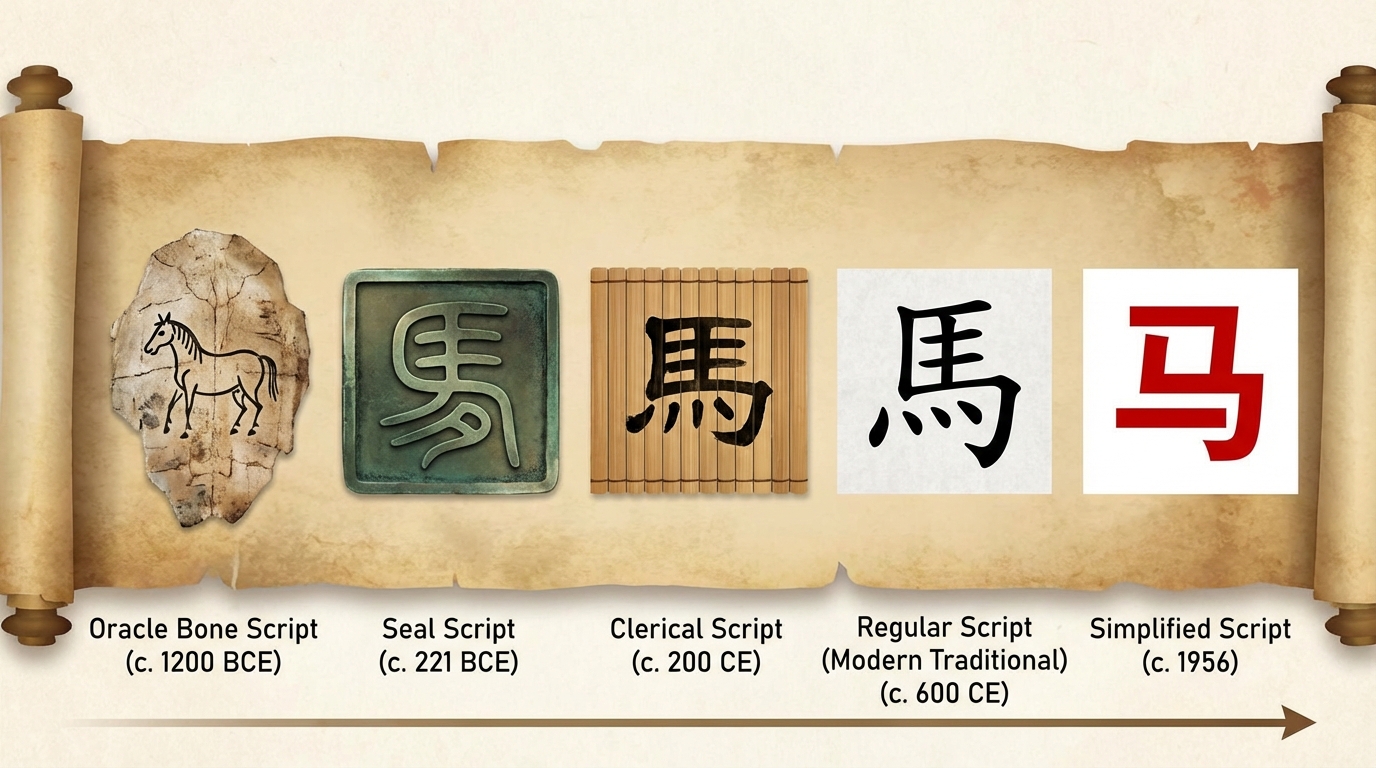
- Pictographs (象形): Direct drawings (e.g., 日 sun, 月 moon).
- Ideographs (指事): Abstract representations (e.g., 上 up, 下 down).
- Picto-phonetic (形声): Roughly 80% of characters. One part gives meaning (radical), one part gives sound.
- Example: 妈 (Mā, mother) = 女 (female radical) + 马 (horse, phonetic 'ma').
Calligraphy (书法 Shūfă)
Calligraphy is not just writing; it is high art and a form of meditation/self-cultivation.
- Four Treasures of the Study (文房四宝):
- Brush (笔): Historically animal hair (Weasel, Goat).
- Ink (墨): Black soot and glue.
- Paper (纸): Xuan paper (Rice paper).
- Inkstone (砚): Grindstone for making ink.
- Styles:
- Seal Script: Ancient, stamp-like.
- Regular Script (Kaishu): Standard, separate strokes (what students learn).
- Cursive Script: Rapid, artistic flowing strokes (hard to read).
– Educational Identity
The Culture of Learning
Owing to Confucian influence, education is seen as the primary path to social mobility and family honor.
- Structure: 6 years Primary + 3 years Junior High + 3 years Senior High (6-3-3 system).
- Compulsory Education: 9 years (Primary + Junior High).
The Gaokao (高考)
- Definition: The National College Entrance Examination.
- Significance: It is the sole determinant for university admission in China. It occurs once a year in June.
- Cultural Impact:
- High School years are often referred to as “dark years” due to intense pressure.
- Familiars will sacrifice entertainment and personal time for study.
- Critiques: Heavily relies on rote memorization vs. the Western focus on critical thinking/extracurriculars.
– Aesthetics and Beauty
Traditional Beauty Standards
Chinese aesthetics are deeply symbolic.
- The Four Beauties (四大美人): Xi Shi, Wang Zhaojun, Diao Chan, Yang Guifei. They are historical archetypes used in idioms (e.g., “Closed moon, shame flower” describing beauty so great it makes flowers shy).
- Physical Traits: Historically, pale skin (indicating one does not work in the fields), melon-shaped face, and large eyes are idealized.
Architecture and Identity
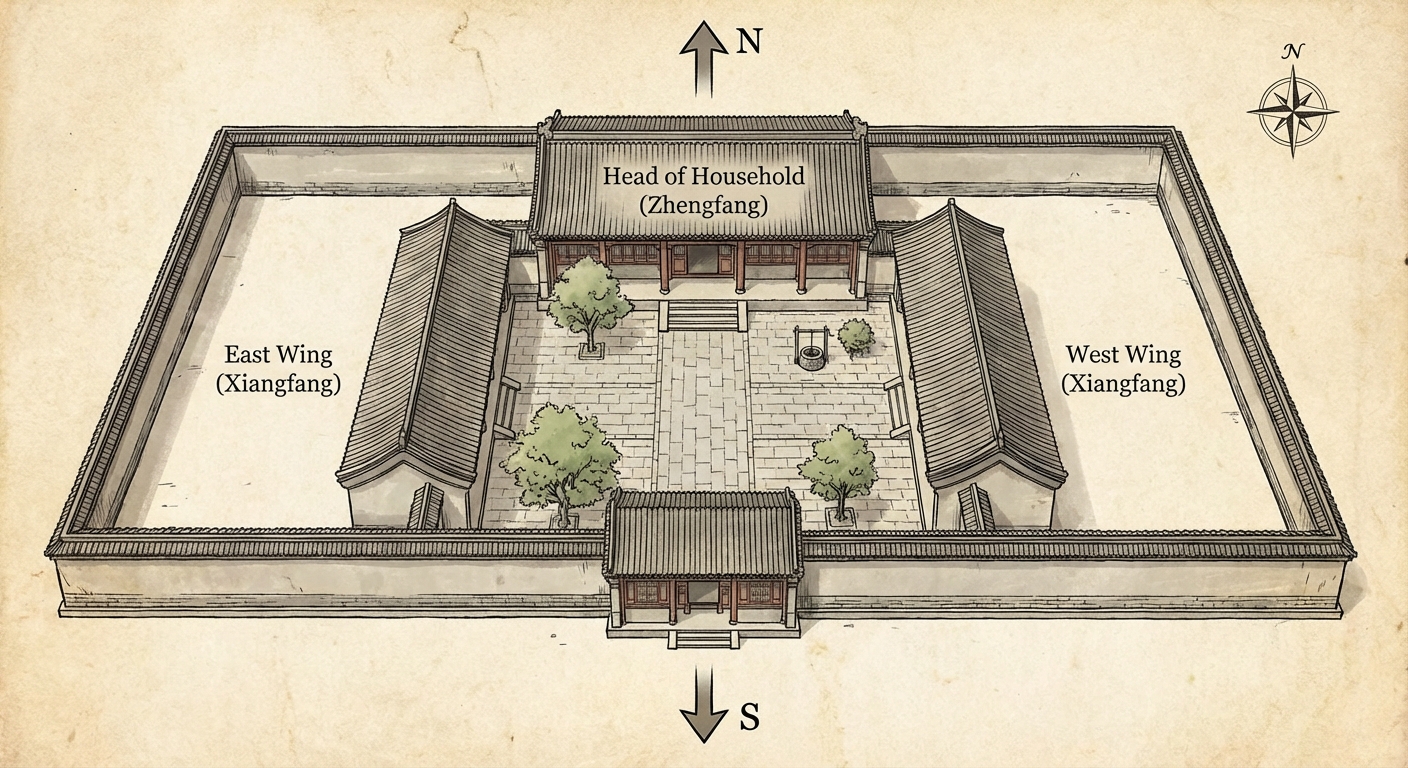
Architecture reflects the social hierarchy and Taoist nature worship.
- Feng Shui (风水): The art of placement to harmonize with energy forces (Qi). Used in building orientation.
- North-South Axis: Important buildings (Forbidden City) face South to catch the warmth and avoid northern winds (bad spirits).
- Siheyuan (四合院): Traditional courtyard homes representing family unity and privacy. The layout reinforces hierarchy (elders in the best north-facing rooms).
– Food as Social Identity
“Min Yi Shi Wei Tian” (民以食为天)
Literal translation: "To the people, food is heaven." Food is the primary social glue in Chinese culture.
Dining Etiquette & Taboos
Understanding dining rules is essential for maintaining Mianzi (face).
- The Round Table: Symbolizes unity and equality (though seating is hierarchical).
- Seating: The guest of honor sits facing the entrance. The host sits nearest the kitchen/service entrance.
- Lazy Susan: A rotating tray used to share dishes designated for communal eating.
- Chopstick Taboos:
- Never stick chopsticks vertically in rice (resembles incense for the dead).
- Don't tap bowls (resembles beggars inviting alms).
Regional Identities (Cuisine)
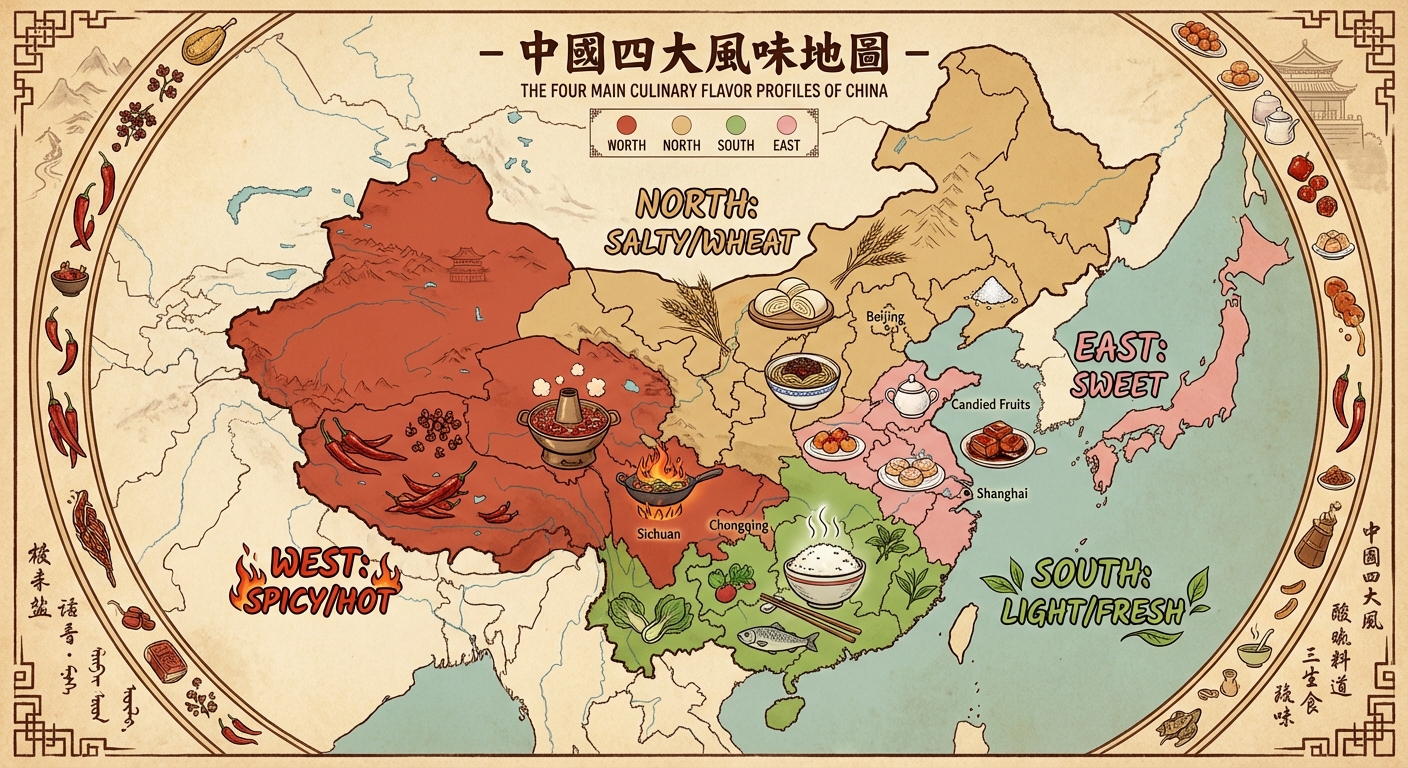
Your identity is often defined by your home province's flavor profile.
- North (Shandong): Salty, wheat-based (noodles/dumplings).
- South (Cantonese): Sweet/Light, rice-based, dim sum.
- East (Jiangsu/Zhejiang): Sweet and Sour.
- West (Sichuan/Hunan): Spicy and Numbing (Ma La).
– Modern Identity in a Digital China
The Digital Ecosystem
Modern Chinese identity is increasingly digital. Because major Western platforms (Google, Facebook) are blocked by the Great Firewall, a unique ecosystem has emerged.
- WeChat (Wiixin): Not just a chat app; a “super app” used for ID, payments, taxes, travel, and social media. It is indispensable for daily life.
- Mobile Payments: China is a largely cashless society (identity is tied to Alipay/WeChat Pay).
- Internet Slang: A creative way for youth to express identity and bypass censorship sensors (e.g., using homophones).
Changing Values
- DINK families: "Double Income, No Kids" – a growing trend challenging traditional filial obligations.
- Globalization: Usage of English names and mixing Western fashion with Hanfu (traditional clothing revival movement).
– Common Mistakes & Exam Pitfalls
1. Confusing Religions
- Mistake: Thinking Confucianism is a religion with a god.
- Correction: It is a philosophy of ethics and social governance. Taoism and Buddhism deal more with the spiritual/cosmic.
2. Generalizing "Chinese Food"
- Mistake: Assuming all Chinese people eat rice daily.
- Correction: Northern China (colder/drier) traditionally eats wheat (noodles, mantou, dumplings), while Southern China eats rice.
3. Stereotyping the "One Child Policy"
- Mistake: Thinking the One Child Policy is still in effect.
- Correction: It ended in 2016. China now has a two-child and even three-child policy (2021) to combat an aging population.
4. Tone Misconceptions
- Mistake: Thinking tones are just "accents" or "emphasis."
- Correction: Tones change the definition of words completely. (e.g., mā = mother, mǎ = horse).
5. Calligraphy vs. Writing
- Mistake: Treating Calligraphy as just handwriting.
- Correction: Calligraphy is traditionally considered the highest visual art form, ranked above painting. It is an expression of the artist's Qi (energy).