Unit 6 Review: The Age of New Imperialism (c. 1750–1900)
1. Rationales for Imperialism
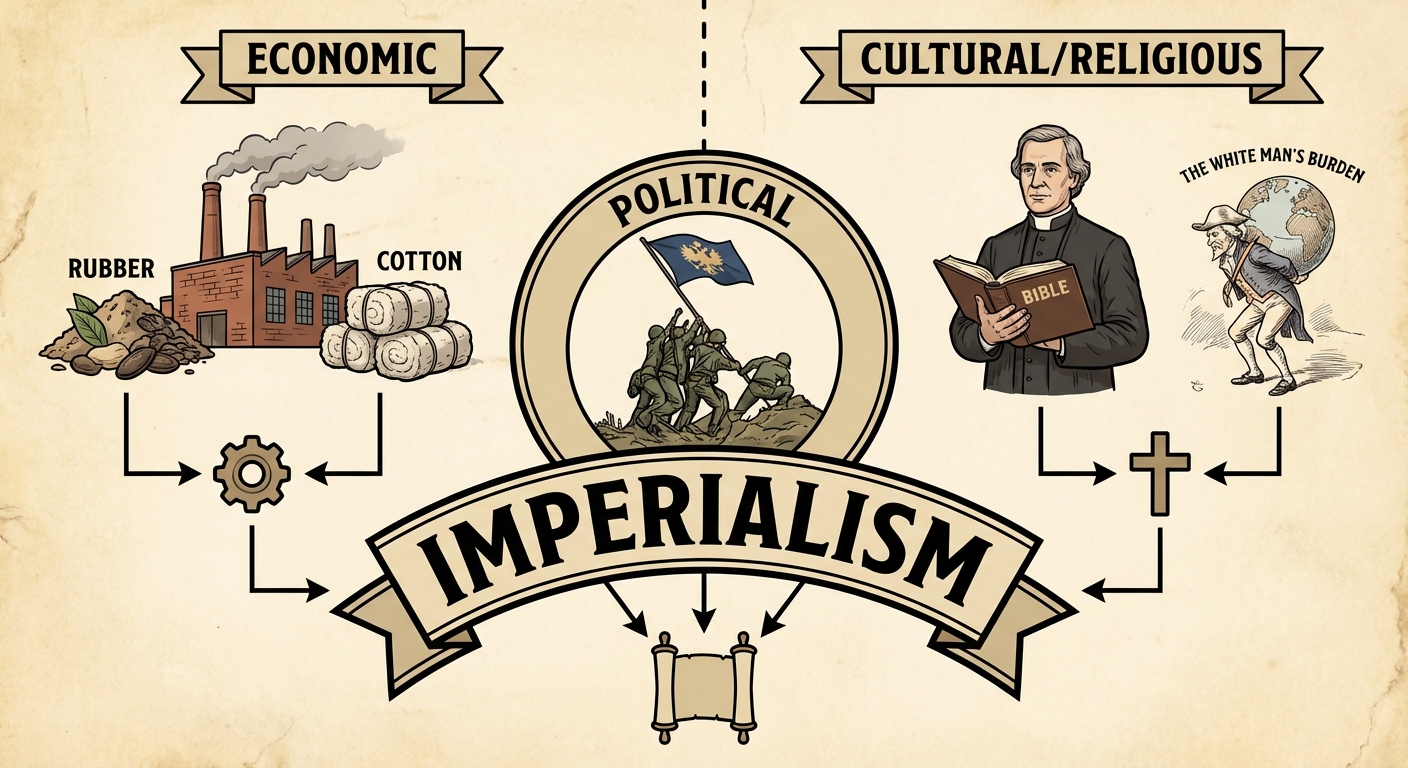
Imperialism in this era (often called "New Imperialism") differed from the earlier Age of Exploration because it was driven primarily by industrial needs. European powers, followed later by the United States and Japan, sought raw materials for factories and markets for finished goods. However, to justify these actions to their citizens and the world, they relied on a set of cultural, religious, and political rationales.
Cultural and Racial Ideologies
The most pervasive justifications were rooted in pseudo-science and cultural arrogance:
- Social Darwinism: This was the misapplication of Charles Darwin’s theory of "survival of the fittest" to human societies. Advocates like Herbert Spencer argued that European dominance was inevitable because white races were biologically superior and had "won" the struggle for survival. This provided a "scientific" shield for racism.
- The Civilizing Mission: Europeans claimed a moral duty to bring "civilization" (Western education, medicine, and monochronic time) to "backward" peoples.
- The White Man's Burden: Popularized by a Rudyard Kipling poem, this concept framed imperialism not as a resource grab, but as a noble, burdensome duty of white nations to care for non-white populations.
Religious Motives
Expand the reach of Christianity remained a powerful motivator:
- Missionaries: Groups travelled to Africa and Asia to convert indigenous populations. While often complicit in colonization, missionaries sometimes advocated for indigenous rights against colonial brutality. They notably set up schools and hospitals, which became tools for cultural assimilation.
Nationalism and Political Competition
- Prestige: Owning colonies became a status symbol. France, having lost the Franco-Prussian War, sought colonies in West Africa to restore national pride.
- Strategic Control: Great Britain focused on the Suez Canal (Egypt) to shorten the route to India, their most valuable colony.
2. State Expansion from 1750–1900
This period saw a shift from private ownership of colonies to direct state control, as well as the entry of non-European powers into the imperial game.
Shift from Private Companies to State Rule
In the previous era, charter companies held sovereign power. By the 19th century, inefficiencies and rebellions caused governments to take direct control.
- The Congo: Originally the private personal property of King Leopold II of Belgium. His reign was infamous for horrific brutality (severing hands of workers who missed rubber quotas). Outrage forced the Belgian government to take over the colony in 1908, renaming it the Belgian Congo.
- Dutch East Indies: The Dutch East India Company (VOC) went bankrupt due to corruption. The Dutch government formally took charge of what is now Indonesia in 1800.
- British in India: After the decline of the Mughal Empire, the British East India Company (EIC) ruled large swathes of India. However, following the Sepoy Mutiny (1857), the British Crown dissolved the EIC and established direct rule, known as the British Raj.
The Scramble for Africa
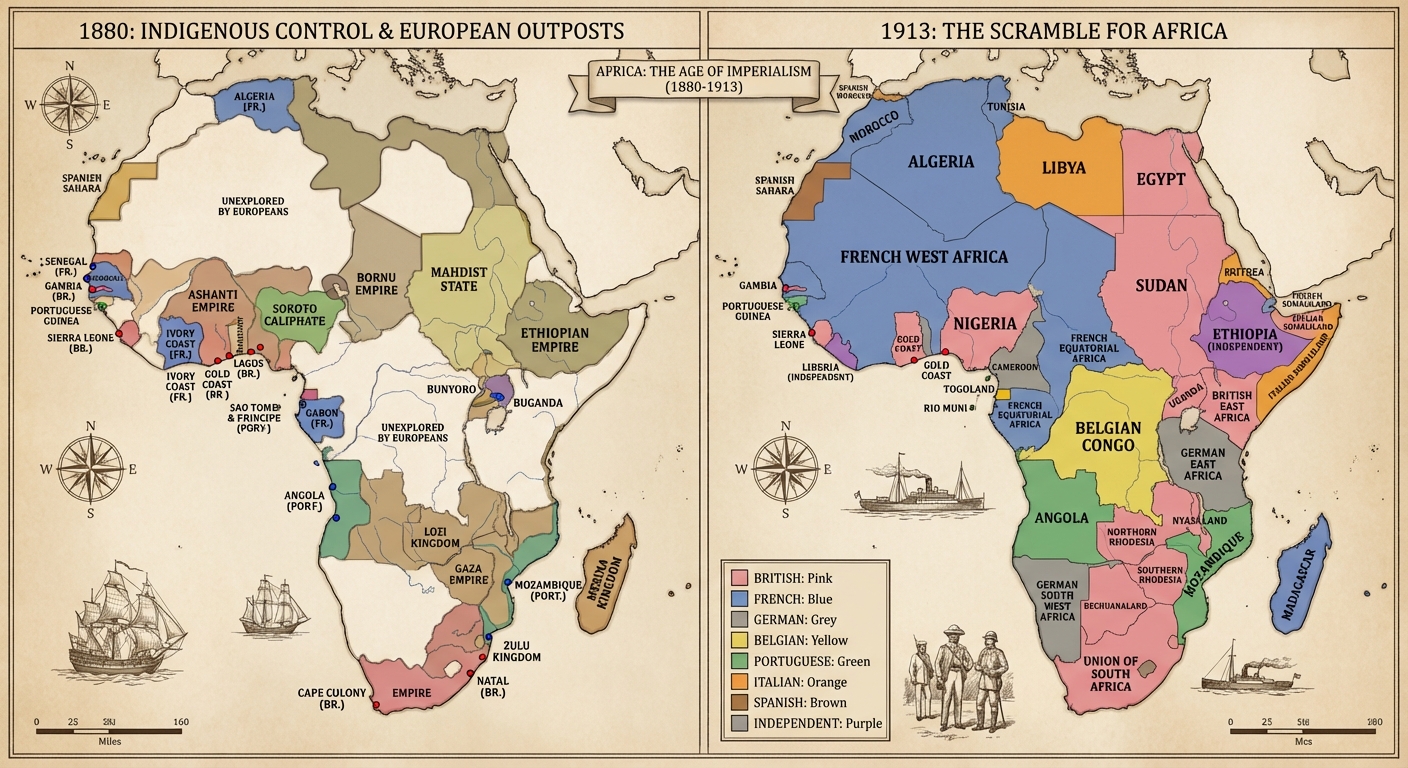
New technologies (steamships, the Maxim machine gun, and Quinine for malaria) allowed Europeans to penetrate the African interior. This led to fierce competition.
- The Berlin Conference (1884–1885): Organized by Otto von Bismarck, European powers met to divide Africa peacefully among themselves to avoid war.
- Crucial Detail: No Africans were invited to the conference.
- Result: Arbitrary borders were drawn that ignored tribal and linguistic lines, causing conflicts that persist today.
Settler Colonies
In some regions, Europeans established permanent homes, displacing indigenous populations:
- Australia & New Zealand: Britain utilized Australia effectively as a penal colony (prison) starting in 1788. Later, free settlers arrived for gold and wool production (sheep), devastating the Aboriginal population through disease and conflict.
Non-Western Imperialism
Europe wasn't alone. Industrialized non-Western nations also expanded:
- United States: Expanded west (Manifest Destiny) displacing Native Americans. Later, the US acquired overseas territories (Philippines, Guam, Puerto Rico) following the Spanish-American War (1898).
- Japan: Following the Meiji Restoration, Japan industrialized and sought colonies for resources. They encroached on Korea and later defeated China (Sino-Japanese War) and Russia (Russo-Japanese War), shocking the West.
3. Indigenous Responses to State Expansion
Indigenous peoples did not passively accept colonization. Responses ranged from direct military engagement to religious movements and the formation of new states.
Direct Resistance
| Event | Location | Cause & Outcome |
|---|---|---|
| Túpac Amaru II Rebellion (1780) | Peru | Túpac Amaru II, a descendant of the Incas, led a revolt against Spanish abuses. He was captured and executed, but became a symbol of Latin American resistance. |
| Indian Rebellion of 1857 | India | Triggered by the use of animal fat on rifle cartridges (offensive to Hindus and Muslims). Sepoys (Indian soldiers) revolted. Resulted in the end of the EIC and start of the British Raj. |
| Samory Touré’s War | West Africa | Touré led the Wassoulou Empire against French expansion. He used guerrilla tactics for decades but was eventually defeated. |
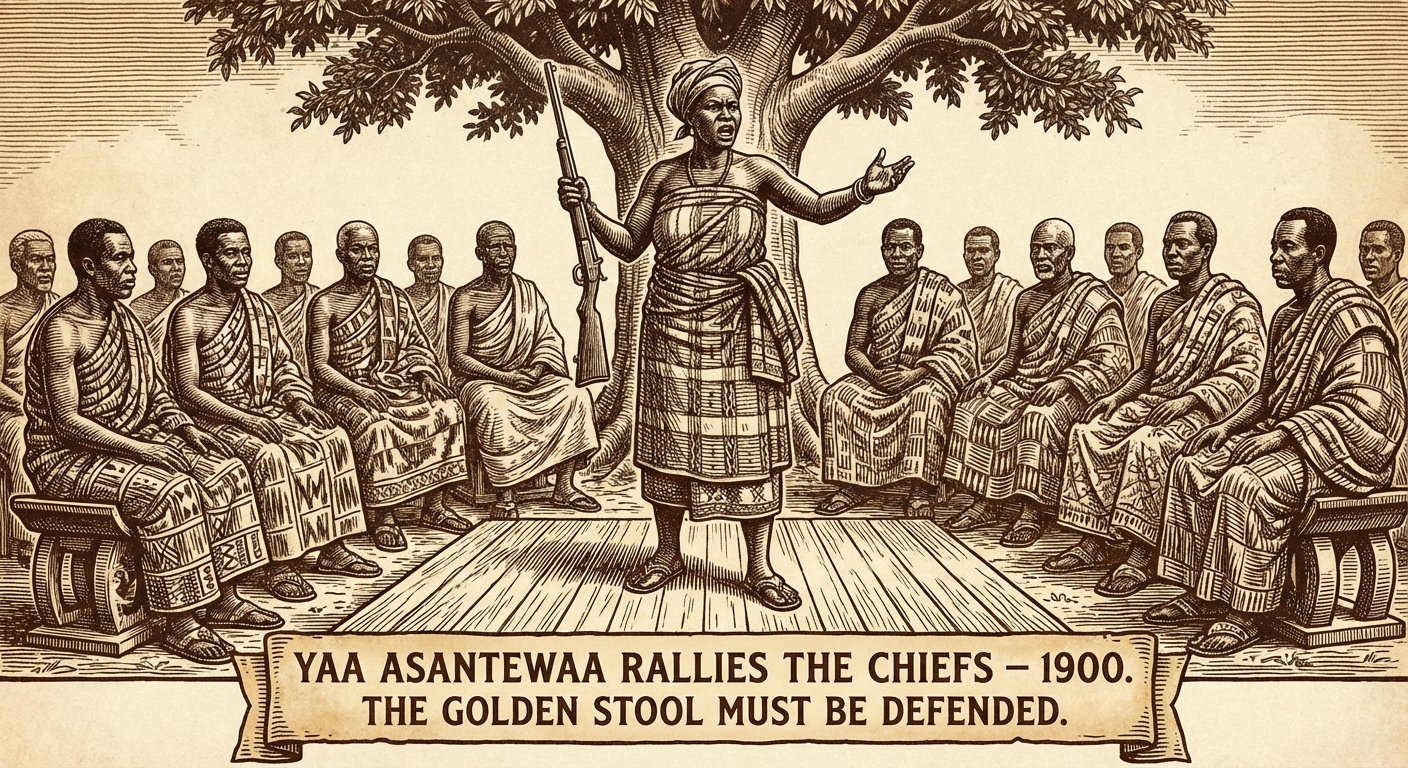
| Yaa Asantewaa War (1900) | West Africa (Ghana) | The British demanded the Golden Stool, the symbol of Ashanti unity. Yaa Asantewaa, a warrior queen, led the resistance. The Ashanti were annexed, but the stool was hidden and preserved. |
Religious Rebellions (Millenarian Movements)
These movements often believed that prophetic interventions or spiritual rituals would drive out the invaders.
- Xhosa Cattle Killing Movement (1856–1857): In South Africa, a prophetess claimed the spirits would drive the British into the sea if the Xhosa killed their cattle and destroyed their crops.
- Result: Famine killed thousands of Xhosa, weakening them further against British colonization.
- The Ghost Dance (1890): In the U.S., Northern Paiute spiritual leaders prophesied that ritual dances would bring back the buffalo and remove white settlers.
- Result: Culminated in the Wounded Knee Massacre, ending the Indian Wars.
- The Mahdist Revolt (1881): In Sudan, Muhammad Ahmad declared himself the Mahdi (guided one). His forces defeated the British-Egyptian army at Khartoum. The "Mahdist State" existed until the British returned with superior weaponry in 1898.
Emergence of New States
Some resistance involved forming fully functioned states on the periphery of empires:
- Sokoto Caliphate: Established in West Africa (modern Nigeria) as a purification movement of Islam. It became a major economic power (slave trade and textiles) before falling to the British.
- Cherokee Nation: In the U.S., the Cherokee adopted a constitution and Western farming methods to assert sovereignty but were forced off their land (Trail of Tears) despite winning a Supreme Court case.
4. Common Mistakes & Pitfalls
Confusing "Old" and "New" Imperialism:
- Mistake: Thinking 19th-century imperialism was about "God, Gold, and Glory" in the search for spices.
- Correction: Old Imperialism (1450–1750) was mercantile (trading posts). New Imperialism (1750–1900) was driven by Industrialization (factories needing rubber, palm oil, cotton) and involved total political domination.
Social Darwinism vs. Darwinism:
- Mistake: Blaming Charles Darwin for racism.
- Correction: Darwin was a biologist studying finches. Herbert Spencer was the sociologist who applied "survival of the fittest" to humans. Don't conflate the science with the ideology.
Ignoring success stories:
- Mistake: Assuming all indigenous resistance failed.
- Correction: Ethiopia (under Menelik II) successfully defeated the Italians at the Battle of Adwa (1896) and remained independent. Siam (Thailand) also maintained independence through diplomacy.
The British East India Company vs. The British Government:
- Mistake: Using the terms interchangeably.
- Correction: Before 1857, a company ran India. After 1857, the government ran India. This distinction matters for continuity and change over time (CCOT) questions.