AP German Unit 5 Study Guide: Quality of Life, Society, and Daily Routine
1. Education and Career (Ausbildung und Beruf)
Education is one of the most significant factors influencing quality of life (Lebensqualität) in German-speaking countries (DACH). Unlike the linear US system, the German system is highly stratified and tracks students early.
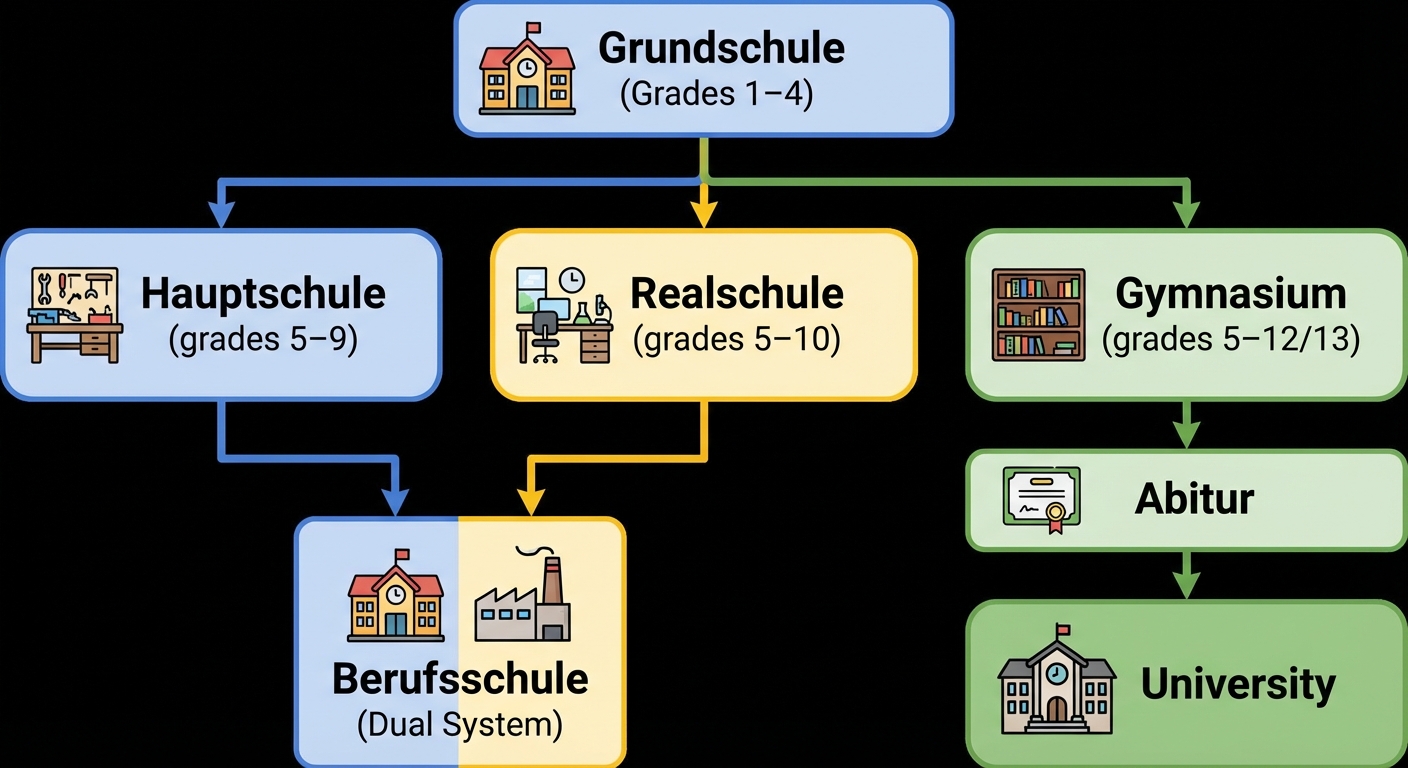
The Three-Tier School System
German secondary education traditionally separates students after 4th grade based on academic ability:
- Gymnasium: Academic track preparing students for university. Ends with the Abitur (university entrance exam).
- Realschule: Intermediate track leading to white-collar apprenticeships or technical schools.
- Hauptschule/Mittelschule: Vocational track leading to manual trades.
Note: Many states now offer Gesamtschulen (comprehensive schools) that combine these tracks to allow more social mobility.
The Dual Education System (Duales System)
This is a unique feature of the German economy and a frequent AP exam topic.
- Definition: Vocational training where students split time between classroom theory (Berufsschule) and practical work (in a company).
- Key Term: Der Azubi (short for Auszubildender) — the apprentice.
- Impact on Quality of Life: Reduces youth unemployment significantly compared to other EU countries and provides financial independence early (apprentices are paid).
University Life
- Cost: Public universities are tuition-free (studiengebührenfrei) or charge nominal administrative fees.
- Structure: Unlike the US "campus life" experience, German universities often lack dorms and sports teams. Students are expected to be independent (selbstständig).
2. Work-Life Balance and Labor Culture
Germany is famous for high productivity despite shorter working hours. The philosophy is often summarized as: "Erst die Arbeit, dann das Vergnügen" (First work, then pleasure), but strictly separated.
Employment Conditions
- Vacation (Urlaub): The legal minimum is 20 days, but standard contracts offer 30 days (6 weeks) of paid leave. Compare this to the US average (10-14 days).
- Feierabend: This word technically means "quitting time," but culturally represents the sacred disconnect from work in the evening. Work emails are generally ignored after hours.
- Social Security (Soziale Sicherung): High taxes fund a robust safety net, including unemployment money (Arbeitslosengeld) and sick pay.
Family Support
- Elterngeld & Elternzeit: Parents can take up to 14 months of paid leave (shared between parents) while their jobs are protected. This supports the Vereinbarkeit von Familie und Beruf (compatibility of family and career).
- Kindergeld: The state pays a monthly stipend to parents for every child until they are 18-25 years old.
3. Housing and Living Environments (Wohnen)
How and where people live drastically affects their well-being. The German housing market differs sharply from the American one.
Renting vs. Owning
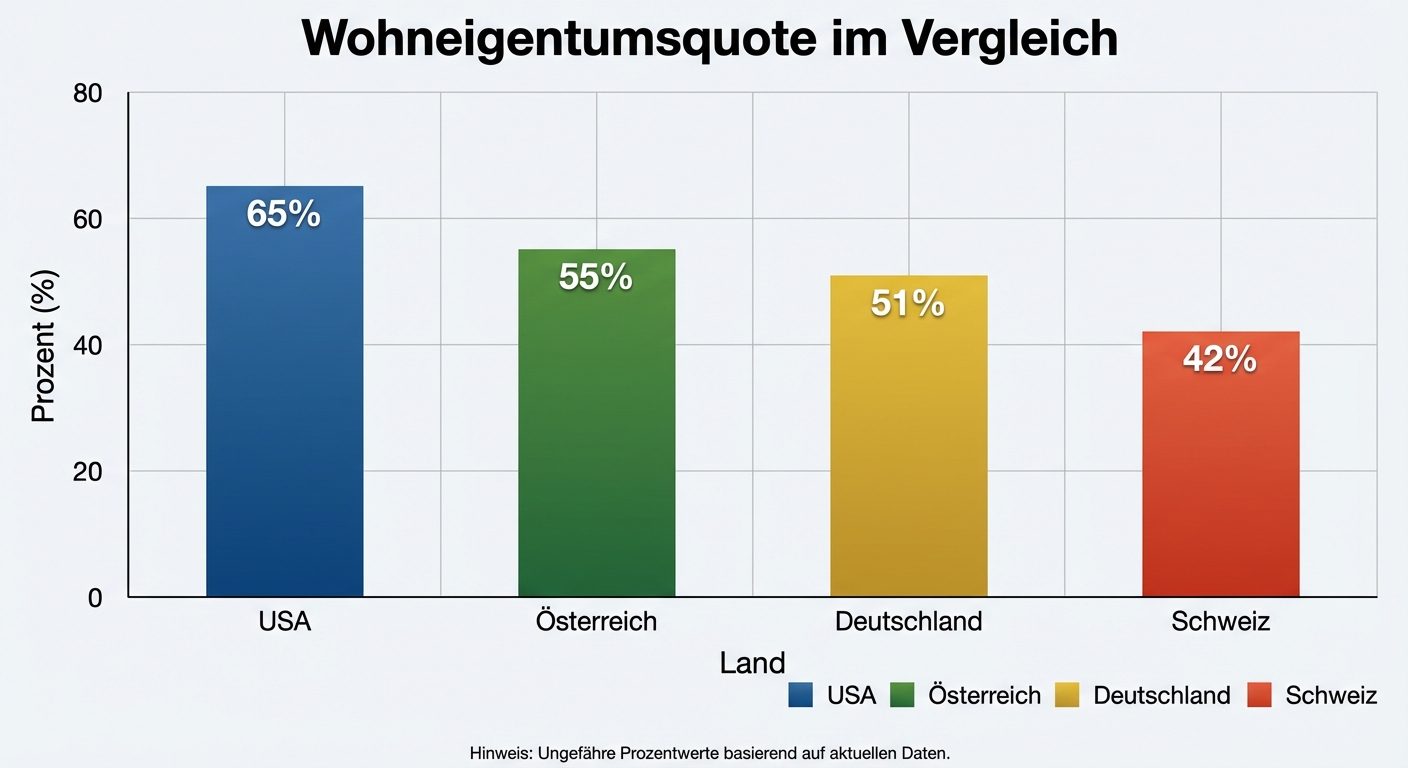
- The Rental Culture: Germany has one of the lowest homeownership rates in Europe (~50%). Renting (zur Miete wohnen) is the norm, even for wealthy families. Leases are long-term and tenant protections are very strong.
- The Kitchen Issue: A common surprise for Americans is that German apartments often come without a kitchen (Einbauküche). Tenants bring their own cabinetry and appliances when they move.
- Wohngemeinschaft (WG): Shared apartments are very common among students and young professionals to save on Nebenkosten (utilities).
Urban Planning
- Walkability: German cities are designed for pedestrians and cyclists (Fußgängerzone). Essential services like bakeries and pharmacies are usually within walking distance.
- Ruhezeit (Quiet Hours): Strictly enforced quiet hours (e.g., Sunday all day, weekdays 10 PM – 7 AM). Mowing the lawn or recycling glass on a Sunday is forbidden.
4. Health, Mobility, and Environment
The Healthcare System
- Universal Coverage: Everyone must have insurance (Versicherungspflicht). It is a multi-payer system (statutory gesetzlich vs. private privat).
- The Concept of "Kur": A prescribed health retreat. Germans can be "prescribed" a few weeks at a spa/clinic for recovery or burnout prevention, paid for by insurance.
Mobility (Mobilität)
- Public Transport (ÖPNV): High reliance on trains (S-Bahn, U-Bahn, ICE). The Deutschland-Ticket (49-Euro-Ticket) was introduced to make nationwide local transport affordable.
- Fahrradkultur: Cities like Münster or Freiburg are built for bikes. Cycling is a mode of transport, not just a sport.
Environmental Awareness (Umweltbewusstsein)
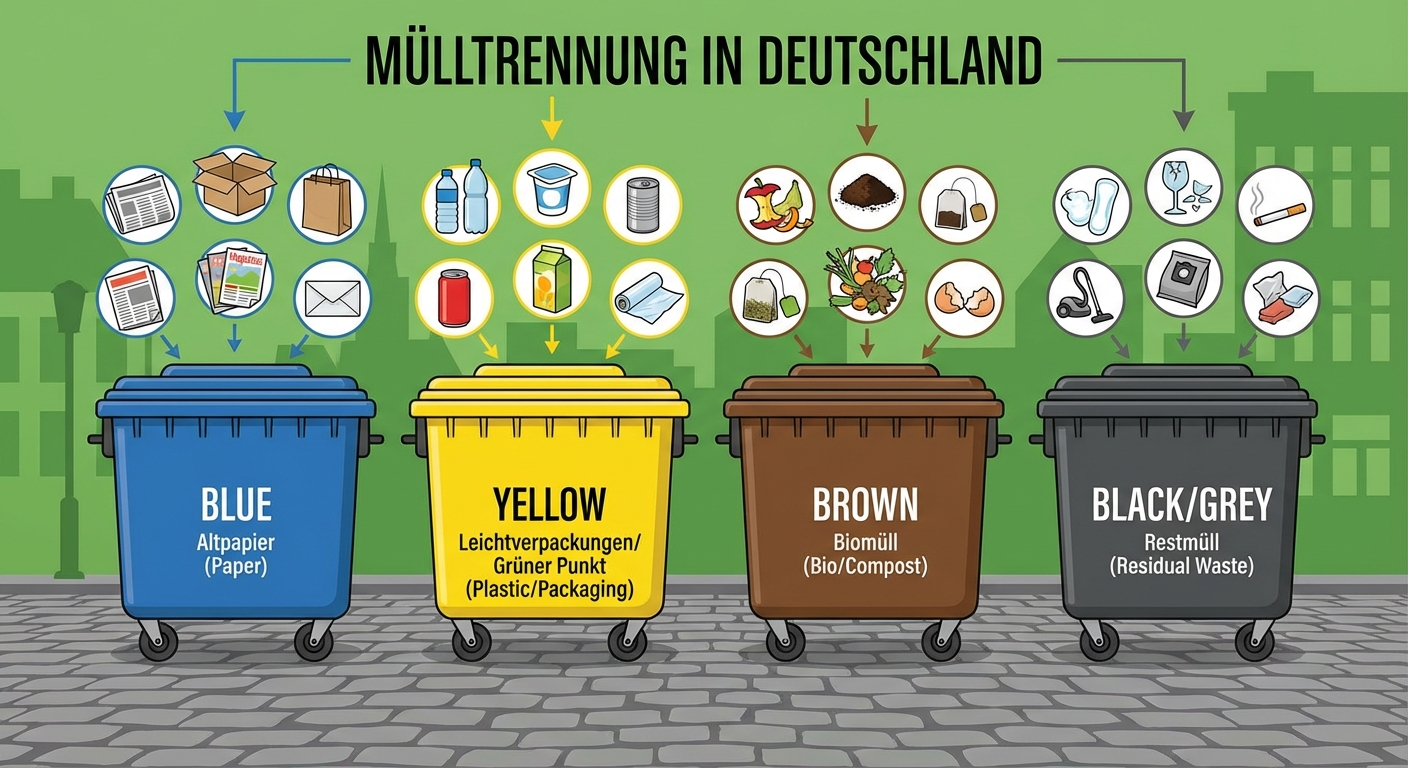
- Mülltrennung: Waste separation is complex (Paper, Bio, Plastic/Packaging, Glass, Restmüll).
- Pfandsystem: A deposit system on plastic and glass bottles. You pay extra (8-25 cents) and get it back when you return the bottle to a machine.
- Energiewende: The transition to renewable energy. Many Germans install solar panels or live in Passivhäuser (passive houses) to lower their carbon footprint.
5. Leisure and Community (Freizeit und Vereine)
Vereinskultur (Club Culture)
While Americans often derive community from school sports or churches, Germans derive it from Vereine (Clubs).
- There are over 600,000 clubs in Germany.
- Types: Sports (Fußballverein), Music (Musikverein), Gardening (Kleingartenverein), or Traditional (Trachtenverein).
- Significance: Clubs are the "social glue" of German society, fostering volunteerism (Ehrenamt) and democratic participation.
Travel (Reisen)
Germans are often called Reiseweltmeister (World Travel Champions). Due to 30 days of vacation, long international trips are common aspects of the standard quality of life.
6. Cultural Comparison: DACH vs. USA
Use this table for the Cultural Comparison Task on the AP Exam.
| Feature | Germany / DACH | USA |
|---|---|---|
| Sundays | Sonntagsruhe: Shops/Groceries closed. Day for family/nature. | Commerce active. Most shops open. "Errand day." |
| Eating Out | Waiters do not hover; you must ask for the bill ("Die Rechnung, bitte"). Tipping is low (rounded up). | Fast service, high turnover, high tipping culture. |
| Air Conditioning | Rare in private homes. Ventilation by Lüften (opening windows). | Standard in most regions. |
| Career Path | Linear, tracked early. Hard to switch tracks later. | Flexible. "Reinventing yourself" is common. |
| Environment | Strict recycling laws, high gas prices, smaller cars. | Convenience often prioritized over sustainability; larger cars. |
7. Common Mistakes & Pitfalls
- Confusing Hochschule with High School: False Friend! Hochschule is a university/college. A US High School is roughly equivalent to a Gymnasium or Gesamtschule.
- Assuming German Stores are Open 24/7: Students often write stories about buying groceries at midnight or on Sunday. In Germany, this is impossible except at gas stations or major train stations (Ladenschlussgesetz).
- Misunderstanding "Dual System": Do not describe it as "just trade school." It is a prestigious, highly organized combination of theory and paid work.
- Vocab Mix-up: Using Unterricht (instruction) when you mean Unterhaltung (entertainment).