AP Italian Unit 1: Family, Society, and Modern Life
Unit 1: Families in Different Societies (Famiglia e Società)
This unit explores the evolving nature of Italian families, social relationships, and the impact of geography and economics on daily life. For the AP exam, you must understand the shift from traditional patriarchal structures to modern, diverse family units, and effectively compare these dynamics with those in your own community.
1. Family Structures & Dynamics (La Struttura Familiare)
Definitions & Key Concepts
- Il nucleo familiare: The nuclear family (parents and children).
- La famiglia allargata: Extended family (including grandparents, aunts, cousins).
- Il capofamiglia: The head of the household (traditionally the father, but this concept is fading).
Evolution of the Family Model
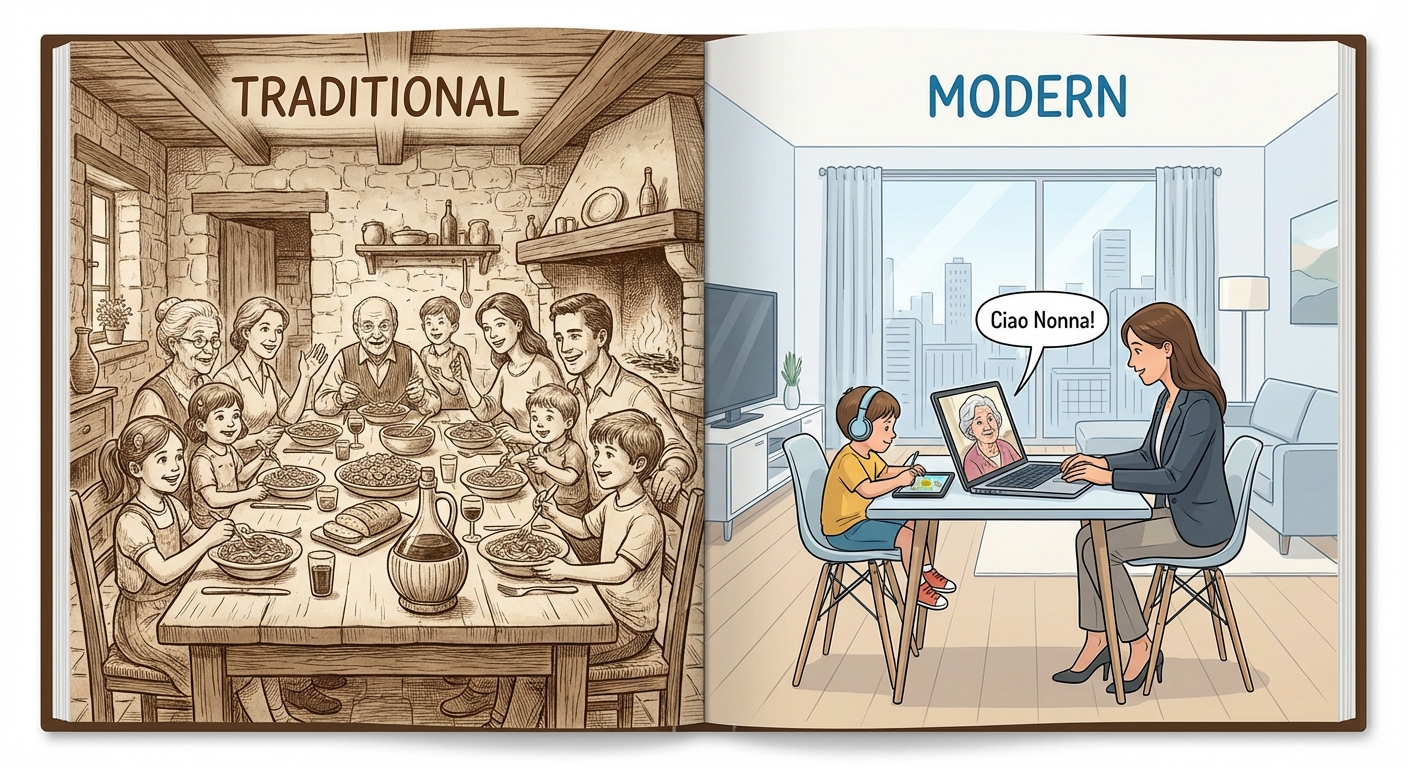
| Feature | Traditional Family (Famiglia Tradizionale) | Modern Family (Famiglia Moderna) |
|---|---|---|
| Size | Large, many children (famiglie numerose). | Small, 1 or no children; decline in birth rates (denatalità). |
| Roles | Strict gender roles; father works, mother is l'angelo del focolare (homemaker). | Egalitarian roles (ruoli alla pari); both parents work. |
| Unity | Multiple generations often lived under one roof. | Nuclear families live separately, though emotional bonds remain tight. |
| Structure | Marriage was the only socially accepted norm. | Rise of convivenza (cohabitation), le coppie di fatto (unmarried couples), and single-parent households. |
Civil Unions (Unioni Civili):
Since 2016 (Legge Cirinnà), Italy recognizes same-sex civil unions, granting legal rights similar to marriage, reflecting a major shift in the definition of family.
The "Mammoni" Phenomenon
A critical cultural concept for the AP exam is the mammone (mama's boy) or bamboccione (big baby).
- Definition: Adult children (often in their 30s) living with their parents.
- Causes:
- Economic: High youth unemployment (disoccupazione giovanile) and high cost of housing.
- Cultural: Strong emotional attachment and the comfort of being cared for by the mother.
- Consequence: Delays in marriage and starting families of their own, contributing to the aging population.
2. Generational Roles (I Ruoli Generazionali)
Women in Society (La Donna)
- Historical: Traditionally legally and socially subordinate to men; focused on managing the home (casalinghe).
- Modern: High levels of education and workforce participation. However, women often face the "double burden"—working full-time while still doing the majority of housework and childcare.
- Cultural Icon: Example: Dora from La Vita è Bella represents traditional strength and sacrifice, while modern figures represent political and scientific leadership (e.g., Samantha Cristoforetti).
The Elderly (Gli Anziani)
Italy has one of the oldest populations in the world (Inverno Demografico - Demographic Winter).
- Role: Grandparents (i nonni) are the "social welfare" of the Italian family. They act as free babysitters, allowing parents to work.
- Living Situation: Unlike the US, putting parents in nursing homes (case di riposo) is often seen as a last resort. Most elderly live alone or with family, supported by their children.
- Memory Aids: Think of the term "Nonni vigili"—elderly volunteers who help children cross the street at schools, symbolizing their active integration in society.
3. Housing and Human Geography (Abitazioni e Geografia Umana)
Italian life is heavily influenced by where the family lives. The concept of "Campanilismo" (attachment to one's local bell tower/town) is strong.
Urban vs. Rural Living
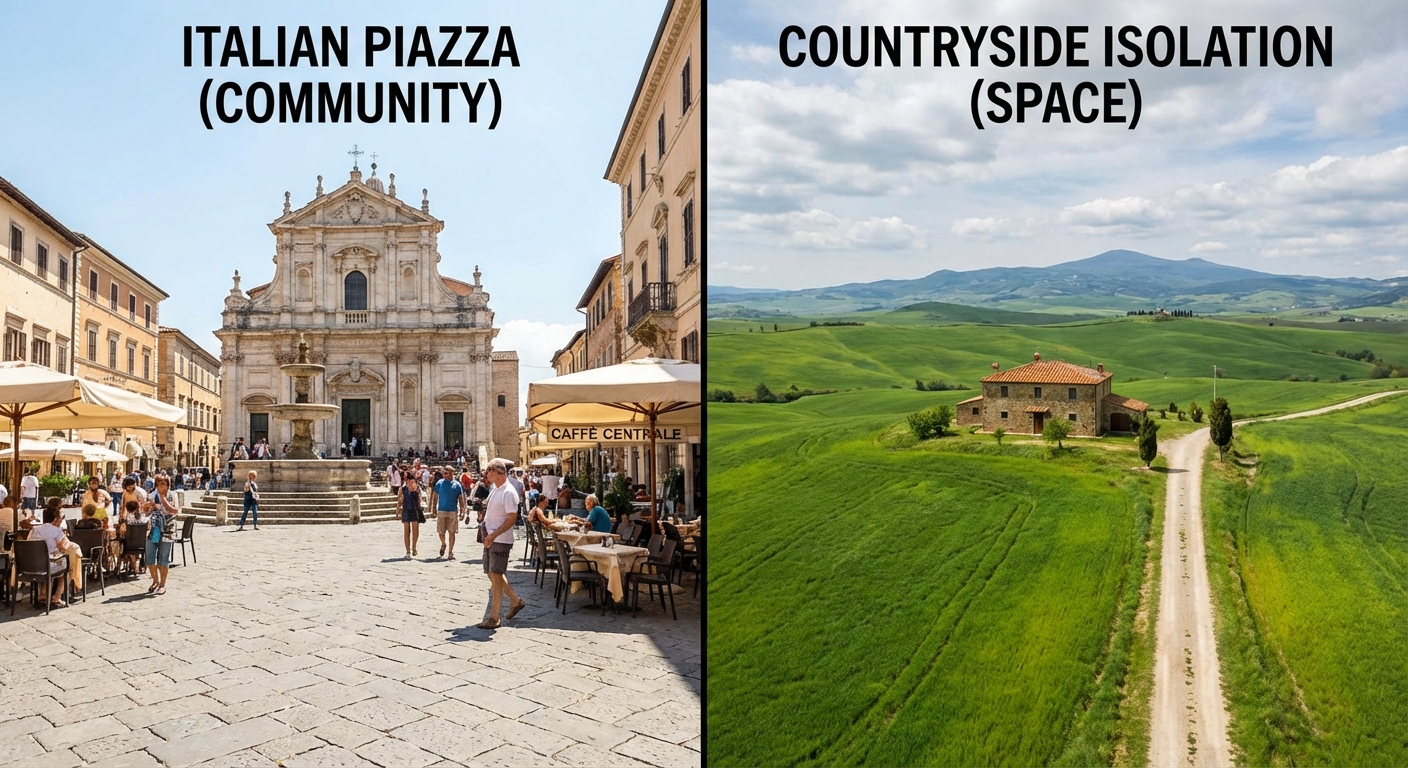
La Città (City Living)
- Housing: Most families live in appartamenti or condomini (apartment buildings), not standalone houses.
- Pros: Access to public transport (i mezzi pubblici), cultural events, universities, and jobs.
- Cons: Pollution (smog), traffic, noise, smaller living spaces.
- The Piazza: The "living room" of the city. A place for meeting friends, casual walks (la passeggiata), and community events—not just a transit space.
La Provincia / La Campagna (Suburbs/Rural)
- Housing: typically villette (small villas) or renovated farmhouses (casali).
- Pros: Contact with nature, larger spaces, lower cost of living, stronger traditional community ties.
- Cons: Isolation, reliance on cars, fewer job opportunities (often causes youth to leave).
4. Holidays, Food, and Leisure (Feste e Tempo Libero)
In Italy, food and holidays are the "glue" of the family. "A tavola non si invecchia" (At the table, one does not age).
Key Holidays & Rites
Religious Roots, Secular Celebration
Natale (Christmas):
- Italy: Focus on the Presepe (Nativity scene) + Christmas Eve dinner (cenone - often fish-based). Gifts may come on Dec 25th or Jan 6th.
- USA Comparison: USA focuses more on the tree and lights; Italy focuses on the nativity and food.
L'Epifania (January 6th):
- La Befana: An old woman who brings candy (carbone for bad kids) to children. Marks the end of the holiday season.
- Significance: A uniquely Italian tradition often compared to Santa Claus but rooted in folklore.
Pasqua (Easter) & Pasquetta:
- Pasqua: Serious, religious mass, followed by a huge lunch (Lamb/Assalom).
- Pasquetta (Little Easter - Monday after): Typically celebrated with friends, not family. Famous for picnics (scampagnate) in parks or the countryside. Quote: "Natale con i tuoi, Pasqua con chi vuoi" (Christmas with your family, Easter with whomever you want).
Ferragosto (August 15th):
- Originally a religious feast (Assumption of Mary), now marks the peak of summer vacation. Italians flock to beaches; cities become ghost towns.
Food Culture (La Cultura Culinaria)
- Sagre: Local town festivals dedicated to a specific food (e.g., Sagra del carciofo). These preserve local identity and bring families together.
- Sunday Lunch (Il pranzo della domenica): A sacred weekly ritual where extended families gather for a multi-course meal.
5. Migration & Global Challenges (Sfide Globali)
Family stability is currently threatened by economic and demographic shifts. Immigration is a major theme in the AP curriculum.
The Double Migration
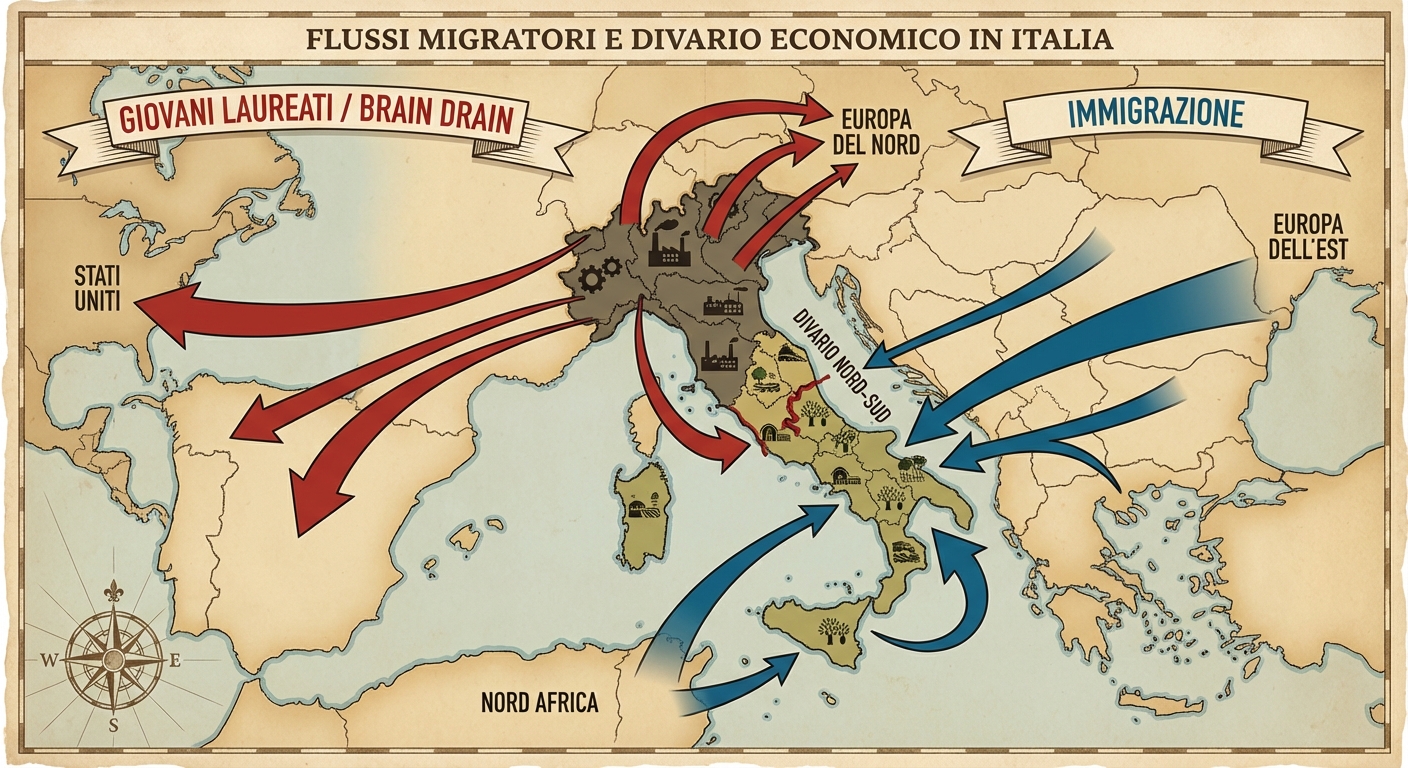
1. Immigration TO Italy (Immigrazione)
- Who: People from North Africa, Eastern Europe (Romania, Albania), and Asia.
- Challenges: Integration, housing, and acceptance in a traditionally homogeneous society.
- Impact: Immigrants often fill jobs Italians typically refuse (caregivers for the elderly - badanti, agriculture, heavy industry). They contribute to the birth rate, offsetting the Italian decline.
2. Emigration FROM Italy (Emigrazione)
- Fuga dei cervelli (Brain Drain): Young, educated Italians leaving for Northern Europe (Germany, UK) or the USA due to lack of meritocracy and low wages in Italy.
- Impact on Family: Splits families apart; grandparents see grandchildren only via video calls.
Economic Pressures
- Precariato: Short-term, unstable job contracts make it hard for young people to get mortgages (mutui) or plan families.
- North vs. South Gap: The industrial North offers more jobs; the agrarian South has higher unemployment, forcing internal migration.
6. Cultural Comparison (USA vs. Italy)
This section is critical for the Presentazione Culturale AP exam task.
| Topic | Italy (Italia) | USA (Stati Uniti) |
|---|---|---|
| Leaving Home | Late (30s). Due to economy + strong family ties. | Early (18). College is seen as the start of independence. |
| Elderly Care | Integrating them into the home (in casa). | Independent living communities or nursing homes. |
| Meals | Long, multi-course, social events. "Slow Food". | Faster, often eaten on the go or in front of TV. |
| Friendship | Fewer friends, but deeper, lifelong bonds (amici del cuore). | Many friends/acquaintances, often changing with life phases. |
| University | Usually commute to local university; stay with parents. | Usually move away to campus dormitories. |
Common Mistakes & Pitfalls
- Stereotyping: Do not assume all Italian women are housewives. Acknowledge the modernization of gender roles.
- "Bar" vs. "Caffè": In Italy, you go to the Bar for breakfast/coffee (morning), not just for alcohol. It is a family-friendly social hub.
- School Age: Do not say Italians leave home for college at 18 like Americans. Most go to university in their own city and live at home to save money.
- Confusing Parenti vs. Genitori:
- Genitori = Parents (Mom & Dad).
- Parenti = Relatives (Aunts, Uncles, Cousins).
- False Friend Alert: "Parents" in English is NOT parenti.
- Assuming "Latino" tendencies: While Italians are warm, the family structure is suffering from a critically low birth rate, unlike many Hispanic cultures which may still have large families. Italy is shrinking.