Unit 4: Science and Technology in the Francophone World
La Science et la Technologie dans le Monde Francophone
This unit explores how science and technology influence society, ethical debates, and the daily lives of people in French-speaking communities. For the AP French exam, focus on comparing technological realities in different regions (e.g., Europe vs. Africa vs. North America).
1. Technological Innovations & Discoveries (Les Inventions et Découvertes)
Modern Technology and "La French Tech"
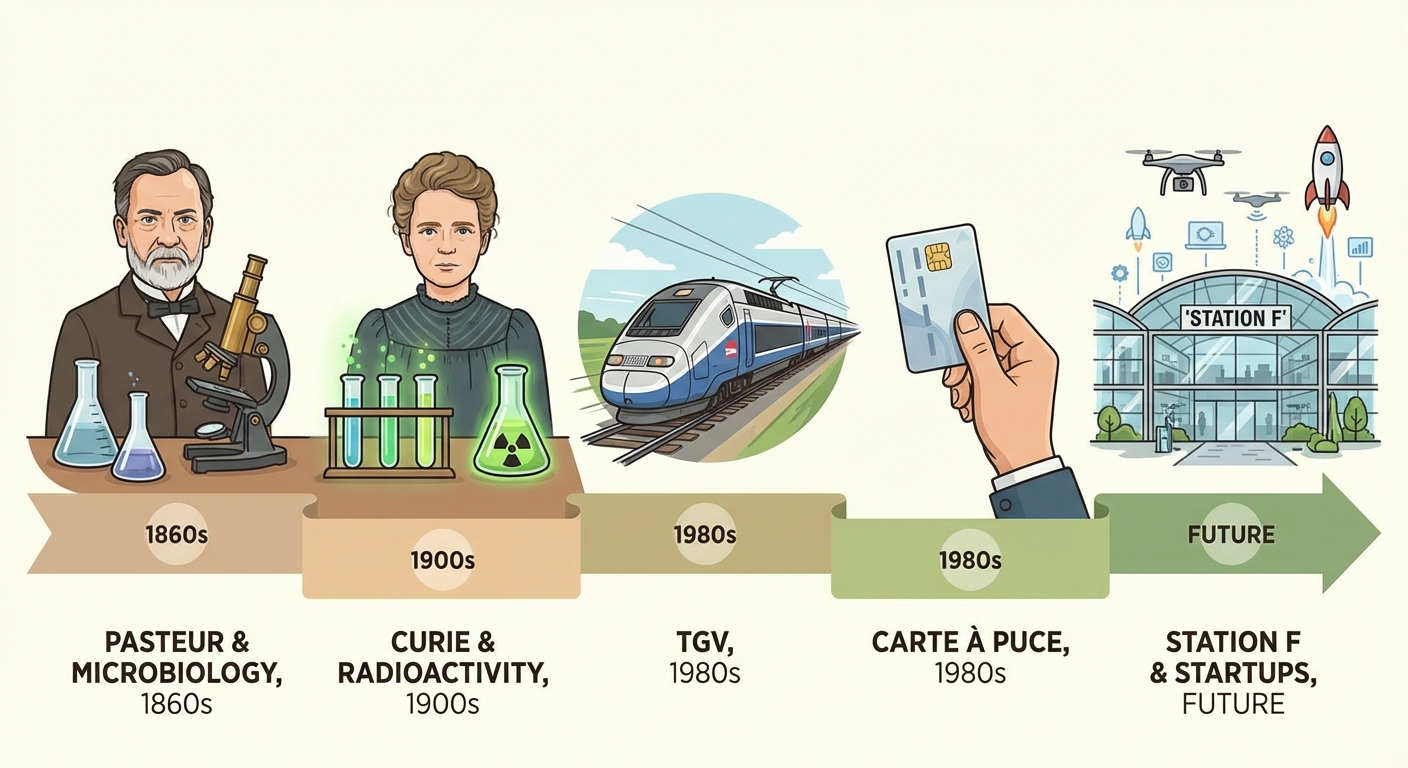
France is a global leader in technology, significantly promoting the startup ecosystem through an initiative called La French Tech.
- Definition: La French Tech refers to the ecosystem of French startups and the government initiative to support them. It highlights France's shift from traditional industry to digital innovation.
- Key Hubs: Station F in Paris is the world's largest startup campus.
- Sectors: Fintech, Biotech, and Green Tech (technologies vertes).
Historical Francophone Contributions
Knowledge of these contributions is essential for the Cultural Comparison task. You should be able to name 2-3 specific French inventions.
| Inventor | Invention (Invention) | Impact (Impact) |
|---|---|---|
| Louis Pasteur | Pasteurization & Vaccines | Revolutionized public health and immunology. |
| Marie Curie | Radioactivity (la radioactivité) | Nobel prize winner (twice); pioneered cancer treatments using radiation. |
| Roland Moreno | The Smart Card (la carte à puce) | The basis for all credit cards and SIM cards used globally today. |
| Braille | Braille System | Allowed the visually impaired (les aveugles) to read and write. |
| Les Frères Lumière | Cinematograph | Birth of modern cinema. |
Space and Transportation
- Aérospatiale: France houses the headquarters of Airbus and leads the European Space Agency's (ESA) Ariane rocket program (launched from Kourou, French Guiana).
- Le TGV (Train à Grande Vitesse): A symbol of French engineering excellence, connecting major cities at speeds over 300 km/h. It promotes eco-friendly travel compared to planes.
2. Access to Technology (L'Accès à la Technologie)
The Digital Divide (La Fracture Numérique)
Not everyone has equal access to the internet and devices. This is a major theme in AP cultural comparisons.
- Definition: La fracture numérique is the gap between those who have access to the internet/computers and those who do not.
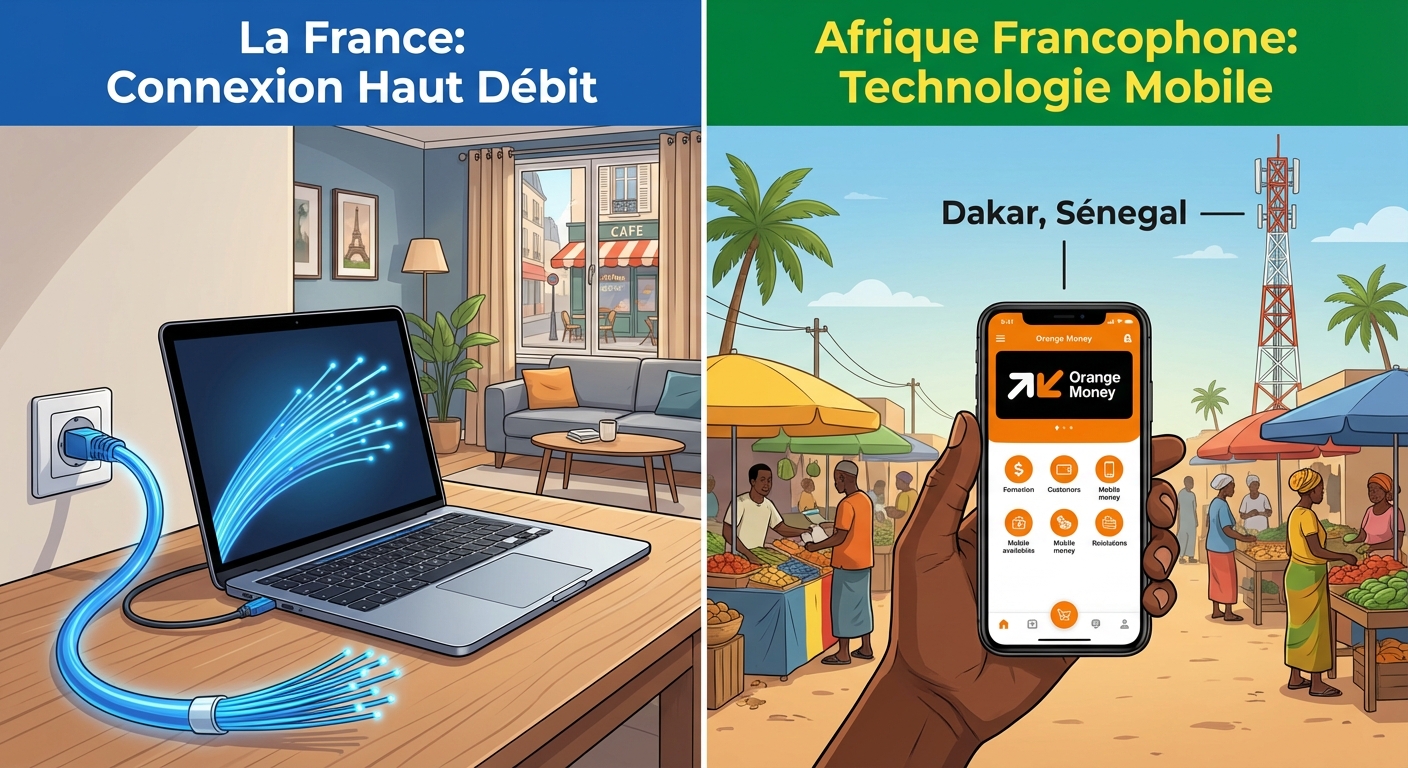
- In France (The "Hexagon"): The divide often exists between urban areas (les grandes villes) and rural areas (la province / les zones rurales), or across generations (les personnes âgées vs. les jeunes).
- In Francophone Africa: While fiber optics might be scarce in remote villages, mobile technology (la technologie mobile) is exploding. Smartphones are the primary way people access the internet.
Real-World Example: Mobile Banking in Africa
In many West African countries (Senegal, Côte d'Ivoire), many people do not have traditional bank accounts. Instead, they use mobile payment systems (like Orange Money).
- Comparison: In the US/France, we use credit cards/Apple Pay. In Francophone Africa, the phone number is the bank account.
3. Science and Ethics (La Science et l'Éthique)
Scientific progress brings moral questions. The AP exam often focuses on Bioethics (La bioéthique) and Privacy (La vie privée).
Bioethics in France
France has strict "Bioethics Laws" (Lois de bioéthique) that are revised periodically.
- Key Concept: France traditionally emphasizes the "dignity of the human body" (la dignité du corps humain).
- GPA (Gestation pour autrui / Surrogacy): Currently illegal in France. This is a major point of contrast with the US, where it is legal in many states.
- PMA (Procréation médicalement assistée / IVF): Recently became legal for single women and lesbian couples in France (2021), a massive social shift.
- GMOs (OGM - Organismes Génétiquement Modifiés): The French public is generally very skeptical of GMOs in food due to health and environmental concerns.
Data Privacy (La Protection des Données)
- RGPD (GDPR): The Règlement Général sur la Protection des Données is a strict European law protecting user data. French citizens are generally more protective of their private life (vie privée) than Americans, who may be more accustomed to sharing data for convenience.
4. Effects on Self and Society (Les Effets sur la Société)
Social Media (Les Réseaux Sociaux)
- Benefits: Democratization of information, staying connected (rester connecté), teleworking (le télétravail).
- Drawbacks: Cyber-bullying (le cyber-harcèlement), isolation (l'isolement), addiction (la dépendance), and fake news (les infox).
Intellectual Property (La Propriété Intellectuelle)
With the internet, downloading music/movies illegally (le téléchargement illégal) became a problem. France introduced Hadopi, an agency to monitor and punish digital piracy, showing the government's active role in regulating tech.
5. Essential Vocabulary
Nouns (Noms)
- Un internaute: An internet user.
- Le numérique: Digital technology/The digital world.
- Un brevet: A patent (crucial for inventions).
- L'ADN (m): DNA.
- Une cellule souche: Stem cell.
- L'intelligence artificielle (IA): Artificial Intelligence.
- Une centrale nucléaire: Nuclear power plant (France relies heavily on nuclear energy).
Verbs (Verbes)
- Télécharger: To download (or upload).
- Naviguer sur internet: To browse the internet.
- Guérir: To cure/heal.
- Cloner: To clone.
- Nuire à: To harm (e.g., La pollution nuit à la santé).
Adjectives (Adjectifs)
- Nocif / Nocive: Harmful.
- Éthique / Non-éthique: Ethical / Unethical.
- Innovant(e): Innovative.
- Efficace: Efficient/Effective.
6. Exam Strategy: The Cultural Comparison
When answering a prompt like: "What is the role of science in the lives of people in your community compared to a Francophone community?"
Use this formula:
Sample Argument Breakdown:
- Thesis: Science plays a protective role in both societies, but the approach to healthcare costs differs.
- Francophone Info: In France, la Sécurité Sociale (la Sécu) ensures universal access to medical technology via the Carte Vitale. Medicine is viewed as a public right.
- Home Info: In the US, access to cutting-edge medical tech often depends on private insurance and employment.
- Comparison: While American technology is world-class, the French system focuses more on equity of access (égalité d'accès).
7. Common Mistakes & Pitfalls
- False Cognates: Do not strictly translate "digital" as "digital." In French, "digital" refers to fingers. Use "numérique" for technology (e.g., l'ère numérique, l'appareil numérique).
- Confusion of Terms: Don't confuse découverte (finding something that existed, like a virus) with invention (creating something new, like a vaccine).
- Cultural Generalization: Avoid saying "Africa has no technology." Instead, discuss how they use technology differently (e.g., mobile payments vs. bank transfers).
- Grammar: When discussing technology, students often forget the preposition with specific verbs.
- Wrong: J'ai besoin l'ordinateur.
- Right: J'ai besoin de l'ordinateur.
- Right: Je me sers de mon portable (I use my phone).