AP World History Unit 3: Land-Based Empires (c. 1450–1750)
Unit 3: Land-Based Empires (c. 1450–1750)
This unit focuses on how land-based empires expanded their borders, consolidated their power, and used religion and art to legitimize their rule. The key theme is the shift from decentralized feudal systems to centralized, absolutist states, largely driven by the adoption of gunpowder technology.
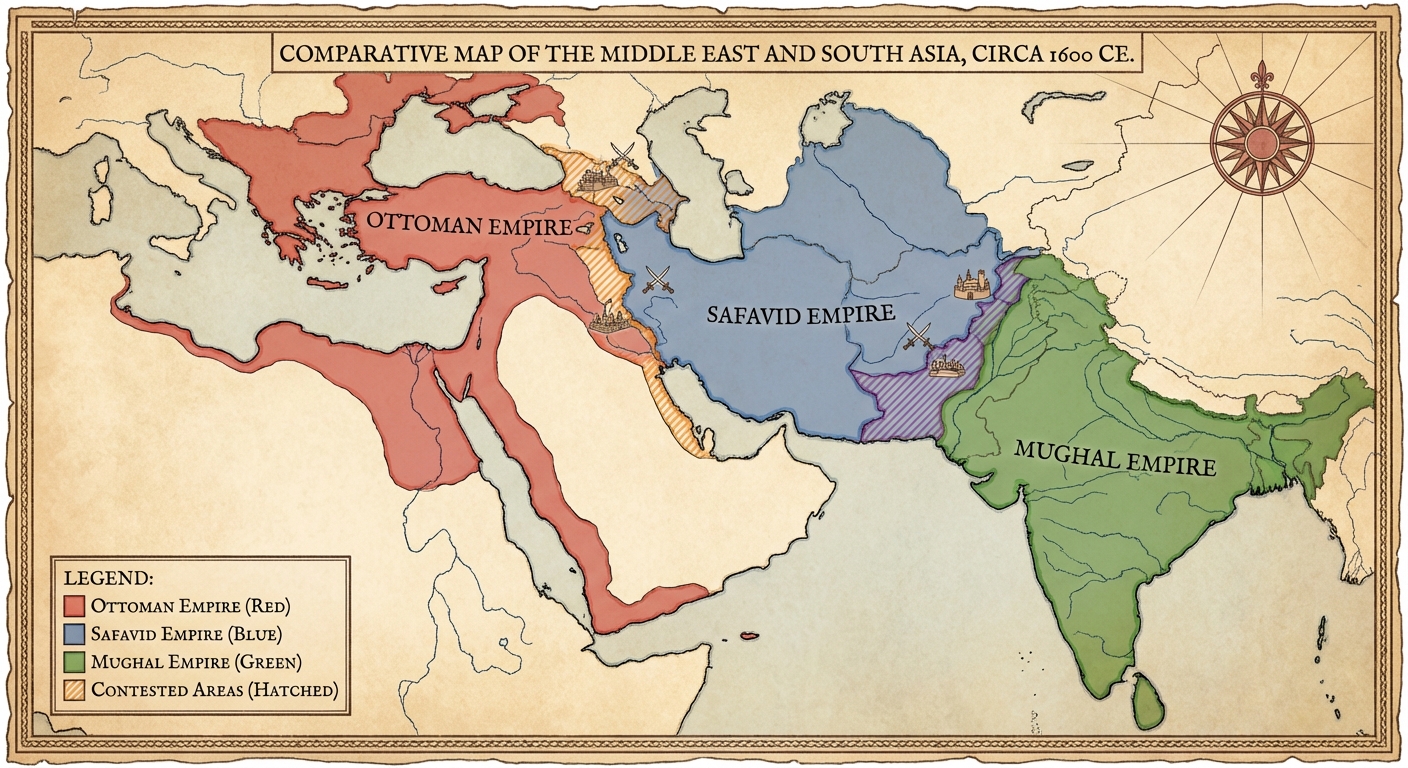
The Expansion of Gunpowder Empires
Defining the "Gunpowder Empires"
These were large, multiethnic states in Southwest, Central, and South Asia that relied on firearms to conquer and control territories. While the term usually refers to the Ottoman, Safavid, and Mughal empires, the concept of expansion via gunpowder also applies to the Qing Dynasty (China), Russia, and the Tokugawa Shogunate (Japan).
1. The Islamic Gunpowder Empires
These three empires dominated the Islamic world. While they shared common Turkic roots and Islam, their interpretations and strategies differed.
| Empire | Location | Key Ruler(s) | Impact & Expansion |
|---|---|---|---|
| Ottoman Empire | Turkey, Balkans, North Africa, Middle East | Suleiman the Magnificent | The largest and longest-lasting. Use of huge bronze cannons to conquer Constantinople (1453). Strictly Sunni Islam. |
| Safavid Empire | Persia (Modern Iran) | Shah Abbas I | Centered on Shi'a Islam (Twelver Shi'ism). Used Shi'ism as a unifying force, but this caused deep conflict with the Sunni Ottomans. Lacked a navy. |
| Mughal Empire | Northern & Central India | Akbar the Great | United most of India. A Muslim minority ruling a massive Hindu majority. Famous for wealth and textile manufacturing. |
2. East Asia: The Qing Dynasty
- Origins: Established by the Manchu people (from Manchuria), not the Han Chinese, who overthrew the Ming Dynasty in 1644.
- Expansion: Conquered Taiwan, Mongolia, Central Asia, and Tibet using gunpowder weapons.
- Cultural Dualism: The Manchus maintained their own ethnic identity (e.g., forbidding intermarriage with Han Chinese) while utilizing traditional Chinese administrative techniques (Civil Service Exam) to rule.
3. Expansion of Russia
- Under Ivan IV (the Terrible) and later distinct figures like Peter the Great, Russia expanded eastward across Siberia to the Pacific.
- Motivation: Control of the fur trade and spreading Eastern Orthodox Christianity.
- Technique: Use of gunpowder and Cossacks (peasant warriors) to establish frontier dominance.
Administration: Consolidating Power
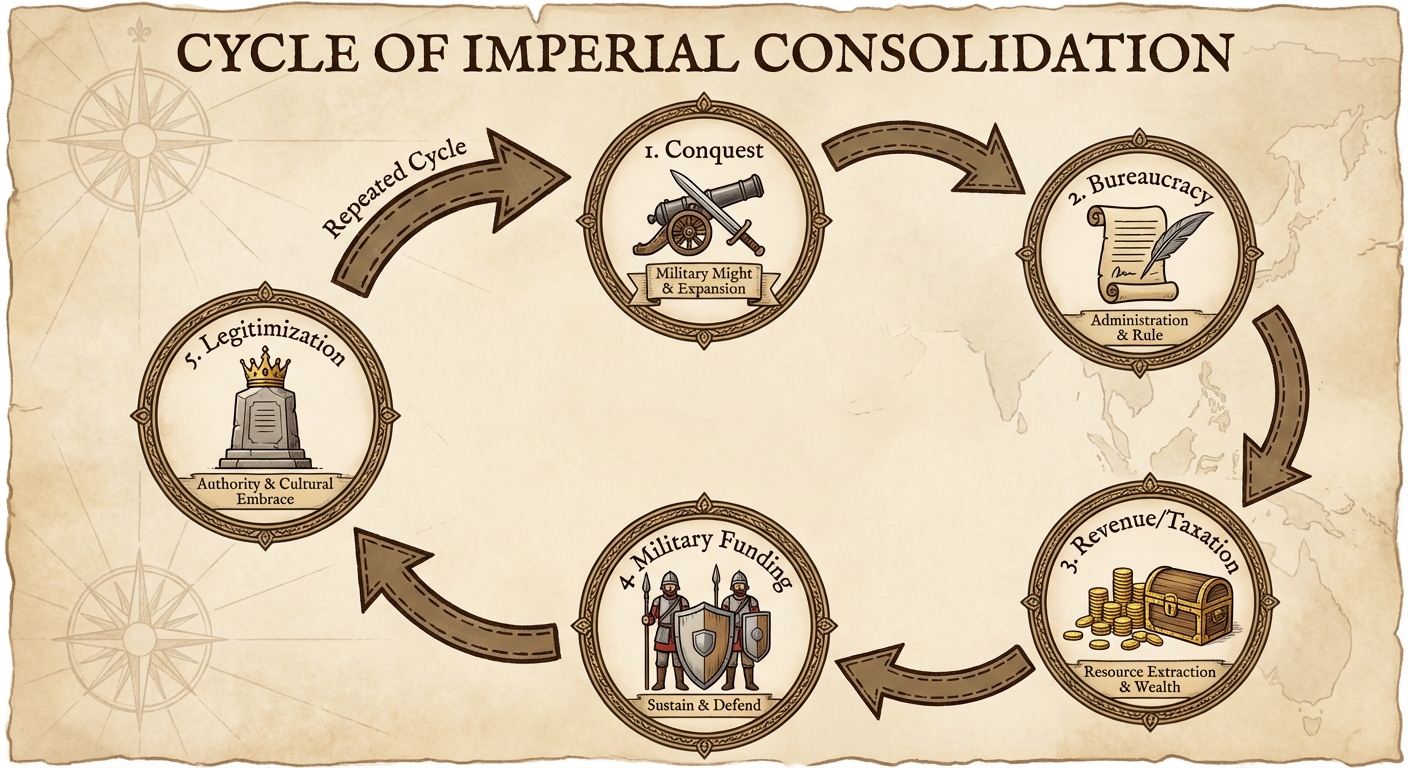
State-building in this era was about centralization. Rulers needed to strip power from the traditional nobility and concentrate it in their own hands.
Bureaucratic Elites and Military Professionals
Rulers created centralized bureaucracies to enforce laws and collect taxes. A common trend was recruiting professionals loyal only to the ruler, rather than relying on hereditary land-owning nobles.
Ottoman Devshirme System:
- Concept: Blood tax. Christian boys were taken from the Balkans, converted to Islam, and educated.
- Outcome: They became the Janissaries (elite gunpowder troops) or high-ranking bureaucrats. Because they had no family ties to rival Muslim nobles, they were fiercely loyal to the Sultan.
Samurai in Japan:
- Following the unifying period, the Tokugawa Shogunate required the Daimyo (land-owning lords) to maintain a residence in Edo (Tokyo) and stay there every other year (Alternate Attendance Policy). This kept the Daimyo broke and under surveillance, transforming the Samurai from roaming warriors into salaried bureaucrats.
Chinese Civil Service Exam:
- The Qing Dynasty reinforced the Confucian exam system. This ensured that the bureaucracy was staffed by educated scholar-gentry who upheld the state's ideology.
Collecting Revenue
Expansion is expensive. Empires developed complex systems to finance the military.
- Tax Farming (Ottoman): The government auctioned off the right to collect taxes in a region to private individuals. The collector paid the state a flat fee and kept the surplus he extracted from the peasants.
- Zamindars (Mughal): Local officials (often elite landowners) who collected taxes on behalf of the Mughal emperor. Over time, they became corrupt and siphoned off revenue.
- Tributes: The Aztecs (Mexica) in the Americas and the Qing in China used tribute systems to demand goods, gold, or labor from subject states.
Legitimizing Rule through Beliefs and Art
Rulers used religion, art, and monumental architecture to justify their power. The message was usually: "I am powerful, wealthy, and chosen by the divine."
1. Religion as a Legitimizer
- Divine Right (Europe): Kings, especially in France (e.g., Louis XIV), claimed their authority came directly from God (