Complete Breakdown of Unit 8: Aquatic Pollution and Ecology
Sources of Pollution
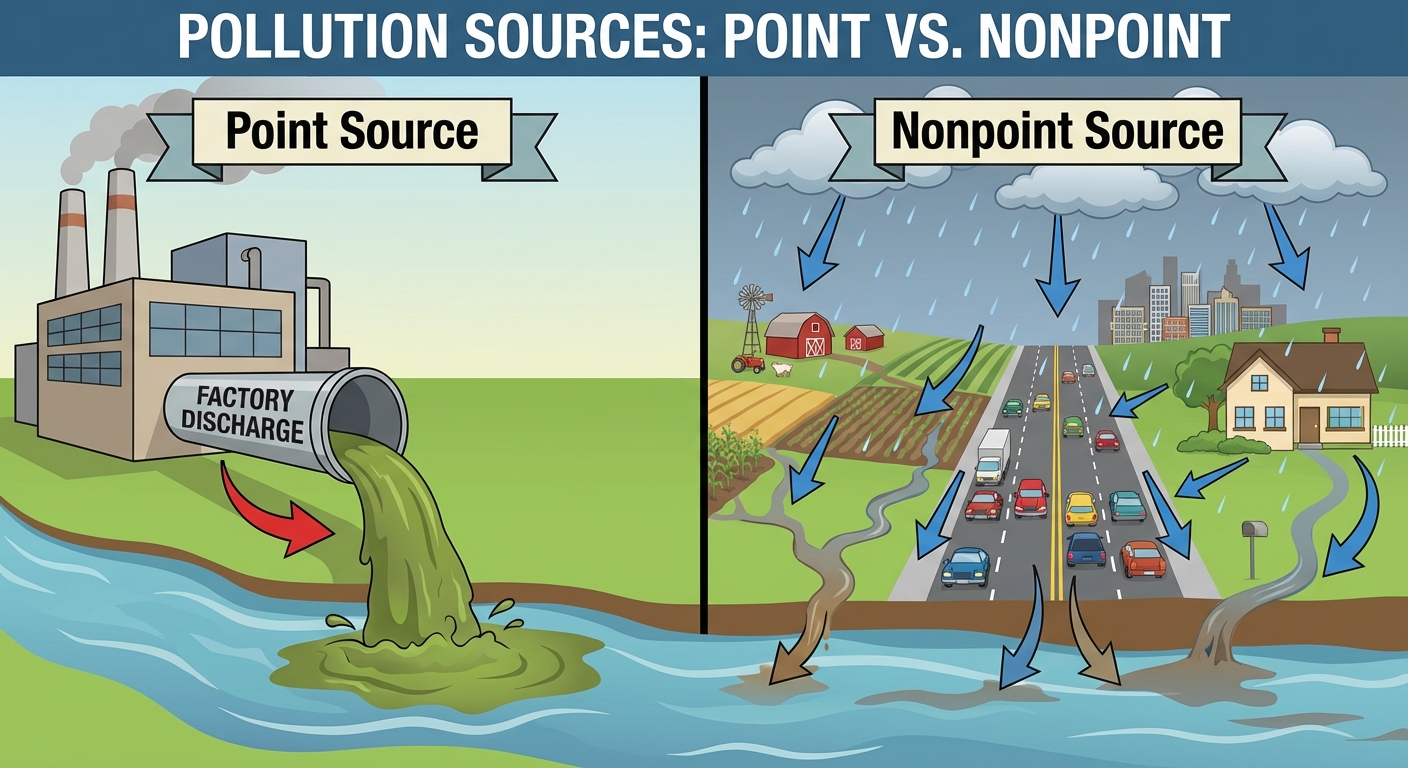
Understanding where pollution originates is the first step in remediation and regulation. In environmental science, pollution sources are categorized based on how easily they can be identified and isolated.
Point vs. Nonpoint Sources
The distinction between point and nonpoint sources determines how pollutants are managed under laws like the Clean Water Act.
| Feature | Point Source | Nonpoint Source |
|---|---|---|
| Definition | A single, identifiable source of distinct discharge. | Diffuse areas that produce pollution, often from runoff over large land areas. |
| Identification | Easy to identify (e.g., a specific drain pipe). | Difficult to identify specific origin; "everyone contributes." |
| Regulation | Regulated via permit systems (e.g., NPDES in the USA). | Harder to regulate; managed through land use planning and behavioral changes. |
| Examples | Wastewater treatment plant discharge, oil refinery pipe, CAFO manure lagoon leak. | Agricultural runoff (fertilizers/pesticides), urban storm runoff (oil/trash), sediment from construction sites. |
Coral Reefs and Ecological Tolerance
Organisms have a Range of Tolerance for abiotic conditions (temperature, salinity, pH, sunlight). Outside this range, they experience physiological stress, limited growth, reduced reproduction, and eventually death.
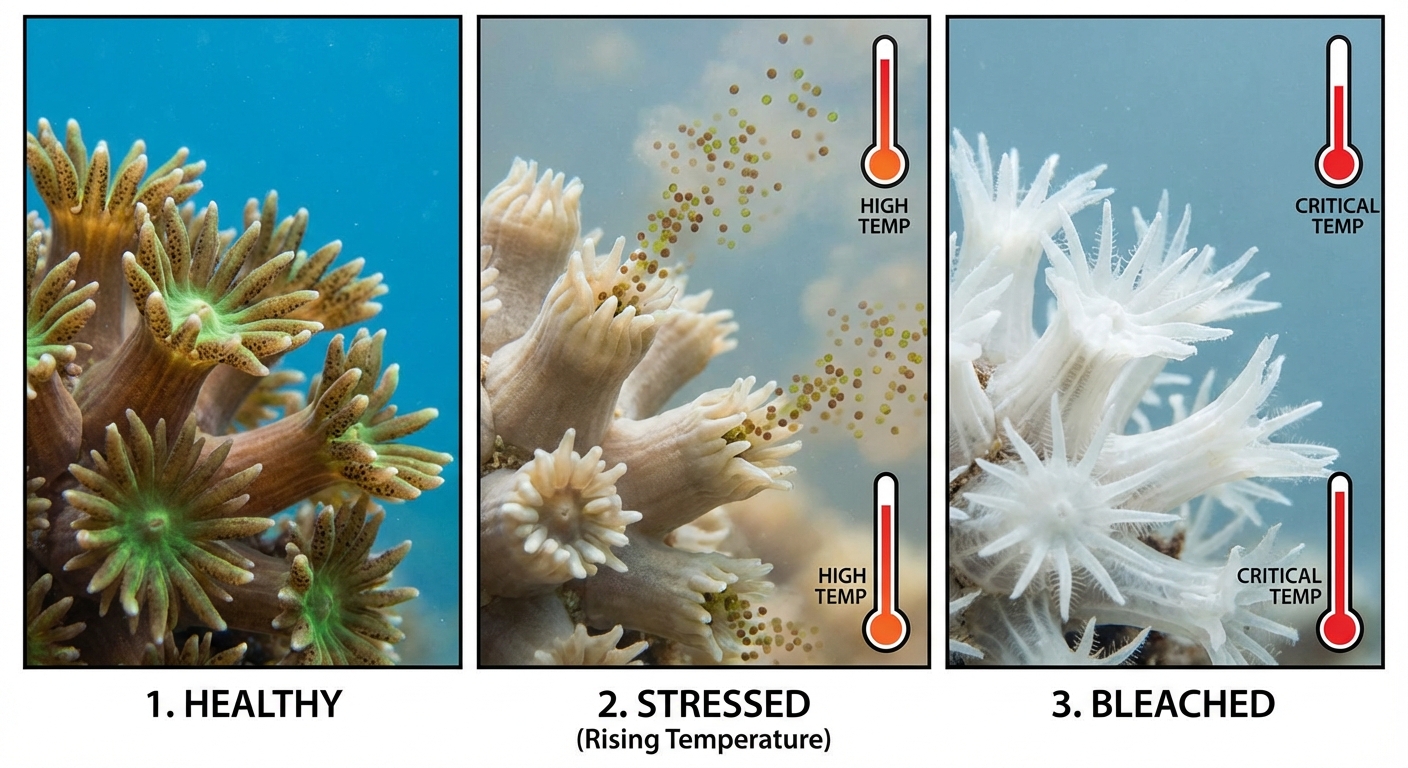
Coral Reefs are particularly sensitive index species:
- Temperature: Increased ocean temperatures cause coral bleaching. This occurs when corals expel their symbiotic algae (zooxanthellae) due to heat stress. Since the algae provide food and color, the coral turns white. If the stress persists, the coral starves and dies.
- Sediment: Runoff increases turbidity, blocking sunlight needed for photosynthesis.
- Acidity: Ocean acidification (caused by increased atmospheric $CO2$ forming carbonic acid) breaks down the calcium carbonate ($CaCO3$) skeletons of corals.
Oil Spills
Oil spills (e.g., Exxon Valdez, Deepwater Horizon) affect marine organisms through chemical toxicity and physical interaction.
- Hydrocarbons: Compounds like benzene in petroleum can kill larvae and plankton immediately upon contact.
- Physical Coating: Oil coats the feathers of birds and fur of marine mammals. This destroys their insulating ability (resulting in hypothermia) and buoyancy (causing drowning).
- Bottom Dwellers: Heavy oil components sink, smothering benthic (bottom-dwelling) organisms like crabs and oysters.
Human Impacts on Ecosystems
When pollutants enter aquatic systems, they alter the chemical balance, often leading to distinct zones of biological activity.
The Oxygen Sag Curve
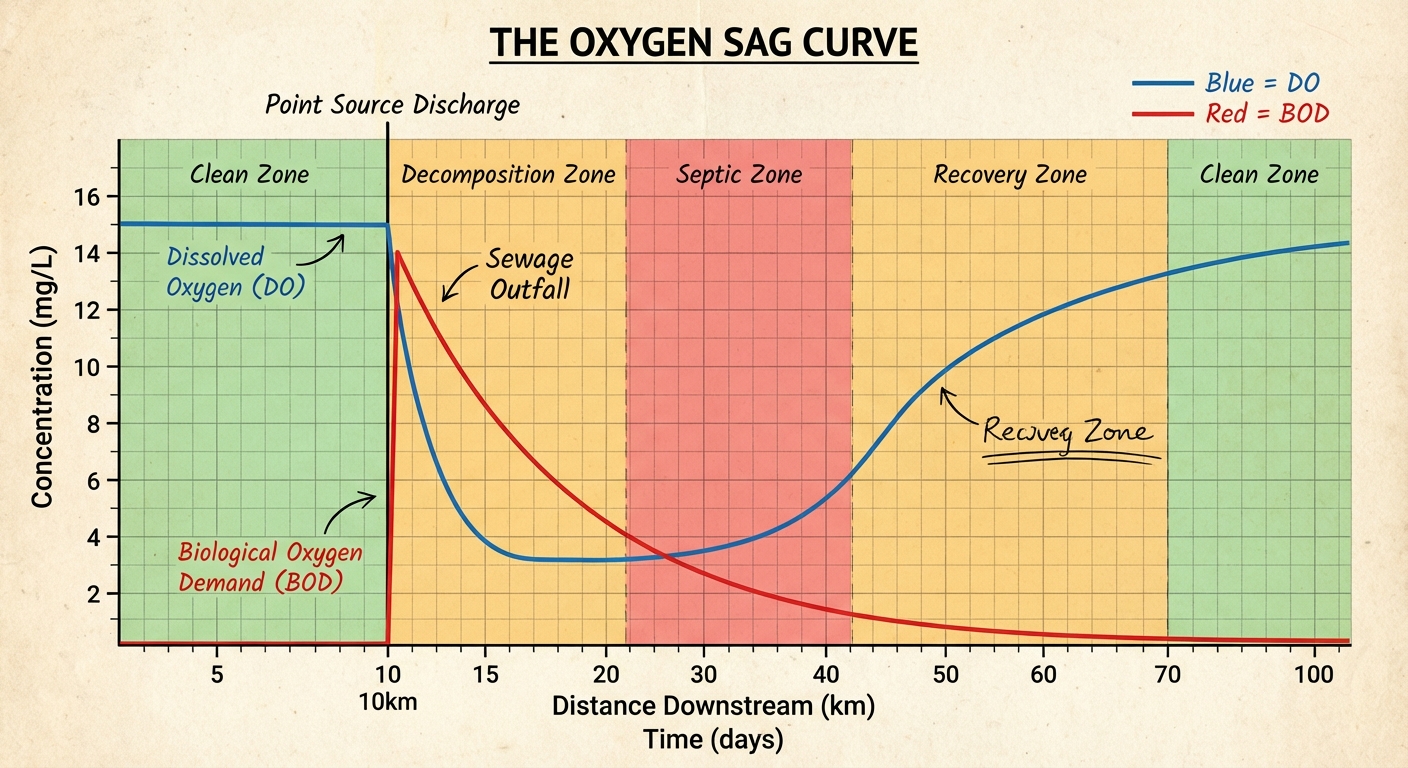
The Oxygen Sag Curve illustrates what happens to Dissolved Oxygen (DO) levels in a flowing stream when biodegradable organic waste (like raw sewage) is introduced.
Key relationship: Biological Oxygen Demand (BOD) and Dissolved Oxygen (DO) are generally inversely related.
- Clean Zone: High DO, low BOD. Healthy species (trout, bass, mayfly nymphs) are present.
- Decomposition (Pollution) Zone:
- Point source input introduces organic waste.
- Microorganisms (bacteria) begin decomposing waste.
- BOD spikes drastically.
- DO begins to drop as bacteria respire (consume $O_2$).
- Septic Zone:
- DO reaches its minimum point (the "sag").
- Fish answer absent. Only pollution-tolerant anaerobic organisms (sludge worms, mosquito larvae, leeches) create the ecosystem.
- High waste toxicity.
- Recovery Zone:
- Waste has been decomposed.
- BOD drops.
- DO rises as aeration occurs.
- More tolerant fish (carp, gar) begin to return.
- Clean Zone: Ecosystem returns to pre-pollution state.
Heavy Metals and Litter
- Mercury (Hg): Enters water via coal combustion and mine tailings. Bacteria convert it into toxic methylmercury, which biomagnifies up the food chain. It causes neurological damage.
- Lead (Pb): Found in old pipes and paint; damages the kidneys and nervous system.
- Litter: Plastic rings strangle wildlife; digestive blockages occur when animals mistake plastic for food (e.g., turtles eating plastic bags thinking they are jellyfish).
Endocrine Disruptors
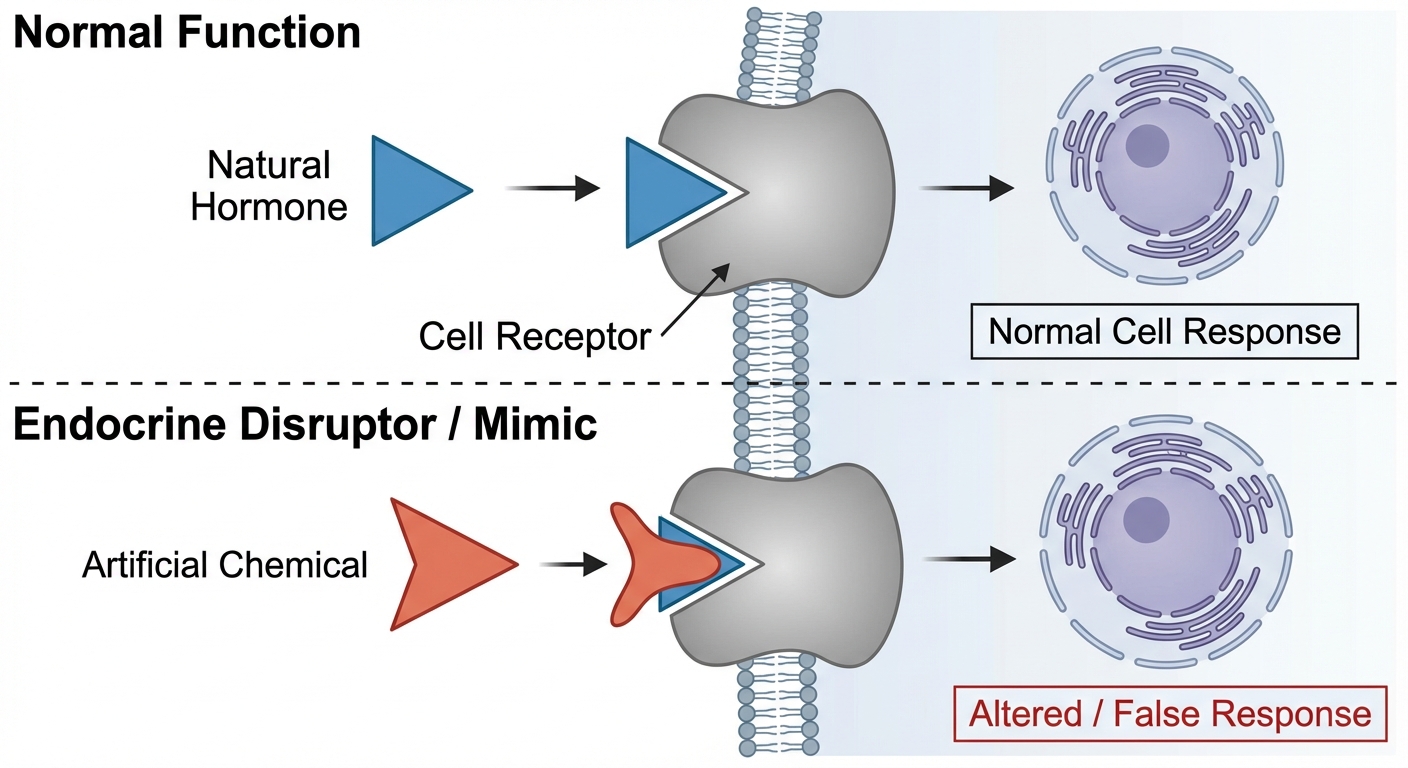
Endocrine Disruptors are chemicals that interfere with the endocrine (hormonal) systems of animals. They simulate point source pollution effects but operate at the molecular level.
Mechanism of Action
Biological systems use a "Lock and Key" model where a natural hormone (key) fits into a receptor (lock) to trigger a response.
Endocrine disruptors can:
- Mimic: Shape-shift to resemble a natural hormone (e.g., estrogen), bind to the receptor, and trigger an unwanted response.
- Block: Bind to the receptor and prevent the natural hormone from attaching (inhibiting necessary signals).
Common Examples and Effects
- Atrazine: An herbicide commonly used in agriculture. Runoff leads to contamination of potential drinking water. It is known to demasculinize amphibians (e.g., turning male frogs into females or causing hermaphroditism).
- DDT: An insecticide. Although banned in many nations, it persists in the environment.
- Phthalates: found in plastics and cosmetics.
Consequences:
- Birth defects.
- Developmental disorders.
- Gender imbalances in fish and amphibian populations.
- Reduced fertility/sperm count.
Human Impacts on Wetlands and Mangroves
Wetlands (swamps, marshes, bogs) and Mangroves (coastal forests) are among the most productive and valuable ecosystems on Earth, yet they are rapidly disappearing.
Ecological Services of Wetlands
Wetlands act as the "Kidneys of the Landscape" and "Biological Sponges."
- Water Filtration: As water slows down moving through a wetland, sediments, nutrients, and pollutants settle out or are absorbed by plant roots.
- Flood Control: They absorb excess water during storms and release it slowly, preventing downstream flooding.
- Groundwater Recharge: Standing water eventually percolates down to recharge aquifers.
- Biological Productivity: They serve as nurseries for fish, crustaceans, and migratory birds.
Threats to Wetlands and Mangroves
- Commercial Development: Filling in wetlands to build homes, parking lots, and malls.
- Dam Construction: Sediments meant for the delta/wetland are trapped behind dams, causing the downstream wetland to erode and sink.
- Agriculture: Draining wetlands for cropland causes loss of habitat and releases stored carbon.
- Aquaculture: Mangroves are often cut down to create shrimp farms. This removes the natural storm barrier, making coastlines vulnerable to hurricanes and tsunamis.
Common Mistakes & Pitfalls
- Confusing BOD and DO: Remember the Inverse Relationship. High BOD means there is a lot of "food" (waste) for bacteria. When bacteria eat that waste, they consume oxygen, causing Low DO. High BOD $\rightarrow$ Low DO.
- Point Source Misinterpretation: Just because you can point to a city on a map does not make the whole city a "point source." A point source must be a specific conveyance (pipe, ditch, channel). A city produces urban runoff, which is a nonpoint source.
- Bioaccumulation vs. Biomagnification:
- Bioaccumulation happens in one individual over time (e.g., a fish getting older and storing more mercury).
- Biomagnification happens across the food chain (e.g., a shark eating 10 toxic fish and concentrating the toxin).
- Clear Water Fallacy: Students often assume clear water is clean. Water contaminated with endocrine disruptors or high acidity can look perfectly crystal clear but be deadly to aquatic life.