Unit 4 & Beyond: Analysis of 19th and Early 20th Century Peninsular Literature
Historical Context and Literary Movements
To master Unit 4 and its transition into the early 20th century, you must understand the pendulum swing of literary movements in Spain. History is rarely static; it reacts to what came before.
1. Romanticism (El Romanticismo) & Post-Romanticism
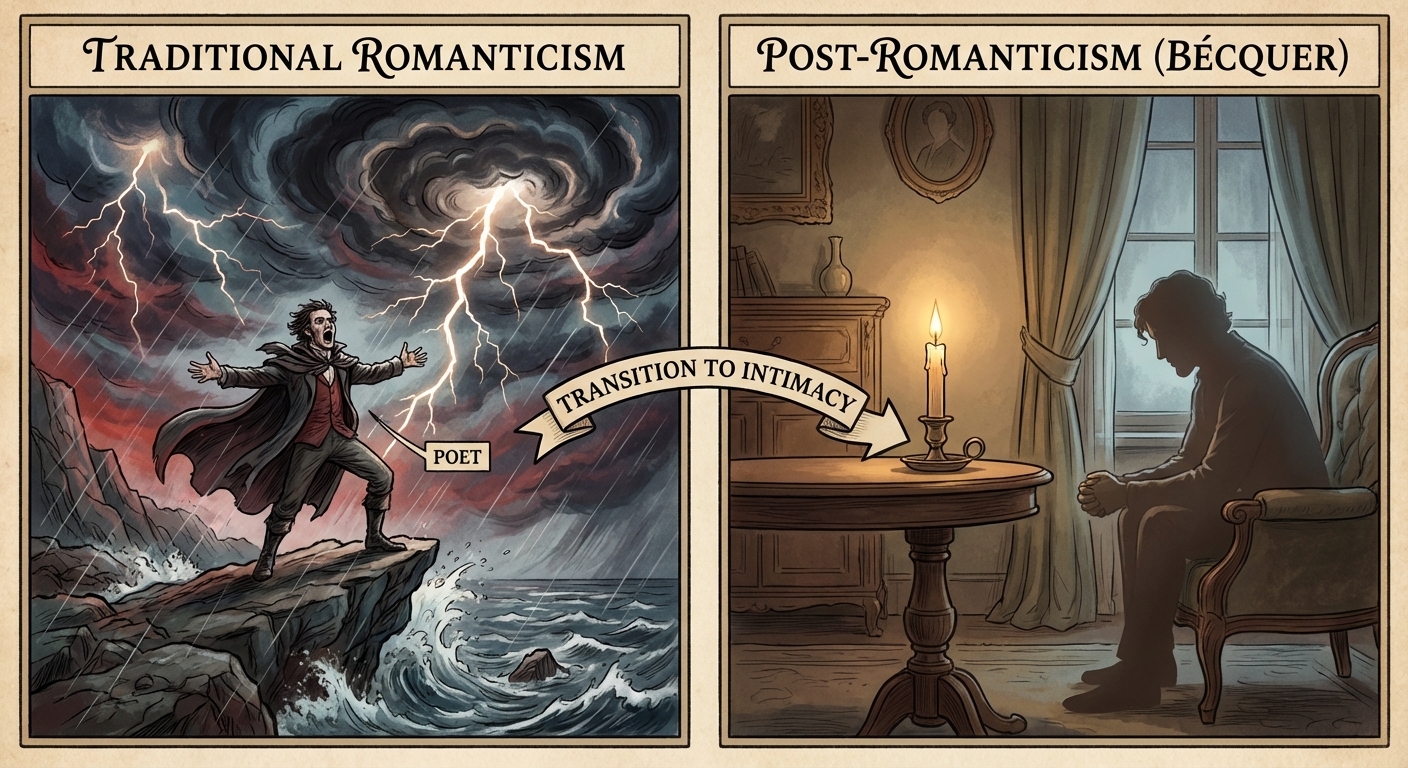
Romanticism (~first half of 19th century) was a rebellion against the strict logic of Neoclassicism. It prioritized:
- Individualism: The ‘Yo’ (I) is the center of the universe.
- Sublime Nature: Nature is wild, turbulent, and reflects the poet's emotions.
- Freedom: Rejection of social and artistic rules.
Post-Romanticism (where Bécquer fits) occurred later (second half of 19th century). While Realism was already dominating prose, Bécquer stripped Romanticism of its loud bombast, creating poetry that was:
- Intimate and introspective.
- Focused on the ineffable (that which cannot be fully expressed with words).
- Structurally simple but emotionally complex.
2. Realism and Naturalism
Realism (Realismo) emerged as a reaction against Romanticism. It aimed to depict life objectively, like a camera.
- Naturalism (Naturalismo), led in Spain by Emilia Pardo Bazán, is an evolution of Realism. It applies the scientific method to literature.
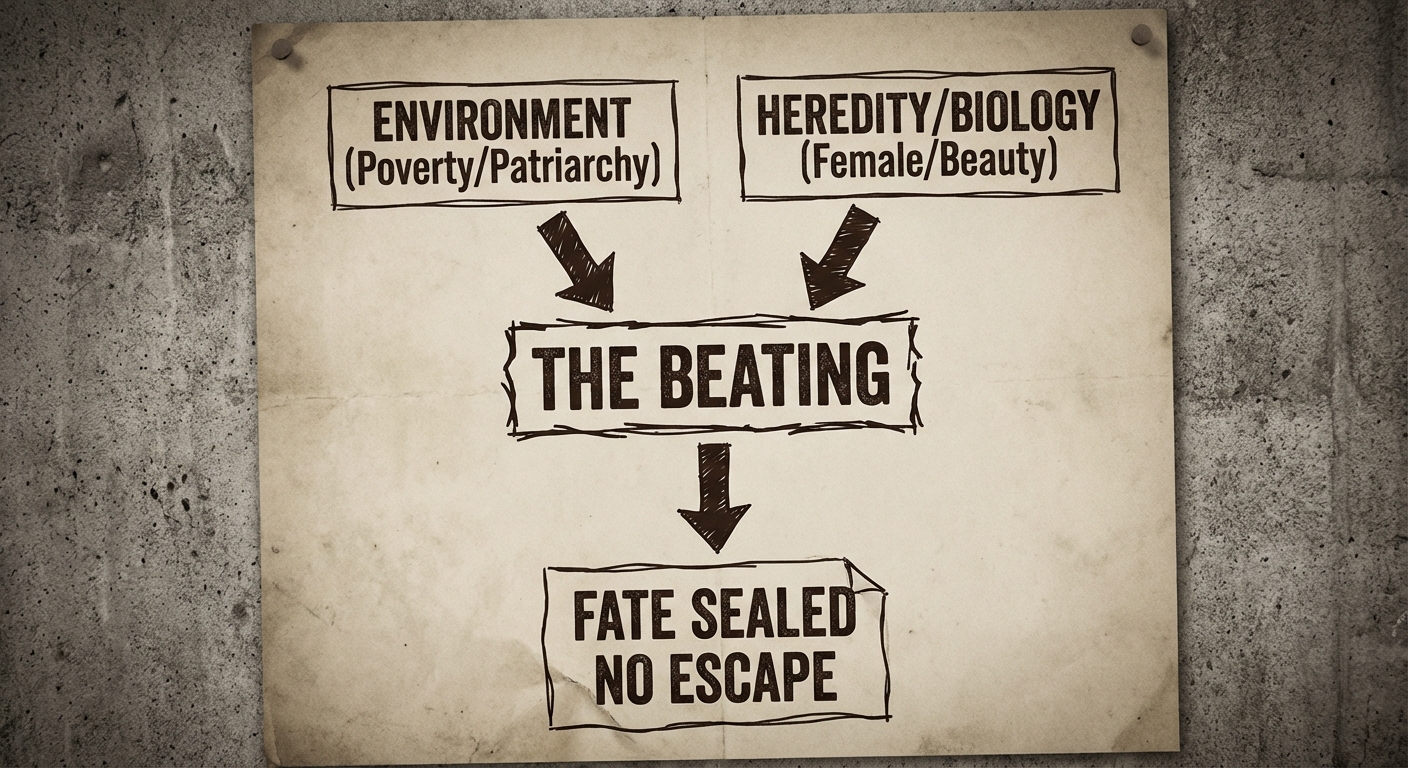
- Determinism: The central concept of Naturalism. A character's fate is determined by their genetic inheritance (biology) and their environment (social/economic conditions). Free will is an illusion.
Gustavo Adolfo Bécquer: The Poetics of the Ineffable
Bécquer represents the bridge between Romanticism and modern poetry. His famous collection is titled Rimas.
Rima IV: "No digáis que agotado su tesoro…"
Theme: The immortality of poetry (La poesía) versus the mortality of the poet.
Bécquer argues that even if there are no poets left, poetry itself will exist as long as there is mystery and human emotion.
- Structure: Anaphora is used heavily. The phrase "mientras…" (while/as long as) is repeated to list conditions (mystery, beauty, love).
- Key Figurative Language:
- Hyperbaton: Altering syntax for emphasis (e.g., "mientras el aire en su regazo lleve perfumes").
- Metaphor/Personification: Nature and science are personified to show that mystery (the source of poetry) transcends logic.
The Core Argument:
"Podrá no haber poetas; pero siempre habrá poesía."
(There may be no poets, but there will always be poetry.)
Rima LIII: "Volverán las oscuras golondrinas…"
Theme: The inevitability of time and the uniqueness of lost love (Memento Mori / Carpe Diem inversion).
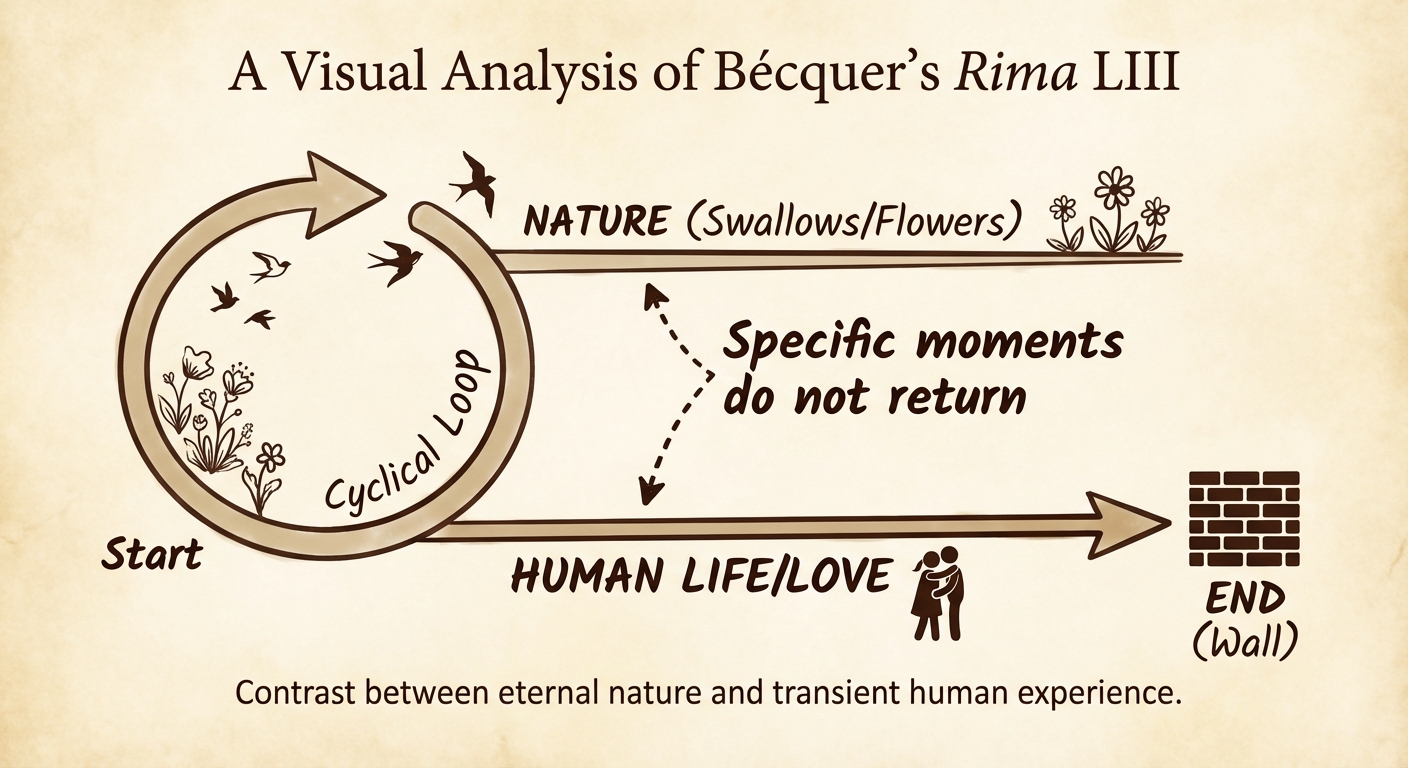
This poem contrasts the cyclical nature of the universe with the linear nature of human relationships.
Analysis by Stanza Grouping:
- Nature Returns (The Swallows/Honeysuckle): The birds (golondrinas) and plants (madreselvas) will return next spring. Nature regenerates.
- The Specifics Do Not Return: The specific birds that watched the lovers, or the specific flowers covered in dew, will not return.
- Refrain: "¡esas… no volverán!"
- Love: Just as specific elements of nature don't return, the profound, worship-like love the speaker felt for the woman will never be replicated by another lover.
Important Literary Devices:
- Polysyndeton: Use of conjunctions to slow rhythm.
- Epithet: "Oscuras golondrinas" (emphasizing the melancholic tone).
- Apostrophe: Addressing the ex-lover directly.
Emilia Pardo Bazán: Naturalism in Galicia
Las medias rojas
Genre: Short Story (Cuento) / Naturalism.
Setting: Rural Galicia (harsh, impoverished, agricultural).
Characters:
- Ildara: Young, beautiful, hopeful. Represents the desire for a better life (emigration to the Americas).
- Tío Clodio: Ildara's father (called "Tío" distinctively in the village context). Represents the old order, laziness, violence, and the oppressive environment.
Plot Summary:
Ildara buys red stockings (medias rojas) with money advanced to her for her upcoming emigration. Clodio notices them, realizes she plans to leave him, and beats her brutally. She loses a tooth and is permanently blinded in one eye. Because she is now "damaged," she cannot emigrate (ships wouldn't take sickly women). She is condemned to stay and rot in the village.
Naturalist Elements (Examination Context):
- Determinism: Ildara tries to escape her fate, but her environment (the patriarchal father) and her biology (her physical beauty being ruined) conspire to trap her.
- Focus on the Grotesque: The description of Clodio lighting his cigar, the violent beating, and the medical description of her eye damage are graphic and objective.
- Color Symbolism:
- Red (Las medias): Hope, passion, modernity, but also blood and violence.
- Grey/Black (The setting): The squalor of the house and the smoke.
Miguel de Unamuno: Precursor to Existentialism
Curriculum Note: While often grouped structurally with late 19th-century works in review, Unamuno belongs to the Generation of '98. This movement arose from the "Disaster of 1898" (loss of colonies), characterized by an identity crisis and existential angst.
San Manuel Bueno, mártir
Genre: Nivola (Unamuno's term for his philosophical novels).
Structure: Use of a narrator (Angela) reflecting on the past (Memoir/Testimony).
Key Characters:
- Don Manuel: The village priest. He is a "saint" who does good works but does not believe in the afterlife. He lives a lie to keep the village happy.
- Angela Carballino: The narrator. She believes in Manuel and eventually discovers his secret. She represents the synthesis of faith and doubt.
- Lázaro: Angela's brother. A progressive progressive thinker who returns from America. He initially opposes Manuel but converts—not to God, but to Manuel's "mission" of protecting the people's peace.
Philosophical Themes:
- Faith vs. Reason: Manuel has reason (which tells him there is no afterlife) but wishes he had the "stupid" faith of the villagers.
- The Truth vs. Happiness: Is it better to know the painful truth or live a comforting lie? Unamuno suggests the "lie" is an act of martyrdom.
- Intrahistoria: The focus on the quiet, daily lives of the villagers rather than great historical events.
Symbolism:
- The Mountain (La Montaña): Represents faith—steadfast, immutable, reaching toward heaven (associated with the villagers).
- The Lake (El Lago): Represents doubt—deep, reflective, concealing secrets beneath the surface (associated with Manuel). Manuel's reflection is seen in the lake, symbolizing his internal conflict.
Comparison Table: Visions of Reality
| Feature | Romanticism (Bécquer) | Naturalism (Pardo Bazán) | Gen '98 / Existentialism (Unamuno) |
|---|---|---|---|
| Tone | Melancholic, Introspective | Objective, Scientific, Pessimistic | Philosophical, Anguished |
| View of the Individual | A unique soul capable of infinite feeling | A product of environment/biology | A consciousness struggling with mortality |
| Role of Nature | Mirror of human emotion | A trap or harsh reality | Symbol of eternal concepts (Lake/Mountain) |
| The "truth" | Found in the ineffable/poetry | Found in observation/science | Found in the struggle (agony) of living |
Common Mistakes & Pitfalls
- Confusing Rima LIII: Students often think all swallows won't return. Correction: The species returns (cycle of life); the specific birds connected to the memory do not. It is about the unrepeatability of a specific moment in time.
- Misinterpreting Tío Clodio: Do not simply call him "bad." In a Naturalist analysis, he is a product of poverty and a patriarchal society. He acts out of a survival instinct (fearing Ildara will leave him alone).
- Don Manuel as a Hypocrite: It is a mistake to view San Manuel as a villain or a standard hypocrite. Unamuno portrays him as a tragic hero (mártir) who sacrifices his own conscience (saves others from his anguish) to ensure the spiritual peace of his parish.
- Chronology: Remember that San Manuel Bueno, mártir (1930s) was published much later than Las medias rojas and Bécquer, but it deals with the spiritual crisis rooted in the turn of the century (Gen '98).