Unit 4: The Impact of Innovation on Japanese Society
This study guide covers Science, Technology, and Society within the specific context of the AP Japanese Language and Culture curriculum. This unit focuses not just on vocabulary, but on cultural perspectives—how Japanese society uniquely integrates ancient traditions with cutting-edge innovation.
Technology and Daily Life (科学技術と日常生活)
In Japan, technology is seamlessly integrated into daily routines to maximize convenience (便利 - benri) and efficiency. Understanding the specific vocabulary and cultural norms surrounding these technologies is crucial for the Interpersonal Speaking and Cultural Comparison sections of the exam.
Essential Vocabulary
| Kanji/Word | Reading | Meaning | Context/Usage |
|---|---|---|---|
| 科学技術 | kagaku gijutsu | Science and Technology | Formal term used in essays. |
| スマホ | sumaho | Smartphone | Short for "Sumātofon". Ubiquitous in modern Japan. |
| アプリ | apuri | App | Application software. |
| SNS | esu-enu-esu | Social Media | Refers to Instagram, LINE, Twitter (X), etc. |
| キャッシュレス | kyasshuresu | Cashless | Paying via IC cards (Suica/Pasmo) or apps (PayPay). |
| 生活 | seikatsu | Daily Life/Living | Examining how tech changes lifestyle. |
The "Keitai" Culture and Mobile Etiquette
Before modern smartphones, Japan had the gara-kei (Galapagos phone)—advanced flip phones unique to Japan. Today, the smartphone is the center of life, but public etiquette remains strict.
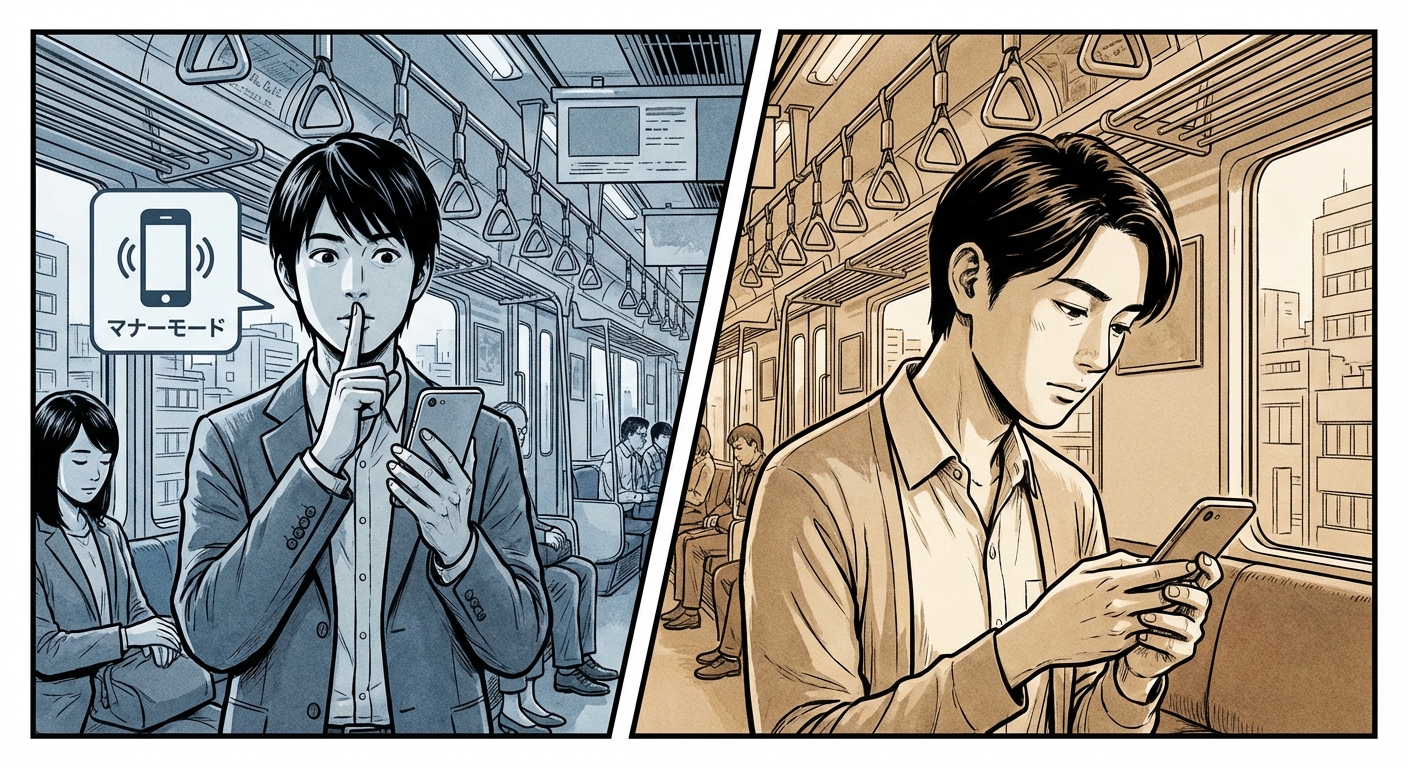
- Manner Mode (マナーモード): On trains and buses, you must set your phone to silent. This is called "Manner Mode."
- No Talking: Talking on the phone on public transport is considered extremely rude (失礼 - shitsurei) and a nuisance (迷惑 - meiwaku).
- Texting/Messaging: Silent use (messaging on LINE, playing games) is perfectly acceptable.
Common Sentence Structure for Probability:
Use ~でしょう (deshō) or ~かもしれません (kamoshiremasen) to discuss future trends.
Ex: 将来、現金を使わない人が増えるでしょう。
(In the future, people who do not use cash will probably increase.)
New Discoveries and Inventions (新しい発見と発明)
Japan is often viewed globally as a "high-tech" nation. For the AP exam, focus on Robotics, Transportation, and Sanitation technologies.
The Robot Kingdom (ロボット王国)
Unlike some Western narratives where robots are feared (e.g., Terminator), Japanese pop culture (e.g., Astro Boy, Doraemon) often portrays robots as friends and helpers.
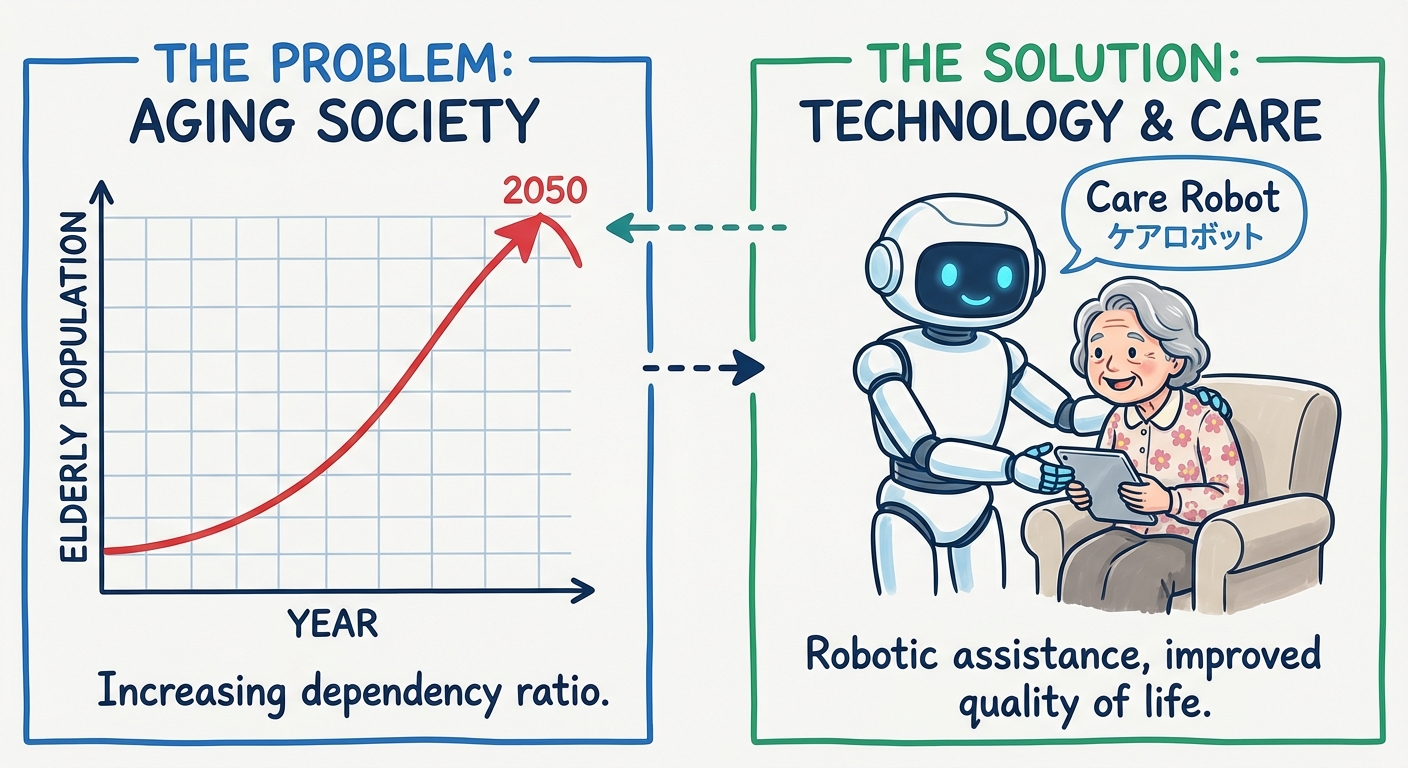
- Care Robots (介護ロボット - kaigo robotto):
- Context: Japan has a rapidly aging society (高齢化社会 - kōreika shakai).
- Application: Robots like Paro (a therapeutic seal) or exoskeleton suits help care for the elderly physically and emotionally.
- Cultural Insight: This addresses the labor shortage (人手不足 - hitode busoku) without relying heavily on immigration, reflecting Japan's insular tendencies.
- Service Robots:
- Robots like SoftBank's "Pepper" can be found in stores greeting customers.
- Automated waiters (restaurant robots) are becoming common to serve food.
Transportation Innovation
- Shinkansen (新幹線): The Bullet Train represents punctuality, safety, and speed.
- Linear Motor Car (リニアモーターカー): The Maglev train (Magnetic Levitation) is the next generation of travel, floating above tracks to eliminate friction.
The High-Tech Toilet (ウォシュレット)
Often a subject of amusement for tourists, the Japanese toilet represents distinct cultural values: cleanliness and hospitality (おもてなし - omotenashi).
- Features: Heated seats, bidet functions, automatic lids, and the "Otohime" (sound princess) specifically designed to mask the sound of usage for privacy.
Ethical Questions in Science and Technology (倫理的な問題)
Advanced technology brings complex problems. You may be asked to discuss the "negatives" of technology in a Compare and Contrast essay.
Connectivity vs. Isolation
- Hikikomori (引きこもり): Acute social withdrawal. While not solely caused by technology, the internet allows people to live without leaving their rooms, exacerbating this social issue.
- Addiction (依存症 - izonshō): Smartphone addiction (sumaho izon) is a major concern among Japanese youth, leading to bans on phones in some schools.
AI and Employment
As AI (人工知能 - jinkō chinō) evolves, there is a debate over job security.
- Pros: Efficiency, solving labor shortages.
- Cons: Loss of "human touch" in service industries; loss of traditional jobs.
Grammar Point: Causative-Passive (Forced Action)
When discussing technology causing stress or forcing habits:
私は親にスマホを止めさせられました。
(I was forced by my parents to stop [using] my smartphone.)
Comparison Table: Benefits vs. Concerns
| Aspect | Benefits (メリット) | Concerns (デメリット) |
|---|---|---|
| AI / Robots | Solves labor shortage; performs dangerous tasks. | Takes away jobs; lack of human emotion. |
| SNS / Internet | Connects people instantly; access to information. | Cyberbullying (ネットいじめ); loss of privacy; less face-to-face communication. |
| Genetic Engineering | Curing diseases; better crops. | Ethical concerns about "playing god"; safety of GMO foods. |
Common Mistakes & Pitfalls
Confusing Transitive/Intransitive Verbs:
- Wrong: ドアが開けました (The door opened [by itself]).
- Right: ドアが開きました (The door opened [intransitive]).
- Context: When observing automated technology (automatic doors, lights), use Intransitive verbs.
Overusing "Anata" (You):
- In English, we say "When you use a robot…" as a general statement. In Japanese, avoid "anata." Use generic nouns like 人々 (hitobito - people) or 私たち (watashitachi - we), or simply omit the subject.
Mixing Registers:
- For the Cultural Comparison (Presentational Speaking), you must use Desu/Masu form consistently. Do not slip into casual speech.
Cultural Comparison Strategy:
- When asked about technology, don't just list gadgets. Explain WHY it is important in Japan (e.g., "Vending machines are popular because Japan has a low crime rate and values convenience."). Always link the technology back to a cultural value.