Foundations of Enslavement in the Western Hemisphere
Systems of Slavery in the Colonial Americas
The institution of slavery in the Americas was not a monolith; it evolved legally, socially, and geographically over centuries. At its core, the system established in the Americas was Chattel Slavery.
Defining Chattel Slavery
Chattel Slavery is a specific form of enslavement where one person has total ownership of another. The enslaved person is legally treated as property (chattel), similar to livestock or real estate, rather than as a human being with rights. Key characteristics include:
- Perpetuity: Enslavement is for life.
- Heredity: The status is passed down to children.
- Racialization: The system specifically targeted people of African descent to create a permanent laboring caste.
The Legal Shift: From Servitude to Slavery
In the early 17th century (e.g., Jamestown, 1619), the distinction between white indentured servants and enslaved Africans was often blurred. However, economic demands and fear of uprising led to the codification of race-based slavery.
Key Legal Precedent: Partus Sequitur Ventrem (1662)
One of the most devastating legal doctrines adopted in the Virginia colony was partus sequitur ventrem ("that which is brought forth follows the womb").
Rule: The legal status of a child is determined by the status of the mother.
This law ensured that children born to enslaved women were enslaved from birth, regardless of who the father was (often white slaveholders). This incentivized the sexual exploitation of enslaved women to increase the enslaved workforce without purchasing new captives.
Geographic Variations
While slavery existed in all 13 British colonies, the systems varied:
- The Chesapeake (Virginia, Maryland): Focused on Tobacco. The work was grueling but often performed in smaller units alongside white indentured servants initially, transitioning to large gang-labor plantations.
- The Lowcountry (South Carolina, Georgia): Focused on Rice and Indigo. Due to the high number of enslaved Africans imported here and the prevalence of disease (malaria), there was often less direct white oversight, allowing for greater retention of African cultural practices (precursors to Gullah Geechee culture).
- The North: While fewer large plantations existed, the North was economically dependent on slavery (shipping, insurance, finance). Enslaved people in the North often worked in domestic service, artisanal trades, or maritime industries.
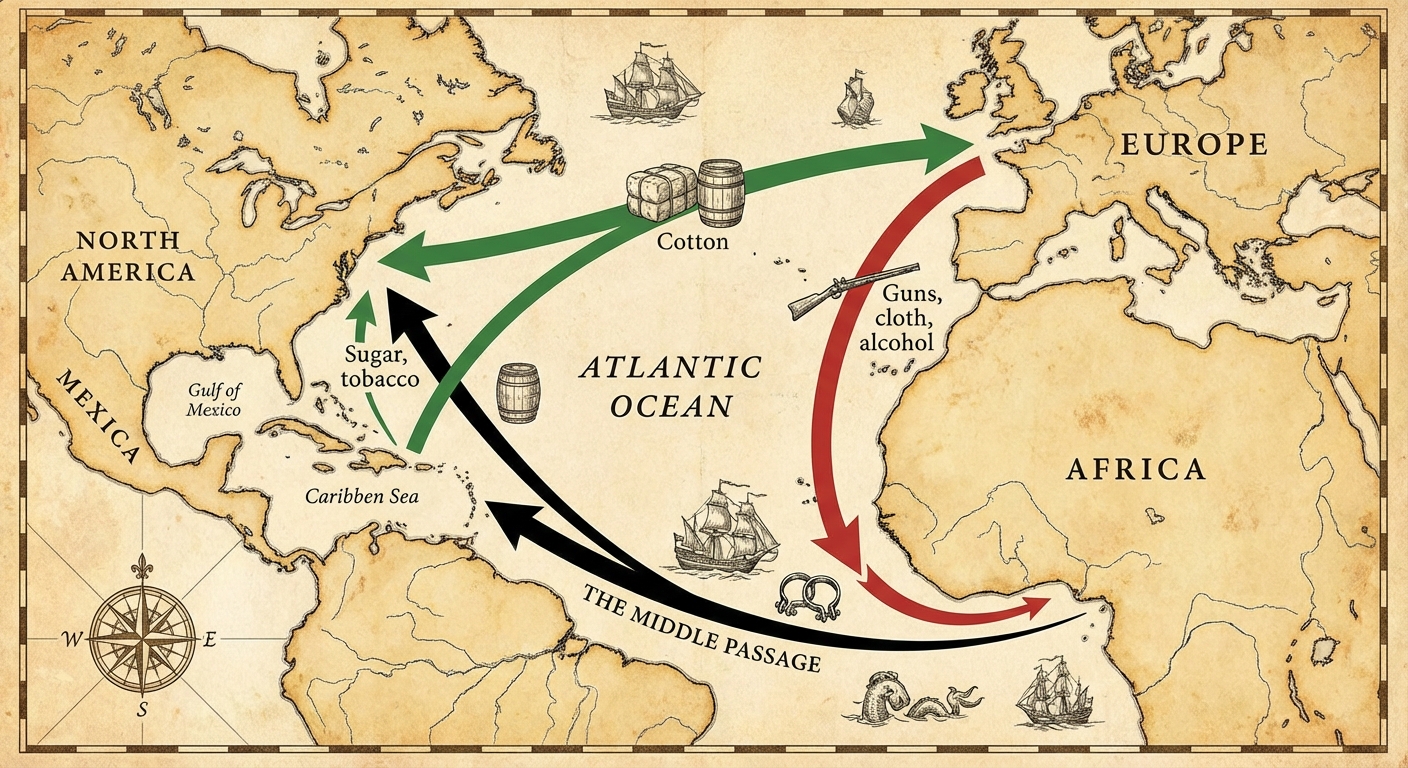
The Economics of Slavery
Slavery was not just a social system; it was the economic engine of the Atlantic World. The colonies operated under an economic theory called Mercantilism, where colonies existed solely to generate wealth for the mother country.
The Cash Crops
The demand for specific commodities drove the expansion of the slave trade. You should associate specific crops with specific regions and labor demands:
| Crop | Primary Region | Notes |
|---|---|---|
| Sugar | Caribbean, Brazil | The most profitable and deadly crop. Known as "White Gold." Life expectancy for enslaved people on sugar plantations was extremely low (often <7 years). |
| Tobacco | Virginia, Maryland | Creating the plantation aristocracy of the Upper South. Soil exhaustion led to westward expansion. |
| Rice | SC/GA Lowcountry | Required complex hydraulic engineering knowledge, which West Africans possessed. |
| Cotton | Deep South (Later) | Exploded after the invention of the Cotton Gin (1793). Became the primary US export in the 19th century ("King Cotton"). |
Global Capitalism
It is crucial to understand that slavery was a capitalist enterprise.
- Banking & Insurance: Banks in New York and London accepted enslaved people as "collateral" for loans. Insurance companies sold policies on the lives of enslaved people to protect the "property" of slaveholders.
- Industrialization: The cheap cotton produced by enslaved labor in the American South fueled the textile mills of the Industrial Revolution in Great Britain and the American North (e.g., Lowell, Massachusetts).
Daily Life Under Enslavement
Despite the brutal efforts to dehumanize them, enslaved people built communities, families, and cultures. However, their daily existence was dictated by the labor systems enforced by the enslavers.
Labor Systems: Gang vs. Task
Historians generally distinguish between two primary methods of organizing enslaved labor:
The Gang System:
- Common in: Tobacco, Sugar, and Cotton regions.
- Structure: Enslaved people worked in groups (gangs) under the supervision of an overseer or a "driver" (an enslaved foreman).
- Schedule: Work was continuous from "sunup to sundown."
- Nature: Harsh, continuous scrutiny and physical punishment were constant.
The Task System:
- Common in: Rice cultivation (Lowcountry SC/GA).
- Structure: Individuals were assigned a specific "task" or quota for the day (e.g., hoeing a certain acreage).
- Incentive: Once the task was complete, the enslaved person had the rest of the day to themselves.
- Result: This allowed for more time to cultivate personal gardens, hunt, fish, and maintain cultural traditions.
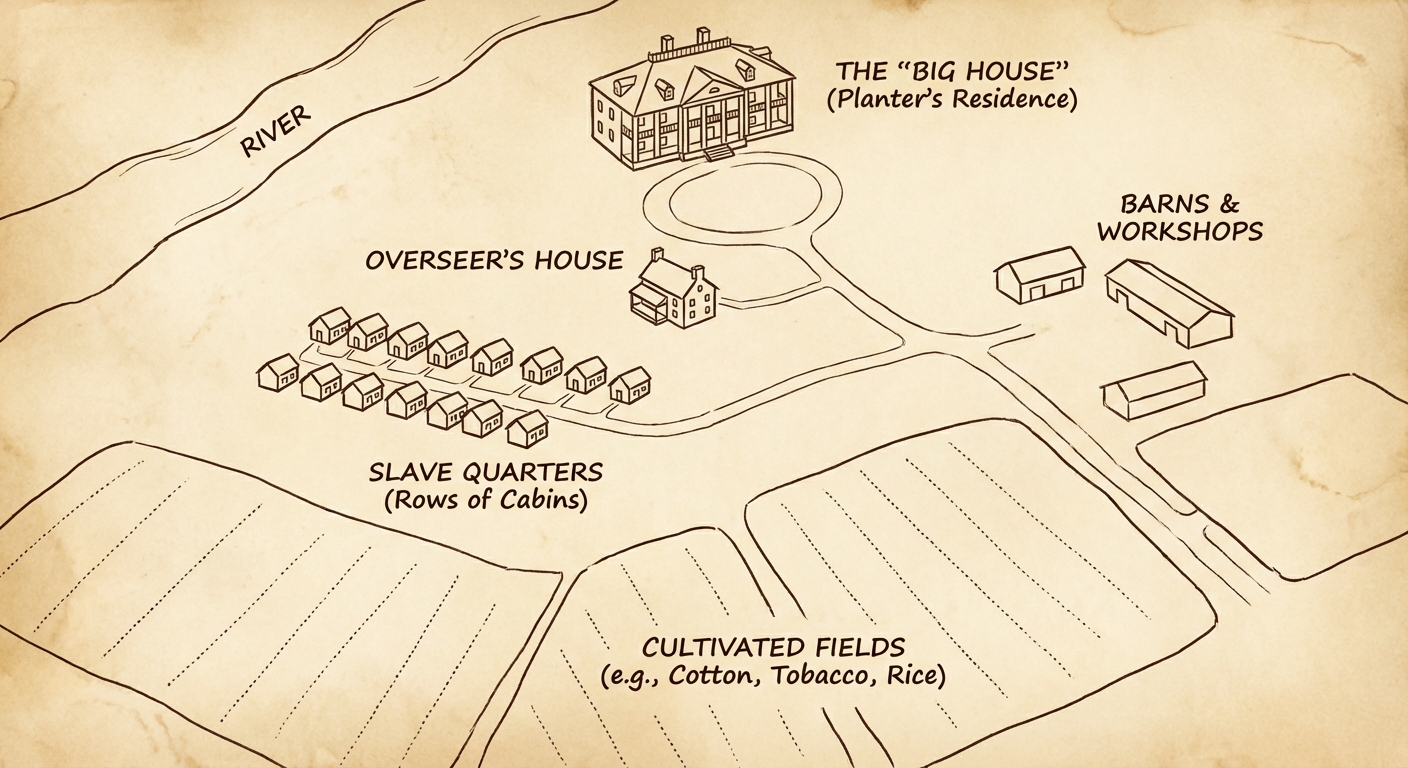
Living Conditions and Control
- The Quarters: Enslaved people typically lived in communal cabins removed from the main house. While these were sites of poverty, they were also spaces of community where white surveillance was lower.
- Diet: Rations were meager, typically consisting of cornmeal and salt pork. Enslaved people supplemented this by hunting, fishing, and keeping personal gardens (when permitted).
- Violence and Coercion: The threat of physical violence (whipping) and psychological violence (the separation of families via sale) was omnipresent.
Resistance and Agency
Resistance wasn't always a violent rebellion (like the Stono Rebellion or Nat Turner's Revolt). More often, it was "day-to-day" resistance:
- Sabotage: Breaking tools, feigning illness, or working slowly.
- Cultural Resistance: Maintaining African religious practices, hairstyles, and naming conventions.
- Fictive Kin: Because families could be separated by sale, enslaved communities created networks of "fictive kin" (calling non-relatives "aunt" or "uncle") to care for children and provide social support.
Common Mistakes & Pitfalls
Thinking slavery was only in the South.
- Correction: In the colonial era, slavery existed in all 13 colonies. New York City had one of the highest urban enslaved populations. The North only gradually abolished slavery after the American Revolution.
Confusing Indentured Servitude with Chattel Slavery.
- Correction: Indentured servants (mostly white Europeans) had a contract for a set number of years (5-7) and retained legal rights. Chattel slavery was perpetual, hereditary, and racialized.
Assuming all enslaved people worked in fields.
- Correction: While the majority worked in agriculture, many enslaved people were skilled artisans (blacksmiths, carpenters), domestic workers, sailors, and severe factory laborers (later in the antebellum period).
Viewing enslaved people only as victims.
- Correction: While they were victimized by the system, AP African American Studies emphasizes agency. Enslaved people actively resisted, negotiated, created culture, and survived. Never ignore their humanity and active participation in their own survival.