Unit 5: Crisis and Renovation in Hispanic Literature
La Generación del 98 y el Modernismo
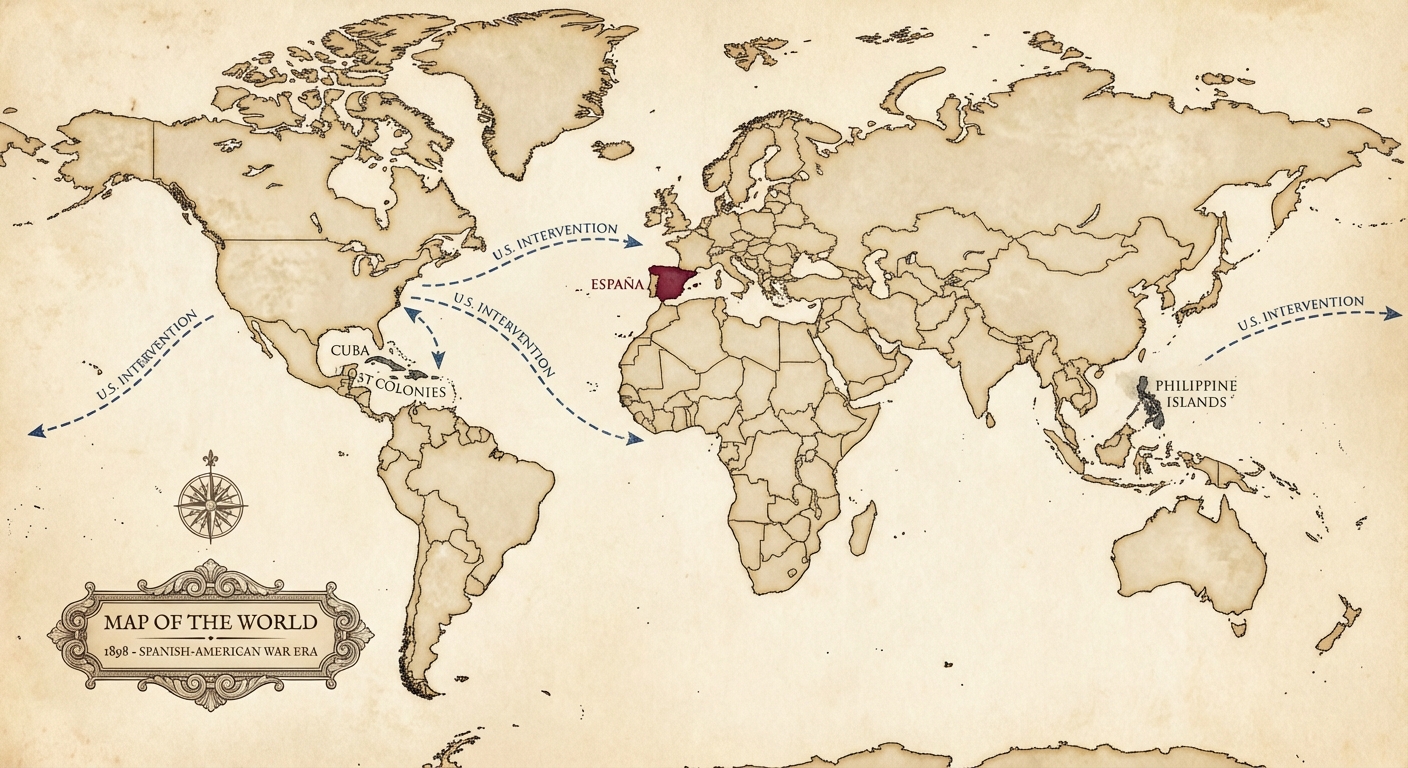
1. Important Historical Context: El Desastre de 1898
To understand Unit 5, you must understand the "Crisis of '98." This is the pivot point where the Spanish Empire collapsed, and Latin America asserted its own cultural identity.
The Spanish-American War (Guerra Hispano-estadounidense)
- The Event: Spain fought the United States in 1898.
- The Outcome: Spain lost its last overseas colonies: Cuba, Puerto Rico, and the Philippines.
- The Impact on Spain: A massive identity crisis. The phrase "El imperio donde nunca se pone el sol" (The empire where the sun never sets) was dead. This led to a period of national depression, soul-searching, and a desire to "regenerate" the country.
- The Impact on Latin America: A fear of the new imperial power (The USA) and a celebration of a distinct Latin American identity (independent of Spain and the US).
2. El Modernismo (Late 19th Century)
Definition: Modernismo is the first Latin American literary movement to influence Spain (reverse influence). It is characterized by a rejection of everyday reality in favor of beauty, musicality, and exoticism. It roughly spans from the 1880s to the 1910s.
Key Characteristics
- El Arte por el Arte (Art for art's sake): Focus on aesthetics over political messages (in the early phase).
- Sentimentalism and Sensuality: Heavy use of the five senses.
- Symbolism: Use of the color blue (freedom/sky) and the swan (elegance/grace).
- Cosmopolitanism: Rejecting local mediocrity to look toward Paris, Greece, or the Orient.
- Renovation of Metric: Experimentation with verse rhythms (using Alexandrine verses, 14 syllables).
AP Required Authors & Works
José Martí (Cuba, 1853–1895)
- Role: Precursor to Modernismo and hero of Cuban independence.
- Required Text: "Nuestra América" (Essay)
- Context: Written to warn Latin Americans about the threat of US imperialism and the error of copying European/US models of government.
- Key Metaphor: "El gigante de siete leguas" (The seven-league giant) refers to the USA.
- Main Argument: "To govern well, one must know the country." Martí argues for a government born from the nature of the country itself, not imported theories.
- "El hombre natural": The native/indigenous person who knows the land, contrasted with the artificial intellectual educated in Europe.
Rubén Darío (Nicaragua, 1867–1916)
- Role: The "Father of Modernism."
- Required Text: "A Roosevelt" (Poem)
- Context: Unlike his earlier "art for art's sake" poetry, this is Mundonovismo (concerned with New World political determination).
- Addressee: Theodore Roosevelt (representing the USA).
- Themes: Anti-imperialism, clash of cultures.
- The Contrast: Contrast the USA (future, strength, technological, "primitive and modern") with Latin America (past, indigenous roots, Catholic, poetic, "worships Jesus Christ").
- Famous Line: "Eres los Estados Unidos, eres el futuro invasor…"
3. La Generación del 98 (Spain)
Definition: A group of Spanish writers deeply affected by the Disaster of 1898. They analyzed the "Problem of Spain" and sought to redefine Spanish identity through its landscape, history, and existential philosophy.
Key Characteristics
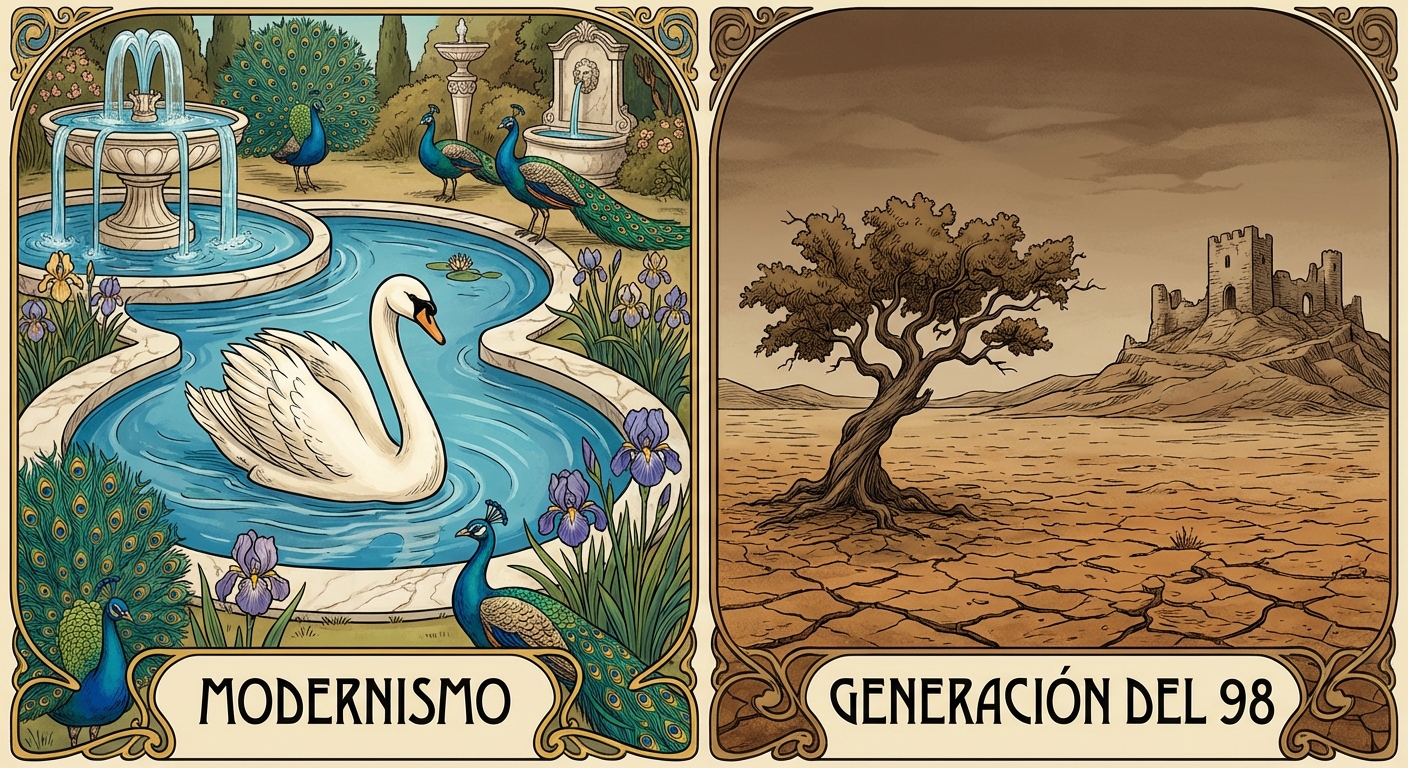
- Focus on Castilla: The dry, austere Castilian landscape symbolized the Spanish soul.
- Existentialism: Anguish (angustia), apathy (abulia), and the question of faith versus reason.
- Plain Language: Rejection of the ornate, flowery language of Modernismo. They preferred direct, sober language.
- Intrahistoria: A term coined by Unamuno. History is not just battles and kings (Historia), but the daily lives of silent, common people (intrahistoria) who are the true eternal tradition.
AP Required Authors & Works
Miguel de Unamuno (1864–1936)
- Philosophy: Defined by the "Tragic Sense of Life"—the conflict between the Reason (which says we die forever) and the Heart (which desperately wants immortality).
- Required Text: "San Manuel Bueno, mártir" (Novel/Nivola)
- Protagonists: Don Manuel (Priest), Ángela (Narrator), Lázaro (Ángela's brother, progressive).
- Plot: Don Manuel is a saintly priest who helps everyone but secretly has lost his faith in God/Heaven. He pretends to believe to keep his parishioners happy and peaceful.
- Key Symbols:
- The Mountain (La montaña): Represents faith, eternity, striving upward.
- The Lake (El lago): Represents the abyss, doubt, nothingness (where the reflection serves as illusion).
- Theme: The truth vs. happiness. Is it better to live a happy lie or a painful truth?
Antonio Machado (1875–1939)
- Style: Solitary, observant, appreciated the landscape of Castilla and the dignity of the common man.
- Required Text: "He andado muchos caminos" (Poem)
- Structure: Romance (octosyllabic verses, assonance rhyme in even verses).
- Theme: The contrast between arrogant intellectuals/upper class ("mala gente") and the simple working people ("buena gente").
- Analysis: The "buena gente" do not complain, they work the land, they enjoy life's simple pleasures, and they accept death naturally. The arrogant people stink of melancholy ("apestando la tierra").
Contextual Authors (Not Mandatory Texts, but highly relevant Context)
- Pío Baroja: Pessimistic novelist. Wrote about the struggle for life in a harsh society (El árbol de la ciencia).
- Azorín: Focused on meticulous description of the Castilian landscape and the passage of time.
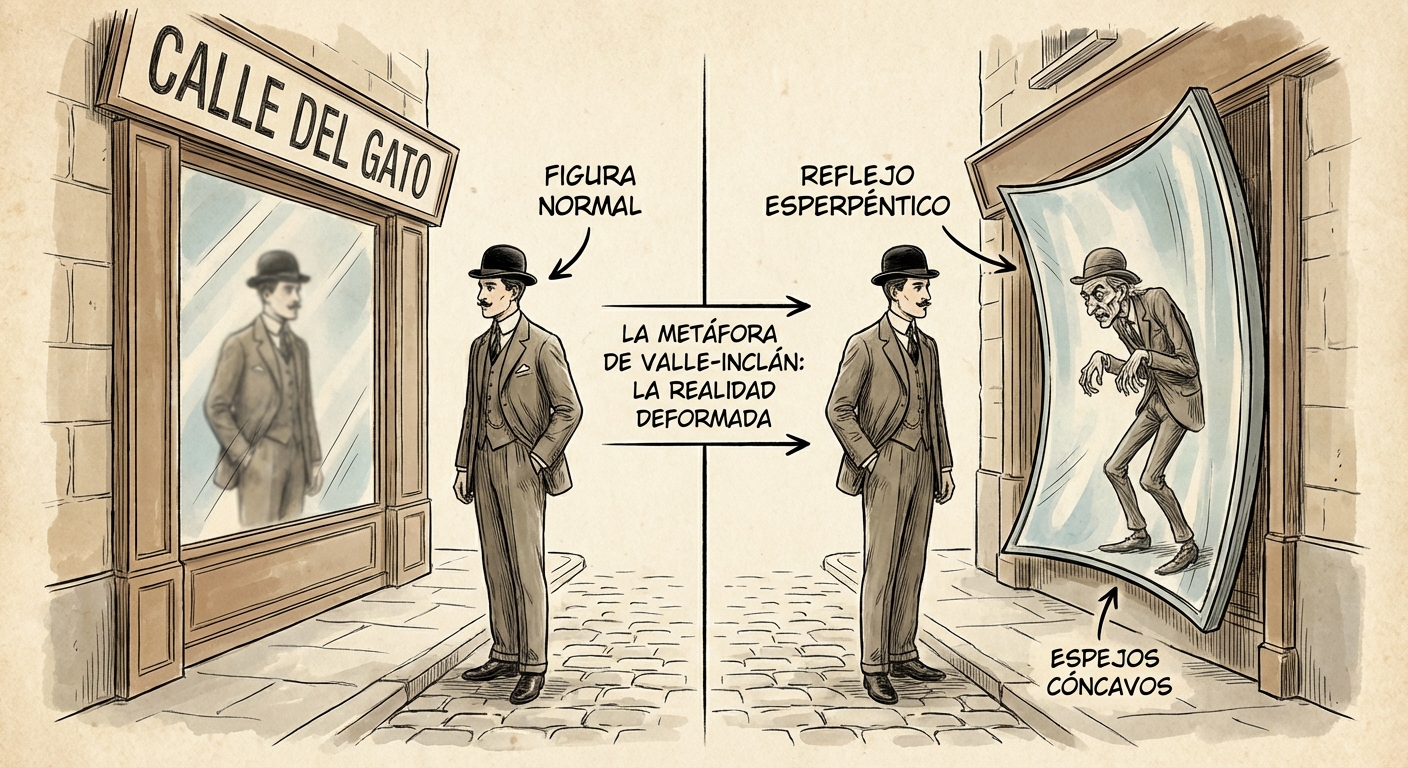
- Ramón María del Valle-Inclán: Creator of the Esperpento style (grotesque distortion of reality to criticize society). Famous for Luces de bohemia.
4. Comparison Table: Modernismo vs. Gen 98
| Feature | Modernismo | Generación del 98 |
|---|---|---|
| Origin | Latin America (Blue, Cosmopolitan) | Spain (Castilla, Introspective) |
| Primary Goal | Aesthetic renewal, Beauty | National Regeneration, Truth |
| Language | Sensual, musical, ornate, colorful | Sobriety, direct, precise, austere |
| Key Symbols | Swans, peacocks, Versailles, blue | Dust, old castles, dry fields, mist |
| Philosophical Focus | Art for Art's Sake (early), Pan-Americanism (later) | Existentialism, Time, God, Identity |
| Representative AP Work | A Roosevelt (Darío) | San Manuel Bueno, mártir (Unamuno) |
5. Literary Techniques & Terminology
Terminology for Analysis
- Metalingüística (Metafiction): Writing about writing. (e.g., In Unamuno's Niebla, the character talks to the author. In San Manuel, Ángela questions the reliability of her own narration).
- Paralelismo: Repetition of grammatical structures (common in Martí and Darío).
- Sinestesia (Synesthesia): Mixing senses (e.g., "hearing a color"). Vital for Modernismo analysis.
- Example: "Verso azul" (Blue verse).
- Verso Libre: Free verse. Breaking traditional rhyme schemes (influenced by Walt Whitman, used by Martí).
- Apostrofe: Addressing a person or entity directly.
- Example: "Es con voz de la Biblia, o verso de Walt Whitman, que habría que llegar hasta ti, Cazador…" (Addressing Roosevelt).
6. Common Mistakes & Pitfalls
- Mistake: Thinking Modernismo is just about "being modern."
- Correction: In Hispanic literature, Modernismo is a specific movement about exoticism and aesthetics. It is not the same as "Contemporary" or English "Modernism" (which is later, like Joyce/Woolf).
- Mistake: Confusing the timelines.
- Correction: Modernismo started slightly before the Generation of '98 (1888 vs 1898), though they overlapped. Modernismo influenced the younger Gen '98 writers initially.
- Mistake: Ignoring the political shift in Darío.
- Correction: Do not analyze simple Modernist poems (about swans) the same way you analyze A Roosevelt. Darío shifted from "Ivory Tower" isolation to political engagement later in life.
- Mistake: Misinterpreting Unamuno's "faith."
- Correction: Unamuno is not an atheist, nor a standard Catholic. He is an agonic thinker—he believes the struggle (agonía) to believe is the essence of religious life.