Unit 6 Study Guide: Global and Societal Challenges in Modern Japan
This study guide covers the critical section of Global Challenges within Unit 6. The AP Japanese Language and Culture exam frequently tests these topics in both the multiple-choice section (listening/reading cultural contexts) and the free-response section (Chat and Cultural Presentation). You are expected to discuss these issues using intermediate-to-advanced vocabulary and understand the Japanese cultural perspective on them.
Environmental Issues (Kankyou Mondai)
Japan is an island nation with limited resources, making environmental consciousness a cornerstone of modern Japanese society. The relationship between nature and modernization is a frequent theme in AP materials.
Waste Management and Recycling
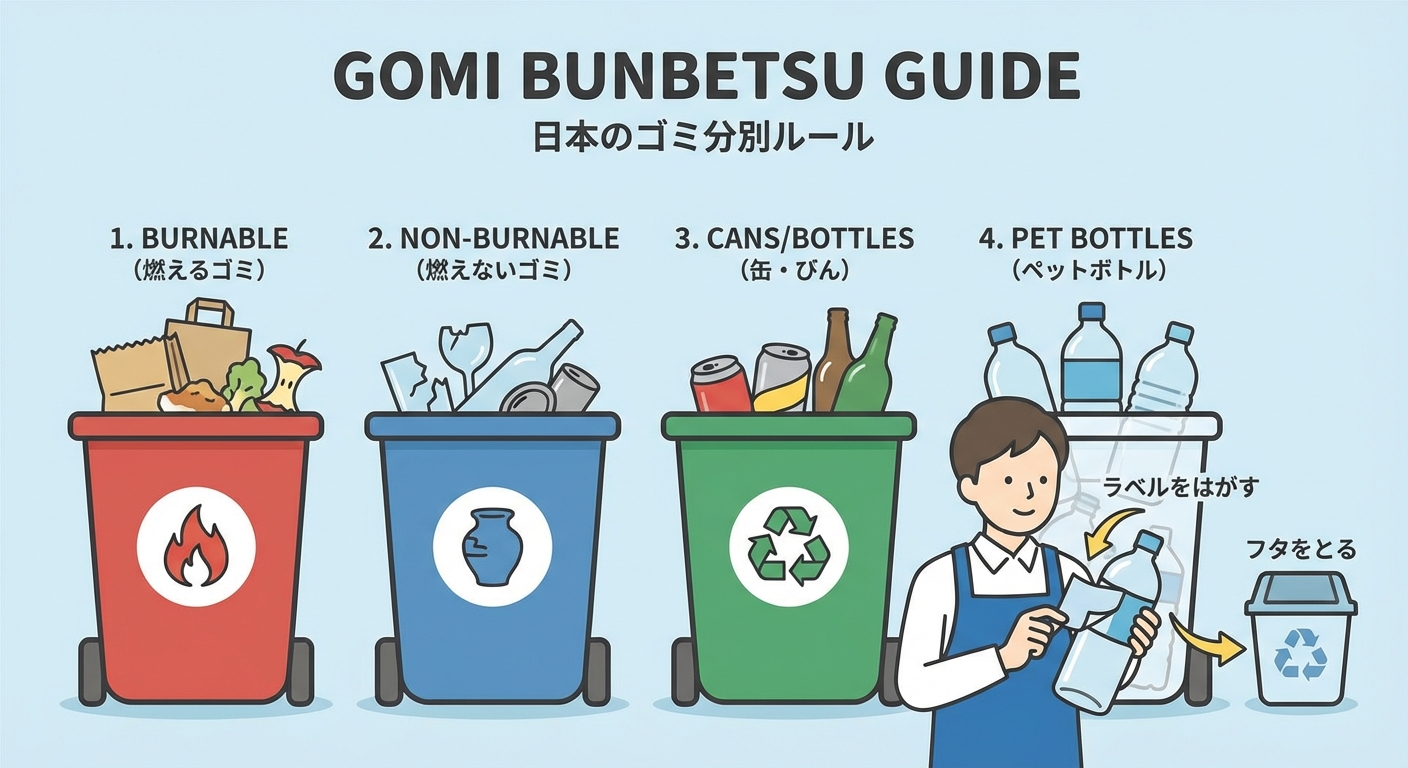
The most immediate environmental interaction for residents in Japan is Gomi Bunbetsu (ゴミ分別)—the strict separation of trash.
- Burnable vs. Non-Burnable: Unlike many Western single-stream systems, Japanese citizens must categorize trash into Moeru gomi (burnable), Moenai gomi (non-burnable), cans, bottles, PET bottles, and paper.
- Specific Rules: PET bottles must have labels and caps removed; cardboard must be tied with string; collection days vary by neighborhood.
- Illegal Dumping: Fuhou touki (不法投棄) is strictly penalized and socially shamed.
The "Mottainai" Culture
The concept of Mottainai (もったいない) goes deeper than just "wasteful." It has roots in Buddhist philosophy, suggesting that objects have spirits and should be utilized to their full potential.
- The 3Rs + 1: Japan teaches Reduce, Reuse, Recycle, and increasingly Refuse (saying no to unnecessary packaging).
- My Bag / Eco Bag: Plastic bags at supermarkets and convenience stores (Konbini) are no longer free. Carrying a My Bag (マイバッグ) or "Eco Bag" is the social norm.
Climate Change and Energy Conservation
Since the 2011 Tohoku Earthquake and the Fukushima nuclear disaster, energy conservation (Setsuden - 節電) has become a civic duty.
- Cool Biz (クールビズ): A government campaign started in 2005 encouraging office workers to embrace casual attire (no ties/jackets) during summer so air conditioners can be set to 28°C (82°F).
- Warm Biz (ウォームビズ): The winter counterpart, encouraging wearing layers to keep heating usage low.
Natural Disasters
Because Japan sits on the "Ring of Fire," disaster preparedness is a major societal challenge.
- Key Vocabulary:
- Jishin (地震): Earthquake
- Tsunami (津波): Tsunami
- Hinankunren (避難訓練): Evacuation drill
- Bousai (防災): Disaster prevention
Political and Social Structures
The most pressing challenge facing Japan's political and social structure is demographic change. This topic is essential for the Cultural Comparison presentation.
The Aging Society (Shoushi Koureika)
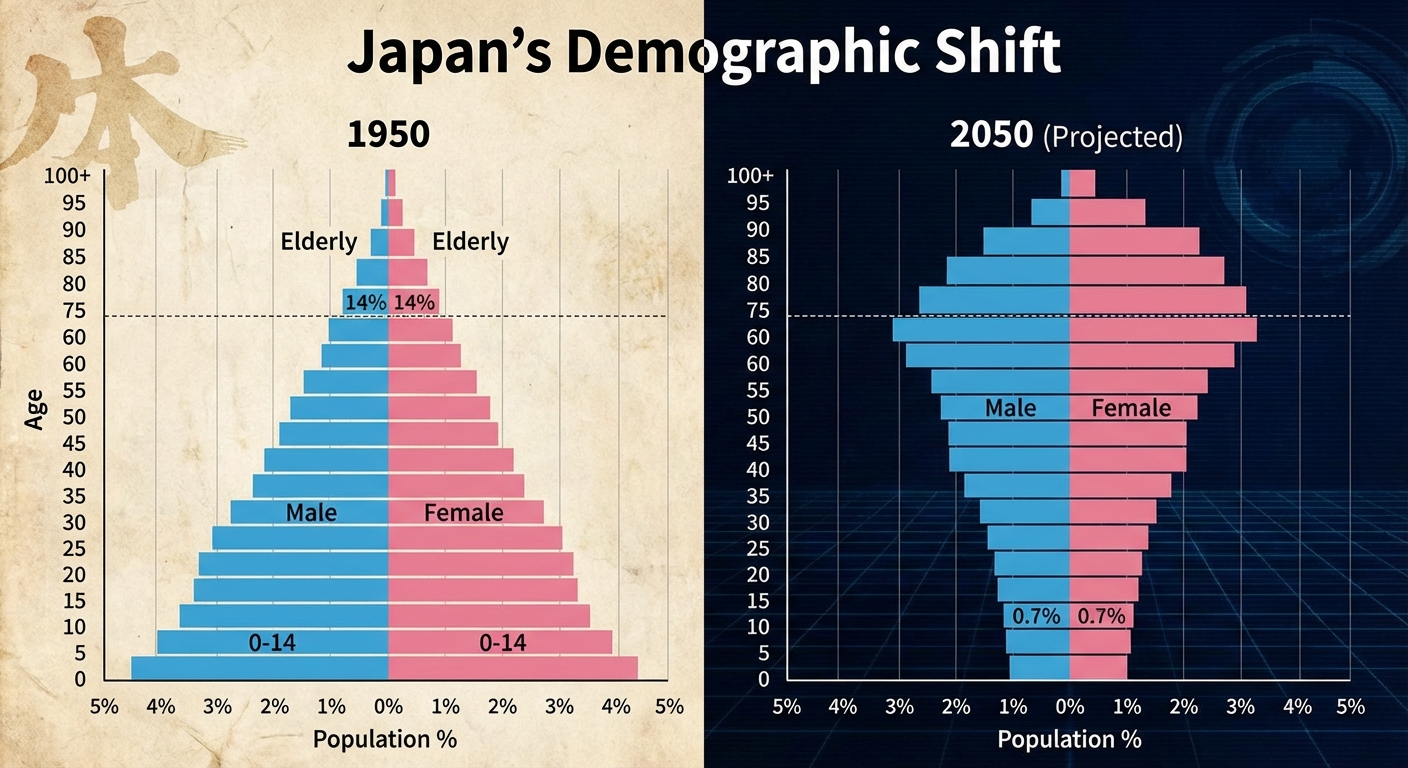
Japan is facing a "super-aging" society, known as Shoushi Koureika (少子高齢化)—a combination of a declining birthrate (shoushika) and an aging population (koureika).
Causes:
- High cost of raising children and education.
- Late marriage (Bankonka - 晩婚化) or choosing not to marry.
- Women prioritizing careers due to changing social norms.
Consequences:
- Labor Shortage (Roudouryoku busoku - 労働力不足): Not enough young people to fill jobs.
- Pension Strain: Fewer workers paying into the system to support a growing number of retirees.
- Care Crisis (Kaigo - 介護): High demand for nursing care for the elderly.
Solutions and Structural Changes
To combat these demographic issues, Japanese society is evolving:
- Women in the Workforce: The government promotes policies to help women work after having children (e.g., better daycare availability, parental leave).
- Foreign Labor: Historically strict immigration policies have relaxed slightly to allow more foreign technical trainees and skilled workers.
- Robotics: Utilizing technology to perform caretaking duties for the elderly.
Social Conscience and Civic Responsibility
Unlike the individualistic approach often seen in the West, Japanese civic responsibility is deeply rooted in Shudan Ishiki (集団意識)—group consciousness. Doing one's part for the harmony (Wa) of the community is expected.
Community Involvement
- Chounaikai (町内会): Neighborhood associations that manage local festivals (Matsuri), cleaning campaigns, and disaster drills. Participation is often expected of residents.
- Volunteering (Borantia - ボランティア): While historically less formalized than in the US, volunteerism surged after the 1995 Kobe Earthquake and the 2011 Triple Disaster. It is now a key part of student life and corporate responsibility.
Peace Education (Heiwa Kyouiku)
Due to its history as the only nation to suffer atomic bombings, Japan places a heavy emphasis on peace education.
- Hiroshima & Nagasaki: Students frequently visit these cities on school trips (Shuugaku Ryokou) to learn about the horrors of war.
- Article 9: The famous clause in the Japanese Constitution renouncing war is a constant topic of political debate regarding Japan's role in global security.
Vocabulary Checklist
Memorize these terms to boost your AP score:
| Kanji/Term | Hiragana | Meaning |
|---|---|---|
| 環境問題 | かんきょうもんだい | Environmental problems |
| 地球温暖化 | ちきゅうおんだんか | Global warming |
| 資源 | しげん | Resources (natural) |
| リサイクル | りさいくる | Recycle |
| 少子高齢化 | しょうしこうれいか | Declining birthrate and aging population |
| 労働力 | ろうどうりょく | Labor force |
| 移民 | いみん | Immigrant/Immigration |
| 責任 | せきにん | Responsibility |
| ボランティア | ぼらんてぃあ | Volunteer |
| 寄付 | きふ | Donation |
Common Mistakes & Pitfalls
- Confusing Mottainai with Stingy: Mottainai is a virtue regarding respect for resources. Being "stingy" (kechi) is negative. Do not mix them up in cultural essays.
- Overlooking Strictness of Trash Rules: When comparing cultures, students often underestimate how complicated Japanese recycling is. It isn't just "tossing it in the blue bin"; it involves washing, removing labels, and following a calendar.
- Terminology Mix-ups:
- Use Jinkou (人口) for "population" (statistical).
- Use Hitobito (人々) for "people" (general group).
- Do not use Hito when discussing demographics.
- Tone in Cultural Speeches: When discussing serious global challenges like aging or disasters, maintain a formal tone (Desu/Masu form at minimum). Avoid slang or overly casual sentence endings.