Unit 4 Comprehensive Review: Science, Innovation, and Modern Society
Introduction to Science, Technology, and Society
In AP Chinese Unit 4, the focus shifts to the dynamic relationship between technological advancement and human life. This section goes beyond simply naming gadgets; it requires you to articulate cause and effect, express opinions on ethical dilemmas, and compare modern conveniences with traditional lifestyles. The ability to discuss the "Double-Edged Sword" (双刃剑 - shuāngrènjiàn) nature of technology is crucial for the Cultural Presentation and Conversation parts of the exam.
Technology and Daily Life (科技与日常生活)
Technology has fundamentally altered how people communicate, shop, and travel in China. The concept of the "Smart Lifestyle" (智能生活 - zhìnéng shēnghuó) is central here.
The Mobile Ecosystem: More Than Just a Phone
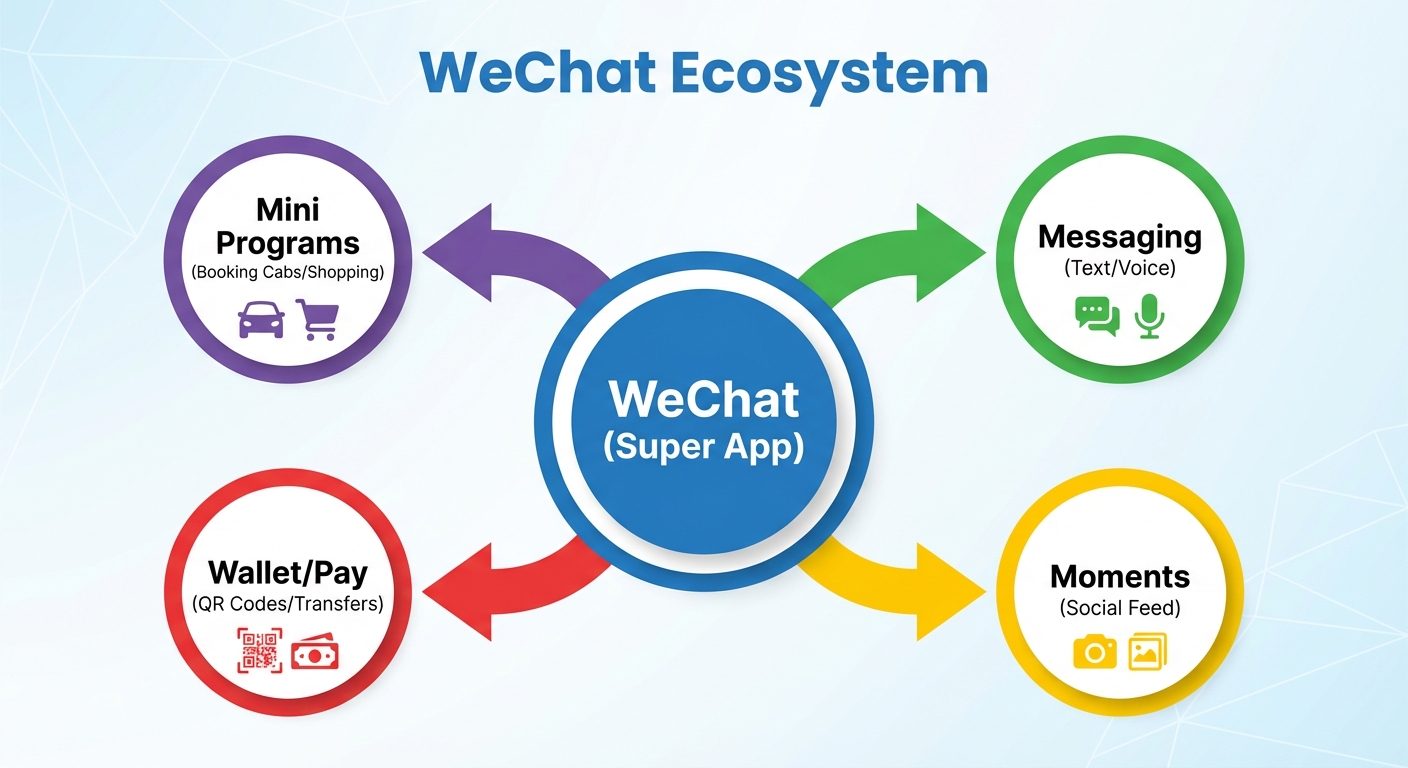
In modern China, the smartphone is not just a communication tool; it is a survival kit. The most critical application is WeChat (微信 - Wēixìn).
- Definition: WeChat is often called a "Super App" because it integrates messaging, social media, and financial services.
- Key Function - Moments (朋友圈 - Péngyǒuquān): A social feed where users post updates.
- Key Function - Mobile Payment (移动支付 - Yídòng zhīfù): Using the phone to pay for everything from street food to utility bills.
The Cashless Society (无现金社会)
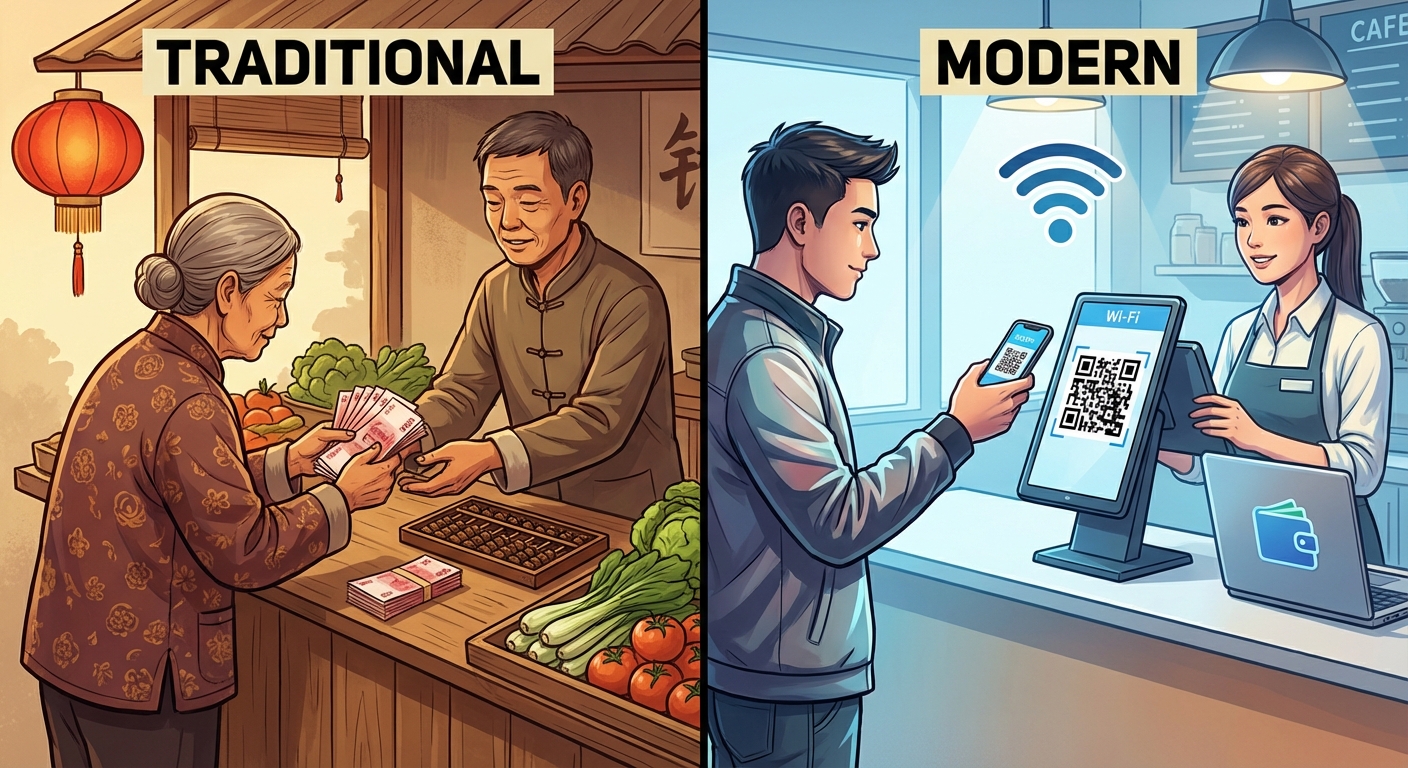
China has largely skipped credit cards and moved directly to digital wallets. The two giants are Alipay (支付宝 - Zhīfùbǎo) and WeChat Pay (微信支付 - Wēixìn Zhīfù).
Sentences describing this trend:
- Now, people rarely carry cash when they go out.
- 现在,人们出门很少带现金 (xiànjīn - cash)。
- Just scan the QR code to complete the payment.
- 只要扫一下二维码 (èrwéimǎ - QR code) 就能完成支付。
Transportation: The Era of Speed
Two major technological impacts on transportation in China are:
- High-Speed Rail (高铁 - Gāotiě): Connects cities efficiently. It is known for being fast (kuài), punctual (zhǔnshí), and comfortable (shūshì).
- Shared Economy (共享经济 - Gòngxiǎng jīngjì): Specifically, Shared Bicycles (共享单车 - Gòngxiǎng dānchē). These solve the "last mile" problem of commuting.
Key Vocabulary Table: Daily Life
| Term (Simplified) | Pinyin | English | Example Context |
|---|---|---|---|
| 方便 / 便利 | fāngbiàn / biànlì | Convenient | Online shopping is very convenient. |
| 依赖 | yīlài | To rely on | Modern people rely too much on phones. |
| 沟通 | gōutōng | To communicate | Tech changes the way we communicate. |
| 随时随地 | suíshí suídì | Anytime, anywhere | We can surf the internet anytime, anywhere. |
| 低头族 | dītóuzú | Phubbers | People who constantly look down at phones. |
New Discoveries and Inventions (新发现与新发明)
This topic covers cutting-edge developments and how they are viewed in Chinese society. You should be able to discuss the "Four Great New Inventions" of modern China (a common cultural topic).
The "Four Great New Inventions" (新四大发明)
Chinese media often refers to these four technologies as the modern equivalent of ancient China's paper, compass, gunpowder, and printing:
- High-Speed Rail (高铁)
- Mobile Payment (移动支付)
- Shared Bicycles (共享单车)
- Online Shopping (网购)
Artificial Intelligence (人工智能 - Réngōng Zhìnéng)
AI is rapidly developing in fields like education (jiàoyù) and medicine (yīliáo).
- Facial Recognition (人脸识别 - Rénliǎn shíbié): Used for security checks at train stations and even for payment.
- Driverless Cars (无人驾驶汽车 - Wúrén jiàshǐ qìchē): A developing technology that aims to reduce traffic accidents.
Space Exploration (太空探索 - Tàikōng Tànsuǒ)
China has made significant strides in aerospace.
- Keywords: Satellite (wèixīng), Moon landing (dēngyuè), Astronaut (yǔhángyuán).
Ethical Questions in Science and Technology (科技中的伦理问题)
For the AP Exam, especially in the free-response section, you must demonstrate the ability to argue different sides of an issue. This requires connecting phrasing like "On one hand… on the other hand…" (一方面… 另一方面…).
Privacy vs. Convenience (隐私与便利)
- The Conflict: Big Data (dàshùjù) makes life convenient by recommending products, but it threatens personal privacy (gèrén yǐnsī).
- Key Argument: "Although technology brings convenience, it also makes us worry about information security."
- 虽然科技带来了便利,但也让我们担心信息安全 (xìnxī ānquán)。
The Digital Divide (数字鸿沟 - Shùzì Hónggōu)
As technology advances, the elderly (lǎorén) often get left behind because they do not know how to use smart devices.
- Example: Many elderly people cannot hail a taxi because they don't use apps. They feel isolated (gūdú).
Health and Social Interaction
- Addiction (上瘾 - Shàngyǐn): Many teenagers are addicted to online games (wǎngluò yóuxì), affecting their academic performance (xuéxí chéngjì).
- Face-to-Face Interaction (面对面交流): People chat online but ignore the real people sitting next to them. This creates distance between family members.
Important Grammar & Sentence Structures
To score high in the Interpersonal and Presentational modes, use these structures to link science and society.
1. Expressing Impact
Structure: $A + \text{对} + B + \text{产生/有} + … \text{影响}$ (A has … influence on B)
- Example: The internet has a huge influence on our lives.
- 互联网对我们的生活产生了巨大的影响。
2. Expressing Change Over Time
Structure: $\text{随着} + … \text{的发展/普及}, …$ (With the development/popularity of…)
- Example: With the popularity of smartphones, fewer people watch TV.
- 随着智能手机的普及,看电视的人越来越少了。
3. The Double-Edged Sword
Structure: $… \text{既} … \text{又} …$ (Both… and…) OR $\text{有利也有弊}$ (Has both pros and cons)
- Example: Technology is a double-edged sword; it has both advantages and disadvantages.
- 科技是一把双刃剑,它既给我们带来了方便,又带来了一些问题。
Common Mistakes & Pitfalls
Confusing "Connect" words:
- Mistake: Using "hé" (和 - and) to connect two sentences.
- Correction: "Hé" connects nouns. To connect sentences, use conjunctions like "bìngqiě" (并且) or simply a comma.
- Wrong: I like playing games, hé my mom likes reading.
- Right: I like playing games, ér (while) my mom likes reading.
Misusing "Affect/Influence":
- Mistake: Saying "Technology gives us influence." (科技给我们要影响).
- Correction: Use "Technology has an influence on us" (科技对我们有影响).
Measure Words for Electronics:
- Use diànnǎo (computer) with tái (台).
- Use shǒujī (phone) with bù (部) or just classify generally with gè (个).
Overusing "Good/Bad":
- Avoid just saying "hǎo" (good) or "bù hǎo" (bad).
- Upgrade your vocabulary: Use yōudiǎn (advantage) / quēdiǎn (disadvantage), lì (benefit) / bì (harm).