Mastering Unit 3: Perspectives on Beauty and Art in Italian Culture
Visual and Performing Arts (Le arti visive e dello spettacolo)
Italy is often described as an "open-air museum" (un museo a cielo aperto). To succeed on the AP exam, you need to understand not just famous names, but the historical context and cultural significance behind the art. You must successfully link artistic expression to the Italian identity.
Major Artistic Movements
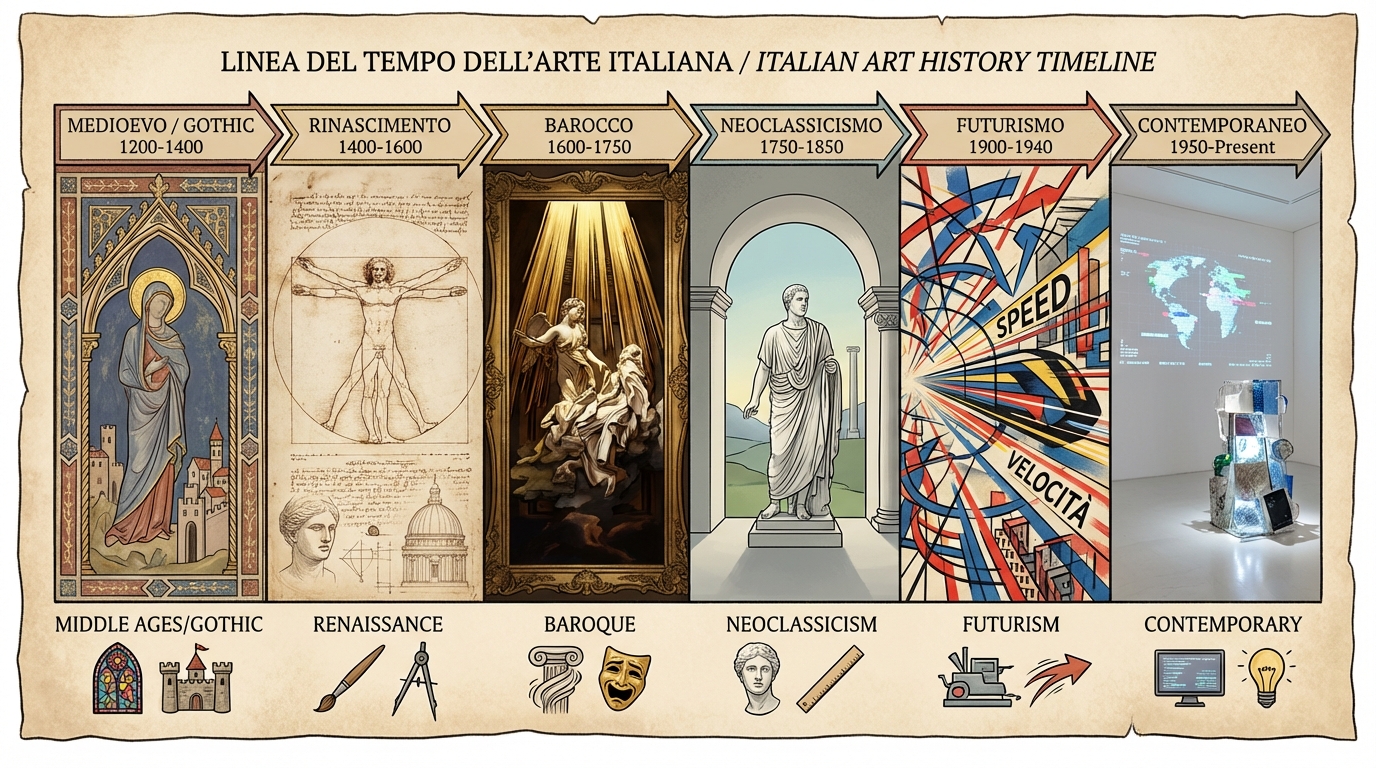
Understanding the timeline of Italian art helps you describe the evolution of beauty in your Cultural Comparison presentations.
The Renaissance (Il Rinascimento):
- Core Concept: Rebirth of classical philosophy, Humanism (Umanesimo), and the centrality of man. Beauty was defined by proportion, balance, and harmony.
- Key Artists: Leonardo da Vinci (sfumato technique), Michelangelo (monumentality), Botticelli (idealized beauty).
- Relevance: Represents the peak of Italian cultural influence worldwide.
The Baroque (Il Barocco):
- Core Concept: A reaction against the balance of the Renaissance. It features dramatic movement, intense emotion, and high contrast between light and dark (chiaroscuro).
- Key Artists: Caravaggio (painting), Bernini (sculpture).
Futurism (Il Futurismo):
- Core Concept: An early 20th-century movement that rejected the past and celebrated technology, speed, violence, and the industrial city.
- Key Artists: Umberto Boccioni, Giacomo Balla.
- Relevance: Important for contrasting "traditional" Italy with "modern/industrial" Italy.
Performing Arts: Opera and Cinema
Opera (L'Opera Lirica)
Opera is not just music in Italy; it is a fundamental part of the national history. During the Risorgimento (the unification interaction), opera served a political purpose.
- Giuseppe Verdi: His music became the soundtrack of Italian unification. The acronym V.E.R.D.I. stood for Vittorio Emanuele Re D'Italia.
- The Experience: Going to La Scala in Milan or La Fenice in Venice is a social ritual requiring specific etiquette and dress code, tying into the concept of la bella figura.
Italian Cinema (Il Cinema)
Cinema accounts for a large portion of the "Interpretive Communication" section of the exam. Focus heavily on Neorealism (Il Neorealismo).
- Definition: A movement emerging after WWII using non-professional actors and shooting on location to show the poverty, desperation, and moral confusion of post-war Italy.
- Key Work: Ladri di biciclette (Bicycle Thieves) by Vittorio De Sica.
- Modern Cinema: Directors like Roberto Benigni (La vita è bella) and Paolo Sorrentino continue to explore Italian identity, often mixing the tragic with the comic.
Literature and Literary Movements (Letteratura e movimenti letterari)
Literature in this unit is viewed through the lens of aesthetics: How do writers describe beauty, nature, and the human form?
The Three Crowns (Le Tre Corone)
The foundation of the Italian language and literary aesthetic was laid by three Tuscans in the 14th century.
- Dante Alighieri: Known as the "Father of the Italian Language." His Divina Commedia established the Tuscan dialect as the standard for literary Italian.
- Francesco Petrarca: His sonnets perfected the lyrical style. He created the model for describing female beauty (The "Petrarchan Ideal": blonde hair, fair skin, angelic nature).
- Giovanni Boccaccio: Wrote the Decameron, prose that focused on human wit and earthly experiences rather than just spiritual ones.
Theater: From Masks to Metatheater
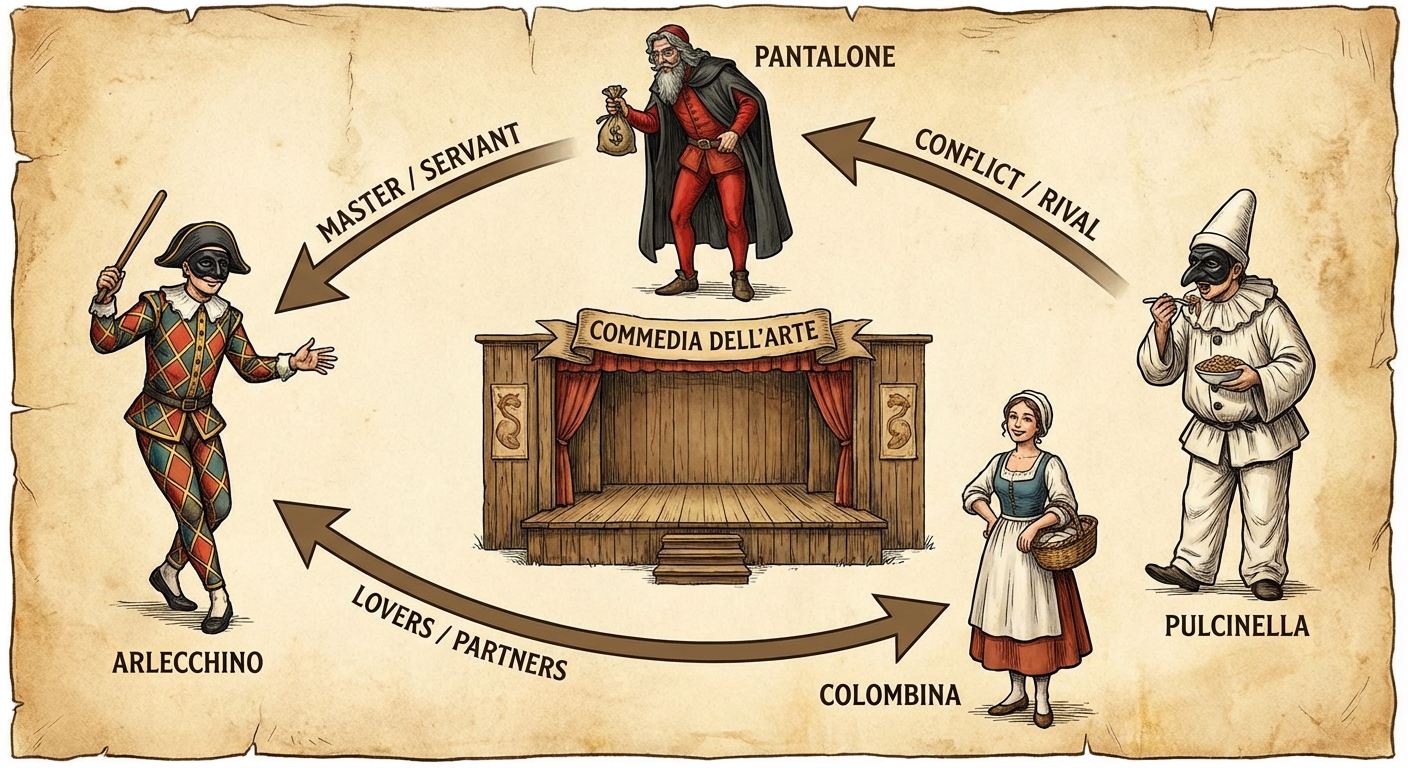
Commedia dell'Arte
Originating in the 16th century, this is essential for understanding Italian humor and regional stereotypes.
- Structure: Based on improvisation (improvvisazione) using a loose plot outline called a canovaccio.
- Stock Characters (Maschere):
- Arlecchino (Harlequin): The hungry, tricky servant from Bergamo.
- Pantalone: The greedy, old merchant from Venice.
- Pulcinella: The philosophical, lazy figure from Naples.
Luigi Pirandello
A Nobel Prize winner who revolutionized modern theater. His central theme is identity vs. appearance (masks). He argues we wear different "masks" depending on who observes us, making truth subjective.
Ideals of Beauty Across Cultures (Ideali di bellezza)
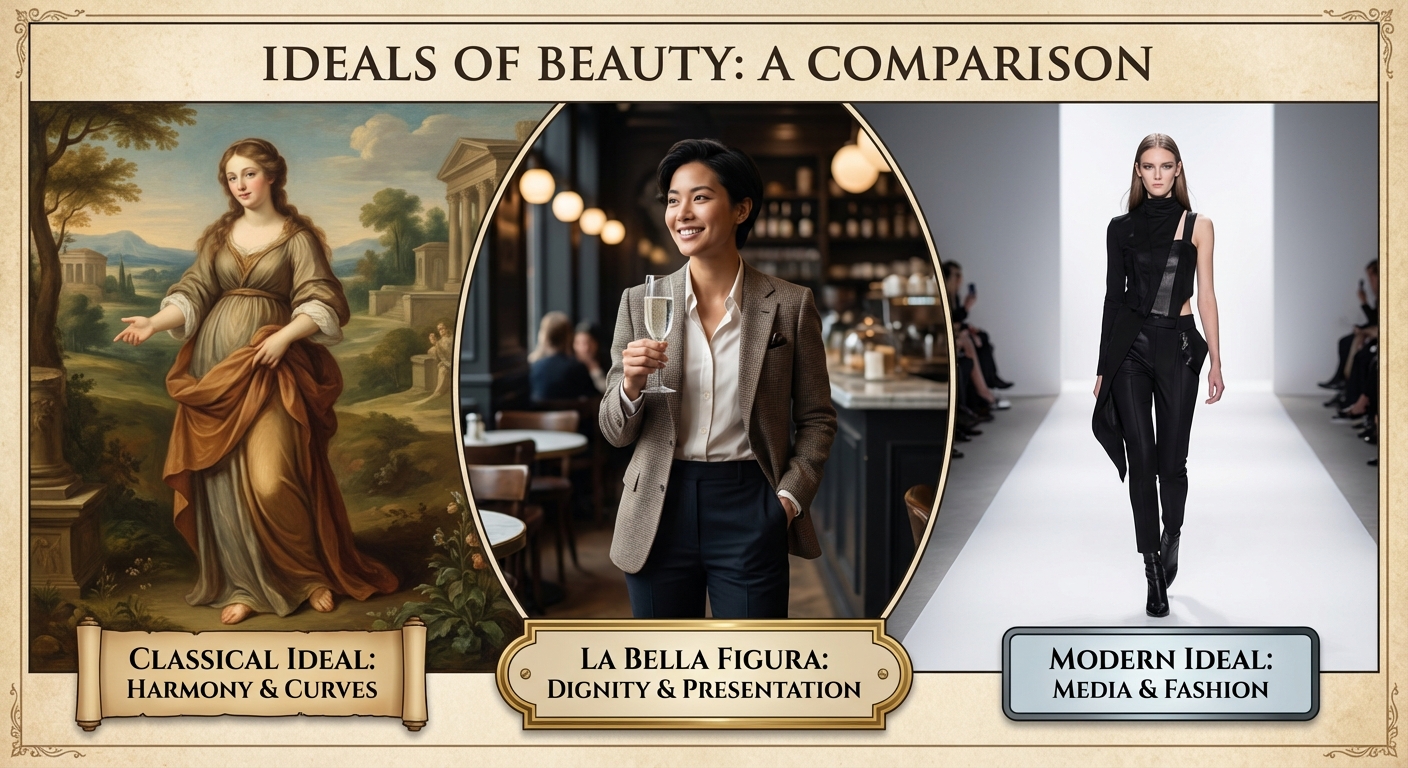
This section is the most likely candidate for the Cultural Comparison speaking task. You must be able to compare historical Italian beauty standards with modern ones, or Italian standards with those in your own community.
Evolution of Beauty Standards
| Era | Ideal of Beauty (L'ideale di bellezza) | Key Features | Cultural Context |
|---|---|---|---|
| Classical/Renaissance | Harmony & Proportion | Full-figured bodies, pale skin, symmetry. | Wealth meant having enough to eat; pale skin meant not working in the fields. |
| Modern Era (20th Century) | The "Diva" | Curvaceous but toned (e.g., Sophia Loren). | Post-war economic boom; celebration of femininity. |
| Contemporary | The "Fashion" Look | Very thin, tall, androgynous. | Influence of mass media, La Settimana della Moda (Milan Fashion Week). |
The Concept of "La Bella Figura"
This is a critical cultural concept that confuses many students. It does not simply mean "beautiful figure" (body shape).
- Definition: La bella figura is the Italian philosophy of presenting oneself well to the world. It encompasses how you dress, how you behave, and your public reputation.
- Application:
- Dressing formally for a simple evening stroll (la passeggiata).
- Avoiding public conflict or drunkenness to maintain dignity.
- Contrast: The opposite is fare una brutta figura (making a bad impression), which is socially shameful.
Beauty in Daily Life
In Italy, aesthetics are applied to functional objects. This is evident in:
- Industrial Design: Brands like Ferrari, Vespa, and Alessi mix high functionality with sleek lines.
- Fashion: Milan is one of the "Big Four" fashion capitals. Italians often view fashion as a cultural heritage and a duty, rather than just a hobby.
Common Mistakes & Pitfalls
Translating "Bella Figura" Literally:
- Mistake: Thinking it refers only to physical weight or attractiveness.
- Correction: Use it to refer to image, dignity, and social etiquette.
Ignoring Regional Differences in Art:
- Mistake: Treating Italian art as a monolith.
- Correction: Remember that mosaics are typical of Ravenna/Sicily (Byzantine influence), while marble sculpture is associated with Tuscany/Carrara. Mentioning regional distinction scores high points for "Cultural Knowledge."
Overlooking "Il Made in Italy":
- Mistake: Discussing art only in museums.
- Correction: In your cultural comparisons, connect historical art to modern craftsmanship. The "Made in Italy" brand (leather, cars, fashion) is the modern evolution of the Renaissance artisan tradition.
Confusing Dates of Movements:
- Mistake: Placing Dante in the Renaissance.
- Correction: Dante is late Middle Ages (Trecento). The Renaissance (Rinascimento) typically starts in the 1400s (Quattrocento).