AP Italian Unit 5: Factors That Impact the Quality of Life (Qualità della vita)
Introduction to Quality of Life
The central theme of Unit 5 is Quality of Life (La qualità della vita). This unit explores how geography, education, employment, social customs, and housing affect the well-being of Italians. To succeed on the AP exam, you must understand not just what Italians do, but why they do it and how their lifestyle choices differ from or resemble those in your own community.
In Italy, quality of life is measured not strictly by income, but by a balance of:
- Health and Wellness (Salute e Benessere)
- Social Connections (Rapporti Sociali)
- Work-Life Balance (Equilibrio tra lavoro e vita privata)
- Cultural Engagement (Impegno culturale)
Education and Requirements for Work
The Italian School System (Il Sistema Scolastico)
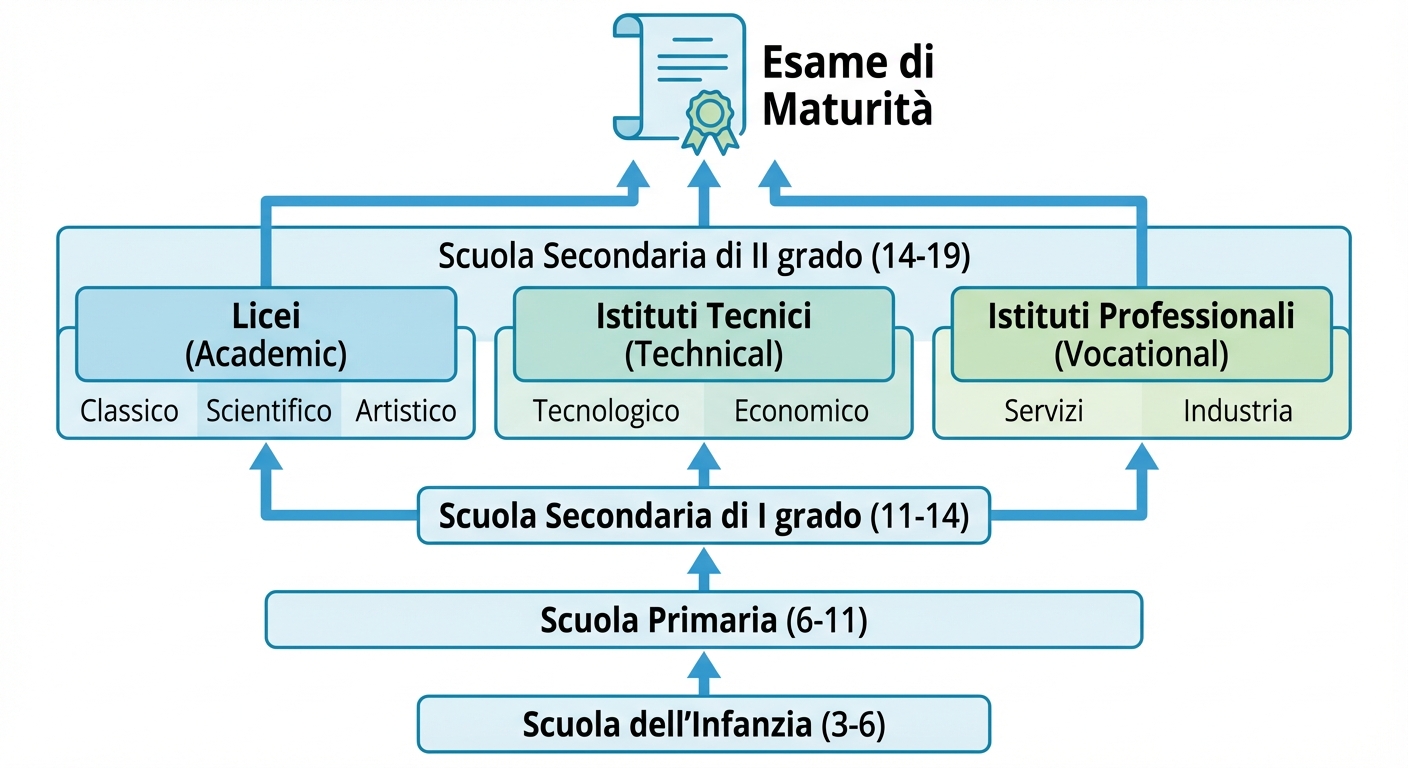
Unlike the comprehensive high school model common in the US, the Italian system requires students to specialize early. This structure heavily impacts career paths and quality of life.
School Cycles:
- Scuola dell'infanzia (Preschool - optional but popular)
- Scuola primaria (Elementary school - 5 years)
- Scuola secondaria di primo grado (Middle school - 3 years)
- Scuola secondaria di secondo grado (High school - 5 years)
The Big Choice: At age 14, students choose a specific track:
- Liceo: Academic preparation for university (e.g., Classico for humanities, Scientifico for STEM, Linguistico for languages).
- Istituto Tecnico: Technical education combining theory and practice (e.g., economics, tourism).
- Istituto Professionale: Vocational training for immediate workforce entry.
L'Esame di Maturità: The rigorous state exam at the end of high school. It is a major rite of passage (rito di passaggio) in Italian culture, much more stressful and formal than US graduation.
The University and Employment
- University Structure: Italy follows the Bologna Process (3 years for a Laurea Triennale + 2 years for a Laurea Magistrale).
- The Job Market (Il Mercato del Lavoro):
- Precariato: A key term describing the state of job insecurity. Many young Italians work on short-term, temporary contracts rather than permanent ones (posto fisso).
- Disoccupazione Giovanile: Youth unemployment is historically high, particularly in the South (Mezzogiorno).
- La Fuga di Cervelli (Brain Drain): Many highly educated Italians emigrate to Northern Europe or abroad to find better wages and meritocratic opportunities.
Social Customs, Traditions, and Leisure
The Rhythm of Daily Life
Quality of life in Italy is often defined by a slower pace and prioritizing socialization over productivity.
- La Pausa Pranzo: The lunch break is traditionally long (though shortening in big cities like Milan). Offices and shops in smaller towns may close from 1:00 PM to 3:30 PM (riposo).
- La Passeggiata: An evening ritual where locals dress up and walk through the town center to see and be seen. It fosters a sense of community belonging.
- Il Bar: The center of social life. Breakfast is quick (caffè e cornetto standing at the counter), but the bar serves as a meeting point all day.
Festivals and Celebrations
Italians maintain strong ties to local traditions, which reinforces regional identity.
- Sagre: These are local food festivals dedicated to a specific regional product (e.g., Sagra del Tartufo or Sagra del Carciofo). They are vital for local economies and preserving culinary heritage.
- Patron Saints (Santi Patroni): Every city has a patron saint (e.g., San Gennaro for Naples, San Giovanni for Florence). The saint's feast day is a local public holiday, often more significant locally than national holidays.
- Ferragosto (August 15th): The peak of summer vacation. Cities empty out as Italians flock to beaches or mountains. It symbolizes the sacredness of rest (il riposo) in Italian culture.
Housing and Urban Life
Living Arrangements
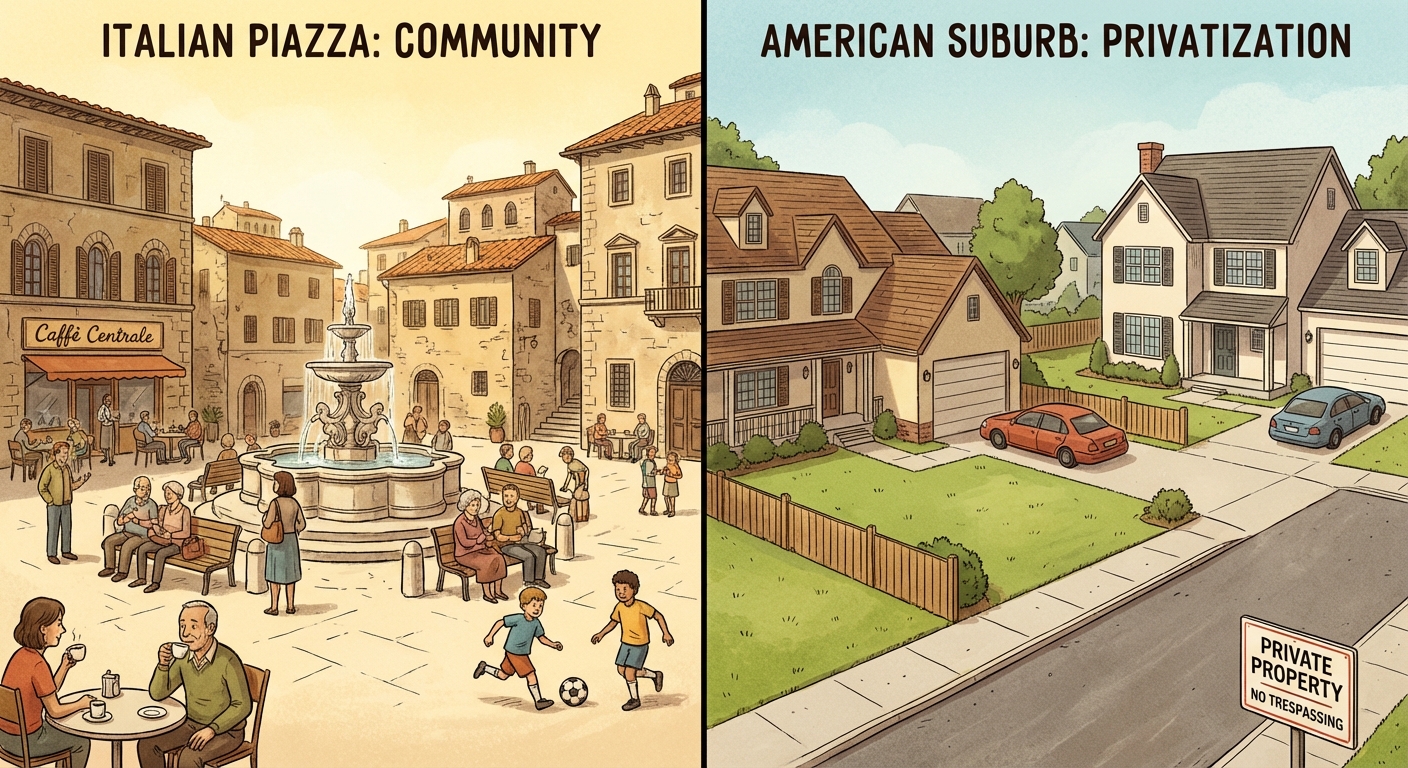
- Apartment Living: The vast majority of Italians live in apartments (appartamenti or condomini), even in smaller towns. Single-family homes with large yards are rare and usually found only in the countryside.
- Living with Parents: Young adults often live with their parents into their 30s. While often stereotyped as mammoni (mama's boys), this is primarily due to economic factors: high rent, unstable jobs, and the difficulty of getting a mortgage.
City Design and Social Interaction
- The Piazza: The central square is the "living room" of the town. It is a public space designed for interaction, political protests, and concerts. This contrasts with the US suburbs, where social life often happens in private homes.
- Centro Storico vs. Periferia:
- Centro Storico: Beautiful, historic, walkable, but often expensive and lacking parking.
- Periferia (Suburbs/Outskirts): More modern, affordable housing, but often lacks the charm and community feel of the center. Can be associated with isolation or social degradation in larger cities.
Health, Sports, and Wellness
Diet and Lifestyle
- La Dieta Mediterranea: Recognized by UNESCO as Intangible Cultural Heritage. It focuses on plant-based foods, olive oil, moderate wine, and fresh, seasonal ingredients (prodotti di stagione). It is a major factor in Italy's high life expectancy.
- Km 0 (Chilometro Zero): A popular movement promoting locally sourced food to ensure freshness and reduce environmental impact.
Sports (Lo Sport)
- Calcio (Soccer): More than a hobby; it is a unifying cultural passion. Sunday matches dominate conversations.
- Other Popular Sports: Cycling (Ciclismo), Volleyball (Pallavolo), and Basketball.
- Wellness Culture: In recent years, there has been a surge in gym memberships and jogging, particularly in Milan and Rome, moving away from purely "incidental exercise" (walking everywhere) to structured fitness.
Geography and Economy: The North-South Divide
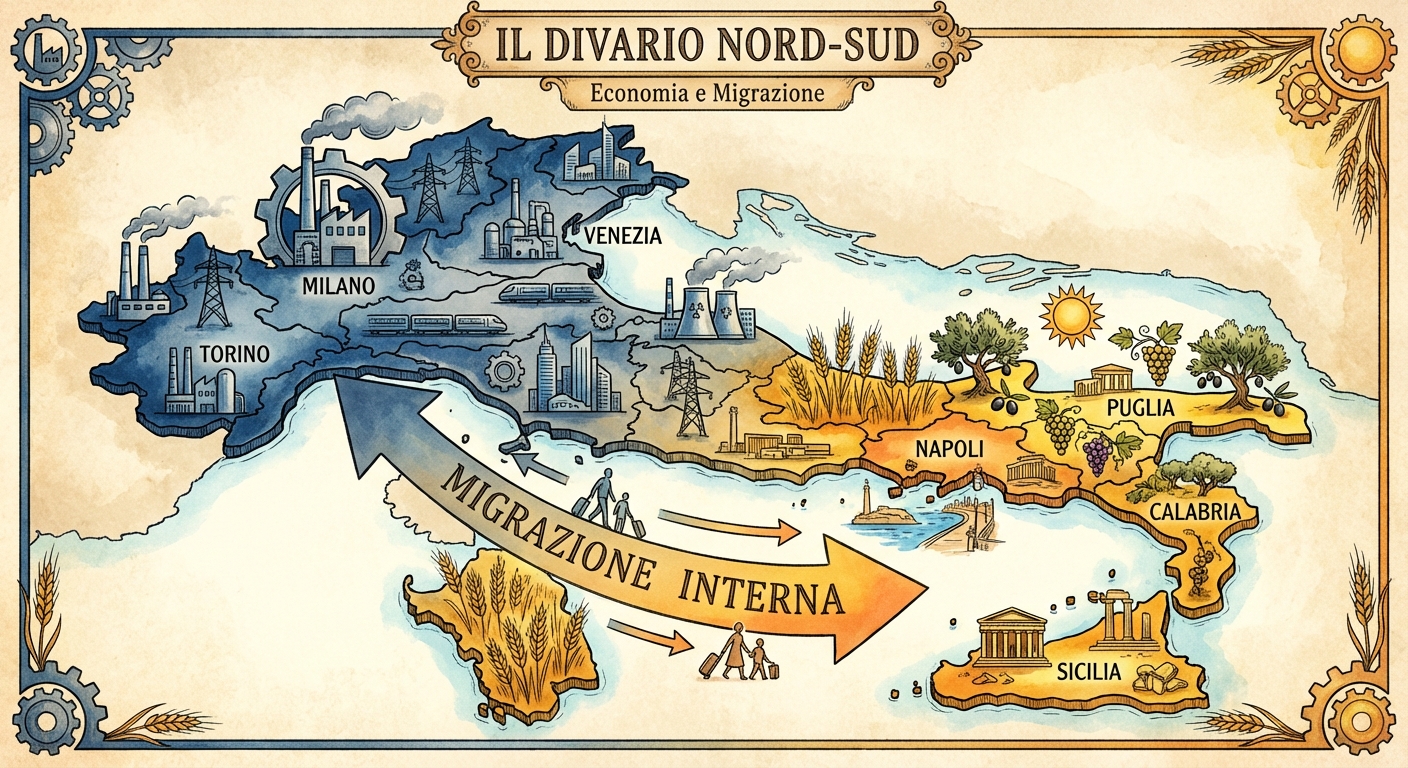
This is a critical concept for the AP exam. Usage of the term "La Questione Meridionale" generally refers to the economic gap between the North and South.
| Feature | Northern Italy (Il Settentrione) | Southern Italy (Il Mezzogiorno) |
|---|---|---|
| Economy | Industrial, Service-based, Wealthier | Agricultural, Tourism-based, Higher Unemployment |
| Life Pace | Faster, "European" efficiency | Slower, Traditional, Focus on extended family |
| Infrastructure | High-speed trains, modern hospitals | Often lacks maintenance, transport can be slower |
| Work | Milan is the economic capital | Dependence on seasonal work (tourism/farming) |
Impact on Quality of Life: While the North offers better jobs, people in the South often report strong social support networks and a less stressful lifestyle, despite economic hardships.
Common Mistakes & Pitfalls
1. Vocabulary False Friends
- Parenti vs. Genitori: Genitori are parents (mom/dad). Parenti are relatives (extended family). Don't say "Vivo con i miei parenti" if you mean your mom and dad.
- Fattoria vs. Fabbrica: Fattoria is a farm. Fabbrica is a factory. The North has many fabbriche; the countryside has fattorie.
2. Stereotyping
- Mistake: Assuming all Italians take a 3-hour nap in the afternoon.
- Correction: Mention that while the pausa pranzo exists, modern life in cities like Milan is very similar to New York or London. Nuance is key for AP scores.
3. Education Comparisons
- Mistake: Saying Italian schools have Prom or school sports teams.
- Correction: Italian schools generally do not have school mascots, varsity teams, or Prom. Sports happen in private clubs outside of school.
Practice Essential Questions
Preparing for the Cultural Comparison (Task 4 of the AP Exam)? Try answering these:
- Housing: Come influisce il luogo in cui si vive (città vs. campagna) sulla routine quotidiana in Italia rispetto alla tua comunità? (How does where one lives influence daily routine in Italy vs. your community?)
- Health: Qual è il ruolo del cibo nella salute e nella vita sociale degli italiani rispetto alla gente del tuo paese? (What is the role of food in health and social life for Italians vs. people in your country?)
- Work: Quali sfide affrontano i giovani italiani nella ricerca del lavoro e come si confronta questa situazione con quella dei giovani nella tua società? (What challenges do Italian youth face in finding work and how does this compare to youth in your society?)
Memory Aid for the Mediterranean Diet
Remember "O.P.E.N." to recall why the diet is healthy:
- Olive Oil (Healthy fats)
- Plant-based (Fruits/Veggies/Legumes)
- Eat Seasonally (Prodotti di stagione)
- No Processed Foods (Focus on fresco)