Advanced Study Guide: The Tragedy of Dido, The Underworld, and the War for Italy
Book 4: The Tragedy of Dido and Aeneas
This section of the Aeneid represents the height of the Odyssean half of the epic (Books 1–6). It explores the conflict between personal desire and public duty. Book 4 is structured as a tragedy, documenting the rise and catastrophic fall of Queen Dido.
The Cave and The "Marriage" (Lines 160–172)
During a hunt organized to cement the alliance between Weird Trojans and Carthaginians, Juno (seeking to keep Aeneas from Italy) and Venus (seeking safety for her son) conspire to bring the couple together.
- The Storm: Juno sends a storm, scattering the hunting party.
- The Union: Dido and Aeneas take shelter in the same cave. Vergil uses primal imagery: Earth (Tellus) and Juno give the signal; lightning flashes as "nuptial torches"; Nymphs howl from the peaks.
- Dido’s Perspective: She calls this union coniugium (marriage) to screen her guilt (culpam).
- Vergil's Commentary: Ille dies primus leti primusque malorum causa fuit (That day was the first cause of death and of evils).
Rumor Fama (Lines 173–197)
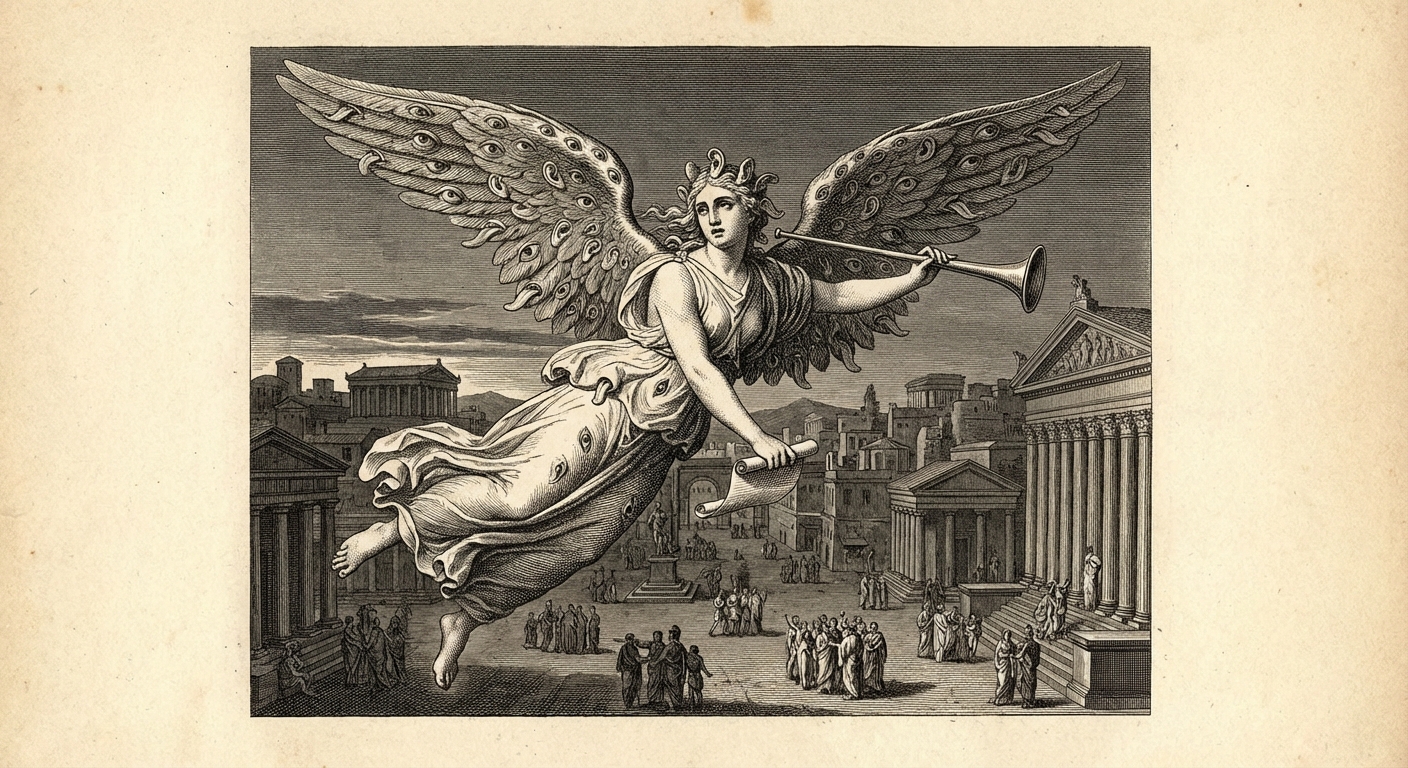
Immediately following the cave scene, Vergil introduces the personification of Fama (Rumor/Gossip).
- Description: Fama is a swift monster with as many eyes, tongues, and ears as she has feathers. She flies by night and sits on rooftops by day.
- Function: She mixes truth (vero) with fiction (ficti). She spreads the salacious news to King Iarbas (a rejected suitor of Dido), inciting his anger and prayer to Jupiter.
Mercury’s Intervention (Lines 259–278)
Jupiter hears Iarbas and sends Mercury to Carthage. Mercury finds Aeneas supervising the construction of Carthage’s walls, wearing a cloak made by Dido and a sword studded with jasper—symbols that he has become "Tyrian" and forgotten his own destiny.
- Key Concept: Obliviscere: Mercury scolds Aeneas for being uxorius (excessively devoted to a wife/woman) and forgetting his duty to his son, Ascanius (Iulus).
- The Ultimatum: If Aeneas won't seek glory for himself, he must not rob Ascanius of the Roman fields (Regnum Italiae).
The Confrontation (Lines 305–361)
Aeneas prepares to leave secretly, but Dido senses it immediately (quis fallere possit amantem? - who can deceive a lover?).
Dido’s Speech (The Prosecution):
- Accuses him of betrayal (perfide) and trying to sneak away.
- Appeals to emotions: Their right hands joined, their "marriage," and the fact that she has destroyed her reputation and safety for him.
- Rhetorical Question: Why does he flee? (Mene fugis?)
Aeneas’s Defense (The Rebuttal):
- Stoic Suppression: He struggles to hide his pain (premebat curam).
- Logical Defense:
- He never denied she deserved thanks.
- He never held the "torches of a husband" (denies the legal marriage).
- If he had free will, he would restore Troy, not go to Italy.
- The gods (Mercury/Jupiter) command it.
- Famous Line: Italiam non sponte sequor ("I do not pursue Italy of my own free will").
Suicide and Curriculum (Lines 659–705)
Dido constructs a pyre under the pretense of a magic ritual to forget Aeneas. She climbs atop it, stabbing herself with Aeneas’s sword.
- The Curse: Before dying, she curses Aeneas, prophesying eternal enmity between their peoples (Rome vs. Carthage/Punic Wars).
- Iris’s Descent: Because Dido died "neither by fate nor by a deserved death" (nec fato merita nec morte), but by sudden madness (furor), Proserpina had not yet cut a lock of her hair to release her soul. Juno sends Iris to cut the lock and release Dido to the winds.
Book 6: The Underworld and Roman Destiny
This book serves as the pivot from the Odyssean journey to the Iliadic war in Italy. Aeneas descends into the underworld to receive a final mandate from his father, Anchises.
The Crossing (Lines 295–332, 384–425)
Aeneas and the Sibyl approach the River Styx.
- Charon: The ferryman is described with "squalid" imagery (filthy beard, fire staring from his eyes). He initially refuses to take a living man.
- The Unburied: Aeneas sees souls pleading to cross. The Sibyl explains that only the buried may cross; the others must wander for 100 years.
- The Golden Bough: The Sibyl reveals the Golden Bough hidden in her robe. This token silences Charon, and he transports them across.
Encounter with Dido (Lines 450–476)
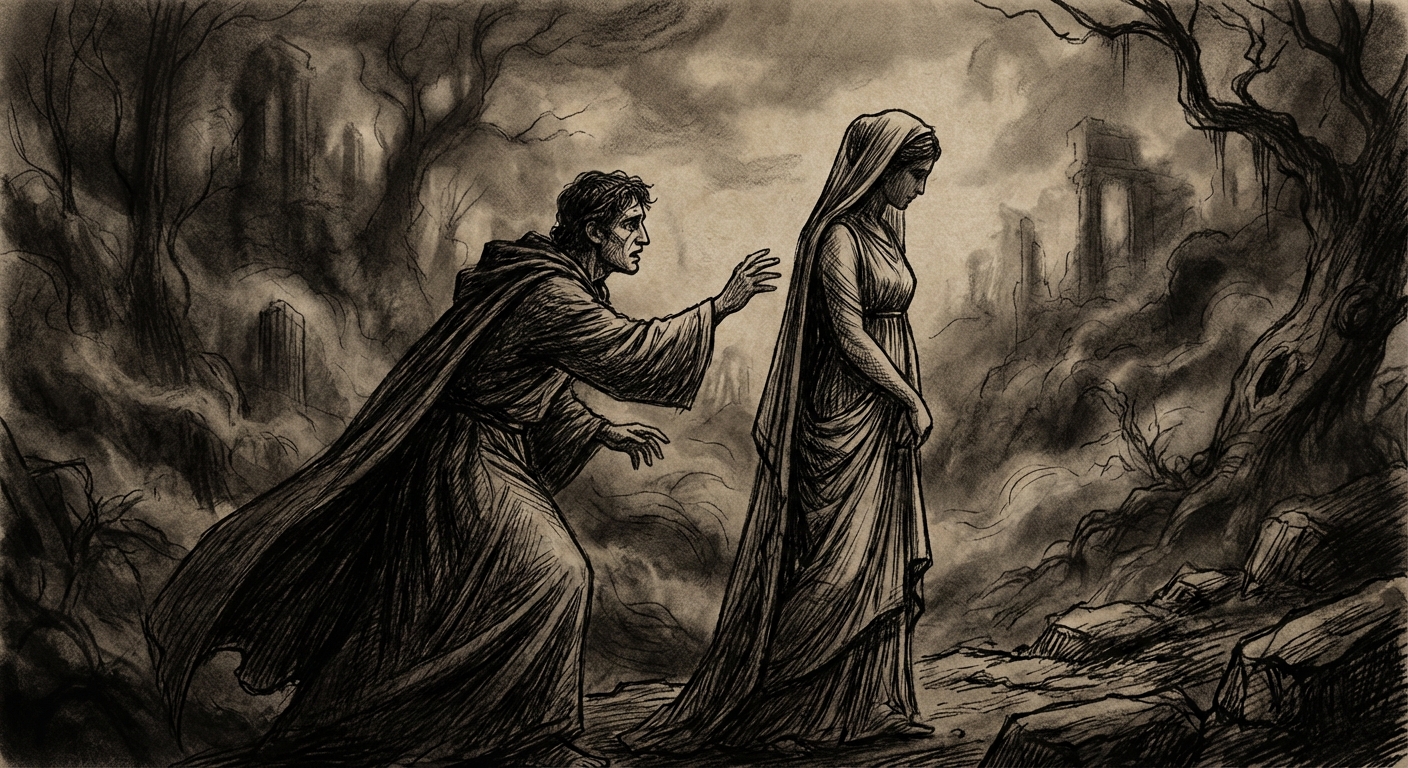
In the Lugentes Campi (Fields of Mourning), Aeneas spots Dido.
- Allusion: The scene mirrors Book 4 but roles are reversed. Aeneas weeps and speaks; Dido stays silent.
- Justification: Aeneas swears by the stars and gods that he left unwillingly (invitus).
- Rejection: Dido stands like "Marpesian flint" (cauter) and turns away to Sychaeus, her first husband. This is the only character in the epic who successfully refuses to engage with Aeneas.
Anchises and the Parade of Heroes (Lines 847–899)
In Elysium, Anchises shows Aeneas a parade of future Roman souls waiting to be born. This is the theological justification for the Roman Empire.
The Roman Mission: While Greeks may be better sculptors or astronomers, the Roman art is:
Hae tibi erunt artes, pacique imponere morem,
parcere subiectis et debellare superbos.
("These will be your arts: to impose the custom of peace, to spare the conquered, and to crush the arrogant.")Marcellus: The parade ends on a somber note with the Younger Marcellus (Augustus's nephew and heir who died young). This connects the mythological past directly to the contemporary grief of the Augustan regime.
The War in Italy (Context for Books 7, 11, 12)
Books 7–12 cover the Iliadic half of the Aeneid: War in Latium. Aeneas is no longer the wanderer; he is the invader.
Book 7: The Causes of War
- Latinus and Lavinia: King Latinus rules Latium. An oracle says his daughter, Lavinia, must marry a foreigner (Aeneas). Turnus, a local Rutulian prince, was previously betrothed to her.
- Juno and Allecto: Juno summons the Fury Allecto to infect Queen Amata (Lavinia's mother) and Turnus with furor. Allecto also causes Ascanius to accidentally kill a pet stag, sparking the first skirmish.
- The Gates of War: Latinus refuses to declare war, so Juno physically bursts open the Gates of War herself.
Book 11: Camilla and the Sorrow of War
After the death of Pallas (Aeneas's ally), a truce allows for burial of the dead. Understanding the cost of war is a major objective here.
- Camilla: A Volscian warrior queen (an Amazon figure) fights for the Latins. She is unstoppable until distracted by the shiny armor regarding a priest, allowing Arruns to kill her.
- Significance: Her death removes the last major defense before Turnus himself. It parallels the tragedy of Dido and Penthesilea.
Book 12: The Final Duel
- The Broken Truce: A duel is arranged between Aeneas and Turnus to settle the war. Juturna (Turnus's divine sister) incites the Rutulians to break the truce. Aeneas is wounded but healed by Venus.
- The Climax: Aeneas chases Turnus. Jupiter and Juno reconcile: Juno agrees to stop fighting if the Trojans drop their name. The new race will be "Latins" (Romans), not Trojans.
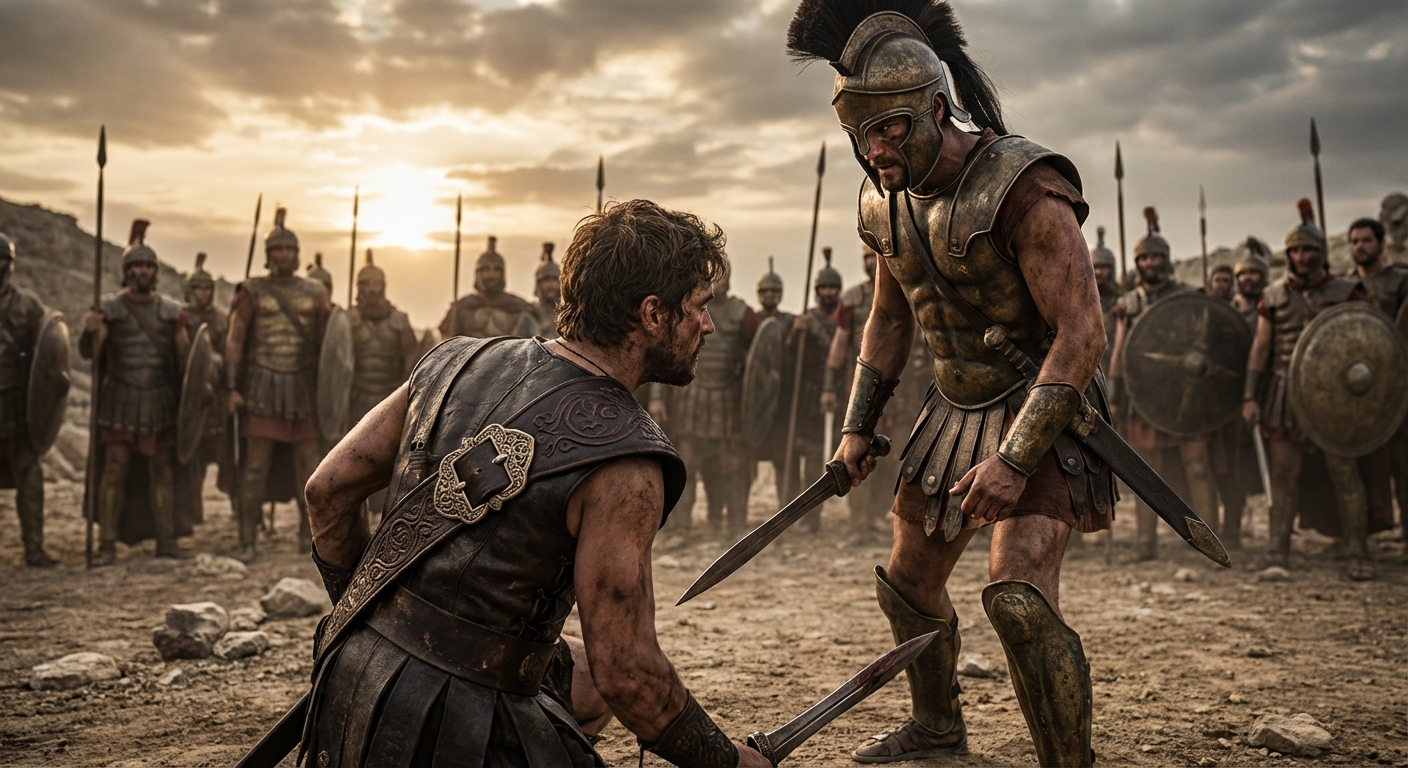
- The Death of Turnus: Aeneas defeats Turnus. Turnus admits defeat and begs to be returned to his father.
- The Decision: Aeneas considers sparing him (showing clementia) until he sees the Belt of Pallas explicitly on Turnus's shoulder.
- The End: Consumed by furor and rage over Pallas, Aeneas stabs Turnus. The epic ends abruptly with Turnus’s soul groaning as it flees to the underworld.
Thematic Analysis & Key Terms
1. Pietas vs. Furor
- Pietas: Duty to gods, family, and country. Aeneas is the embodiment of this (Pius Aeneas), though he struggles with it.
- Furor: Unbridled passion, rage, or madness. Associated with Juno, Dido, Amata, and Turnus.
- The Conflict: The Aeneid asks if pietas can truly conquer furor. The ending (Aeneas killing in rage) suggests the victory is complicated.
2. Ekphrasis
- Definition: A detailed literary description of a work of visual art.
- Key Example: The Shield of Aeneas (Book 8) depicts Roman history (Romulus, Augustus at Actium). Aeneas lifts the shield "ignorant of the history, but rejoicing in the image."
3. Fate (Fatum)
- Fate is immutable in the Aeneid. Jupiter is the administrator of Fate. Humans and gods can delay it (Juno), but they cannot change the outcome.
Common Mistakes & Pitfalls
- Misinterpreting "Pius": Students often think pius means "holy" or "religious." It actually refers to the dutiful fulfillment of obligations to father, gods, and state. Even when Aeneas leaves Dido (an act modern readers hate), he is acting primarily out of pietas toward his son and future Rome.
- Confusing the Speakers: In Book 4, be careful identifying who says what. Dido speaks in emotional, rhetorical questions. Aeneas speaks in defensive, logical statements. Mercury speaks in imperatives.
- The Golden Bough: Students often forget why Aeneas needs it. It is the specific passport required for a living body to cross the Styx.
- The Ending: A common error is assuming the Aeneid ends resolutely. It ends on a cliffhanger of violence. Do not write that "Aeneas lived happily ever after"—the text stops at the death of Turnus.
- Grammar Alert - Subjunctives: Books 4 and 6 are heavy with Indirect Questions and Purpose Clauses. Always check if a verb is subjunctive to determine the nuance of the sentence.