Comprehensive Notes: Shaping Identity in the German-Speaking World
Language and Personal Identity (Sprache und persönliche Identität)
In AP German, understanding the relationship between language and identity is crucial for the Cultural Comparison (Task 4) and the Argumentative Essay. Language is not just a tool for communication; it is often described as Heimat (home) or a key component of one's soul.
The Role of Mother Tongue and Foreign Languages
Identity is often shaped by the language spoken at home (Zuhause) versus the language spoken in public society (Öffentlichkeit).
- Die Muttersprache (Mother tongue): The language of emotional expression, childhood memories, and family bonds.
- Die Fremdsprache (Foreign language): A tool for professional advancement (Berufsaussichten) and global communication.
- Zweisprachigkeit (Bilingualism): Growing up with two languages often results in a "hybrid identity," where a person navigates two cultural worlds.
Key Vocabulary:
- sich identifizieren mit (+ Dat) — to identify with
- die Sprachbarriere — language barrier
- geborgen — secure/safe (feeling at home in a language)
- ausgrenzen — to exclude (someone based on language skills)
Dialects and Regional Identity
Unlike in some English-speaking contexts, Dialekte (dialects) in the DACH region (Germany, Austria, Switzerland) are sources of regional pride, though they function differently in each country.
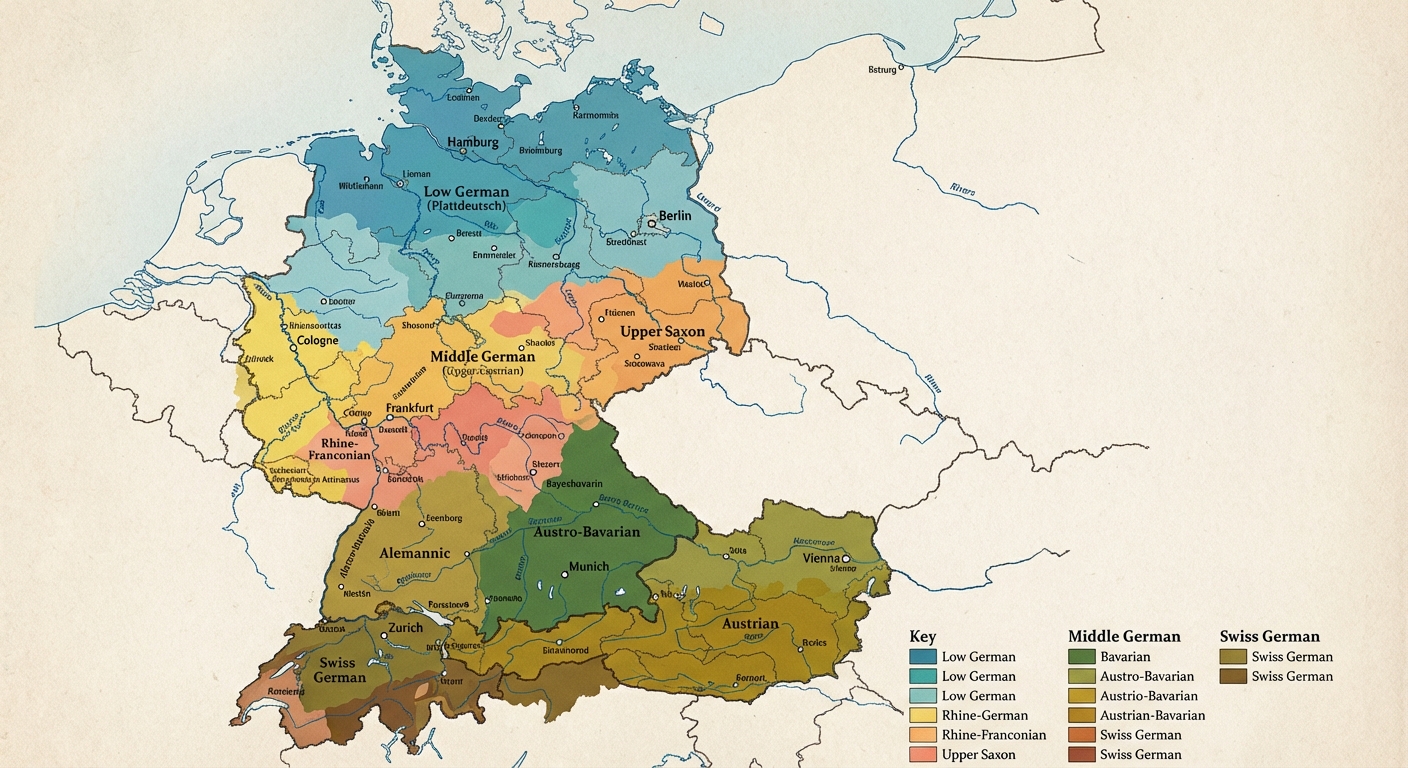
- Germany: There is a tension between Standarddeutsch (Hochdeutsch) and dialects (e.g., Bayerisch, Sächsisch, Plattdeutsch). While dialects are used comfortably in private circles, Hochdeutsch is required for career success (Karriere) and media. Some fear dialects are dying out (aussterben).
- Switzerland: The situation is a Diglossia. Everyone speaks Schweizerdeutsch (Swiss German) in daily life (even on the radio and in parliament), but they write in Standard German (Schriftdeutsch). Swiss German is a massive part of Swiss national identity.
- Austria: A mix of Bavarian-based dialects and a specific Austrian variation of Standard German.
Youth Language and Globalization (Jugendsprache und Denglisch)
Language changes over time (Sprachwandel). Current identity debates often focus on the influence of English.
- Denglisch: The mixing of German and English (e.g., downloaden, das Meeting, chillen). Purists see this as a threat to German identity (Sprachverfall), while pragmatists see it as natural enrichment (Bereicherung).
- Kiezdeutsch: An urban ethnolect spoken in multi-ethnic neighborhoods, simplifying grammar (e.g., dropping prepositions: "Ich geh Bahnhof"). It marks group identity among youth, not necessarily a lack of education.
Cultural Beliefs and Values (Kulturelle Überzeugungen und Werte)
Identity is defined by the unseen values a society holds dear. In the AP exam, avoid superficial stereotypes; look for the deeper values, often visualized using the Iceberg Model of culture.
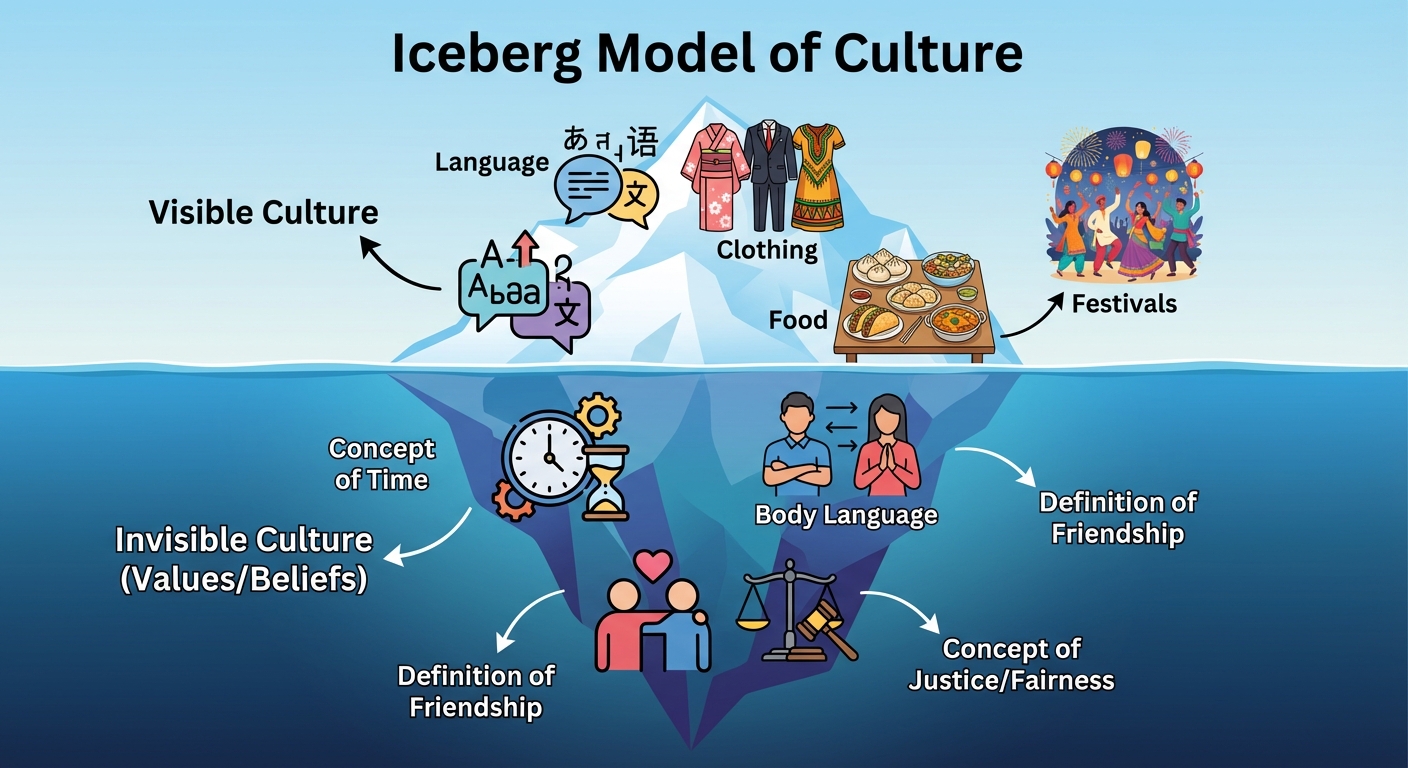
Core Values in the DACH Region
When comparing German culture to your own, consider these fundamental pillars:
Pflichtbewusstsein & Ordnung (Duty & Order):
- There is a high value placed on reliability (Verlässlichkeit).
- German Punctuality (Pünktlichkeit): Being late is perceived as stealing someone else's time. It signals disrespect.
Privatsphäre & Datenschutz (Privacy & Data Protection):
- Germans are notoriously private compared to Americans. There is skepticism toward digital surveillance and Google Street View.
- Friendships take longer to form but are often deeper (Oberflächlichkeit vs. Tiefgründigkeit).
Umweltbewusstsein (Environmental Awareness):
- This is a central part of modern German identity. Recycling (Mülltrennung), passing the Pfand (bottle deposit) system, and the Energiewende (energy transition) are civic duties.
- Bioprodukte: Buying organic is a lifestyle statement.
Feierabend & Work-Life Balance:
- The clear separation between work and private life. When the work day ends (Feierabend machen), business emails are generally ignored.
Stereotypes vs. Reality (Vorurteile vs. Realität)
| Stereotype | Nuanced Reality |
|---|---|
| Germans have no humor. | German humor is often satirical, political, or dry (Kabarett), rather than slapstick. |
| Everyone wears Lederhosen. | This is specific to Bavaria/Austria and festivals (Tracht). Modern Germans dress globally/casually. |
| Germans are cold/rude. | It is often "Directness" (Direktheit). Germans value honesty over polite small talk. |
Multiculturalism and Assimilation (Multikulturalismus und Assimilation)
Since the 1960s, Germany has transformed from a homogeneous society into a country of immigration (Einwanderungsland). This plays a major role in the AP theme "Personal and Public Identities."
Historical Context
- Gastarbeiter (Guest Workers): In the 1960s/70s, workers were invited from Turkey, Italy, and Greece effectively to rebuild the economy (Wirtschaftswunder). The plan was for them to leave; they stayed.
- Migrationshintergrund: A person has a "migration background" if they or their parents were not born with German citizenship. Over 25% of Germany's population falls into this category.
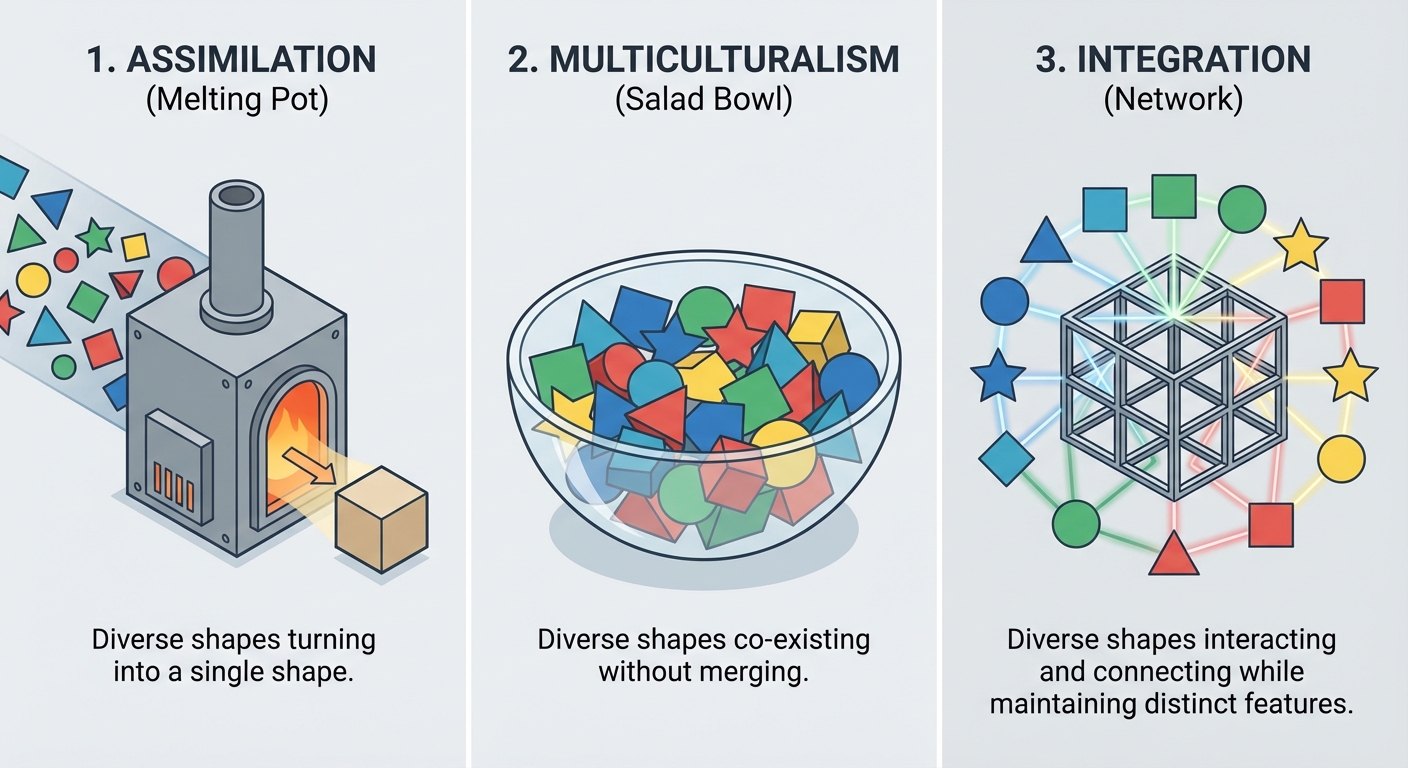
Integration Models
To understand the debate, you must distinguish between these concepts:
- Assimilation: The minority group gives up its cultural identity and adopts the dominant culture completely. (The "Melting Pot" idea, largely rejected in modern Europe).
- Integration: The immigrant participates in society (learns the language, follows laws, works) but retains their cultural roots.
- Parallelgesellschaft (Parallel Society): A negative term used to describe communities that segregate themselves from the mainstream society.
- Leitkultur: A controversial conservative concept suggesting there is a "leading culture" (mainstream German values) that immigrants must adhere to, rather than just multicultural coexistence.
Current Debates (Aktuelle Debatten)
- Doppelpass (Dual Citizenship): Laws have been modernized to allow dual citizenship more easily, acknowledging that identity can be plural.
- Willkommenskultur: Following the 2015 refugee crisis, debate raged between a "culture of welcome" and fears of "Überfremdung" (foreign infiltration).
Common Exam Application (Argumentative Essay):
Common Mistakes & Pitfalls
Confusing Deutsch vs. Deutscher:
- Wrong: "Er ist ein Deutsch."
- Right: "Er ist Deutscher." (He is German - noun). Deutsch is usually the adjective or the language.
Stereotyping in Cultural Comparisons:
- Avoid saying "All Germans do X." Use modifiers: Viele Deutsche (many Germans), Im Allgemeinen (in general), or Es ist üblich (it is common).
Mixing up Integration and Assimilation:
- Do not use them interchangeably. Integration allows for dual identity; Assimilation implies erasing the old identity. The current German goal is usually Integration.
Article Usage with Identity Terms:
- Abstract concepts often need the article in German when they don't in English: "Die Gesellschaft" (Society), "Die Identität" (Identity).