Comprehensive Guide to Unit 9: Globalization and Interactions
9.6 Globalized Culture
Defining Cultural Globalization
Cultural Globalization refers to the transmission of ideas, meanings, and values around the world in such a way as to extend and intensify social relations. In the modern era (c. 1900–present), this process has been accelerated by the Internet, popular culture, and international travel.
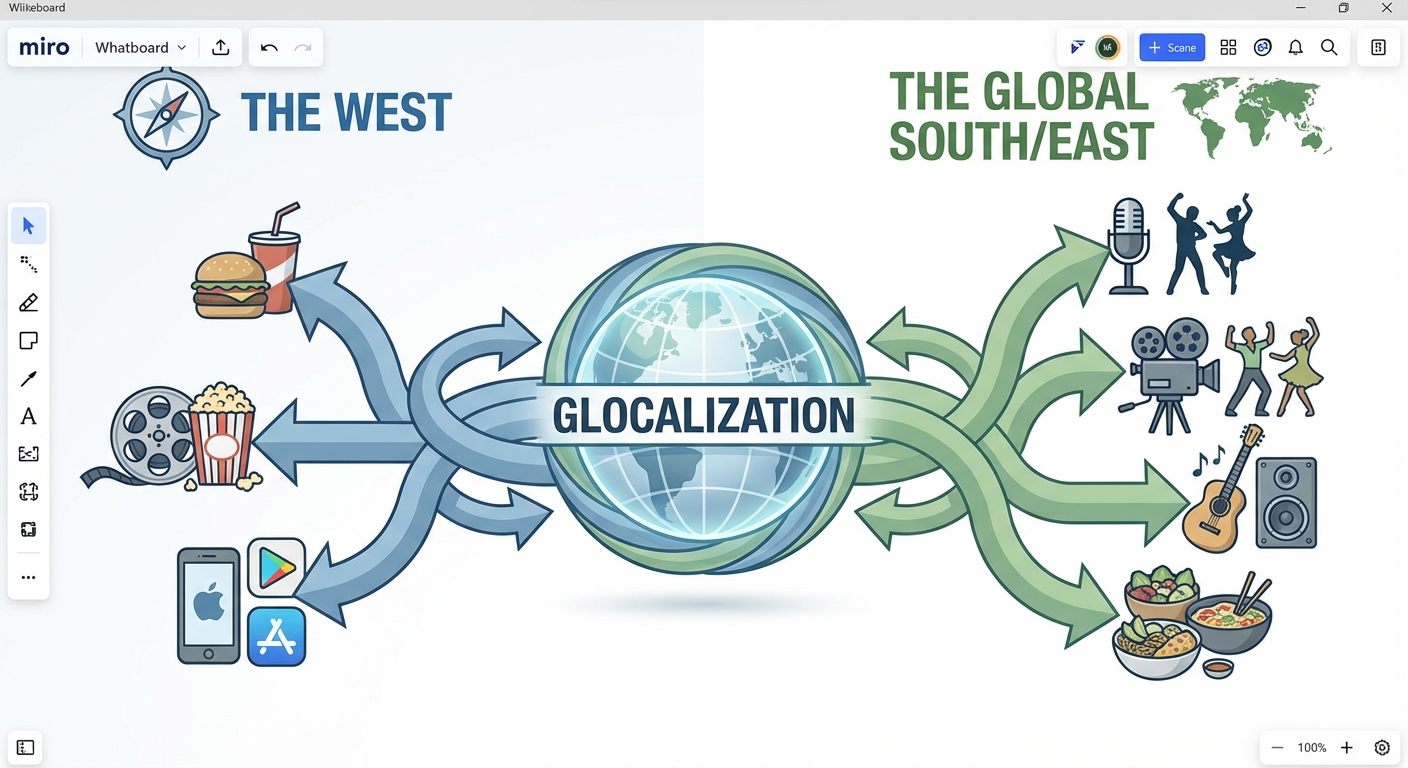
While often criticized as Americanization (the spread of US culture), the process is multidirectional. Non-Western cultures increasingly influence the West, a phenomenon often described as Glocalization (adapting global brands or ideas to local tastes).
Key Aspects of Global Culture
Consumer Culture
- Global brands like Coca-Cola, McDonald's, Toyota, and Nike have created a shared consumer experience across continents.
- E-Commerce: Companies like Amazon and Alibaba have made goods available globally, bypassing traditional retail barriers.
Music and Film
- Reggae: Originating in Jamaica, it evolved from African and Caribbean roots (Bob Marley) to become a worldwide genre addressing social justice.
- K-Pop (Korean Pop): A prime example of non-Western culture gaining massive global traction (e.g., BTS, Blackpink) due to social media and YouTube.
- Bollywood: The Indian film industry creates more movies annually than Hollywood, enjoying immense popularity in South Asia, the Middle East, and Africa.
Sports
- Sports have become a "universal language" facilitating nationalism and international cooperation.
- The Olympic Games: Revived in 1896, they serve as a stage for international competition and diplomacy.
- The FIFA World Cup: Football (soccer) is the world's most popular sport, and the World Cup creates a shared global viewing event.
9.8 Institutions Developing in a Globalized World
Since the end of World War II, the world has seen a shift from purely national governance to international cooperation through specific institutions. These organizations aim to maintain peace, facilitate trade, and solve humanitarian crises.
Political and Peacekeeping Institutions
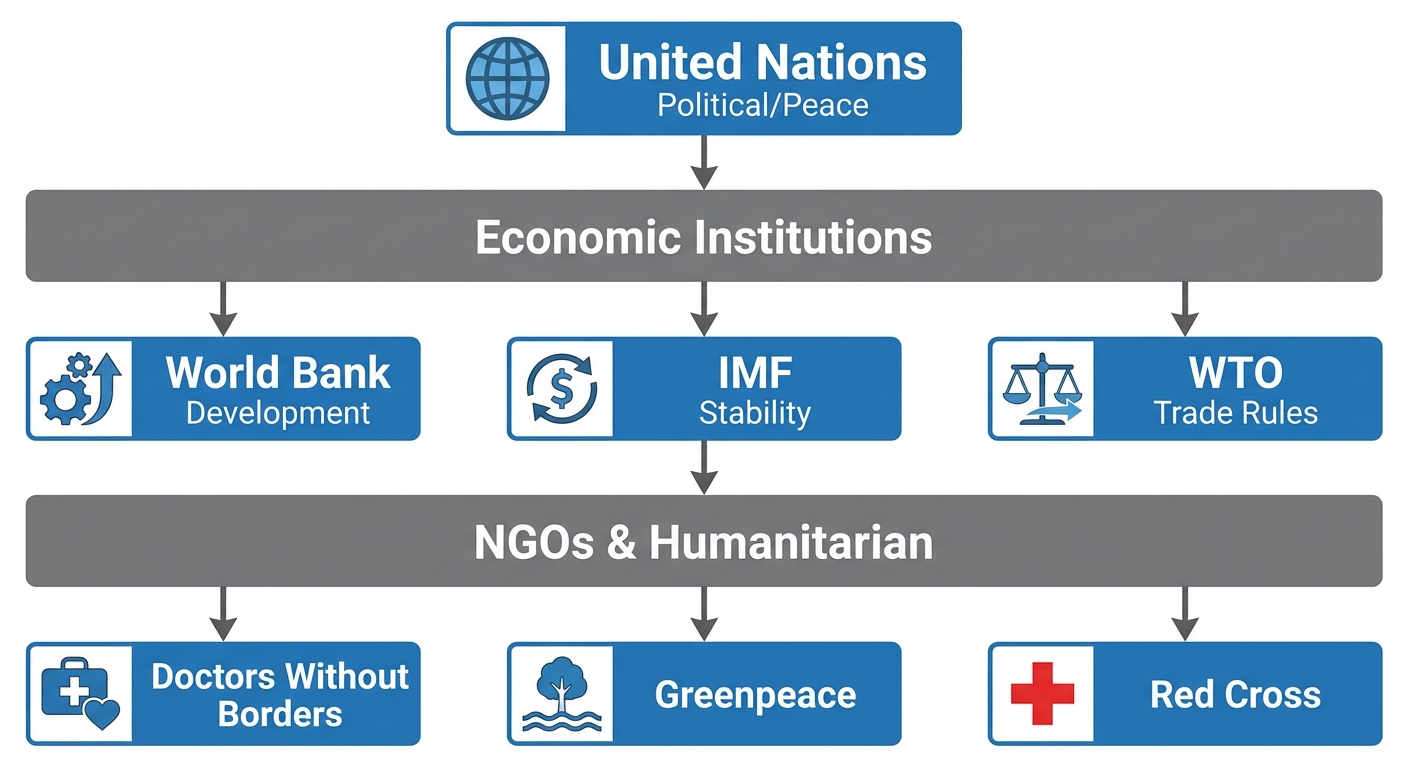
The United Nations (UN)
- Founded: 1945 (replacing the ineffective League of Nations).
- Goal: To maintain international peace, promote human rights, and facilitate cooperation.
- Structure:
- General Assembly: All member nations discuss global issues.
- Security Council: 5 permanent members (US, Russia, China, UK, France) with veto power; responsible for peace and security.
- Peacekeeping Forces: Often called "Blue Helmets," these troops are deployed to conflict zones (e.g., Rwanda, Bosnia) to protect civilians and maintain stability, though their effectiveness has been debated.
Global Economic Institutions
These institutions largely advocate for Free Market Economics and Neoliberalism (reducing trade barriers and privatization).
| Institution | Acronym | Primary Function |
|---|---|---|
| World Trade Organization | WTO | Regulates international trade rules to ensure trade flows smoothly, predictably, and freely. Replaced GATT in 1995. |
| International Monetary Fund | IMF | Promotes global financial stability and exchange rates. Provides short-term loans to countries in economic crisis to prevent currency collapse. |
| World Bank | WB | Focuses on poverty reduction. Provides long-term loans and grants to developing countries for infrastructure and development projects. |
Humanitarian and Non-Governmental Organizations (NGOs)
NGOs operate independently of any government to address social or environmental issues.
- International Committee of the Red Cross/Red Crescent: Provides humanitarian aid during war and natural disasters.
- Greenpeace: Focuses on environmental campaigning (climate change, deforestation).
- Doctors Without Borders (Médecins Sans Frontières): Provides medical care in conflict zones and epidemics (e.g., the Cholera outbreak in Haiti, Ebola in West Africa).
9.7 Resistance to Globalization
Not everyone benefits largely from globalization. While it has created wealth, it has also increased inequality and environmental degradation. Critics act through protests, art, and political movements.
Reasons for Resistance
- Economic Inequality: Critics argue that the IMF and World Bank favor wealthy nations and corporations over the local poor (Global North vs. Global South divide).
- Labor Exploitation: Free trade agreements often lead to outsourcing jobs to countries with few labor protections ("sweatshops").
- Environmental Degradation: Shipping goods globally increases carbon footprints, and multinational corporations often extract resources from developing nations unsustainably.
- Loss of Sovereignty: Countries may be forced to cut social spending (austerity) to meet IMF loan requirements.
Major Examples of Resistance
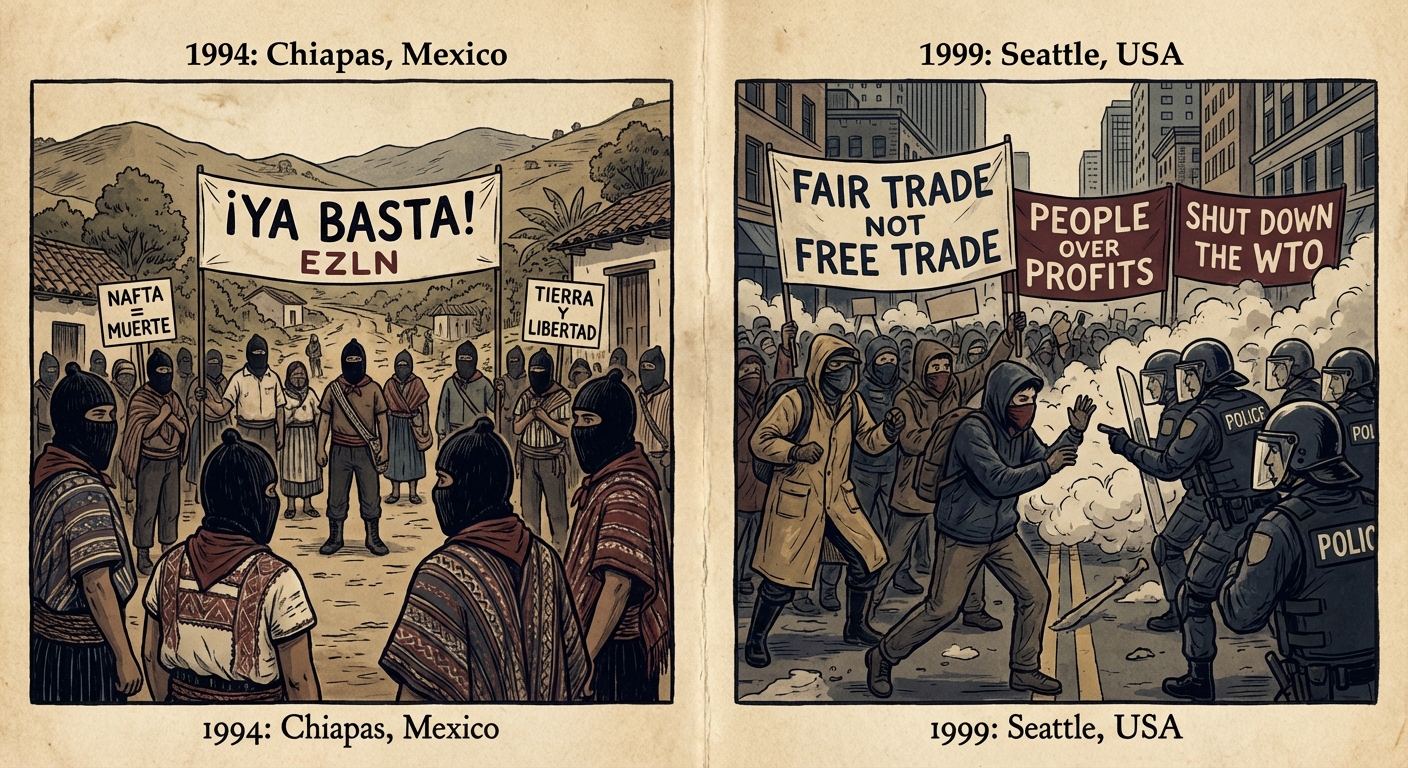
The Battle of Seattle (1999):
- A massive protest against the World Trade Organization (WTO) conference in Seattle.
- Coalition: Labor unions, environmentalists, and human rights groups united to disrupt the meeting.
- Significance: Brought global attention to the "dark side" of globalization.
World Social Forum (WSF):
- Created as a counter-weight to the World Economic Forum (where the relentless wealthy meet).
- Slogan: "Another world is possible."
- Focuses on fair trade, debt relief for poor nations, and unregulated markets.
The Zapatistas (Mexico):
- In 1994, indigenous people in Chiapas rose up in response to NAFTA (North American Free Trade Agreement).
- They argued NAFTA would destroy the livelihoods of indigenous corn farmers by flooding Mexico with cheap US corn.
Brexit (2016):
- The UK voted to leave the European Union (EU).
- Represents a resurgence of nationalism and a rejection of supranational control over immigration and economy.
9.9 Continuity and Change in a Globalized World
This section requires synthesizing the entire unit to understand how the world has evolved from 1900 to the present.
Continuities (What stayed the same?)
- Global Inequality: Despite overall growth, the gap between the "Industrialized West" (and now East Asia) and the "Global South" (Africa, parts of Latin America) persists.
- Nationalism: Despite the rise of global institutions like the UN, the Nation-State remains the primary unit of identity and governance. Nationalism continues to fuel conflicts.
- Patriarchy: While women have gained suffrage and rights (CEDAW), gender gaps in pay and political representation remain a global continuity.
Changes (What is new?)
- Speed of Interaction: Technology (radio, internet, air travel) has made communication instantaneous, creating a "global village."
- Supranational Organizations: For the first time in history, organizations like the EU or WTO have legal authority that supersedes national laws in trade and regulations.
- Environmental Awareness: The scale of human impact (Anthropocene) has led to new global movements and treaties (Paris Agreement) that did not exist in previous eras.
Common Mistakes & Pitfalls
Confusing the IMF and the World Bank:
- Correction: Think IMF = Currency/Stability (Emergency Room). Think World Bank = Infrastructure/Poverty (Gym/Builder).
Thinking Globalization is only "Westernization":
- Correction: Remember specific examples of reverse flow: Korean Pop culture (K-Pop), Indian Film (Bollywood), and Japanese Anime influencing the West.
Assuming Resistance is always violent or anti-trade:
- Correction: Much resistance is about Fair Trade (better rules), not ending trade completely. It often takes the form of peaceful consumer choices (buying local, organic) rather than just riots.
Overestimating the UN's Power:
- Correction: The UN relies on member nations for funding and military. It cannot "force" a powerful nation to do something if that nation has veto power in the Security Council.