Mastering Global Challenges in the German-Speaking World
Environmental Issues (Die Umweltprobleme)
In the AP German Language and Culture curriculum, the environment is not just about vocabulary; it is central to the German cultural identity. The German-speaking world (DACH: Germany, Austria, Switzerland) is often viewed as a pioneer in sustainability.
The Energy Transition (Die Energiewende)
This corresponds to the massive structural shift in Germany's energy production. The goal is to move away from nuclear energy (Atomkraft) and fossil fuels (fossile Brennstoffe) toward renewable energy sources.
- Erneuerbare Energien (Renewable Energies): The main pillars are wind energy (Windkraft), solar energy (Solarenergie), and hydropower (Wasserkraft).
- Atomausstieg (Nuclear Phase-out): Following the Fukushima disaster, Germany accelerated its plan to shut down all nuclear power plants. This is a highly debated topic regarding energy prices and security.
- Kohleausstieg (Coal Phase-out): The planned end of coal usage to reduce CO2 emissions.
Sustainability in Daily Life (Nachhaltigkeit im Alltag)
For the Cultural Comparison section of the exam, you must understand how average citizens participate in environmental protection.
- Mülltrennung (Trash Separation): This is taken very seriously. Households separate bio-waste (Biomüll), paper (Altpapier), plastic (Gelber Sack/Tonne), and residual waste (Restmüll).
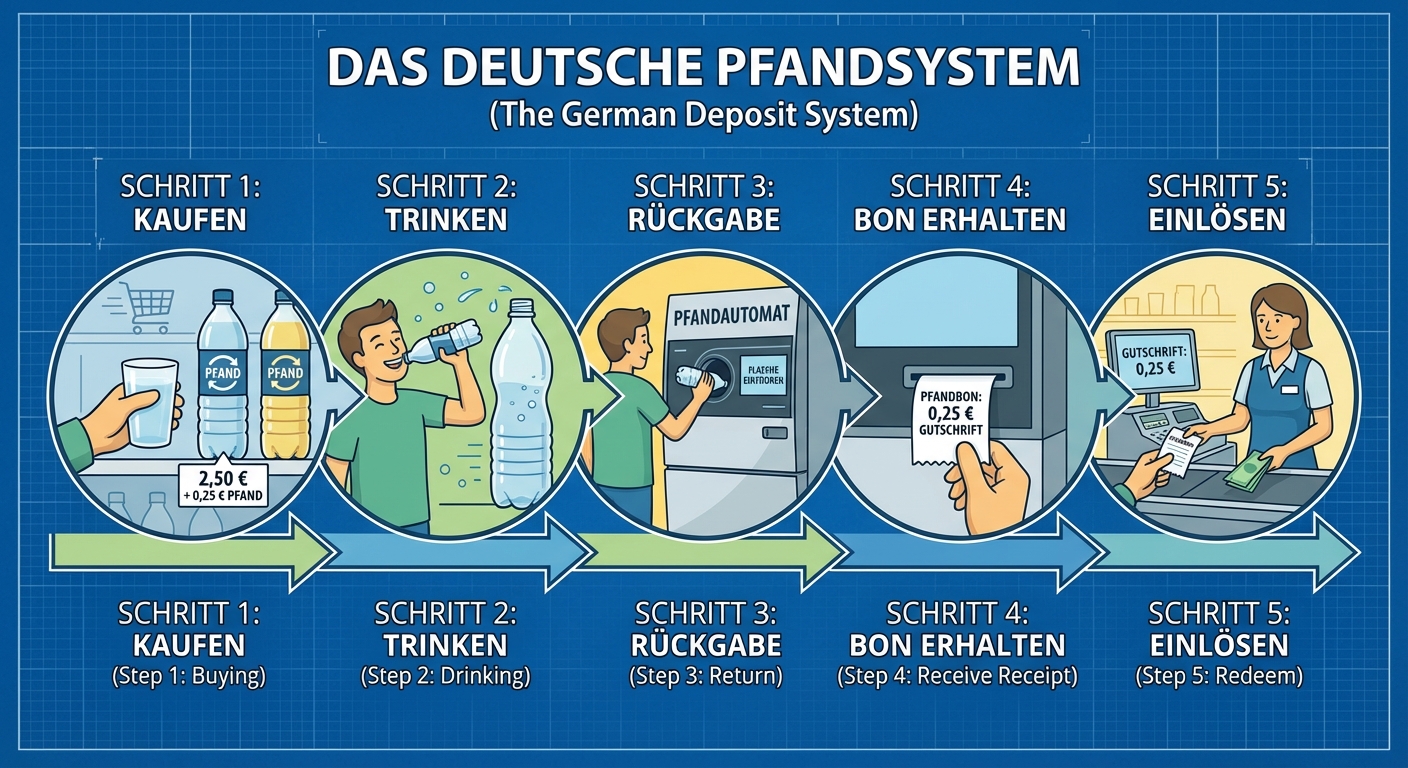
- Das Pfandsystem (Deposit System): Unlike simple recycling bins in the US, Germany uses a refundable deposit system for bottles and cans. You pay an extra €0.08 to €0.25 when buying a drink and get it back when you return the bottle to a machine (Pfandautomat).
- Verkehrswende (Traffic Transition): The push to reduce car usage in favor of public transportation (Öffentliche Verkehrsmittel) and bicycles. Many cities explore "car-free zones" (autofreie Zonen).
Climate Change (Der Klimawandel)
German discourse focuses heavily on the Treibhauseffekt (greenhouse effect) and the responsibility of industrial nations to curb emissions. Frequent topics include extreme weather events (extreme Wetterereignisse) like floods (Hochwasser) or heatwaves (Hitzewellen).
Politische und soziale Strukturen (Political and Social Structures)
This section deals with how society is organized, who holds power, and how demographics shape the future.
Demographic Change (Der demografische Wandel)
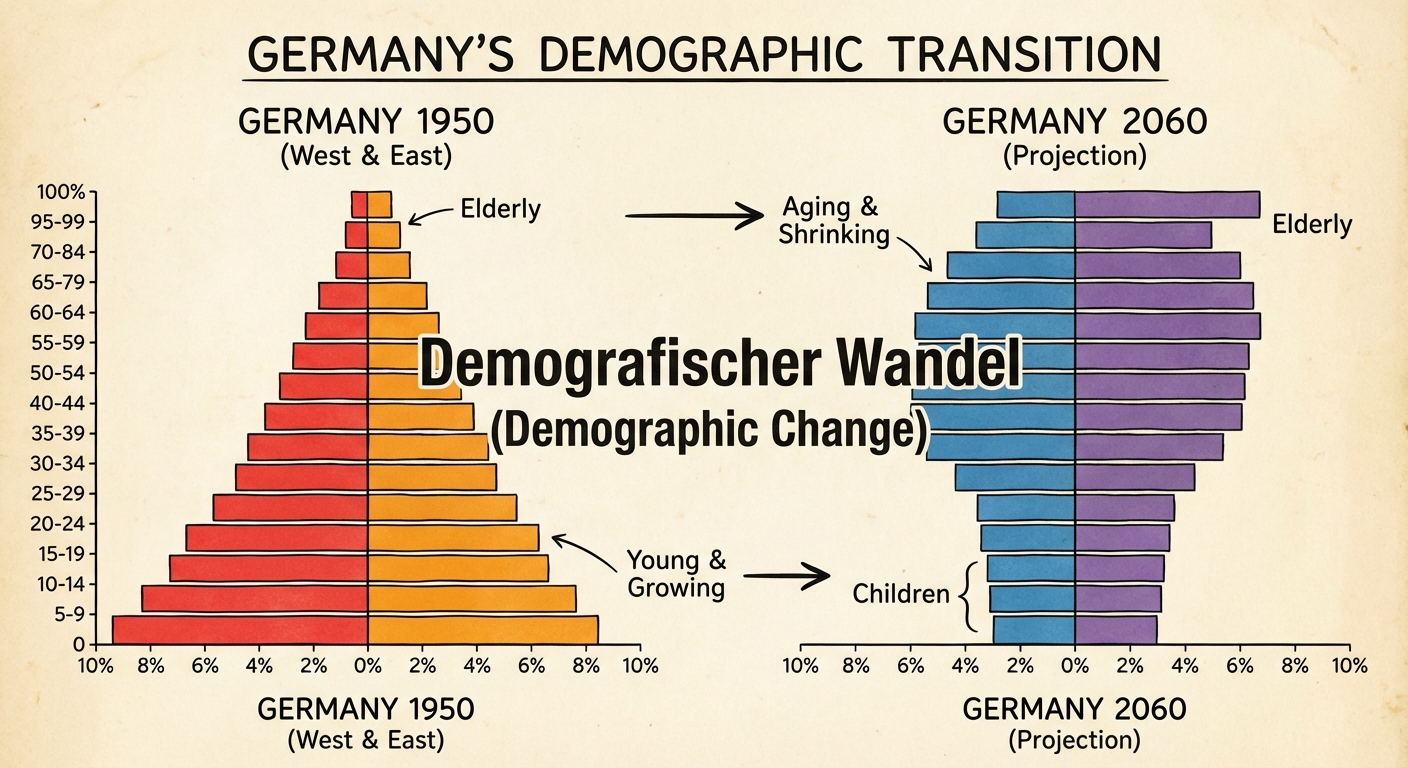
Germany has one of the oldest populations in the world. This phenomenon is defined by two opposing trends:
- Rising Life Expectancy (steigende Lebenserwartung): People are living longer due to good healthcare.
- Low Birth Rate (niedrige Geburtenrate): Fewer children are being born.
Consequences:
- Fachkräftemangel (Shortage of skilled workers): Not enough young people to replace retirees in the workforce.
- Rentensystem (Pension system): The "Generational Contract" (Generationenvertrag)—where the young pay for the old—is under pressure because there are fewer contributors per retiree.
Migration and Integration (Migration und Integration)
Germany is an immigration country (Einwanderungsland), though this term was historically debated.
- Gastarbeiter (Guest Workers): In the 1960s/70s, workers were recruited from Turkey, Italy, and Greece. Many stayed, leading to today's multicultural society.
- Flüchtlingskrise (Refugee Crisis): Since 2015, the arrival of refugees from Syria and other conflict zones has tested social cohesion. Key concepts include Willkommenskultur (welcoming culture) versus Fremdenfeindlichkeit (xenophobia).
- Integration: Successful integration involves language acquisition (Spracherwerb) and participation in the labor market.
The European Union (Die Europäische Union)
Germany is a founding member of the EU. For the exam, know the benefits and challenges:
- Offene Grenzen (Open Borders): Under the Schengen Agreement, citizens can travel freely without border checks.
- Der Euro: The shared currency simplifies trade but links economies together strictly.
Social Conscience and Civic Responsibility (Soziales Gewissen und Bürgerliche Verantwortung)
How do individuals contribute to the greater good? Germany defines itself as a Sozialstaat (social welfare state), meaning the state is constitutionally obligated to protect the social security of its citizens.
Civic Engagement (Bürgerschaftliches Engagement)
Volunteering is not just for college applications; it is the backbone of German society.
- Das Ehrenamt (Honorary office/Volunteering): Millions of Germans hold an Ehrenamt. This is distinct from charity; it is often an official unpaid position within an association.
- Examples: Volunteer Fire Departments (Freiwillige Feuerwehr), Sports Clubs (Sportvereine), and Food Banks (Die Tafeln).
Activism and Protest
The German-speaking world has a strong tradition of public protest.
- Fridays for Future: Founded by Greta Thunberg, this movement is exceptionally strong in Germany. Students skip school on Fridays to demonstrate for climate protection.
- Bürgerinitiativen (Citizens' Initiatives): Groups formed by citizens to influence local politics, often regarding construction projects or environmental conservatism.
Cultural Comparison: Social Net vs. Individualism
| Feature | DACH Region (Sozialstaat) | USA (Individualism) |
|---|---|---|
| Health Insurance | Mandatory (Versicherungspflicht); heavily regulated costs. | Mixed public/private; often tied to employment. |
| Higher Education | Universities are mostly tuition-free (studiengebührenfrei). | High tuition costs; student loans common. |
| Employment | Strong worker protection (Kündigungsschutz); many vacation days (20-30 days). | "At-will" employment; fewer guaranteed benefits. |
Common Mistakes & Pitfalls
When writing your persuasive essay or speaking during the presentation, avoid these common errors related to this unit:
False Cognate: Die Politik vs. Politics
- Mistake: "Politics are important." -> Die Politiken sind wichtig. (WRONG)
- Correction: Die Politik ist wichtig. (In German, Politik is singular when referring to the field/concept. Politiken refers to specific policies, which is rare in this context).
Confusing Wenn, Wann, and Als
- When talking about environmental changes in the past, students often mix these up.
- Use als for a single event in the past (Als ich ein Kind war…).
- Use wenn for repeated events or conditionals (Wenn wir nichts tun, stirbt der Wald - If we do nothing, the forest dies).
- Use wann ONLY for questions (Wann beginnt die Demo?).
Environment Vocabulary Generality
- Avoid just saying "It is bad for nature" (Es ist schlecht für die Natur). Be specific.
- Use: umweltschädlich (harmful to the environment) or umweltfreundlich (environmentally friendly).
Cultural Assumption: "Free" Stuff
- Don't say healthcare or university is "free" (kostenlos). It is financed by taxes and social contributions (steuerfinanziert). Using precise vocabulary shows cultural competence.