Foundations of Literary Analysis: Deconstructing Short Fiction
Character Analysis: More Than Just People
In AP English Literature, characters are the vessels through which the author conveys themes and meaning. You must move beyond describing who a character is to analyzing how they are constructed and why they act the way they do.
Methods of Characterization
Authors use two primary methods to reveal character traits. Understanding the difference is crucial for evidence-based analysis.
- Direct Characterization: The narrator explicitly describes the character.
- Example: "John was a cold, calculating man who cared little for the feelings of others."
- Indirect Characterization: The author shows the character through details, requiring you to infer traits. This is where the bulk of your analysis should focus.
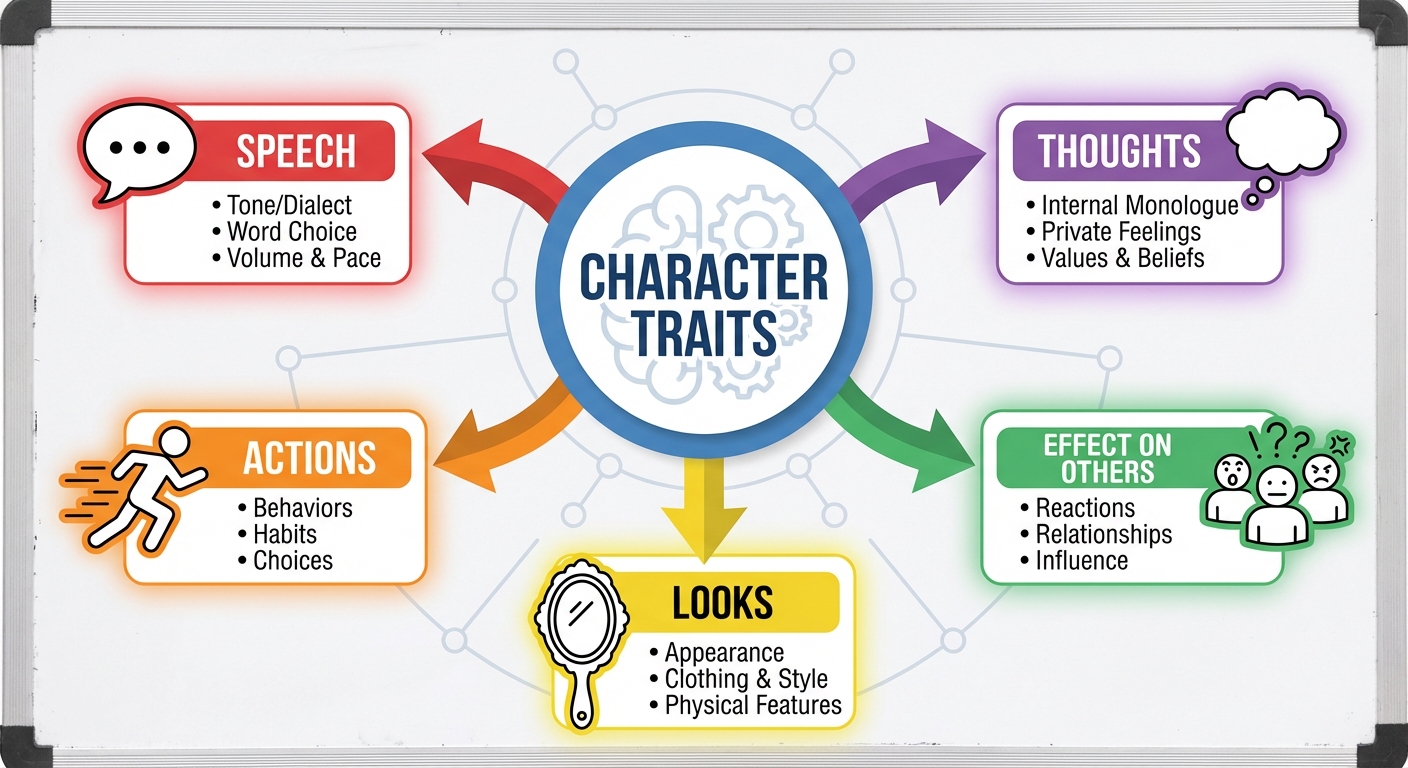
To analyze indirect characterization effectively, use the acronym STEAL:
- Speech: What do they say? How do they speak (dialect, tone)?
- Thoughts: What is revealed through their internal monologue?
- Effect on others: How do other characters react to them?
- Actions: What does the character actually do?
- Looks: How does their physical appearance reflect their internal state?
Character Complexity and Perspective
The AP exam loves complexity. A complex character is someone who often holds contradictory traits, desires, or values.
- Internal Conflict: A struggle within the mind of a character (e.g., duty vs. desire, fear vs. ambition).
- Competing Values: When a character must choose between two "rights" or two "wrongs."
Key Term: Perspective
Character perspective is how characters understand their circumstances based on their background, personality, and biases. It is distinct from the narrator's point of view.
Tip: When analyzing complexity, look for the word "yet" or "but" in your own writing. "She is incredibly generous to strangers, yet deeply stingy with her own family." This tension is where deep analysis lives.
Types of Characters (The Archetypes)
While you shouldn't just label characters, knowing these terms helps describe their function in the plot:
- Protagonist: The main character driving the action. Note: They are not always "good" (e.g., Anti-hero).
- Antagonist: The force opposing the protagonist. This can be a person, nature, society, or the protagonist’s own internal flaw.
- Dynamic vs. Static:
- Dynamic: The character undergoes a significant internal change.
- Static: The character remains largely the same. Static characters often highlight the change in the dynamic character.
- Foil: A character whose traits contrast sharply with another character (usually the protagonist) to highlight specific qualities of that character.
Setting: The Function of Time and Place
Setting includes the time and place of a narrative, but in AP Lit, it is rarely just a backdrop. It is often a participant in the story, establishing the mood, creating conflict, or revealing character.
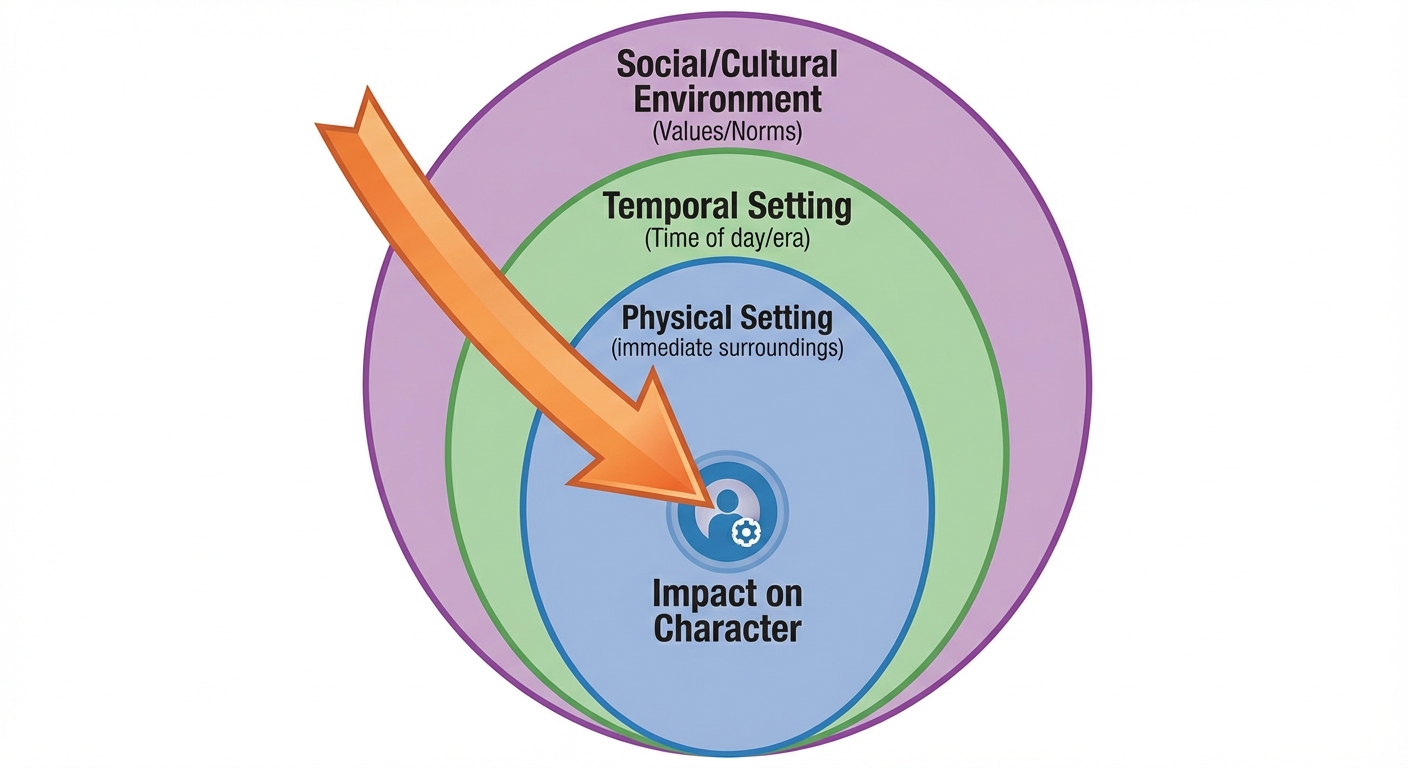
The Three Dimensions of Setting
- Physical Location: The immediate surroundings (a room, a forest, a spaceship).
- Temporal Setting: The time of day, year, or historical interaction. (e.g., Given the social norms of the 1920s, a character's actions might be interpreted differently).
- Social/Cultural Environment: The values, beliefs, and standards of the society in which the story takes place.
Setting as Atmosphere and Symbol
Setting is the primary tool for establishing Mood (the feeling the reader gets) and Atmosphere (the external environmental feeling).
- Pathetic Fallacy: A specific type of personification where the weather or environment reflects the internal emotional state of a character (e.g., a thunderstorm raging while a character realizes a terrible truth).
- Setting as Conflict: Sometimes the setting is the antagonist (Man vs. Nature or Man vs. Society).
Example Application:
Consider a story set in a decaying, dusty mansion (Physical) in the post-Civil War South (Temporal/Social).
- Analysis: The decay of the house likely symbolizes the decay of the family's old wealth and social standing. The setting is not just where they live; it is a physical manifestation of their refusal to move forward in time.
Narrator and Point of View (POV)
The Narrator is the entity telling the story. The Point of View is the "camera angle" through which the story is told. Who tells the story determines what we know and how we feel about it.
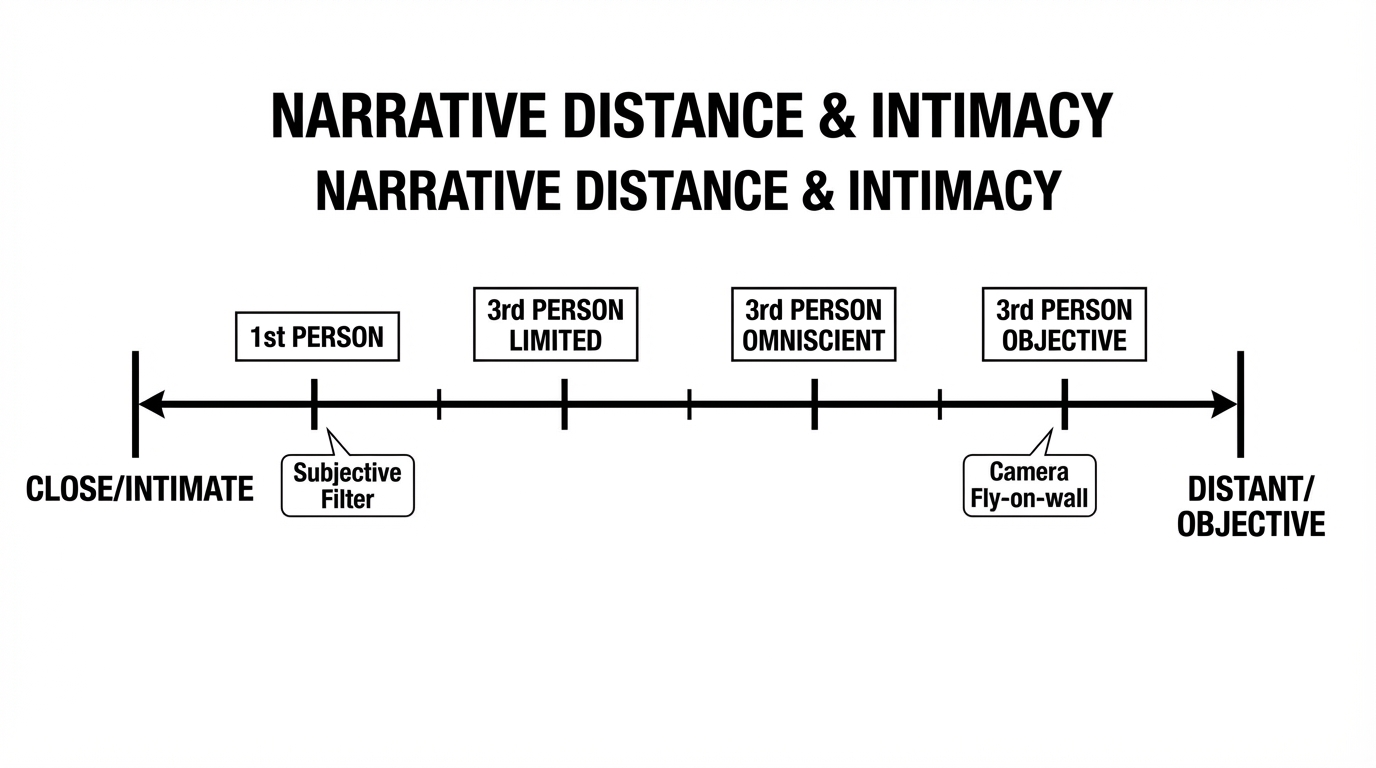
The Hierarchy of POV
- First Person: The narrator is a character in the story (uses "I").
- Effect: Intimacy and immediacy. We see the world through their biases.
- Risk: Subjectivity. Are they telling the truth?
- Third Person Limited: The narrator is outside the story but focuses on the thoughts and feelings of one character.
- Effect: We feel close to the protagonist but lack the full picture of other characters' motivations.
- Third Person Omniscient: The narrator is all-knowing and can access the thoughts of any character.
- Effect: Provides a broader context and dramatic irony (we know things the characters don't).
- Third Person Objective: The narrator reports only what can be seen and heard, like a camera, without access to internal thoughts.
- Effect: Creates distance and ambiguity; forces the reader to judge primarily on action.
Reliability and Distance
A crucial concept in Unit 1 is the Reliable vs. Unreliable Narrator.
- Unreliable Narrator: A narrator whose credibility is compromised. This can be due to:
- Age/Immaturity (e.g., a child not understanding what they are seeing).
- Mental state (insanity, hallucination, grief).
- Moral bias (lying to make themselves look better).
Narrative Distance:
This refers to the physical or psychological gap between the narrator and the events.
- Temporal Distance: A narrator looking back on events from 20 years ago will analyze them differently than a narrator experiencing them in the moment.
Interconnectivity: Putting It All Together
In AP Lit, you never analyze elements in isolation. You must explain how they interact.
- Character + Setting: How does the environment shape the character? Does the character rebel against the social setting?
- Point of View + Character: How does the narrator's bias shape our perception of the protagonist's complexity?
Worked Example:
Scenario: A story is told in the first person by a wealthy, arrogant man (POV/Character) walking through a slum (Setting).
- Observation: He describes the people as "lazy" and the streets as "filthy."
- Analysis: The setting isn't inherently "lazy"; this description reveals the narrator's prejudice (Characterization) rather than the reality of the setting. The contrast between his wealth and the setting creates tension.
Common Mistakes to Avoid
- Confusing the Author with the Narrator:
- Mistake: "Hemingway feels sad about the war."
- Correction: "The narrator expresses disillusionment with the war." Never assume the narrator is the author, even in first-person stories.
- Describing Instead of Analyzing:
- Mistake: "The setting is a dark forest."
- Correction: "The darkness of the forest isolates the protagonist, forcing him to confront his internal fears without social distractions."
- Ignoring the Title:
- Short stories often use titles to establish the central symbol or setting immediately. Don't overlook this textual detail.
- Assuming the Protagonist is the "Good Guy":
- Protagonists can be villainous or deeply flawed. Analyze them based on their complexity, not their morality.