AP Spanish Unit 3: Beauty and Aesthetics Comprehensive Review
Note: This guide integrates Spanish vocabulary and concepts essential for the AP Spanish Language and Culture exam. Key terms are bolded and often provided with their Spanish equivalents to aid in Interpretive and Presentational communication.
Visual and Performing Arts (Las Artes Visuales y Escénicas)
In the Spanish-speaking world, art is rarely just for decoration; it is often a vehicle for social commentary, history preservation, and political resistance. Understanding the context of art is crucial for the Cultural Comparison section of the exam.
Major Art Movements and Figures
To succeed on the AP exam, you must recognize these specific movements and how they reflect the culture of their time.
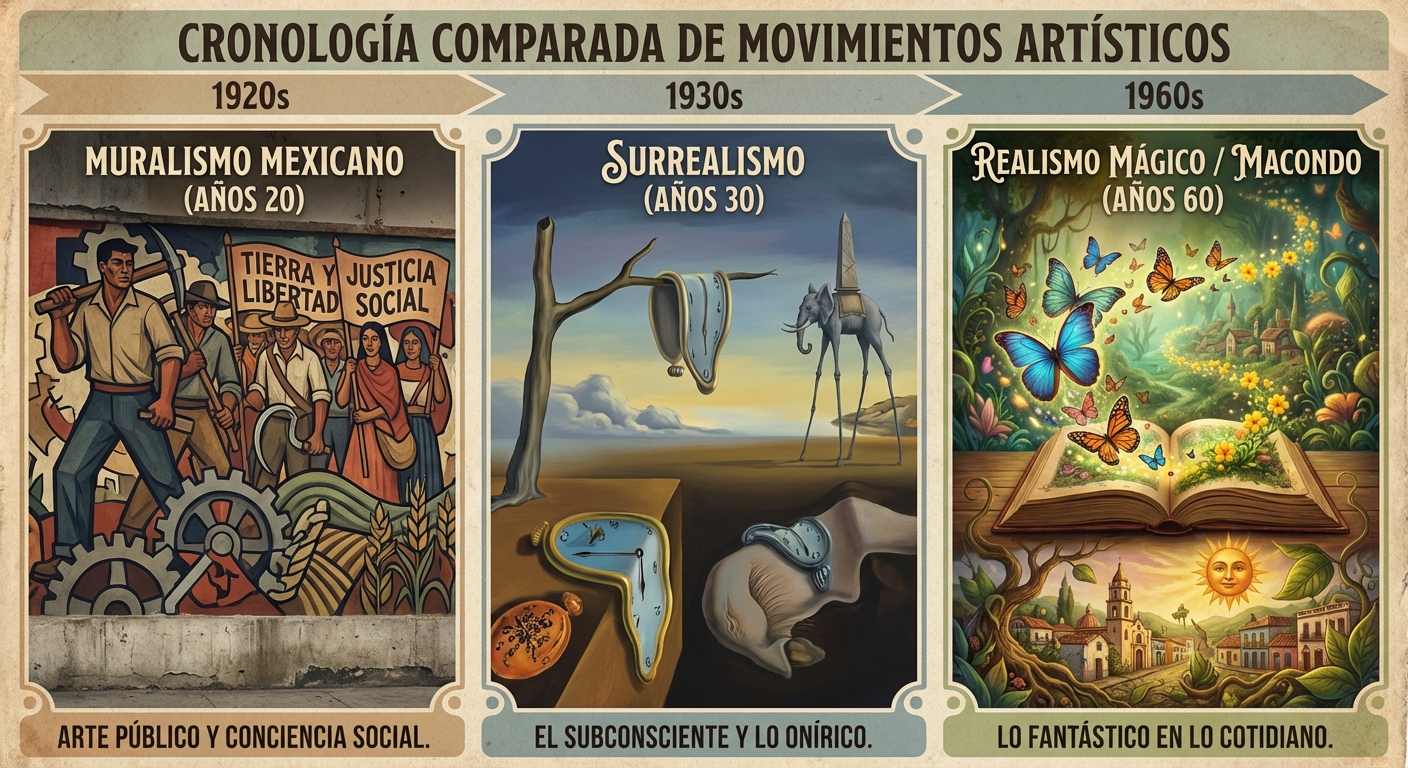
Muralism (El Muralismo):
- Definition: An artistic movement that originated in Mexico after the Revolution (1910s–1920s). Its purpose was to educate the illiterate masses about Mexican history and politics through large public paintings.
- Key Concept: Art as a public service (el arte como servicio público), not a luxury for the wealthy.
- Key Figures:
- Diego Rivera: Focused on the working class, indigenous roots, and Marxist ideology.
- David Alfaro Siqueiros & José Clemente Orozco (Part of "Los Tres Grandes").
Surrealism (El Surrealismo):
- Definition: A movement exploring the subconscious, dreams, and the irrational. It challenges logical reality.
- Key Figures:
- Salvador Dalí (Spain): Famous for melting clocks (La persistencia de la memoria); explored paranoia and dreams.
- Frida Kahlo (Mexico): While often associated with Surrealism, she claimed, "I never painted dreams. I painted my own reality." Her work focuses on identity (identidad), pain (dolor), and indigenous culture.
Cubism (El Cubismo):
- Definition: Analyzing objects, breaking them up, and reassembling them in an abstracted form. It depicts the subject from a multitude of viewpoints.
- Key Figure: Pablo Picasso (Spain). His most famous work relevant to the AP theme is Guernica, a powerful anti-war statement depicting the bombing of a Basque town during the Spanish Civil War.
Modern Interaction with Classics:
- Fernando Botero (Colombia): Known for Boterismo—depicting people and figures in large, exaggerated volume. This is not just "fatness"; it is a stylistic choice to critique society or add humor.
Performing Arts: Music and Dance
Performing arts often serve as a marker of regional identity (identidad regional).
- Flamenco (Spain): distinct from general "Spanish dance." It involves cante (singing), toque (guitar), and baile (dance). It is an expression of the Gitano (Roma) culture in Andalusia, often expressing suffering or deep emotion (duende).
- Tango (Argentina/Uruguay): Originated in the lower-class districts of Buenos Aires. It represents passion, nostalgia, and immigrant melancholy.
- Salsa & Merengue (Caribbean): Represent the syncretism (sincretismo) of African rhythms and European instrumentation.
Literature and Literary Movements (La Literatura)
Literature on the AP exam is often used to test Interpretive Reading. You do not need to memorize every book, but you must understand the characteristics of major movements.
Magic Realism (El Realismo Mágico)
This is perhaps the most critical literary term for AP Spanish students.
- Definition: A literary genre where magical or supernatural elements are presented in an otherwise realistic setting. The characters treat the magic as mundane or normal.
- Difference from Fantasy: In fantasy (like Harry Potter), magic surprises the characters or requires a new world. In Magic Realism, if a character ascends to heaven while doing laundry, the neighbors just wonder where the sheets went.
- Key Figure: Gabriel García Márquez (Colombia), author of Cien años de soledad.
- Key Figure: Isabel Allende (Chile), author of La casa de los espíritus.
The "Boom" Latinoamericano
A period in the 1960s and 70s when Latin American writers became world-famous for challenging traditional narrative structures.
- Julio Cortázar (Argentina): Known for Rayuela (Hopscotch) and short stories like La noche boca arriba, which plays with the concept of duality (dualidad) and time.
- Themes: Political turmoil, search for identity, and the mixing of indigenous myth with modern reality.
Essential Literary Vocabulary for Analysis
When writing your email reply or persuasive essay, use these terms to sound more academic:
| Spanish Term | English Definition | Usage Context |
|---|---|---|
| La metáfora | Metaphor | Comparing two things without "como". |
| El símbolo | Symbol | An object representing an abstract idea. |
| El punto de vista | Point of view | Who is telling the story? |
| La cosmovisión | Worldview | How a culture or author perceives reality. |
| La crítica social | Social critique | Using art/text to highlight societal flaws. |
Ideals of Beauty Across Cultures (Los Ideales de la Belleza)
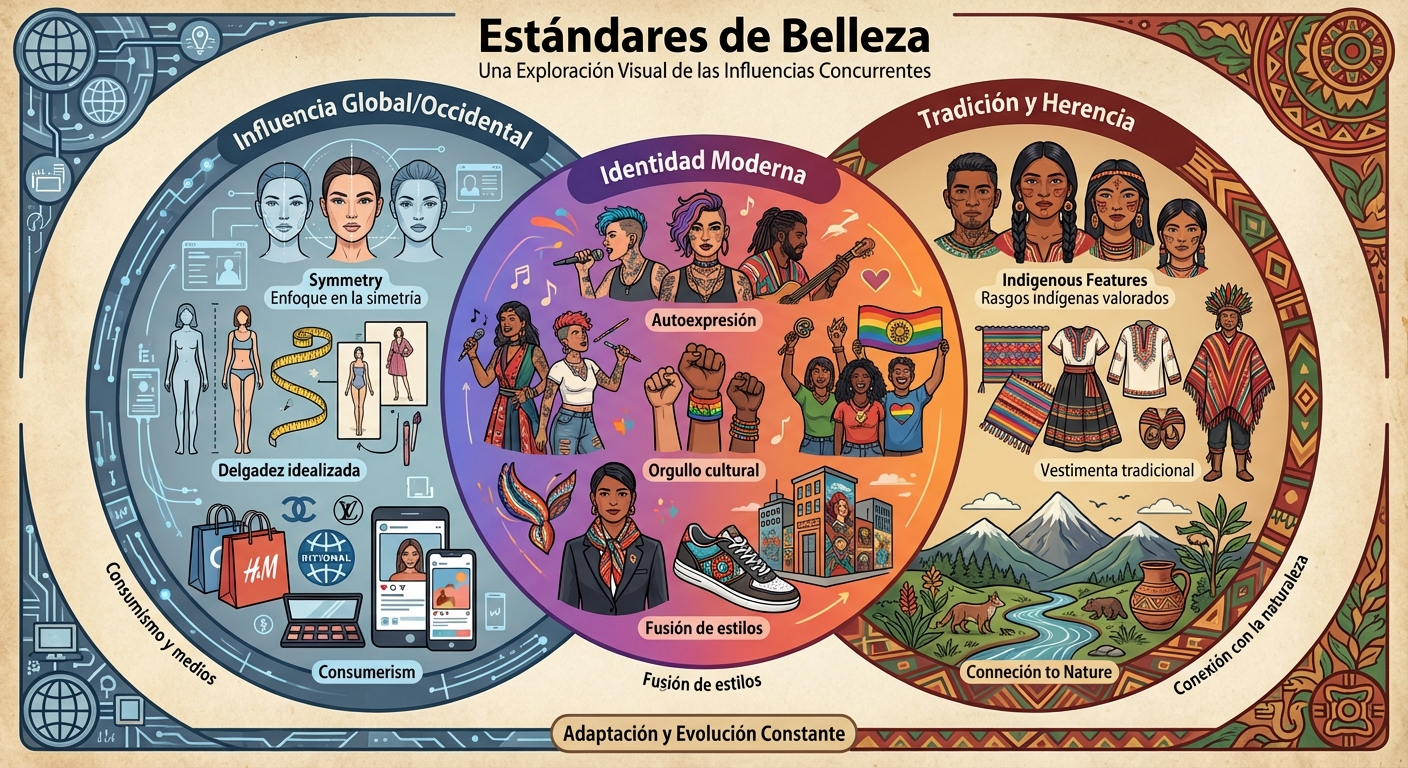
This topic asks you to define what is considered "beautiful" and how that standard changes across time and geography.
Subjectivity of Beauty
- The Concept: Beauty is subjective (subjetiva). The saying "La belleza está en los ojos de quien mira" (Beauty is in the eye of the beholder) is central here.
- Global vs. Local:
- Globalization: Mass media and Hollywood have exported a "Western" standard of beauty (thin, tall, light-skinned) to the Spanish-speaking world.
- Resistance: Many regions are reclaiming indigenous features, traditional clothing (trajes típicos), and natural beauty as the true standard.
Architecture and Public Spaces
Beauty is also reflected in where people live.
- Modern Architecture: Santiago Calatrava (Spain) is known for futuristic, skeletal designs (e.g., City of Arts and Sciences in Valencia).
- Colonial Architecture: Characterized by central plazas, patios (open courtyards for light/air), and balconies. The plaza concept is vital—it is the center of social life, not just a transit point.
- Antoni Gaudí: His work in Barcelona (La Sagrada Família) mimics forms found in nature (organic architecture), rejecting straight lines which do not exist in nature.
Fashion (La Moda)
Fashion is a form of artistic expression and economic power.
- Designers: Carolina Herrera (Venezuela) and Oscar de la Renta (Dominican Republic) represent elegance and have integrated Latin aesthetic into high fashion.
- Fast Fashion: Spain is the home of Zara (Inditex). This makes fashion accessible but raises questions about sustainability (sostenibilidad) and the loss of artisan individuality.
Structural Formula for Cultural Comparisons
For the speaking section (Task 4), you must compare your community with a Spanish-speaking community regarding art or beauty. Use this "formula" to organize your thoughts:
- Example Argument: "Mientras que en México el muralismo se utiliza para educar al público sobre la historia política (Target), en mi comunidad los Estados Unidos, el arte callejero o 'graffiti' se ve a menudo como vandalismo (Source), aunque ambos ocurren en espacios públicos (Connector)."
Common Mistakes & Pitfalls
- Stereotyping Art: Not all Hispanic art is "colorful folk art." Do not simplify the vast history of Spanish art into just piñatas or sugar skulls. Acknowledge modernism, abstraction, and surrealism.
- Confusing Realizar vs. Darse Cuenta:
- Realizar = To perform, accomplish, or make (e.g., realizar una obra de arte).
- Darse cuenta de = To realize or become aware of a fact.
- Mistake: "El artista realizó que la sociedad sufría." (Wrong) $\rightarrow$ "El artista se dio cuenta de que la sociedad sufría." (Correct).
- Ignoring the "Why": When discussing beauty or art, don't just describe what it is. Explain why it matters. Why did Rivera paint murals? (To educate). Why is fashion important? (Identity and economy).
- Passive vs. Active Art: Remember that in Spanish, we often say a work "treats" a theme (la obra trata de…) rather than "is about." Avoid overuse of ser adjectives; use verbs like reflejar (to reflect), mostrar (to show), and criticar (to critique).