AP US History: Postwar Domestic Transformations (1945–1980)
Domestic Changes in the Cold War Era
The period from 1945 to 1980 marked a dramatic shift in the American domestic landscape. Fueled by post-WWII affluence, the nation saw an explosion of suburban living, a population boom, and ambitious federal efforts to reshape society. However, this prosperity masked deep social rifts that erupted into cultural rebellions and radical shifts in the 1960s and 70s.
The Postwar Economic Boom and Suburbanization
Following World War II, the United States entered the longest period of sustained economic growth in its history (1950s–1960s). This era is defined by the rise of the middle class, mass consumerism, and a massive demographic shift toward suburbs and the Sun Belt.
Engines of Prosperity
Unlike the post-WWI era which led to a depression, the post-WWII economy soared due to several key factors:
- The GI Bill (Servicemen's Readjustment Act of 1944): This is arguably the most significant piece of legislation for the postwar middle class. It provided veterans with low-interest loans to start businesses, buy homes, and notably, paid for college tuition. This democratized higher education in America.
- Defense Spending: The Cold War necessitated a permanent war economy. Huge federal budgets for defense (e.g., aerospace, electronics) kept factories running and employment high.
- Technological Advancements: Innovations developed during the war (plastics, electronics, aviation) transitioned to civilian use.
The Rise of Suburbia
The 1950s saw a mass exodus from cities to the suburbs, fundamentally changing the American lifestyle.
- Levittowns: pioneered by William Levitt, these were mass-produced, standardized housing developments. Using assembly-line techniques, homes could be built quickly and cheaply.
- Significance: It made homeownership affordable for the white working class, symbolizing the "American Dream."
- Interstate Highway Act (1956): Signed by President Eisenhower, this was the largest public works project in history. while justified as a defense measure (to evacuate cities in case of nuclear attack), it practically served to accelerate suburbanization and the decline of passenger trains.
- "White Flight": As white families moved to suburbs, inner cities were often left with shrinking tax bases and deteriorating infrastructure, contributing to urban poverty among minority groups who were often barred from buying suburban homes due to restrictive covenants.
The Sun Belt Migration
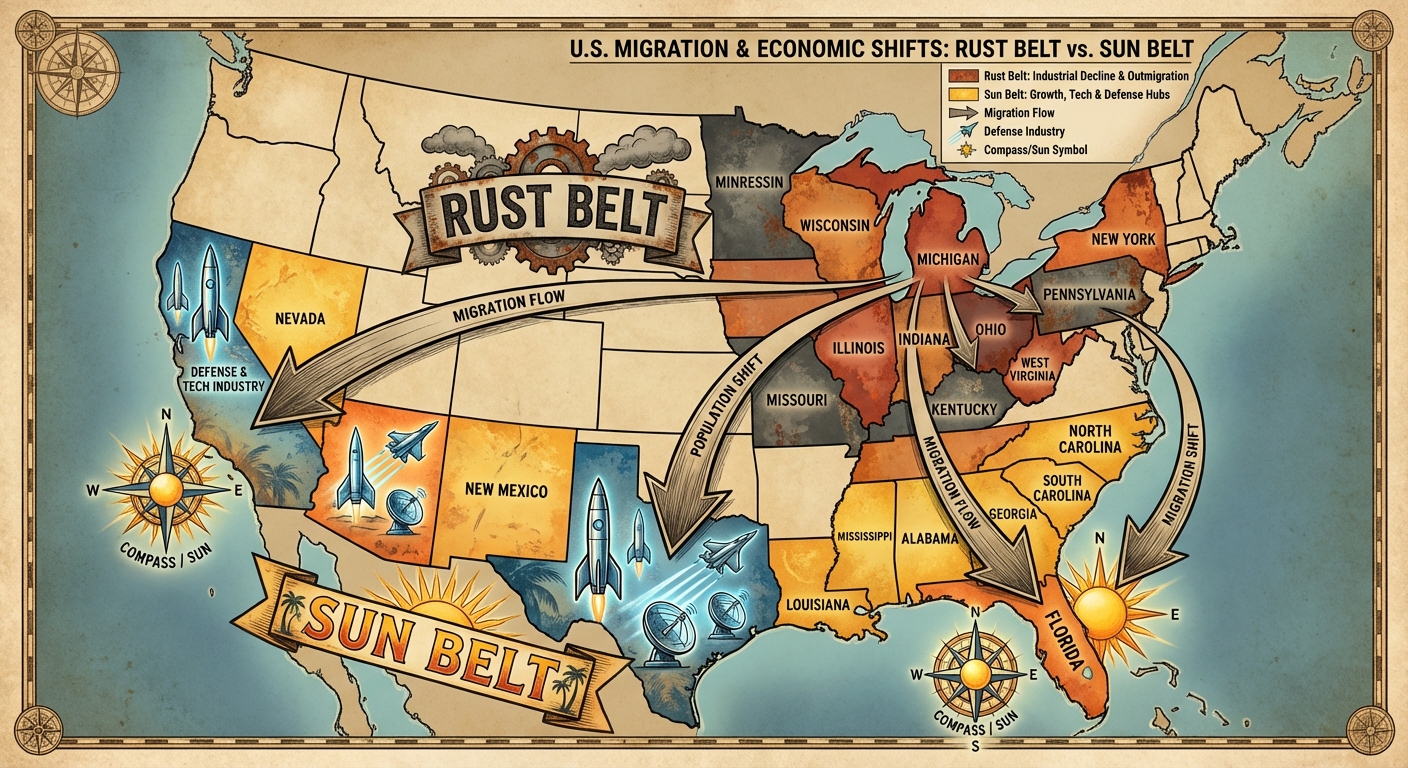
Beginning in the 1950s, political and economic power shifted from the industrial Northeast and Midwest (the "Rust Belt") to the South and West (the Sun Belt), stretching from Florida to California.
- Drivers: Lower taxes, warmer climate, and the invention of air conditioning.
- Federal Funding: The government awarded massive defense and aerospace contracts to Sun Belt states (e.g., Texas, California), creating high-tech jobs.
Youth Culture, Counterculture, and Social Change
The cultural consensus/conformity of the 1950s created a pressure cooker that exploded in the 1960s. The "Baby Boom" generation (born 1946–1964) came of age, challenging the values of their parents.
1950s: Conformity and Cracks in the Facade
The 1950s culture is often characterized by conformity—the nuclear family, corporate jobs, and television culture (e.g., Leave It to Beaver). However, dissent existed:
- The Beat Generation (Beatniks): Writers like Jack Kerouac (On the Road) and Allen Ginsberg criticized the sterility and materialism of American life. They were the intellectual precursors to the hippies.
- Rock 'n' Roll: Popularized by Elvis Presley, this genre bridged the gap between "black" R&B and "white" country music. It terrified traditional parents who viewed it as rebellious and sexually provocative.
1960s: The Counterculture
By the mid-1960s, a distinct Counterculture emerged, rejecting social norms regarding dress, sexual behavior, and authority.
- Hippies: Characterized by long hair, drug use (LSD/marijuana), and communal living (